
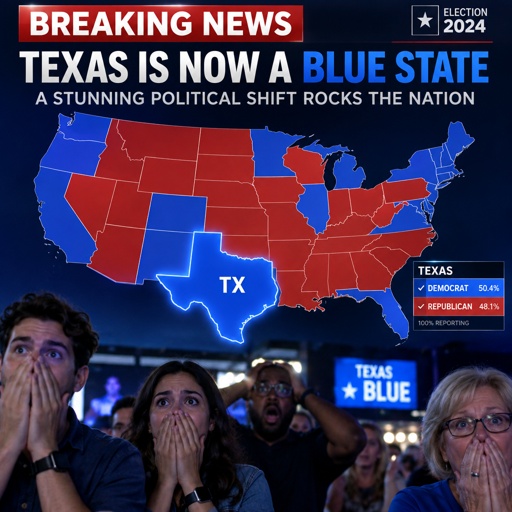
QUESTION: Marty –
I am still in shock by the Democratic sweep of Texas. Lieutenant Governor, Dan Patrick has been very popular yet it seems everyone just voted Democrat. I have to question if this was a clean election. I would be curious about your thoughts.
While the war in Iran did not help, the hispanic community was the swing vote. The removal of the traditional hard working immigrants turned the hispanic community. While I support canceling any funding for immigration including housing and healthcare for refugees, as well as expelling convicted criminals, they detained hard working immigrants who have been here for decades. Immigrants have been scared to go to church in fear of being detained. They suggested they would round up the criminals but they rounded up everyone likely for political reasons.
Texas is now a blue state ?
LF
REPLY: You have a Spanish governor and you can thank and his ICE that simply went too far. Even I have one staff member who they refuse to grant a visa just to come to our annual conferences. We are an international company and they have abused their power going to extremes. Americans didn’t like the open border, but Miller harassed people who have been here for decades and disrupted companies like mine. He probably SINGLE-HANDEDLY secured the Spanish vote in Texas.
Well, I must say, Florida is still Red. It was close. Yet, Florida did not pass a no property tax measure. Instead, Amendment 3 was approved, which increases property tax exemptions for homeowners, but does not eliminate property taxes entirely. That was a surprise, but it would have only benefited permanent residents, so it is strange why that would be defeated I assume it was Democrats assuming it benefits only the rich.
The main reason Texas was attracting so many companies was that there was also no corporate income tax. That may con under attack and the Democrats are just on a warpath of vengeance, which is probably the start of what the computer projects that the US will eventually separate because the differences are just too stark much like the Russia Revolution of 1917.
Texas has had 26 governors since 1903 and only 5 were republican. However, this Republican Era has been only since 1995. Cyclically, you hit the Pi Cycle. It was 31 years until 2026. Sorry, but the computer showed a Directional Change in 2026. I warned our Institutional clients who inquired about moving to Texas vs Florida. Part of our job is corporate restructuring from the long-term cyclical perspective. The Texas Constitution does NOT explicitly prohibit a corporate income tax; the relevant prohibition applies ONLY to personal income taxes. Texas does not have a corporate income tax, and it is one of the few states without one. However, this is a matter of legislative policy and statute, not a constitutional ban. The state instead imposes a franchise tax (often called a “margin tax”) on businesses. We MUST take everything into consideration when asked. Texas was due for a change based on the Pi Cycle
Now, to put this in perspective, Texas did embrace the Progressive Era when it began, but its version was selective, largely urban-based, and concentrated in the first two decades of the twentieth century (roughly 1900–1920). The period from the 1890s through the 1910s saw real reform in areas like prohibition, women’s suffrage, municipal government, and regulation, but Texas remained fundamentally rural and agricultural, and many progressive impulses faded or turned conservative by the 1920s.Where Texas honestly embraced progressivism was when Texas ratified the 18th Amendment (Prohibition) in 1918 and approved a state prohibition amendment in 1919. The suffrage movement gained ground through the Texas Woman Suffrage Association, winning the right for women to vote in the 1918 Democratic primary and ratifying the 19th Amendment in June 1919.The Municipal Reform in Texas cities became laboratories for progressive governance. Galveston pioneered the commission form of city government after the 1900 hurricane, a model that spread to hundreds of cities nationwide as a “businesslike” antidote to corruption. Urban progressives pushed for lower taxes and weakened machine politics.
The early rise of progressivism was the 1890s overall, but in the 1892 election of reformist Governor James Stephen Hogg, this was truly the beginning of Texas progressivism, and the state produced national Progressive-era figures like Edward M. House and several members of Woodrow Wilson’s Cabinet.
In 1915, the legislature created supplemental equalization funds for “country schools,” marking the first time state funds were targeted to a specific set of needy schools, though the reliance on local property taxes baked in inequalities that persisted for decades.
Texas remained predominantly rural and agricultural throughout the period. Industry was sparse and confined to mainly lumber, railroads, and oil. The Progressive Era “left Texas relatively unchanged” in its fundamental economic structure. Most Texas women, despite winning the vote, still lived in the countryside and filled traditional roles.
Racial and Ethnic Exclusion. Progressive reforms were largely shaped by white, native-born Texans. Prohibition support was centered among rural, old-stock white residents, while Black, Hispanic, and German populations largely opposed it. The era also saw the resurgence of the Ku Klux Klan in the 1920s, which many Texans endorsed.
There was a Conservative Backlash that surfaced during the 1920s. By the 1920s, the reform impulse had largely spent itself. Texas politics in that decade were marked by conservative and sometimes reactionary resistance to change, despite rapid industrialization and urbanization. The progressive energy that had animated the 1900s and 1910s gave way to complacency and reaction.
Then came the 1930s–1950s. The Progressive Era is generally dated to about 1900–1920. The decades after 1920 saw different dynamics in the face of the Great Depression, New Deal programs, World War II, and the early civil rights movement. While some reform impulses persisted, such as state support for junior colleges beginning in 1941, these were not part of the original Progressive movement. By 1950, Texas was undergoing profound economic change, transitioning from agricultural to industrial, but this transformation was driven by war and modernization rather than progressive reform ideology.
In short, Texas embraced progressivism where it aligned with the interests of its dominant white, rural, and urban middle-class constituencies, prohibition, suffrage, municipal efficiency, and some school funding. However, Texas never fully embraced the broader social or economic transformations that defined national progressivism, and the movement’s influence waned significantly after 1920.
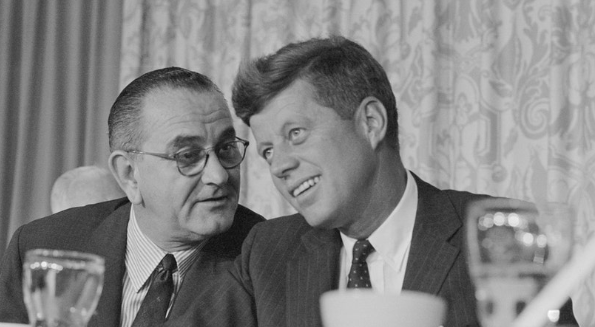
Don’t for get that Democrat Kennedy selected Lyndon B. Johnson was from Texas as his running mate primarily to balance the ticket geographically and add experience. Johnson’s Texas roots were seen as crucial to offsetting Kennedy’s Northeastern appeal, and his veteran political career added age and gravitas to the younger candidate’s campaign