
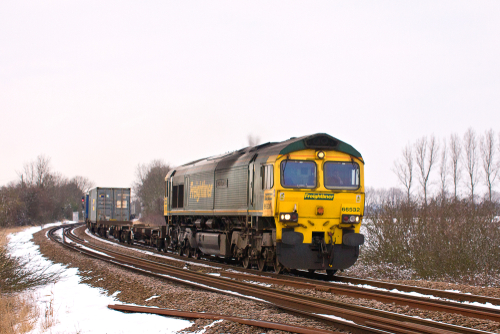
Germany is preparing for the possibility of receiving 1,000 wounded NATO soldiers every day in a direct military confrontation with Russia. Siemens Mobility and Lufthansa Technik Defense have announced plans to develop military hospital trains capable of transporting more than 150 wounded personnel, including those requiring intensive care. Each train could accommodate approximately 90 medical personnel and operate without relying entirely on electrified railway infrastructure. Europe is once again planning for mass casualties on a scale not witnessed since World War II.
Germany’s Surgeon General, Ralf Hoffmann, previously warned that a large-scale conflict could produce approximately 1,000 wounded troops daily. That translates into 7,000 casualties in one week and 30,000 in a month if the rate persists. Germany has only five military hospitals and estimates that approximately 15,000 civilian hospital beds could be required to treat wounded NATO personnel. Civilian infrastructure would become an extension of the battlefield, with medical resources redirected toward a war the public never wanted.

The proposed hospital trains are modeled partly on Ukraine’s experience, where drones have made conventional battlefield evacuation increasingly dangerous. Wounded soldiers cannot always be retrieved without exposing rescue personnel to additional attacks. Ukraine has consequently converted passenger carriages into mobile medical facilities, and Germany is examining how to develop a similar system. Siemens would supply railway equipment, while Lufthansa Technik Defense would integrate medical systems compatible with military transport aircraft. The companies have signed a memorandum of understanding, but there is not yet a finalized procurement contract. Nevertheless, the planning reveals the scale of the conflict German officials are preparing to manage.
Germany’s geographical position makes it central to NATO’s military logistics. Troops and equipment would move eastward through German territory, while the wounded would be transported westward for treatment. Railways, highways, airports, hospitals, and industrial facilities would become essential military infrastructure. Those same networks could become vulnerable to sabotage and cyberattacks. Germany is already examining Cold War-era facilities, including an underground hospital bunker in Ulm built in 1979 to accommodate approximately 2,000 people during a nuclear emergency. Infrastructure constructed for a confrontation Europeans believed had ended is once again being reconsidered.

Defense Minister Boris Pistorius has warned that Russia could develop the capability to attack NATO territory by 2029. That is an assessment of potential military capability, not proof that Moscow has decided to launch such an attack. Yet Germany is already conducting exercises to test the evacuation of wounded soldiers from NATO’s eastern flank. The March 2026 Medic Quadriga exercise involved approximately 1,250 military and civilian personnel, while the Bundeswehr has discussed introducing medical trains by 2028. The government is moving beyond speeches about military preparedness and beginning to organize civilian resources around the possibility of sustained warfare.
There is something deeply disturbing about the return of this mentality to Europe. Germany has struggled with industrial weakness, expensive energy, and growing fiscal obligations, yet it must now consider how to finance military logistics, emergency healthcare, and the enormous economic disruption of a potential war. The country abolished compulsory military service in 2011 and has struggled to recruit sufficient personnel. Now its planners are contemplating casualty levels that would require a fundamentally different military structure. Equipment can be manufactured and trains converted, but experienced soldiers cannot simply be replaced. Nor can a country indefinitely divert productive resources toward warfare without damaging its civilian economy.
What is especially troubling is the contrast between the scale of these preparations and the difficulty European leaders have had maintaining direct diplomatic communication with Moscow. Finland and Norway recently demonstrated that communication with Russia can take place without abandoning support for Ukraine. Negotiation does not require accepting an adversary’s demands. It is precisely how governments attempt to prevent disagreements from escalating into catastrophe. Yet Europe is investing enormous effort in preparing for the consequences of a wider war while the diplomatic effort to prevent one remains deeply constrained.
The figure of 1,000 wounded soldiers every day should haunt every European leader discussing military confrontation. These would be young men returning without limbs, suffering permanent injuries, or never returning home. Their families would carry the consequences for generations, while governments accumulated debts to finance the destruction. The economic and human costs would extend far beyond the front lines, affecting every aspect of civilian life.
Germany’s hospital trains may save lives if the worst occurs, and preparing medical infrastructure is a legitimate responsibility of government. But the broader picture is ominous. The railways are being evaluated, hospitals are being incorporated into military planning, and old Cold War facilities are receiving renewed attention. Europe is preparing the machinery necessary to manage mass casualties. Its leaders should be devoting equal determination to ensuring those casualties never occur.