
Everyone has something to say about the state of reading in 2026: Reading comprehension scores in the U.S. have continued to decline. Many college students cannot make it through an entire book. The majority of Americans reported reading five or fewer books the previous year, according to a 2025 Pew Research survey.
Yet, at the same time, a growing number of Gen Zers are identifying as readers. “Welcome to hot literature fall,” Yahoo declared last week. People are attending reading parties in droves, signing up to celebrity book clubs, and fashioning books as accessories.
Whether we are reading more or less than ever shouldn’t be the main concern. The real question is: How are we reading—and are we reading deeply enough?
The opposite of shallow scrolling
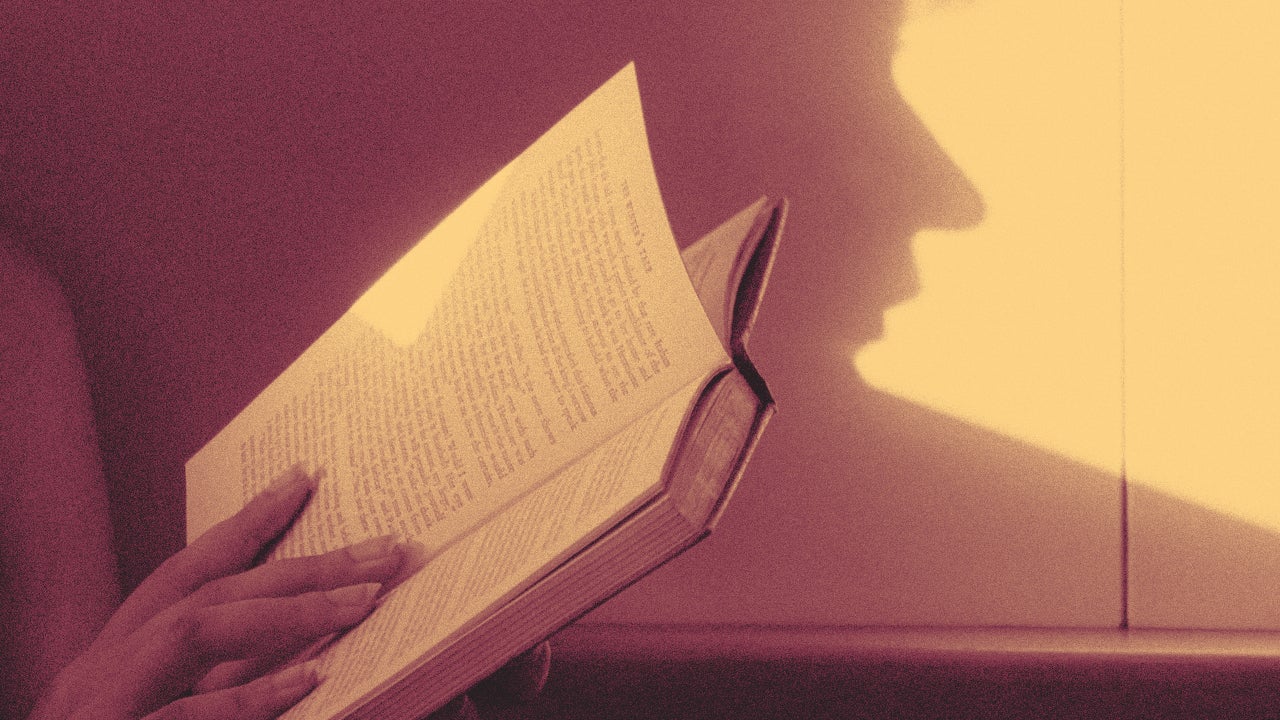
In the age of smartphones, artificial intelligence, and information overload, the act of “deep reading,” or really getting lost in a book, can be difficult to practice.
Nowadays, “brain rot” is rampant: Most of us spend more time than we’d care to admit mindlessly scrolling low-quality content online, with 63% of U.S. adults ages 18 to 29 admitting they are online “almost constantly,” per a 2025 Pew Research Center survey.
This spin through the algorithmic meat grinder often leaves us feeling mentally exhausted. A 2025 study also found “brain rot” content leads to emotional desensitization, cognitive overload, and negative feelings about oneself.
Deep reading, on the other hand, isn’t just passively scrolling whatever our feeds throw at us without scrutiny or pause. It’s slowing down enough to approach what you’re reading in a critical and analytical manner. It’s putting yourself in a character’s shoes, if you’re reading fiction.
It also prioritizes understanding as well as knowledge—which aren’t always interchangeable. Research even shows deep reading is effective at countering misinformation, as well as reducing stress and loneliness.
It was easier for us to do “in prior cultural moments when the most available technology that we had was a printed book,” says JT Torres, professor of educational psychology at Washington and Lee University and director of its center for teaching and learning.
The societal shift to digital reading has been shown to negatively affect kids’ reading comprehension, a 2023 meta-analysis found. “We primarily interact with our smartphones through text,” Torres says. Skimming text, whether it’s on our phones or laptops, is now largely unavoidable. “But we’re not reading as deeply as we used to.”
And the negative effect isn’t limited to simply shrinking our attention spans and rotting our brains. “There is a strong correlation between reading fiction, in particular, and being more understanding of others,” Torres says.
If deep reading increases empathy and compassion for others, the polarizing, siloed nature of digital media does the opposite.
Cognitive ability is cratering
The recent rise of AI and overreliance on tools like ChatGPT has been shown to further erode critical thinking skills. That is the true literacy crisis, according to Torres.
“It has nothing to do with people reading or not reading,” he says. “It has to do with the fact that we are not teaching people how to read critically and evaluatively.”
When skimming a text—useful in instances like quickly checking emails—our eyes move in a zigzag pattern, and our brain processes information differently as a result. This affects our ability to navigate large swaths of information, such as on a social media feed.
“It incentivizes a retreat to the most familiar silos of unchecked information, which require and receive no analysis, leaving us susceptible to false information and demagoguery,” researcher and professor Maryanne Wolf at the University of California, Los Angeles, wrote for The Guardian in 2018.
After years of conditioning our brains in this way, it can be tough to train our attention back beyond a speedy skim. But we are not born with critical thinking skills, per se—these can be built only through practice.
How deep reading helps
For those looking to develop their deep reading skills, Torres recommends first setting goals that don’t have anything to do with quantity or speed.
“The goal should be time spent reading, not how many books can I get through,” he says. “Think more about it as like a mental gym, as exercise.”
Set yourself an hour to read, regardless of whether you get through 5 pages or 50 in that time. It also doesn’t matter what you’re reading—it could be anything from A Court of Thorns and Roses to Anna Karenina.
“In terms of cognitive benefits, reading as a skill to be developed can happen with any text,” Torres says.
Practicing deep reading is giving yourself permission to slow down and savor that text: Taking a pause to reflect on the meaning of a dense passage. Imagining yourself in a character’s situation. Picturing how you’d handle the plot’s central conflict.
These practices can then be applied beyond fiction: Research has shown that pausing for a few extra seconds while reading can reduce susceptibility to misinformation.
“When you’re faced with information—let’s say a Facebook post—you are more likely to transfer some of those habits,” Torres explains. Rather than accepting the claim at face value, a deep reader is more likely to question, fact-check, and cross-reference information.
“I think the most important thing is you’re not just trying to rush to a conclusion or rush to the end of the book,” he says. “That’s the primary benefit that I think deep reading offers.”
Slowing down to savor what you’re reading, be it fiction or non, can have a real medicinal effect on your smartphone-addled brain.
And if you reached this sentence by skimming the article, perhaps go back to the beginning. Slow down, sit with it, and consider what can be gained by spending a few extra minutes with what you’re reading.