
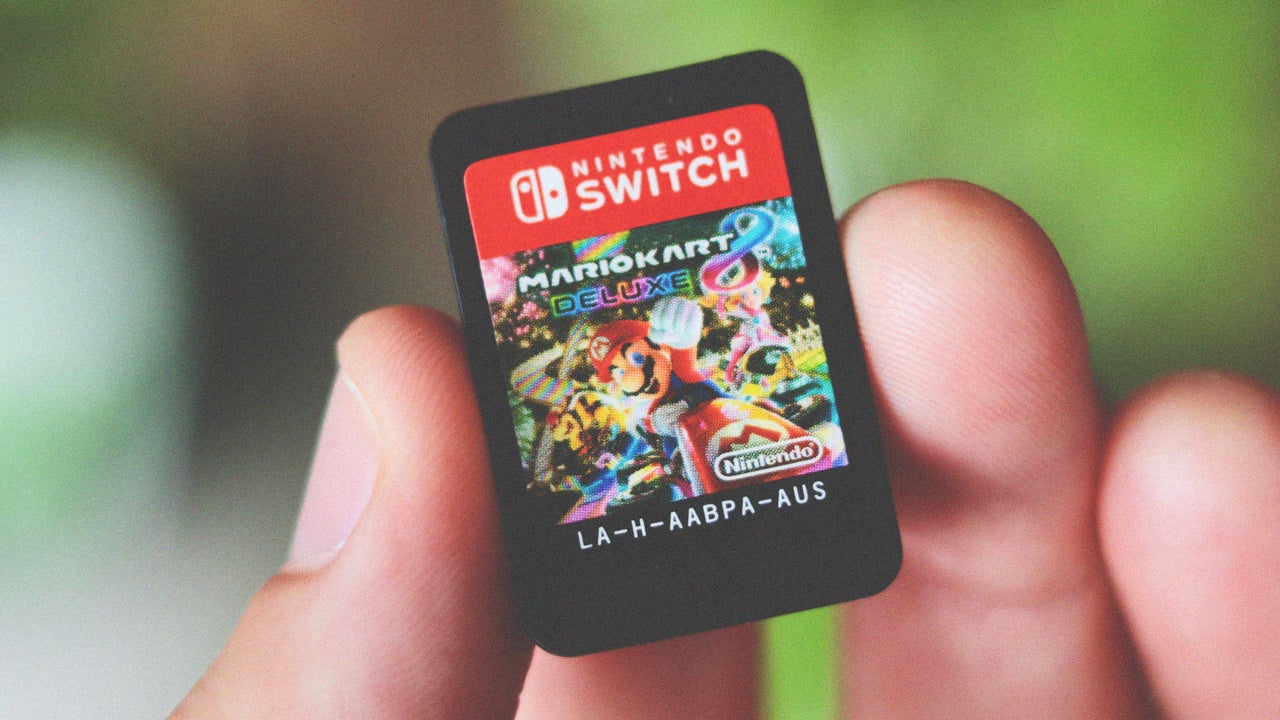
Sony sparked a backlash among gamers with its decision to phase out physical game discs. Now Nintendo is reassuring its customers that it has no plans to follow suit anytime soon.
“We go off what the consumer prefers, and take that into account very heavily,” Bill van Zyll, VP and general manager for Nintendo in Latin America, said in a recent interview. “We also have a platform that was just launched. We’re barely just over a year into [Nintendo Switch 2]. It’s got both digital and physical—that capability. There’s no plans to ditch physical.”
Van Zyll’s comments are more of a reaffirmation than a new policy announcement. But in the current gaming environment, they’re giving Nintendo loyalists reason to breathe a sigh of relief.
Physical game sales have been a hot topic since Sony’s announcement earlier this year. The company plans to stop producing physical discs for all new PlayStation games starting in January 2028. From an economic standpoint, it’s hard to fault the decision. Just 15% of the PlayStation games sold in the fourth quarter of last year were physical copies. And as Sony develops its next-generation hardware, it’s undoubtedly trying to keep costs as low as possible, especially given recent spikes in the prices of memory and processor chips. Jettisoning a physical disc drive could help achieve that goal.
Still, for a company that once championed physical media—even mocking Microsoft’s restrictive game-sharing policies—the move was bound to cause controversy. And Sony made things worse for itself in September, arguing in a legal filing that players who purchase digital games are buying licenses rather than ownership of the games themselves.
Nintendo is hoping to sidestep that controversy, and it’s easy to see why. While Sony gets only a fraction of its software sales from discs, physical games accounted for 38.5% of Nintendo’s total software revenue in the quarter ending June 30.
Van Zyll said Nintendo takes an “agnostic” approach to how games are distributed. Whatever consumers want is fine with the company.
Whether Nintendo will maintain that position in the years to come is less certain. Van Zyll made no long-term commitments. Given how secretive Nintendo is about future hardware plans—often keeping its non-Japanese divisions in the dark during the early stages of development—that’s a promise he likely couldn’t make anyway.
It’s also worth noting Van Zyll’s role. He oversees Latin America, where physical game sales remain particularly strong. In many ways, he was preaching to the choir rather than speaking directly to players in North America and Europe.
And while the Switch 2 accepts game cartridges, those cartridges don’t always contain the games themselves. Many Switch 2 titles, particularly those from third-party publishers, use game-key cards that simply allow players to download the game from Nintendo’s servers. Nintendo’s own major releases generally contain the full game on the cartridge. For game-key cards, though, the preservation risk remains: If the game becomes unavailable to download, the cartridge alone won’t be enough to recover it.
Microsoft, meanwhile, has taken a more middle-of-the-road approach. While it has made no announcements about the future of physical media, the company recently launched a program letting players claim digital access to eligible games they own on disc.
Make no mistake: Digital is the future of game distribution, despite the valid concerns of preservationists and collectors. But after Sony’s PR bungle, other game makers are likely to tread more cautiously with future moves away from discs and cartridges. Companies like Nintendo will also pay close attention to regional demand. As long as that remains strong in important markets, some form of physical media is likely to stick around.