
Data center opposition can foster a bigger Democratic tent by aligning red and blue, and rural and urban communities.
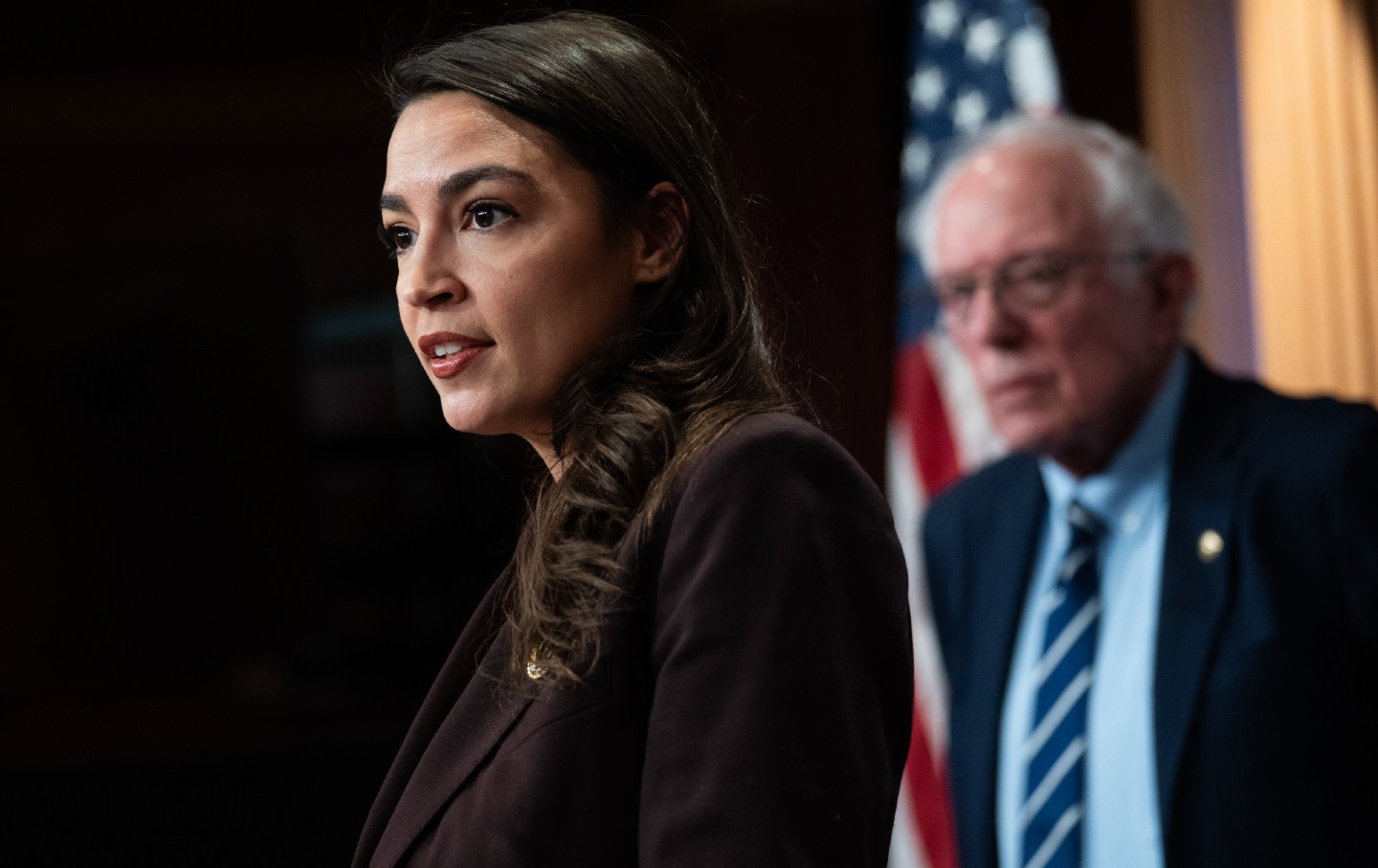
Alexandria Ocasio-Cortez announcing the Artificial Intelligence Data Center Moratorium Act
(Tom Williams / CQ-Roll Call, Inc via Getty Images)
“How about we put one in Mar-a-Lago?” responded Representative Alexandria Ocasio-Cortez (NY-14) with a wry smile when asked about President Trump’s comment that only communities intent on being “backwards and poor” would resist AI data centers.
The remark highlighted a seismic gap between the Trump administration, which is currently seeking to nix public disclosure of data center air pollution, and the American people. While Trump has extolled data centers, 71 percent of Americans—including majorities of Democrats, independents, and Republicans—say they oppose their construction.
Unlike President Trump, progressive Democrats—and in particular, 2028 presidential hopefuls—have recognized the backlash to data centers as a critical opportunity to mobilize voters across a broad political spectrum and address local communities’ mounting concerns about affordability, health, and environmental protection. Yet they have espoused different and seemingly competing visions for action. Two congressional proposals in particular, a bill by New York’s Ocasio-Cortez and a resolution by California Representative Ro Khanna, offer alternative visions for data center policy and raise crucial questions, not only about which path will better serve communities’ needs but also about which vision will prove most attractive to voters.
The race to implement data center policy comes amid a data center boom, driven by soaring investment in AI technologies as tools like ChatGPT become an increasingly normal facet of daily life. Already, the US is home to over 4,700 data centers, including operational sites and ones under development. While the existing majority are in urban communities, most new ones are being planned in rural areas. These new data centers, which provide AI computing power, are often pitched with the promise of accelerating economic growth and creating local jobs.
Yet the facilities come with sizable hidden costs. They consume significant energy in a still heavily fossil fuel–reliant grid, fueling the climate crisis. Data centers are projected to account for 9.5 percent to 15.3 percent of total US electricity use by 2030. Efforts to meet their insatiable energy appetite are driving a surge in proposed new natural gas plants, threatening to lock in a dependence on fossil fuels that the world must end to avert more catastrophic planetary warming. This build-out also risks profound consequences for public health, as hundreds of former EPA members have warned. One study found that US data center emissions could contribute to approximately 600,000 asthma cases and 1,300 deaths in 2028. Communities have also voiced concerns about rising electricity bills from data center energy use, especially during an ongoing affordability crisis. Data centers have further faced public scrutiny for requiring copious amounts of water for cooling—with large ones consuming up to 5 million gallons per day—which puts pressure on local water supplies and for generating noise pollution. Backlash to Elon Musk’s xAI Colossus data center complex has also illustrated concerns about AI data centers’ burdening marginalized communities and developers’ circumventing regulatory requirements.
The barrage of AI data center impacts has spurred a new wellspring of Democratic organizing, including by youth activists. Young people have challenged planned data centers in California, Colorado, Virginia, Texas, and Alaska. In Calcasieu Parish, Louisiana, Madalynn McGuire, a freshman at the University of Louisiana at Lafayette and an organizer with the environmental justice organization Vessel Project of Louisiana, is working to raise local awareness, especially among her peers, around proposed data centers. “They’re supposed to be futuristic…. that’s what they market it as,” but “they are relying on 19th-century energy sources,” said McGuire, who also called for young people to have a “seat at the table” in conversations about AI data center development and noted that the electoral power of young people should not be underestimated.
Current Issue

Such activism and public backlash have made data centers a high-profile issue in the 2026 midterm elections, attracting attention from Democratic and Republican candidates alike. According to an analysis by NPR, midterm campaigns and outside organizations spent over $45 million on ads mentioning data centers between January and August 2026. In a fiercely contested Michigan Senate race, Republican Mike Rogers shifted from supporting data center development to calling for a pause, aligning with progressive Democratic challenger Abdul El-Sayed and breaking from President Trump, who recently faced backlash on Truth Social for glorifying AI and data centers.
Yet even as candidates amplify calls for data centers to be accountable to communities, what that accountability should look like remains unclear. Proposals by Ocasio-Cortez and Khanna, both prominent Democratic House representatives with progressive and environmental bona fides, exemplify two broader possible responses to voters’ demands. In many ways, their proposals mirror two strands of public opinion emerging from polling. According to The New York Times, 61 percent of voters oppose the construction of AI data centers. Among those opposed, 38 percent supported a complete ban on data center construction, while 56 percent supported limits and regulations around data center construction instead. And they implicate larger questions about whether data center development should proceed at all in the absence of robust legislative safeguards and what such safeguards should entail.
Ocasio-Cortez, who is widely seen as the natural successor to Senator Bernie Sanders and expected to launch a presidential run in 2028, has called to halt data center development. In June, she introduced the Artificial Intelligence (AI) Data Center Moratorium Act in the House of Representatives, following a joint proposal for such legislation in March with Sanders, who sponsored the Senate version. The bill would enact a temporary moratorium on the construction of data centers and the expansion of existing ones until there is federal legislation to ensure AI safety and fair distribution of AI-generated wealth. Proposed safeguards include allowing affected communities to approve or reject AI data center development, promoting the creation of union jobs, and ensuring that data centers do not increase consumers’ utility or electricity bills, exacerbate climate change, or cause environmental harm.
The Data Center Bill of Rights resolution introduced in early August by Khanna, who floated a possible presidential run in conversation with NPR roughly a week later, instead would allow communities to choose whether to have data centers. The resolution, which is legally nonbinding, outlines 10 rights for affected communities, including the ability to ban data centers in residential areas and reject development proposals through a “transparency community process.” How this process would work is unclear, though Khanna has emphasized that data center developers would have to “make the case” to communities. The resolution also establishes rights to preserve local governments’ ability to regulate this development, require “enforceable community benefit agreements,” and enact statewide pauses on new construction until the adoption of sufficiently protective state legislation.
Ryan O’Donnell, executive director of Data for Progress, said both proposals addressed core public concerns. Data for Progress has found that a majority of voters (63 percent) support a moratorium on new AI data center construction for at least one year, aligning with the Ocasio-Cortez proposal. While it has not polled directly about Khanna’s resolution, “a lot of it maps on perfectly to what voters are telling us,” said O’Donnell, adding that “more clean power, more community benefits” were common desires among voters.
Indeed, a significant majority of Americans (73 percent) support requiring new data centers to offset their electricity use by supporting local households with rooftop solar installations or energy efficiency upgrades.
For Will Lawrence, a Democratic candidate for the House in Michigan, any data center policymaking framework must ask, “What would it take to arrive at a place where people actually trust that the benefits of this new technology will be shared, rather than merely making the rich and powerful even richer and more powerful?” Lawrence, who has made opposition to data centers and criticism of Big Tech money in politics a mainstay of his campaign, recently announced his plan for a federal moratorium and a “National AI Compact.” Although his proposal overlaps with that of Ocasio-Cortez, he also saw “a lot of good specifics…that could be part of an AI benefits compact” in Khanna’s resolution.
Popular
“swipe left below to view more authors”Swipe →
While the political feasibility of current national proposals may turn on the midterm elections, it is clear that data center policy presents an opening for mobilizing voters beyond traditional Democratic strongholds. Multiple analysts have highlighted how data center opposition can create “strange bedfellows”—aligning red and blue, and rural and urban communities—thus fostering a bigger Democratic tent. “I hope we all see [this moment] as an opportunity to build new alliances with unexpected allies” instead of one “to repolarize along existing partisan or ideological lines,” said Lawrence.
“We want to see whether or not Democrats are going to be able to prove to the American public that they should be the ones trusted on this issue, especially going into 2028,” said O’Donnell. Given Trump’s rhetoric, “they should be winning this fight, and they’re not. That says a lot.”
Polling from The New York Times reveals that more likely voters trust the Republican Party (42 percent) slightly more than the Democratic Party (40 percent) to handle AI data centers. “What we see is that the very people that [Democrats] need to win back are the people that are most unfavorable of AI broadly,” said O’Donnell, adding that voters will look “to see whether or not politicians are fighting for them, or if they’re fighting on behalf of tech and the corporations.”
“People are gravitating towards the public official that is willing to stand up to these large corporations that are extracting so much from communities,” said Steven Renderos, executive director of the racial justice organization Media Justice. In his work, Renderos has seen numerous examples of AI data centers’ creating “unique coalitions” that transcend traditional political divides. Rather than betting on a certain political party, for many affected community members, “it’s really about who will stand with the community and who won’t,” he said.
Ultimately, whether Democrats can define themselves as leaders of the opposition to data centers remains to be seen. The midterms may provide crucial insight into which ideas resonate the most with voters, providing a road map for 2028 presidential hopefuls. “I think data centers will be a very critical issue in this election,” said Renderos. For him, the larger question is to what degree anti-data center organizers “can carry [the] momentum forward to ensure that this issue stays top of mind for voters and for future politicians that may be running for office in a couple of years.”
More from The Nation

Corporate leaders say they should be shielded from congressional inquiries because they had no alternative but to collaborate with the Trump administration. History says otherwise…
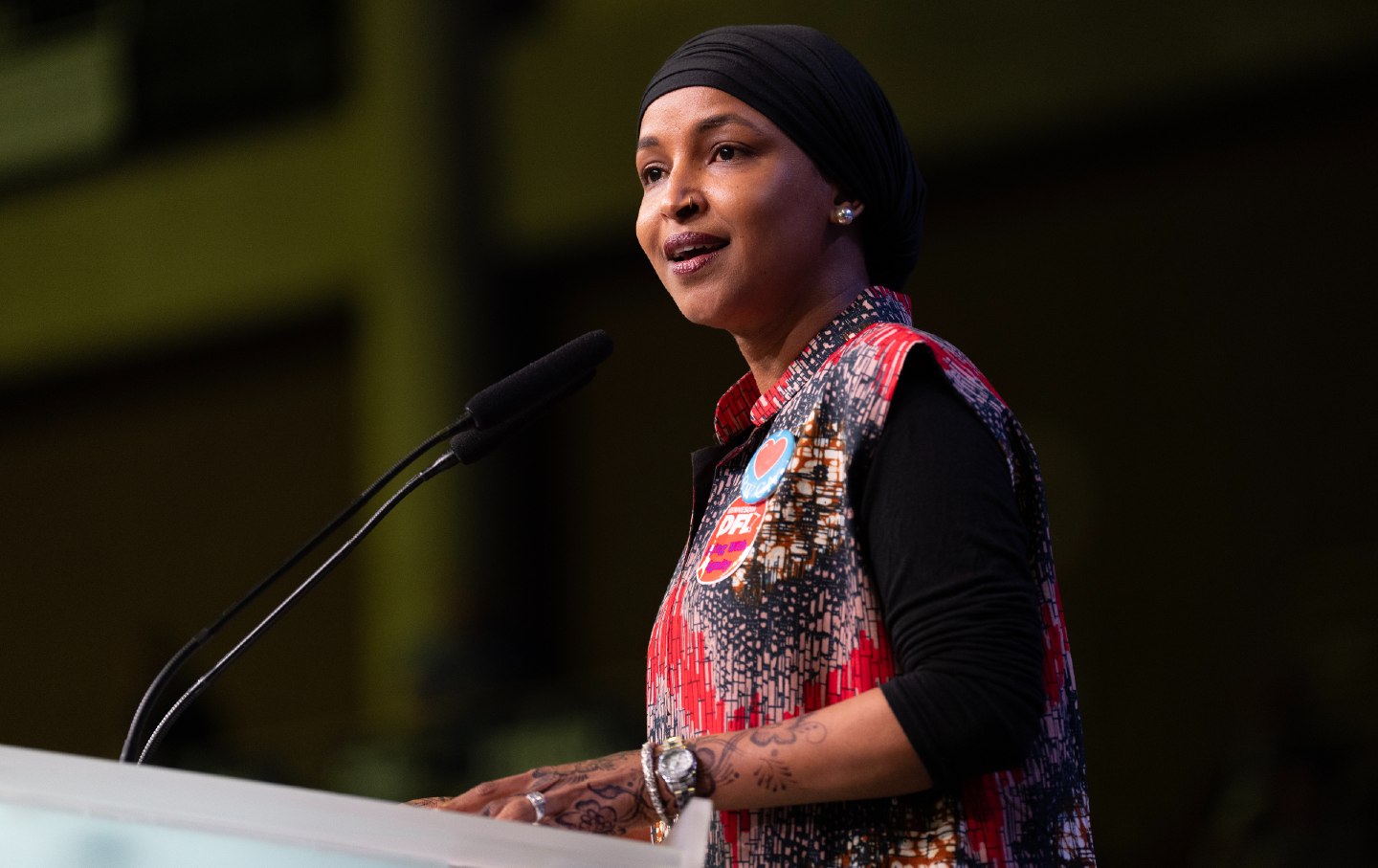
Minnesotans say the raid on Omar’s home was all about politics. They also argue that it will backfire and generate boosted turnout for DFL candidates.
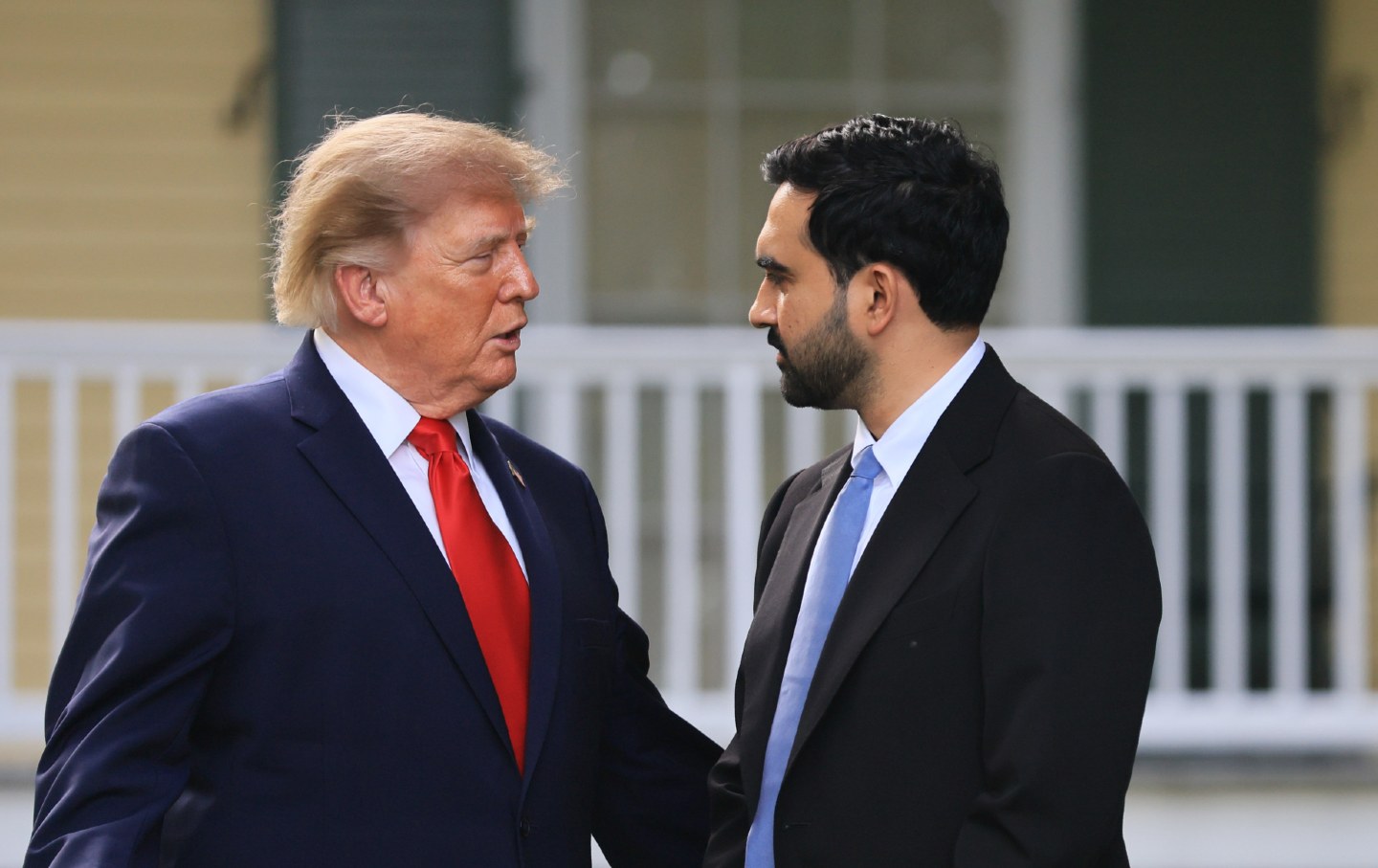
After a federal agent shot an immigrant in New York, activists are questioning Mamdani’s handling of the NYPD and his relationship with the White House.
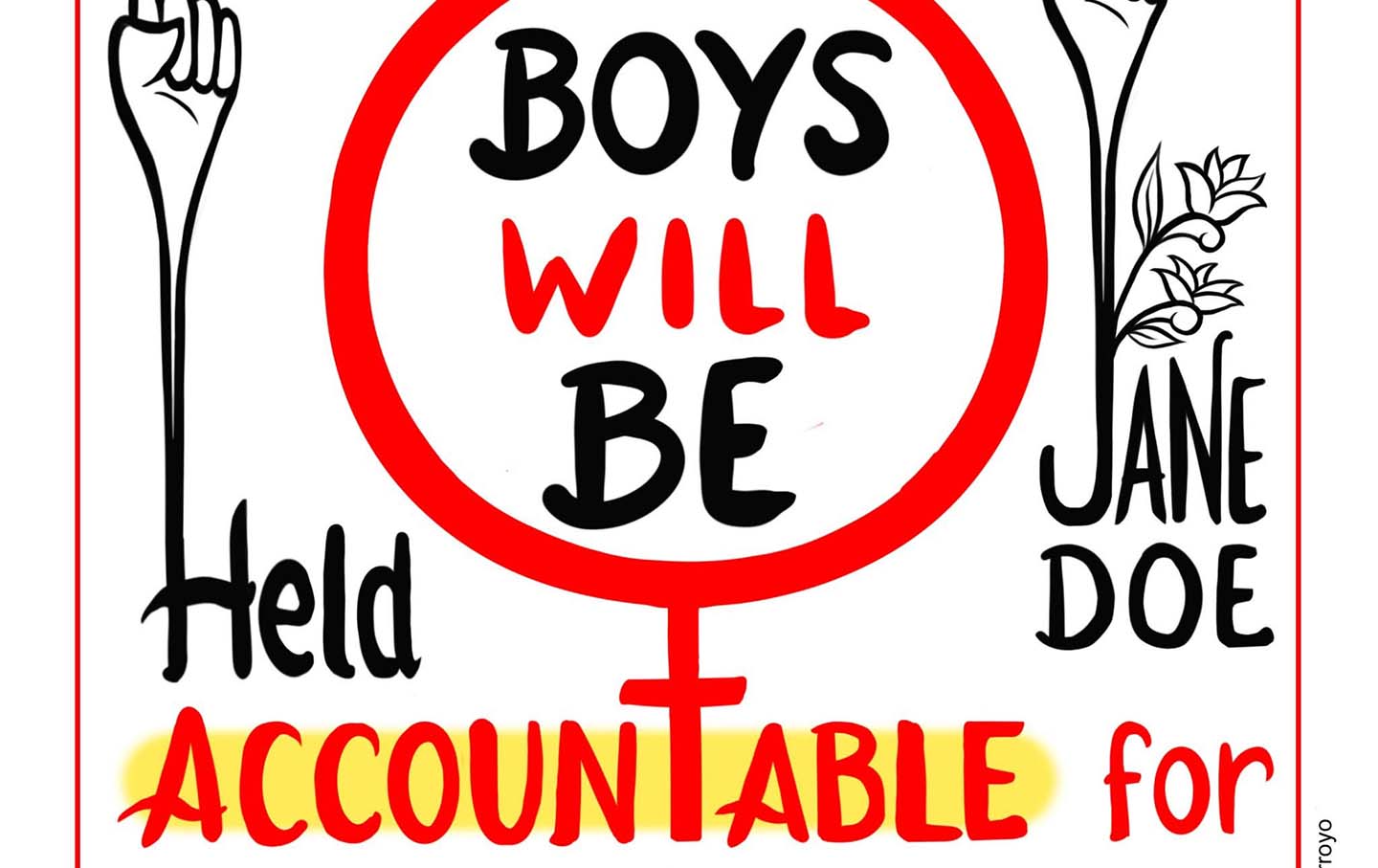
Allegations of gang rape and sex trafficking at Cornell University highlight persistent concerns about rape culture, even years after the #MeToo movement.