
On a field in Frayser, Tennessee, a neighborhood on the north side of Memphis, designers from the regional firm Archimania sought a clever solution for the Girls Inc. Youth Farm, a nonprofit operating an agriculture center that served as a teaching center and a hub for youth development
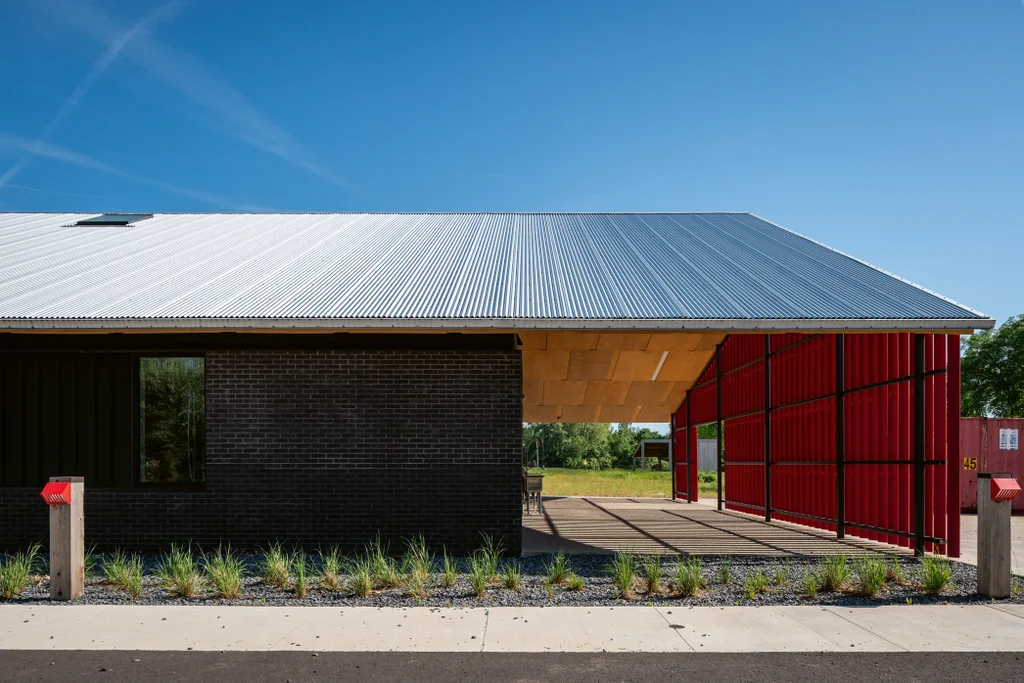
Firm founder Todd Walker can spin many narratives about how projects connect to the region. There’s the urban-rural connection in Memphis, the history of hardwood construction, and the cultural nexus created by the Mississippi River. But in seeking to design a project that stretched the budget of this local institution and best served the multifaceted mission of the client—offering large spaces for classrooms and gathering students, serving the site and landscape, and providing ample shading—the building took a certain familiar shape. The award-winning project, capped with red wood slats, covered in sheet metal roofing, ended up referencing the poultry barns that dot the surrounding area.
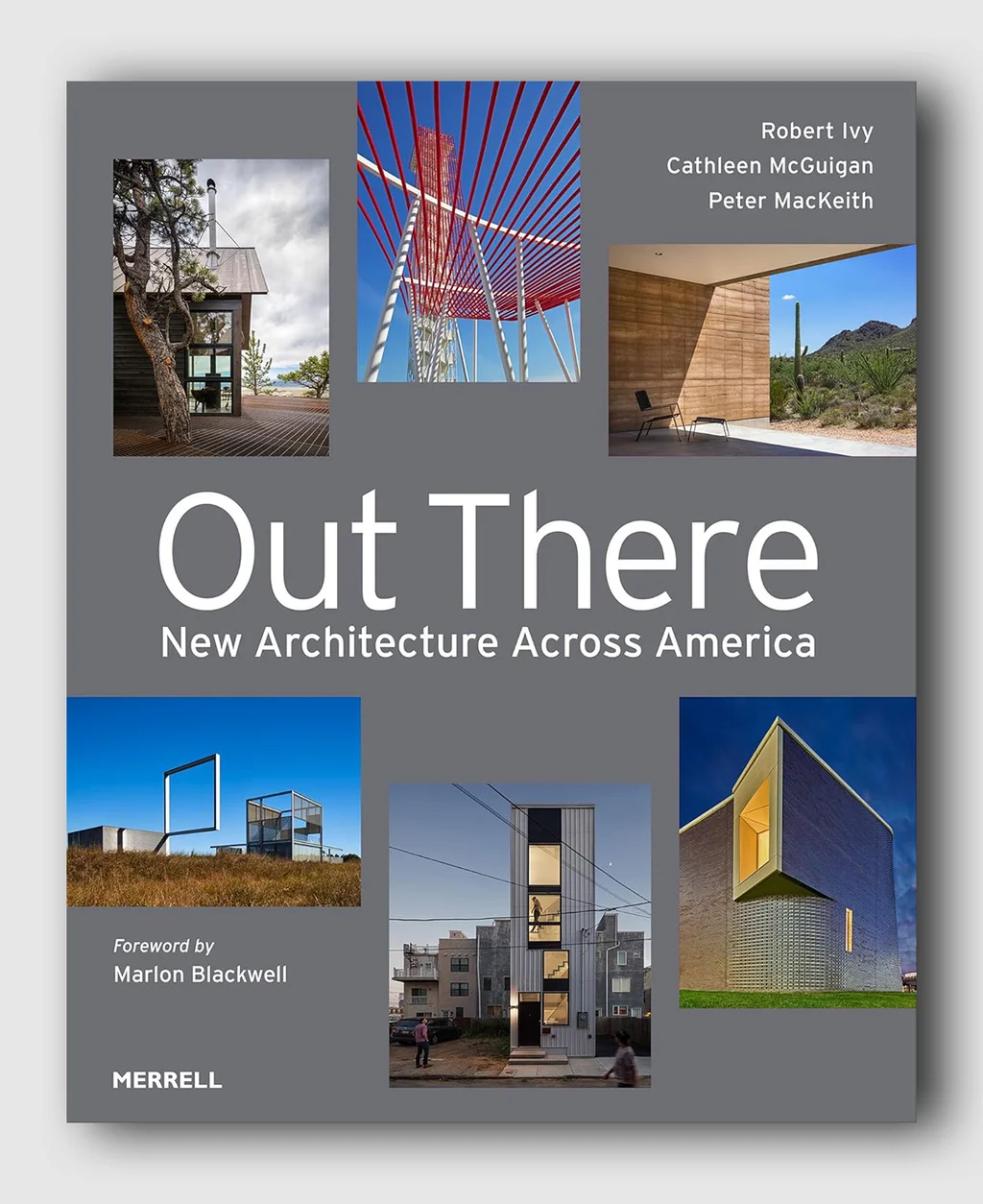
A new book, Out There: New Architecture Across America, makes the case that when it comes to evolving forms and styles in American architecture, a new generation of firms is drawing inspiration from not just place and local architectural heritage, but the place a building like the Girls Inc. Youth Farm will play in the community. And along with an increased focus on resourcefulness, and material experimentation ranging from rammed earth to bamboo, it underscores how impact comes in many sizes. Out There offers a compendium of case studies on how relatively tiny projects can have massive ripples in unexpected, or underpopulated, areas.
Collecting project highlights from 50 architectural firms, the book focuses on practices from regional cities and small towns. Often, this means firms playing with varied building types, from residential work in isolated landscapes to hybrid buildings for clients focused on civic, social, and environmental causes.
The book’s authors—Peter MacKeith, dean at the architecture school at the University of Arkansas, Robert Ivy, formerly the CEO of the AIA and editor of Architectural Record, and Cathleen McGuigan, another former editor of Architectural Record—sought out architects who were often physically (and definitely creatively) out there, but also rooted in local community. The title refers to a famous 2001 Architectural Record issue with the same title that was published during Ivy’s tenure. It was, as MacKeith suggested, an attempt to answer the question, “what is in fact American architecture at this particular point in time?”
It’s always a tricky balancing act to pull unifying trends from the work of dozens of disparate firms—the housing projects alone ranged from cabins in remote hillsides to the colorful, Tokyo-meets-Mid-Atlantic urban homes of Bright Common Architecture & Design. But there were some through lines that connected many of the featured projects.
The economic realities of working as an architect today—the AIA found that billing has declined for 25 straight quarters, and renovation work recently overtook new buildings as the primary source of work—have created a certain resourcefulness, with reliance on adaptive reuse and local building forms as influences.
“It’s a generalization, but the architects in this book are not overburdened by large budgets,” said Ivy.
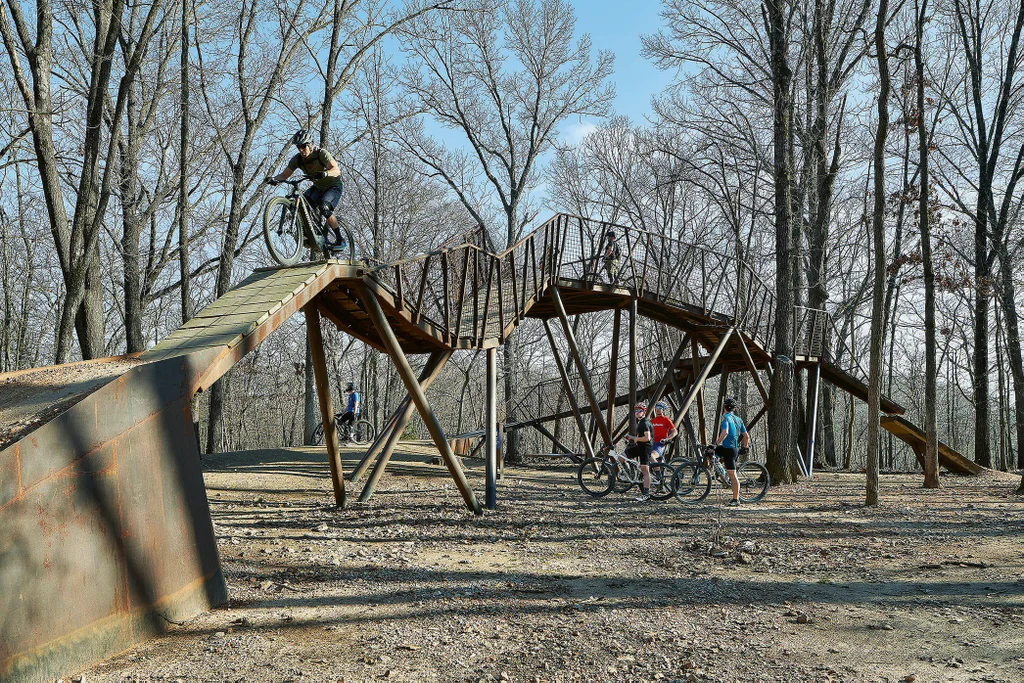
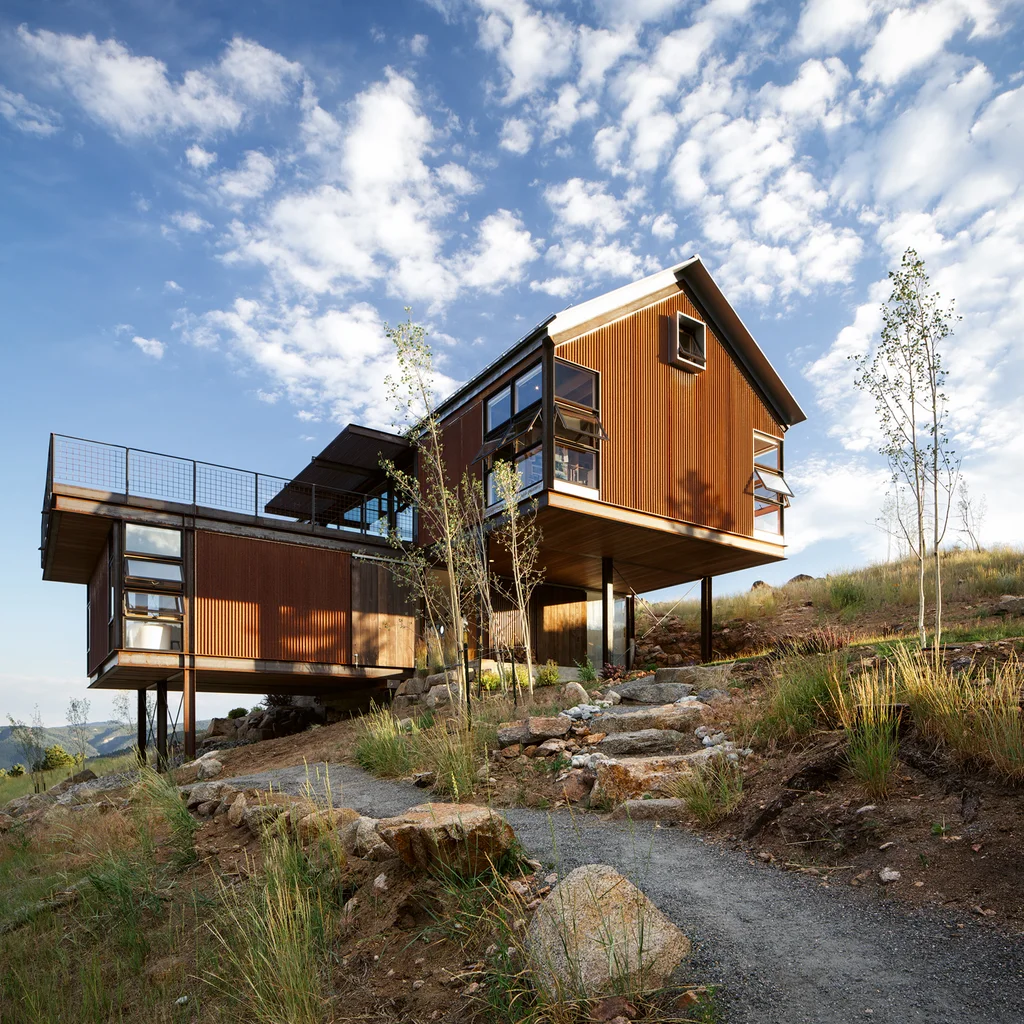
That may explain why the one form that reappears throughout the manuscript, on projects ranging from Modus Studio’s Coler Mountain Bike Preserve to the Sunshine Canyon House by Renee del Gaudio, is the barn. While it may sound stereotypical and reductive to focus on a cliche of rural architecture, the repeated references to this building type have more to do with matters of economics and efficiency. As architect Marlon Blackwell notes in his forward, it’s about re-presentation, taking local conditions and thinking about them in new ways.
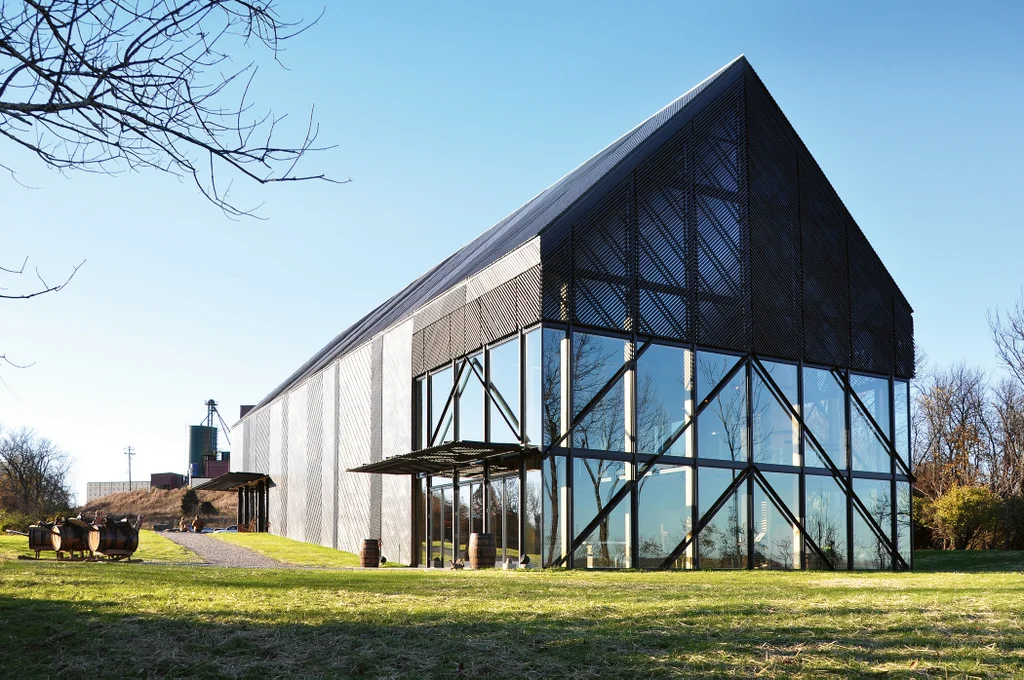
“It really is the maximum square footage that you can cover and enclosed with the minimum amount of materials in the absolute minimum amount of labor,” said Ross Primmer, cofounder and principal of De Leon + Primmer, a Louisville-based firm highlighted in the book. Their Visitor Center project for Wild Turkey Bourbon in Lawrenceburg, Kentucky, a black barn silhouette made from stained wooden chevrons, was inspired by the tobacco farm found through the region.
“It’s not some cliched nod to rural America,” he said. “We don’t treat it as a shape that replicates itself, we actually treat it as a building method.”
His partner, Roberto De Leon, said that utilizing that kind of building method and approach not only tapped into local materials and construction knowledge, but was able to deliver a quality project at a price nonprofits and small communities could afford. It’s important to maximize what those communities can get out of a product, which is why one of the studio mottos is “innovation necessarily equals economy.”
Out There is filled with these kinds of small, exceptional sites that, in a rural context or on a small main street, become anchors and community hubs. Cunningham Architects surgically cut out sections of a rusted two-story car dealership in Dallas, Texas, refashioning the beams and concrete into a new house of worship for All Saints Church. Johnsen Schmaling Architects created a striking art studio at the end of a dilapidated street in downtown Racine, Wisconsin, a small collection of glass jewel boxes that energized a moribund Midwestern block. And in Lincoln, Nebraska, Actual Architecture, in partnership with PLAIN Designbuild, renovated a plain, late 19th-century church, turning a modest house of worship into the Art Chapel community center.
Like so many projects in the books, these examples offered clever, concise, and community-oriented projects that were conscious of a low budget. Their impact far exceeded their square footage and cost. Vernacular architecture can be a loaded word, and tricky to define, said MacKeith. But in these cases, he felt it was more about a set of principles than an aesthetic formula.
“These projects were about producing very good, even great architecture with resourcefulness and attentiveness to local communities,” he said.