
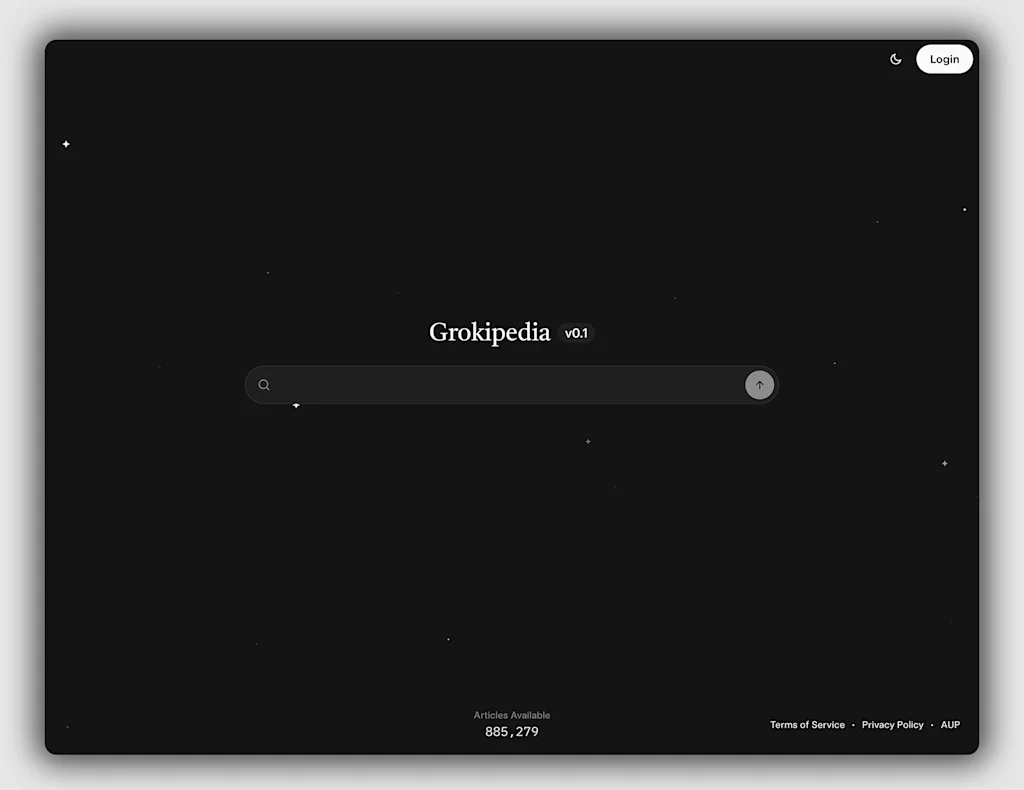
Elon Musk is the kind of entrepreneur who likes to have an enemy as motivation—traditional carmakers, the mainstream media, the “deep state.” His newest undertaking, launched October 27, is no exception: Grokipedia is positioned as an alternative to Wikipedia, which Musk claims is biased and “woke.” A product of Musk’s artificial intelligence company xAI, Grokipedia’s inner workings are unclear, but the pitch is that it’s an AI-generated compendium of what Musk calls “truth, the whole truth, and nothing but the truth.”
One major factor that makes Grokipedia different from Musk’s other rival-fueled enterprises is that Wikipedia is quite popular, well-liked, and widely trusted. There’s no substantial burgeoning dissatisfaction with or opposition to Wikipedia fueling demand for an alternative. To the contrary, in the world of mass-market information, it’s one of the strongest brands out there.
This wasn’t always the case. Founded in 2001, Wikipedia’s crowdsourced alternative to a traditional encyclopedia was treated with skepticism for its first decade or so, as consumers weighed the merits of formal expertise against what came to be called crowdsourcing. But by the mid-2010s, its trust grew even as long-established information brands struggled.
For example, in a YouGov survey in the U.K., 64% of respondents said they trust Wikipedia “a great deal” or “a fair amount,” beating out the likes of the BBC and The Times; a five-country survey in 2019 found trust of Wikipedia at 78% or better. For techno-optimists, Wikipedia was touted as a portent of the internet’s utopian work-together future. In a world where top-down information “gatekeepers” were no longer trusted, Wikipedia attained a Web-era version of gravitas, a crowdsourced Walter Cronkite.
That vision was replaced by the divisive realities of social media, but Wikipedia has hung on, remaining one of the world’s most popular sites, recognized as one of the great collective efforts of humanity, built on a robust internal debate structure from thousands upon thousands of individual contributors all around the world.
Prior to Grokipedia’s launch, Wikipedia cofounder Jimmy Wales spoke to The New York Times about his new book, which “tries to apply the lessons of Wikipedia’s success to our increasingly partisan, trust-depleted world.” On the subject of Musk, Wales shrugged: “We’ll be here in a hundred years and he won’t. As long as we stay Wikipedia, people will still love us.”
The truth is that the rise of AI more generally could pose a threat to Wikipedia: AI summaries in Google searches are already said to be cutting into Wikipedia traffic, and that could impact the combination of donations and volunteers that keep the effort afloat.
But as for Grokipedia itself, the site is off to a rocky start. Wired found that it “pushes far-right talking points” on gender and other issues. The Atlantic noted that the entry for Musk himself left out reference to his apparently pro-apartheid grandfather, but did note that he’d lost 20 pounds. Some found that Grokipedia had, in multiple cases, simply rehashed its rival’s entries, and others just saw it as a bland knockoff, the exact opposite of Wikipedia’s human touch and originality.
(Musk’s xAI has not been transparent about exactly how entries are chosen or assembled, but reports suggest they appear to be generated by some iteration of its Grok chatbot, seemingly working off Wikipedia entries in at least some cases.)
But even Cronkite had skeptics, so of course Wikipedia does, too. Musk’s complaints about the online encyclopedia (specifically his own entry) fall in line with a wider conservative line of attack. These critics insist that Wikipedia has “systemic ideological biases—particularly a left-leaning slant in coverage of political figures and topics.” (Or at least that’s what Grokipedia says.)
In a war of credibility, Wikipedia has become a formidable opponent, maybe especially to Musk. “For many people, their level of trust in Elon Musk is extremely low because he says wild things all the time,” Wales told The Times. “When he attacks us, people donate more money.”