
Close Menu
    Facebook X (Twitter) Instagram
    TRENDING :
    • Russia’s Last Independent Newspaper Is Going Dark
    • These Soviet anti-drinking PSAs show a different side of Russian propaganda
    • Colts Trade Deadline Watch: Targets, Rumors and Latest Buzz
    • How the New Urbanism took on sprawl and won
    • Zane Gonzalez Nails Three Field Goals in Loss
    • 5 signs you are not going to be made obsolete by AI
    • Swift Held in Check by Buccaneers Defense
    • Norris Wins Wet Brazilian GP as Mercedes Clinch Constructors’ Title
    Populist Bulletin
    • Home
    • US Politics
    • World Politics
    • Economy
    • Business
    • Headline News
    Populist Bulletin
    Home»Business»These Soviet anti-drinking PSAs show a different side of Russian propaganda
    Business 4 Mins Read

    These Soviet anti-drinking PSAs show a different side of Russian propaganda

    Business 4 Mins Read
    Share Facebook Twitter Pinterest LinkedIn Tumblr Telegram Email Copy Link
    Follow Us
    Google News Flipboard
    Share
    Facebook Twitter LinkedIn Pinterest Email


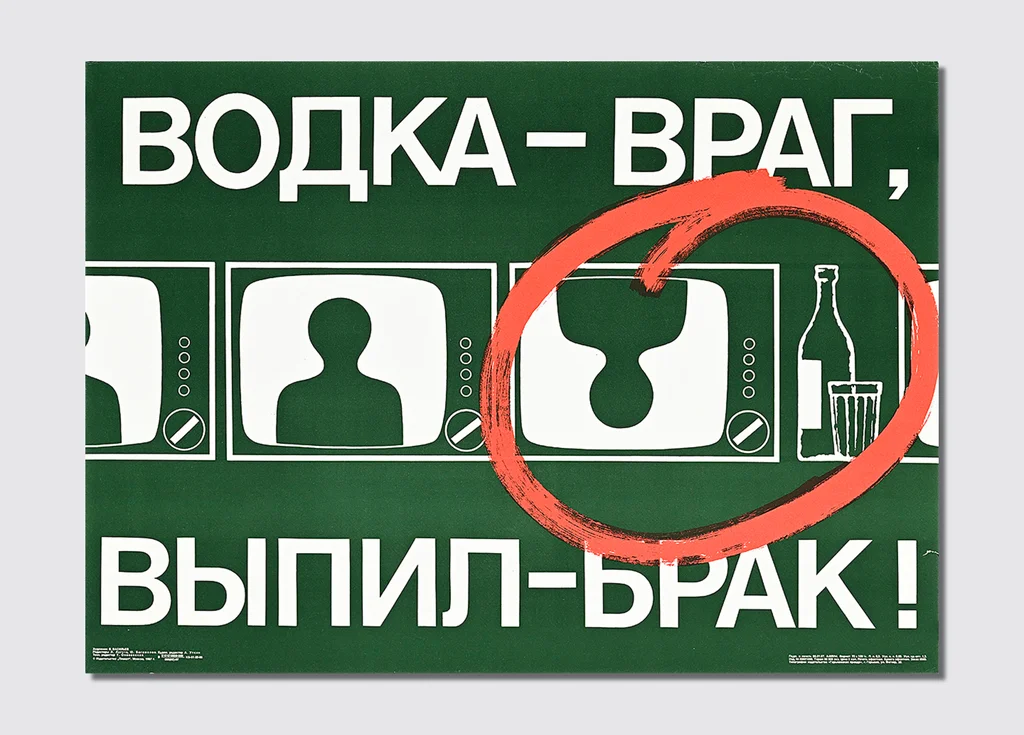
    In the final years of Soviet Union, the government tried curbing drinking with public service announcements that visualized alcohol as death. A new exhibition called Just Say Nyet collects the best of them from the late 1980s that looks a little different than what you might first think of when it comes to Soviet propaganda.

    Curated by B.A. Van Sise, the exhibition runs from November 12 to April 11, 2027 at Poster House in New York City. This work shows a visual style distinct from the early-20th century Russian constructivist style of big, bold, blocky typography paired with grids and diagonals, or socialist realism, a style associated with mid-20th century Soviet propaganda showing images of people working together in solidarity or depicting the work of the individual as for the good of the whole.

    [Image: Courtesy Poster House]

    The look of Soviet public health PSAs in the 1980s involves simple symbols like alcohol bottles and labels that are centered in the messaging. The idea is to make visual metaphors about why drinking is deadly as minimal and easy to understand as possible.

    “It echoes, in many ways, all the other efforts happening in the waning days of the Soviet Union,” Van Sise tells Fast Company, which he describes as a “humanist view of the problem,” for lack of a better term, because it “focused more on individual health and wealth rather than a person’s value to the state.”

    This more humanist approach to government propaganda can also been seen in other antidrug and morality PSAs of the ’80s.

    “What’s different here is that you see the concept move from stick to carrot,” Van Sise says.

    The work doesn’t depict alcoholism as a drag on the wider society; it asks viewers to consider why quitting drinking is better for them. The message is individualistic, not collectivist. The artist behind one poster called “Don’t Lose Face” replaced a young person’s face with an alcohol bottle as a warning that drinking could cost them their personal identity.
    [Image: Courtesy Poster House]

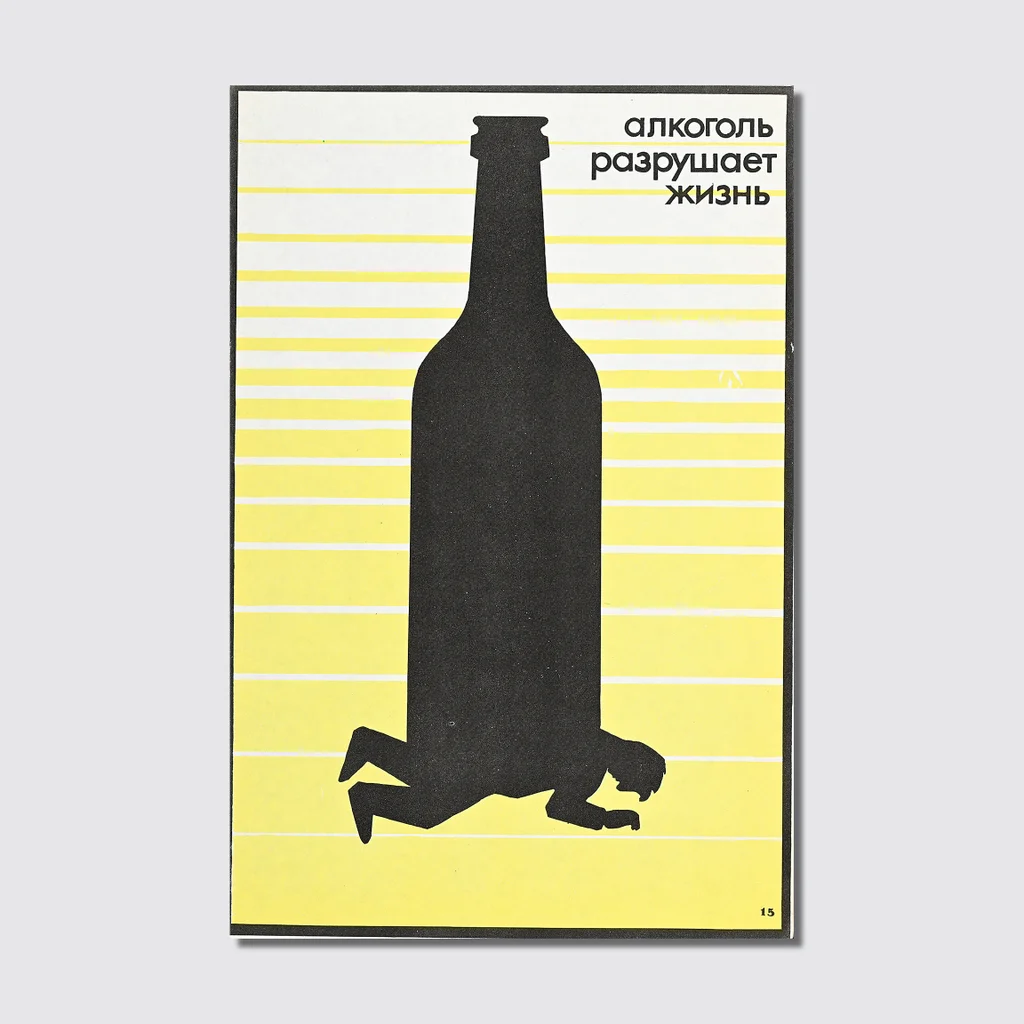
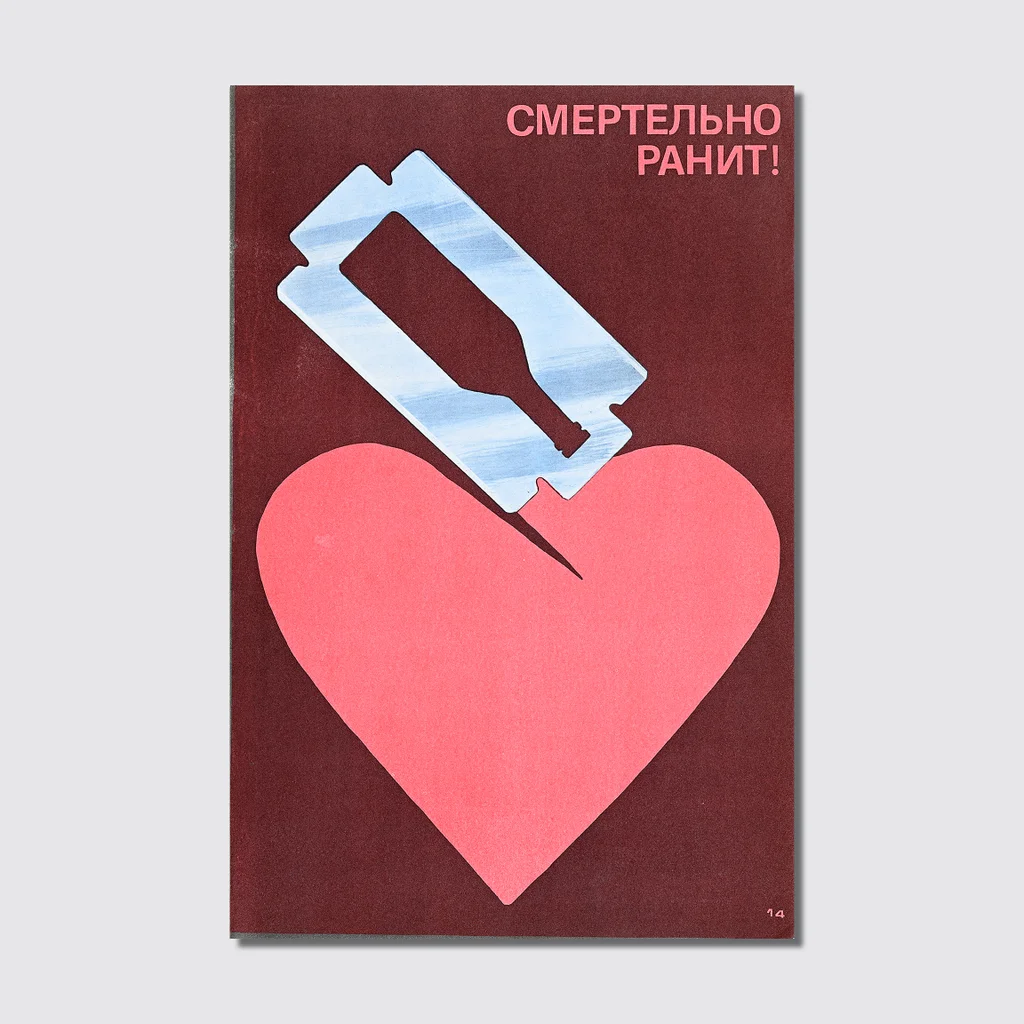
    The exhibition also includes work like “Alcohol Destroys Life,” a 1989 poster that shows a bottle crushing a man, and “Lethally Harmful” from the same year, depicting a bottle shape inside a razor blade cutting into a heart shape. The message is that alcohol kills.
    [Image: Courtesy Poster House]

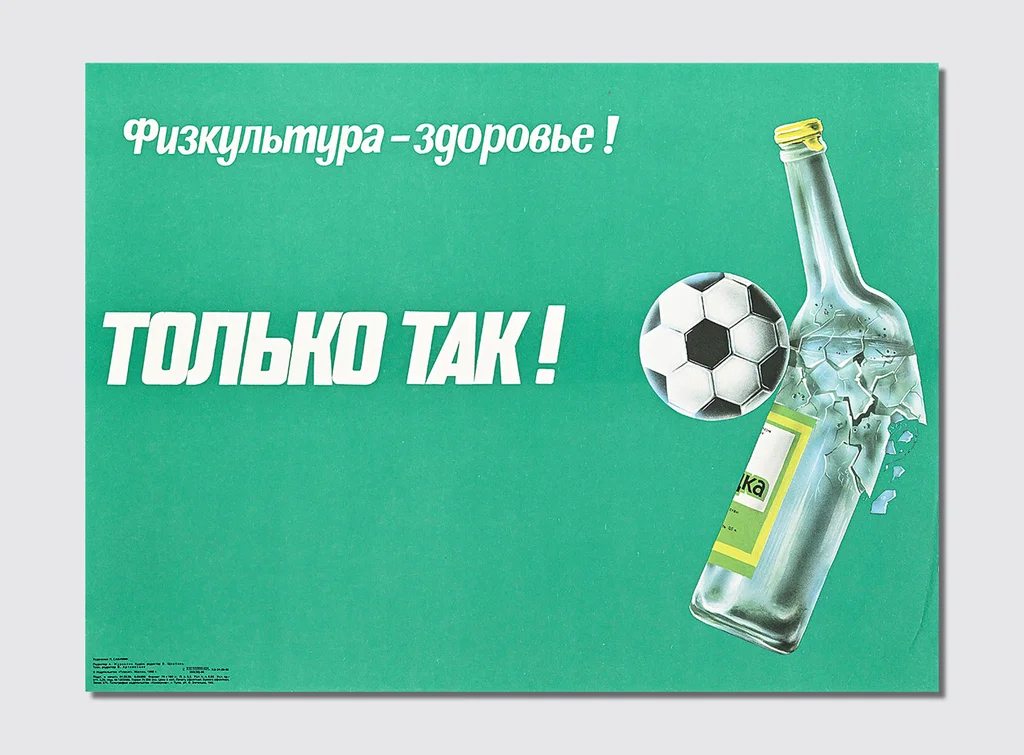
    “Physical Education is Health! That’s the Only Way!” from 1988 shows a soccer ball smashing a bottle of vodka, while “Alcohol is the Enemy of Life,” by the designers Sergei Bulkin and Evgeniya Mikheeva, the team that also designed the razor blade and heart poster, uses the label from a bottle as a sheet draped over a dead body on an autopsy table.
    [Image: Courtesy Poster House]

    The Soviet government launched the anti-drinking campaign in May 1985 as the most serious state-sanctioned effort to curb alcoholism since prohibition during World War I. The truth was, the country had a long-running drinking problem.
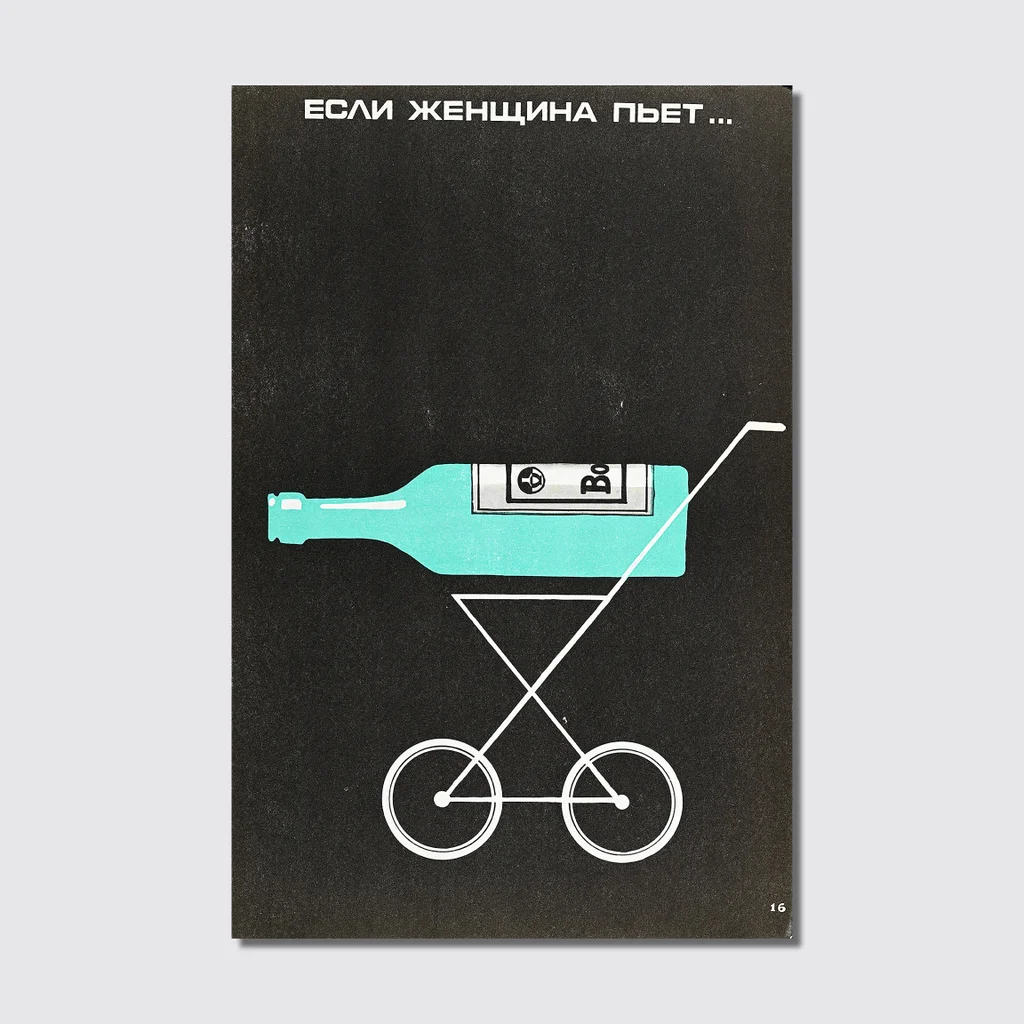
    [Image: Courtesy Poster House]

    By 1986, per capita alcohol consumption in the USSR had doubled over 30 years, the CIA estimated at the time. The agency blamed rising alcoholism there on factors like societal stresses and a low quality of life, and said it contributed to problems like industrial accidents, worker absenteeism, violent crimes, and declining life expectancy.
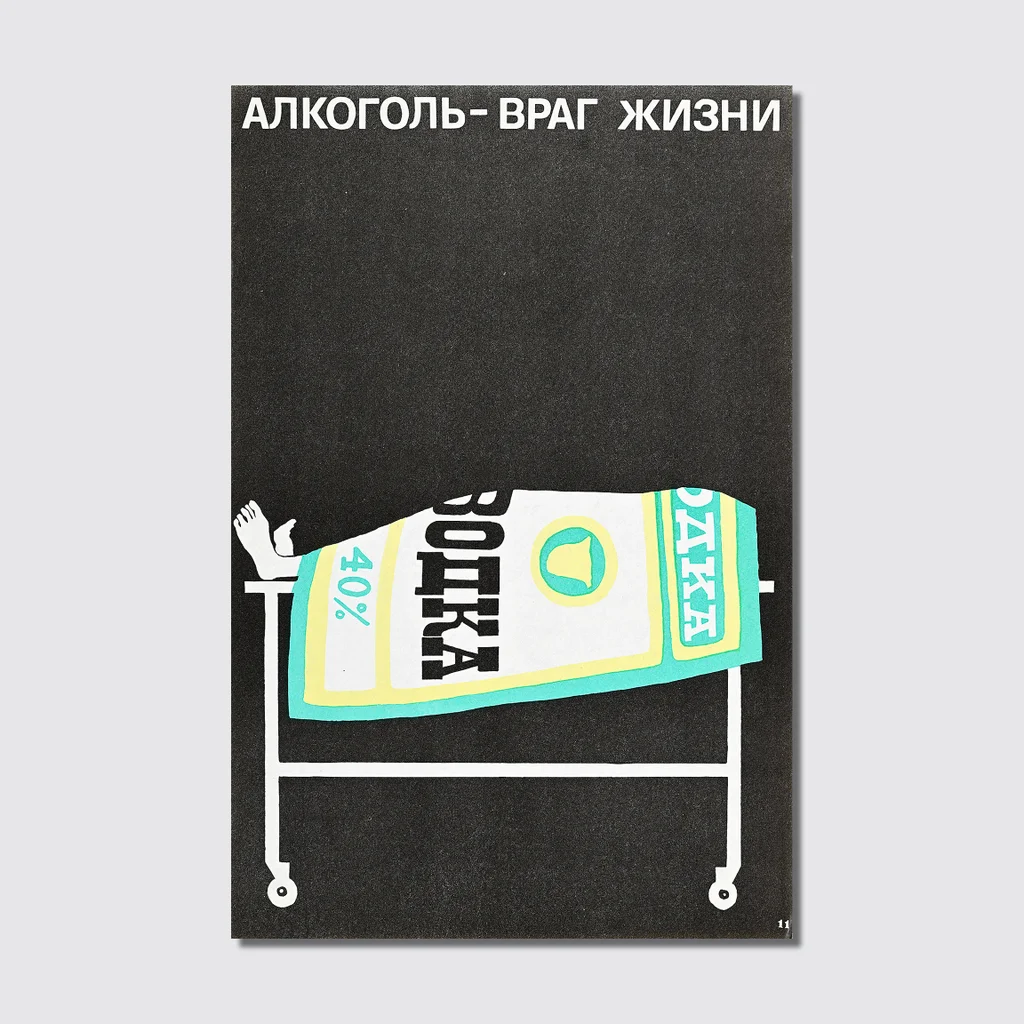
    [Image: Courtesy Poster House]

    By 1985, the Soviet government enacted stricter rules around alcohol consumption and sale, and cut back on state production of alcohol while launching the PSA campaign. The campaign ultimately wasn’t successful, however. It failed for the same reason the U.S. ended Prohibition during the Great Depression and a French sobriety campaign in the 1950s and ’60s floundered: A lot of people drink to make the world hurt a little less for them, and that can’t be conquered with sloganeering.

    [Image: Courtesy Poster House]

    “People like a drink. Some people need a drink,” Van Sise says. “Americans made liquor illegal, the French made it questionable, the Soviets made it undesirable. But at the end of the day, no slogan is going to dissuade somebody with tremors.”


    Source link

    Share. Facebook Twitter Pinterest LinkedIn Tumblr Email

    Related Posts

    How the New Urbanism took on sprawl and won

    November 9, 2026

    5 signs you are not going to be made obsolete by AI

    November 9, 2026

    3 calendar and text scams circulating right now, and how to avoid them

    November 9, 2026
    Top News
    World Politics 3 Mins Read

    Journalist Mark Halperin Slams Illinois Governor J.B. Pritzker Over His Awful FOX News Interview: ‘Loser of the Week’ (VIDEO) | The Gateway Pundit

    World Politics 3 Mins Read

    Illinois Governor J.B. Pritzker did an interview on FOX News with Bret Baier this week…

    Olivet Looks to Build on 55-Point Night Against Kent City

    October 29, 2026

    7 Essential Accounts Every Accountant Should List

    May 31, 2026

    The Economy Into 2028 | Armstrong Economics

    February 6, 2026
    Top Trending
    US Politics 8 Mins Read

    Russia’s Last Independent Newspaper Is Going Dark

    US Politics 8 Mins Read

    Activism / November 9, 2026 Novaya Gazeta’s closing marks the end of…

    Business 4 Mins Read

    These Soviet anti-drinking PSAs show a different side of Russian propaganda

    Business 4 Mins Read

    In the final years of Soviet Union, the government tried curbing drinking…

    World Politics 1 Min Read

    Colts Trade Deadline Watch: Targets, Rumors and Latest Buzz

    World Politics 1 Min Read

    The Indianapolis Colts are back in the trade conversation as the deadline…

    Categories
    • Business
    • Economy
    • Headline News
    • Top News
    • US Politics
    • World Politics
    About us

    The Populist Bulletin was founded with a fervent commitment to inform, inspire, empower and spark meaningful conversations about the economy, business, politics, government accountability, globalization, and the preservation of American cultural heritage.

    We are devoted to delivering straightforward, unfiltered, compelling, relatable stories that resonate with the majority of the American public, while boldly challenging false mainstream narratives that seem to only serve entrenched elitists, and foreign interests.

    Top Picks

    Russia’s Last Independent Newspaper Is Going Dark

    November 9, 2026

    These Soviet anti-drinking PSAs show a different side of Russian propaganda

    November 9, 2026

    Colts Trade Deadline Watch: Targets, Rumors and Latest Buzz

    November 9, 2026
    Categories
    • Business
    • Economy
    • Headline News
    • Top News
    • US Politics
    • World Politics
    Copyright © 2025 Populist Bulletin. All Rights Reserved.

    Type above and press Enter to search. Press Esc to cancel.