
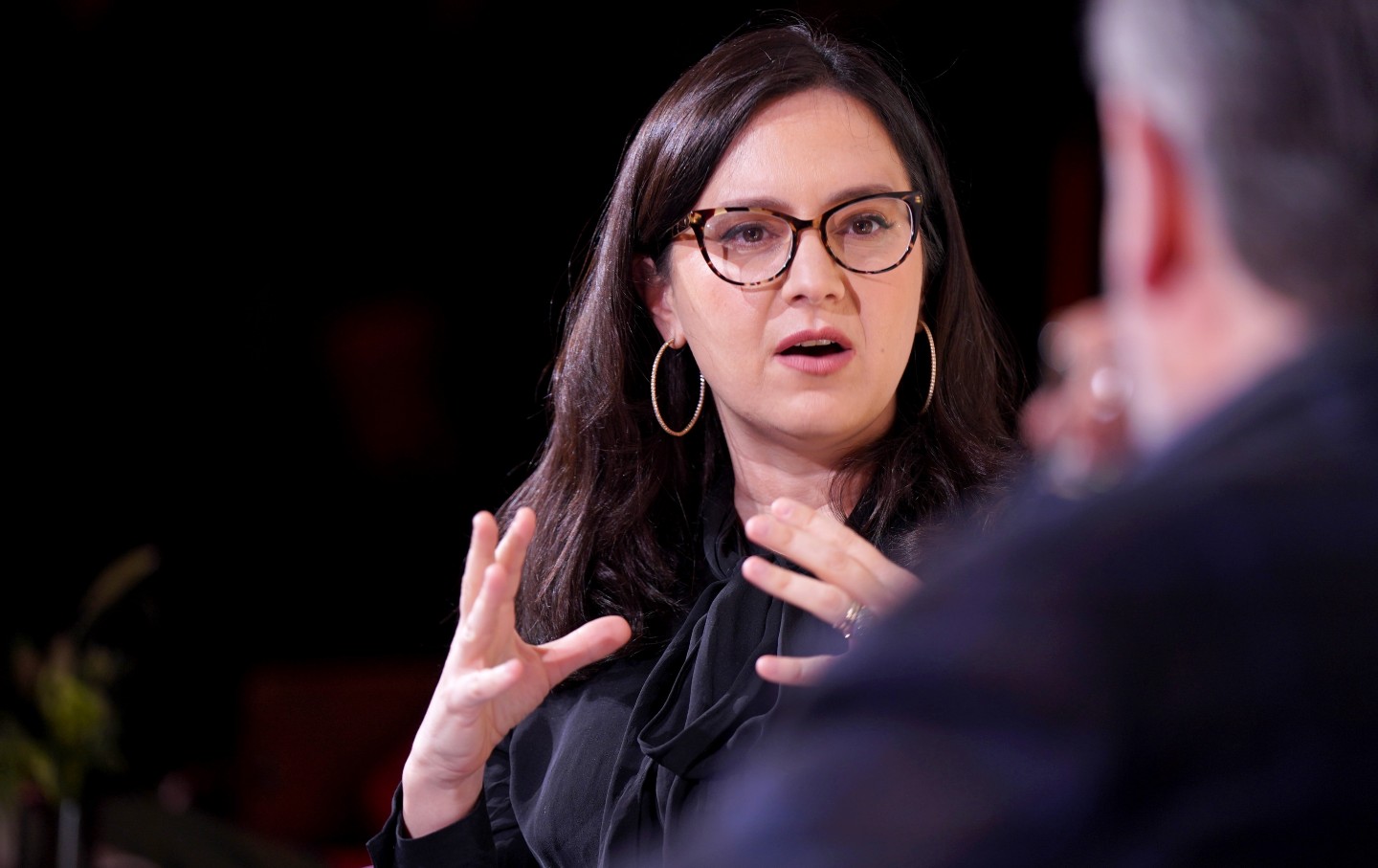
It isn’t her ideology. It’s her product.
After the recent upheaval at 60 Minutes, all eyes are on the network to see if it’s turning Trumpian. After being fired by CBS News, Scott Pelley, in a frank interview with The New York Times, accused editor in chief Bari Weiss of “murdering” 60 Minutes and putting her “thumb on the scale for the president’s version of events”—a “level of political influence that I had never seen in 37 years” at the network.
Back in January, Weiss told the CBS staff that they were “not producing a product that enough people want.” She said that CBS News needed to be modernized; it had to run more exclusives and “widen the aperture” of stories and voices on its broadcasts.
The place where Weiss has had the most opportunity to make those changes is The CBS Evening News. Her choice as anchor, Tony Dokoupil, took over that chair in early January, meaning that she has had more than five months to leave an imprint. To measure it, I recently watched the show for two weeks. I was not encouraged.
Not because of any political bias, though. I found very few traces of a conservative or pro-Trump slant. On June 5, for instance, congressional correspondent Nikole Killion reported on the president’s visit to Chippewa Falls, Wisconsin. Trump touted a recent positive jobs report, but, she said, “in the heart of Wisconsin farm country, there’s a different bottom line” as “some have struggled with tariffs and rising fuel and fertilizer costs.” “What grade would you give the president when it comes to the economy?” she asked a small-business owner. “I’d probably give him a D,” he said. A Republican couple were more positive.
In general, stories dealing with national politics were presented in a down-the-middle, by-the-book fashion. But that was part of the problem. Night after night, the show served up a succession of tedious, tiresome, and uninspired stories. I saw no evidence whatsoever of a modernized approach or a widening of the aperture. There were reports about the weather—tornadoes in Chicago, marble-sized hail in Wisconsin, 50-foot swells pounding the California coast. There were stories about crashes and accidents—a fatal bus crash on I-95 in Virginia; a gas explosion at an apartment complex in Texas; massive explosions in Mexico and Malta. Animal stories abounded—about a family of bobcats found in an attic, a mountain lion on the loose, a celebration in Southern California of three sea lion pups released into the ocean.
During my vigil, CBS did offer one major “exclusive”—about a Michigan woman who had gone missing in the Bahamas in early April. Her husband had told authorities that she had fallen off their dinghy in rough waters, and they had initially considered it a missing persons case, but, as CBS “learned,” it was now being treated “as a possible murder investigation,” with the husband a suspect. For days, correspondent Cristian Benavides reported from the scene. Watergate it was not.
Current Issue

Watching the overall trudge of coverage—the Sherpa guide missing for six days on Everest who was found alive; hostages taken in a building that housed a Chase bank branch in Bakersfield, California; unruly passengers on planes; chaos on roadways; cursory coverage of the California gubernatorial primary; a segment on “Dr. Buckets,” a middle-school gym teacher in Maine who made 11,115 three-point shots in 24 hours—I thought, Is this the best that Bari Weiss can do?
Viewers seem similarly unimpressed. Since Dokoupil became the anchor, the newscast’s ratings have hovered around 4 million viewers (about what they were before he began)—far behind its main rivals, ABC (more than 8 million viewers) and NBC (more than 6 million). Truth be told, though, those broadcasts are not much better. TV news does desperately need a makeover, yet no one has shown the fortitude or imagination to undertake it.
When he took over the evening news, Dokoupil promised to get out of the studio and into the field—to ask and explore questions that were on the minds of average Americans. And, in his first month, he embarked on a two-week “Live From America” tour, traveling to Miami and Dallas, Minneapolis and Detroit to speak with mayors, community leaders, factory workers, and business leaders about such subjects as immigration, opioids, and inequality, but it soon faded. In mid-May, the newscast introduced an “Affordability in America” series, which, while welcome, was about a year overdue.
In my viewing, there was one conspicuous exception to the show’s general lassitude. It had to do, oddly enough, with Scott Pelley’s firing. After the newscast aired a straightforward report on the “three tumultuous days” at the network, Dokoupil came on to offer an extraordinary tribute to his fallen comrade.
“When I started at CBS,” he said, “Scott Pelley was in this very chair, still doing a dozen stories a year for 60 Minutes, and amid all of that, still meeting with every new correspondent to share his view of the mission here. He believed freedom of the press, to quote Madison, was the right that guaranteed all the others.” He believed that if you made it to CBS News, “you were among the best in the world,” and “he worked every single day to live up to that standard.” He was one of the first reporters at Ground Zero. He covered the wars in Iraq and Afghanistan, the civil war in Syria, the genocide in Darfur, and the battle for Kyiv. At home, he reported on the “hard-times generation” after the Great Recession, interviewing a girl who had lived in a truck for five months.
“He was in some ways a man from another era—and that’s not a knock,” Dokoupil observed. He didn’t watch the competition, he said, “because he knew who he was—a journalist who valued truth at all costs and always kept alive the memory of colleagues killed in the field.” But, in one major break from the past, he changed the CBS Evening News logo in the studio. Where Pelley’s own name would normally have appeared, he instead wrote “The CBS Evening News, With All of Us.” “Well, Scott, from all of us, thank you.”
It was a heartfelt expression of support for a man who had just been fired by Dokoupil’s bosses—a profile in courage on a broadcast where such displays are rare. But it was soon back to normal and the usual churn of weather, animals, explosions, rescues, and pedestrian political coverage.
Popular
“swipe left below to view more authors”Swipe →
In his interview with the Times, Pelley said that in the end the biggest threat to CBS from those in charge was not “any kind of political influence” but rather “incompetence.” Based on my viewing, I would have to agree.
With the midterm elections now firmly upon us, the question is whether Democratic candidates will do more than merely occupy ballot lines as mild alternatives to the red-hot crisis that is Donald Trump.
As Trump spends over $1 billion a day on a globally destabilizing war on Iran and admits that he doesn’t “think about Americans’ financial situation,” millions across the country are struggling with the surging costs of essentials. Democrats must seize this moment and advance bold, small-“d” populist ideas—not settle for cynical caution that once again snatches defeat from the jaws of victory.
The Nation elevates progressive ideas, movements, and elected officials achieving real change across the country into the national conversation. At the same time, our journalists are exposing how crypto and AI-funded super PACs are spending hundreds of millions of dollars to knock out candidates they oppose, reporting on the devastating impact of the Supreme Court’s evisceration of the Voting Rights Act, and sounding the alarm on attempts by red states to quickly redraw electoral maps, disenfranchising Southern Black voters.
We can play this critical role because of support from readers like you. This June, we’re raising $20,000 to power The Nation’s independent journalism in the run-up to November’s immensely consequential elections.
It’s in our power to build a more just society, and your support at this critical moment brings us closer to that bold vision. I hope you’ll donate today.
Onward,
Katrina vanden Heuvel
Editor and Publisher, The Nation
More from The Nation
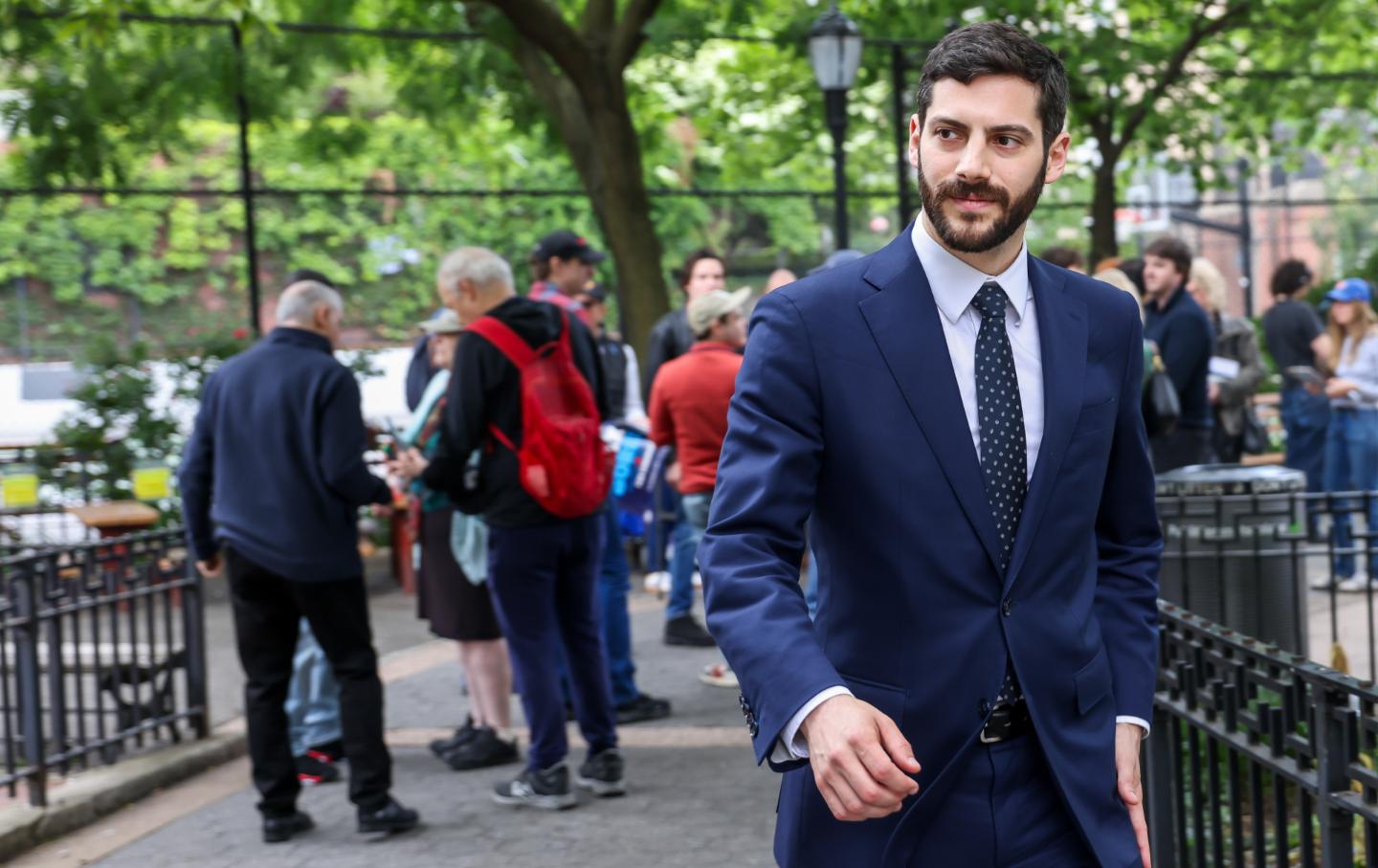
A super PAC bankrolled by tech billionaires is trying to sink my run for Congress. What happens here will tell every other politician whether AI can be checked at all.
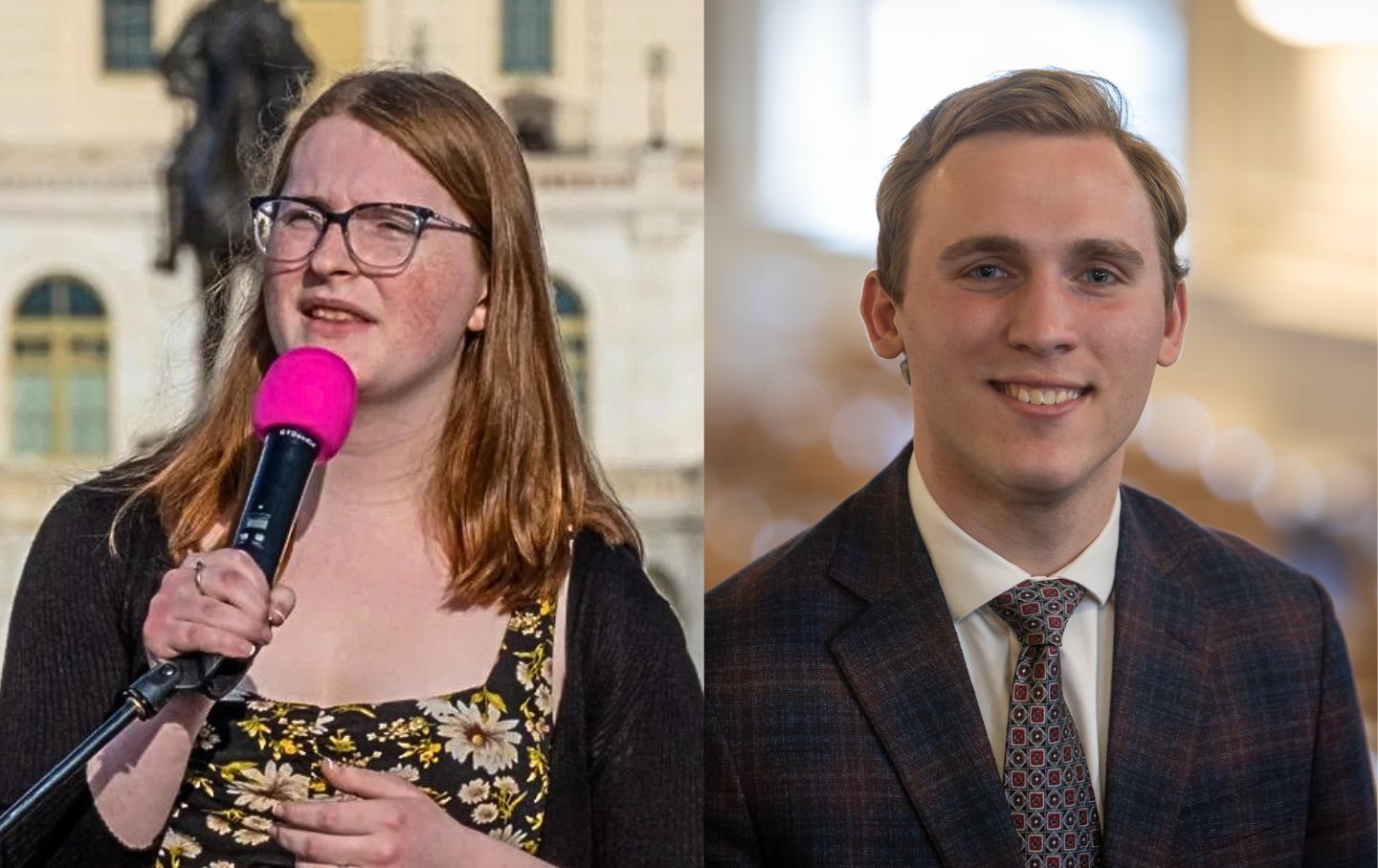
Twenty-five years after libertarians began migrating to New Hampshire to consolidate power, young politicians are deciding whether to embrace their vision—or resist it.

This is an all-hands-on-deck moment to save cultural and press freedom.
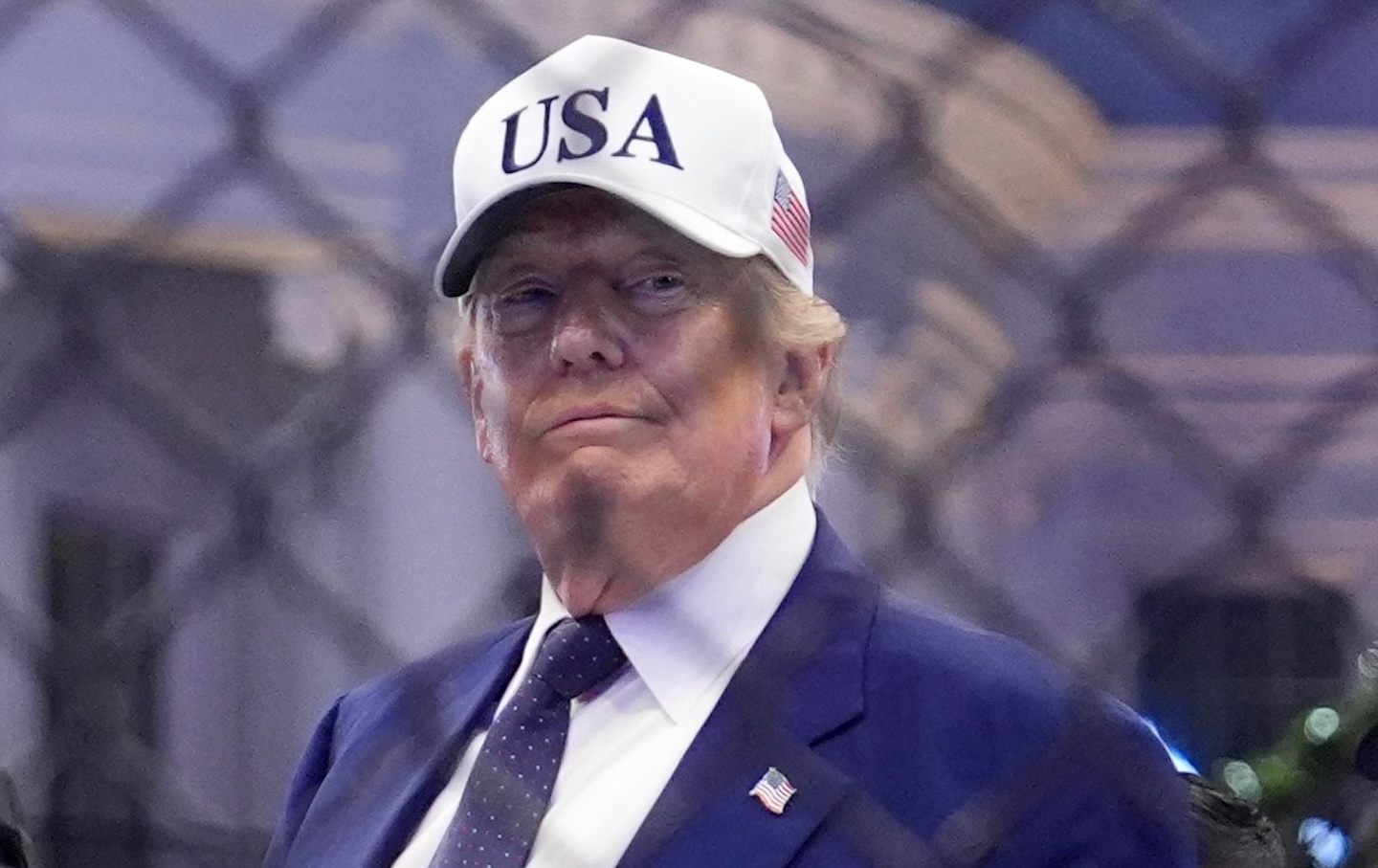
The negotiations are a stark symbol of the president’s failure. But any deal is better than endless, foolish war.