
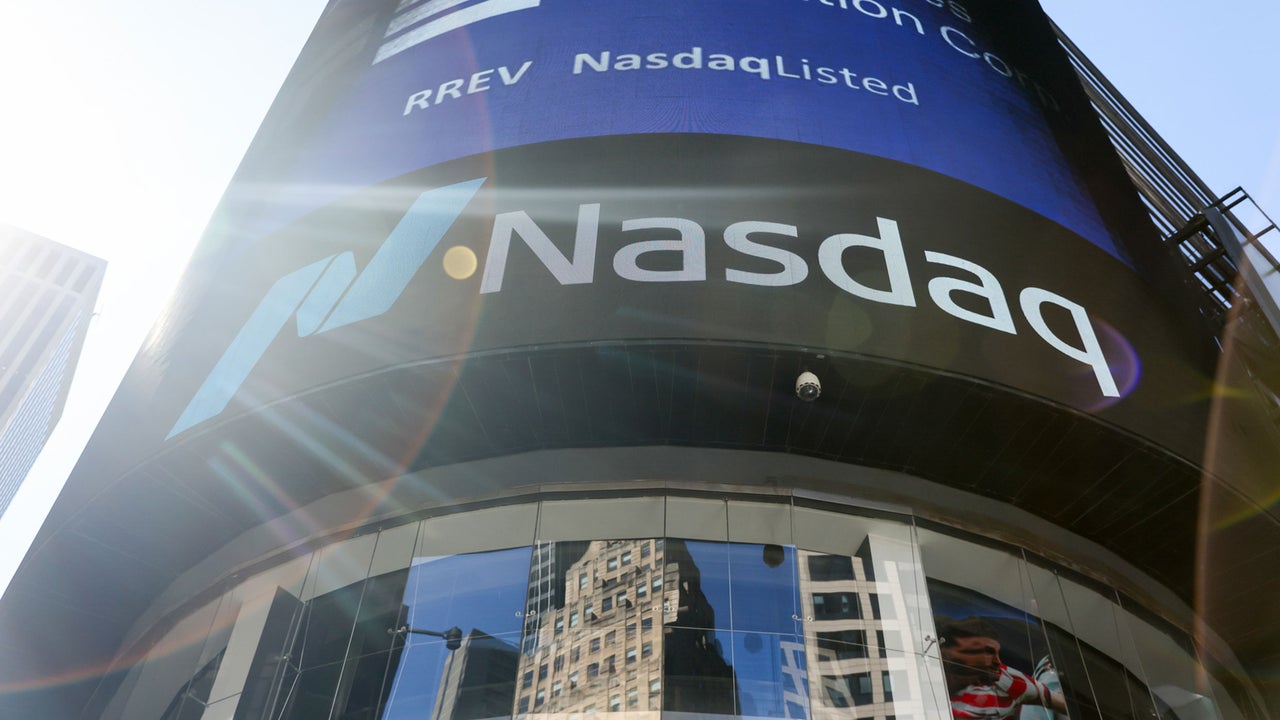
Tech stocks continued their slide Tuesday, stoking concerns that the long-feared collapse of the AI and chip rally could be near. But some traders on Wall Street say this is only a bump in the road.
The Nasdaq Composite Index was down 475 points, or nearly 2%, as of 9:45 a.m. ET Tuesday, after dropping 1.3% on Monday. Shares of major chipmakers were broadly lower, some substantially so.
The sell-off that began Monday gathered steam overnight, as global markets in Asia took heavy losses on plunging memory-chip stocks. South Korea’s Kospi index, which has been the best-performing index in the world since the start of 2025, tumbled 10%, triggering a 20-minute trading halt.
The Kospi drop was driven largely by sharp declines in Samsung and SK Hynix, which were both down 12%.
The volatility rattled investors in Europe, where semiconductor companies including Switzerland’s STMicroelectronics, Germany’s Infineon, and ASML, based in the Netherlands, also lost ground.
Despite the global sell-off, analysts said they are not concerned about the overall health of the market and do not believe this is the long-warned popping of the AI bubble.
“The AI beneficiaries [have] captured kind-of the zeitgeist of the momentum traders and when that happens, you’re going to have sharp sell offs like we’re having. I’d argue it’s healthy,” said Andrew Slimmon, a senior portfolio manager at Morgan Stanley Investment Management, on CNBC’s Squawk Box.
At the heart of the sell-off appears to be growing concern about cash flow for these companies. Many AI companies still lack a clear growth narrative, and investors are getting twitchy. At the same time, the threat of interest rate hikes by the Federal Reserve could make it harder for those companies to find additional funding.
In the past, a one-day drop like the one the market is seeing Tuesday morning would likely have sparked panic among investors. But in the years since the pandemic, such swings have become more common and are viewed by some investors as business as usual.
While it underscores the frothy nature of stocks today, the Nasdaq composite is still considerably higher than it was at the start of the year. Before trading began on Tuesday, the index was up 12.6% year to date.
Still, investors are retreating from some of the biggest names in tech.
Alphabet continued its slide, falling a little more than 1% after Monday’s 5% decline following news that two prominent artificial intelligence leaders left the company for competitors. Nvidia slipped 3% in early trading. This came just days after “the Big Short” investor Michael Burry issued his latest warning about the company, saying an “aggressive fall” was coming. Qualcomm, meanwhile was down more than 8%.
Micron Technology was one of the biggest early losers, tumbling more than 11%. Sandisk was down 12%. Seagate was off nearly 8%. And Intel fell 6%.
Meanwhile, SpaceX, whose IPO dominated headlines 11 days ago, has fallen below its first-trade price, plunging 16% on Monday and falling another 4% in early trading Tuesday. At 9:45 a.m. ET, shares were down to $148. To put that in perspective, the losses Elon Musk saw on Monday were the equivalent of Warren Buffett’s complete net worth.
Combined, those are some scary numbers. But despite the drops, Daniel Morris, chief market strategist at BNP Paribas Asset Management, says this is not a bubble burst.
“The P/E ratio for the Nasdaq index in the run up to the bursting of the dot.com bubble in March 2000 peaked around 48 times,” he wrote in a note to investors earlier this month. “Today it is 23.”