
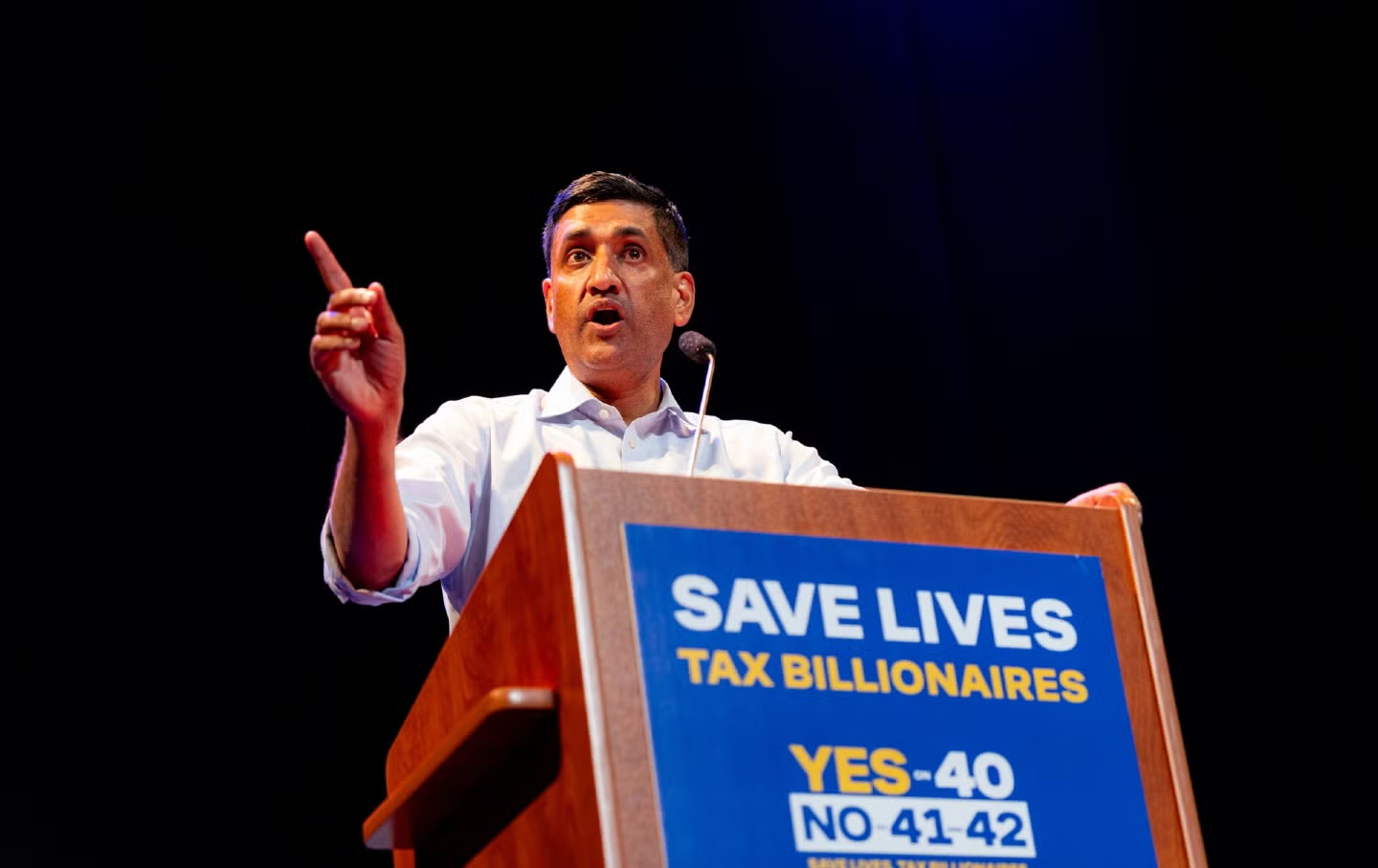
The California Democrat is renewing the Democratic Party’s vital connection to Roosevelt’s New Deal and the Economic Bill of Rights.
Joining Senator Bernie Sanders at the Ballots Over Billionaires rally in Los Angeles on October 5, Representative Ro Khanna proudly stated: “We are New Deal Democrats, not corporate Democrats. We are New Deal Democrats, not neoliberal Democrats. We are New Deal Democrats, not Chuck Schumer Democrats.”
Have you been listening to Ro Khanna’s speeches? Standing on the shoulders of FDR, Khanna has taken hold of a century of American history and not only thrown a challenge to the Democratic Party leadership but also begun to stake a powerful claim to the party’s 2028 presidential nomination.
Just as then–New York Governor Franklin Roosevelt did in 1930 when he wrote in the lengthening shadows of the Great Depression and the rising threat of authoritarianism, “There is no question in my mind that it is time for the country to become fairly radical for a generation,” Khanna has made it clear that he, too, recognizes that to effectively confront and prevail against the authoritarian menace that threatens to destroy American democratic life today, Democrats must not only win elections but also pursue determined progressive—indeed, radical-democratic—action when they do.
Speaking at the National Press Club (NPC) this past April, Khanna decried the ever-increasing concentration of wealth and power in the hands of a “new Gilded Age” elite and the difficulties working people face to stay afloat. Drawing on not only the best of Franklin Roosevelt but also Harry Truman, A. Philip Randolph, and Martin Luther King Jr., he proceeded to project a “New Economic Patriotism.… A new deal for this era. A freedom budget for this century”—indeed, a “21C Marshall Plan” for middle- and working-class Americans. This new New Deal or Marshall Plan would include creating a Work for America program—modeled after FDR’s Works Progress Administration—to help rebuild the nation and guarantee jobs to those who need them; establishing a National Industrial Bank to “invest in the industries that will define the future” and direct such investments in particular to those cities whose economies were most devastated by deindustrialization; and enabling workers to not only more easily organize unions but also participate in “worker ownership” of the companies for which they work.
Most critically, the New Economic Patriotism would entail the enactment of an updated version of the Second Bill of Rights that Roosevelt himself first proposed in 1944—an Economic Bill of Rights for all Americans that would guarantee, among other things, a useful job at a living wage, universal healthcare, food security, a decent home, a good education, and opportunities for recreation—a set of rights that the corporate bosses and congressional conservatives of both parties vehemently and successfully opposed.
The NPC speech was just the beginning. Taking a page from FDR’s deep-listening tours of New York State to hear from farm and factory workers affected by the Great Depression, Khanna spent July crisscrossing his home state of Pennsylvania, connecting with Rust Belt workers on the left and right. Khanna’s bipartisan conversations have led to bipartisan alliances—introducing the Data Center Bill of Rights, requiring disclosure of water and power use and the projected effect on local utility rates before a permit is issued, keeping these facilities out of residential neighborhoods and off farmland, and giving a community standing to refuse one. Yes, listening tours are common in American politics. Bills that come out of them are not.
Current Issue

Then there is the question of whether Khanna can pass anything, which is where most bold agendas die. Khanna and Thomas Massie, a libertarian Republican, forced the Epstein Files Transparency Act to the floor over the objections of both parties’ leaders and the president—and it passed. Republicans voted for it because their own voters understood what was at stake, which was whether this country runs two systems of justice, one for working Americans and one for rich men who abused young girls for decades. Roosevelt did not assemble his majorities simply from people who already agreed with him. Neither did the organizers who built the industrial unions.
Addressing the August meeting of the Democratic National Committee in Texas, Khanna intensified the challenge he had issued to party leaders. After declaring himself a proud Democrat, he proceeded to remind them that their party once had a tradition of “fighting for economic democracy against oligarchy,” but in the course of the economic crises of the 1970s, it had not only wrongly turned its back on that tradition and embraced the politics of neoliberalism but also tragically turned away from America’s urban and rural working classes in favor of serving the interests of coastal professionals. “In short,” he said, “we stopped being the party of Main Street and became the party of Wall Street.” And notably, the often ideologically, identically, and geographically rift-ridden DNC membership responded to Khanna’s words with universal applause.
Bluntly stating, “I am tired of platitudes. I am tired of the consultant-crafted, focus-group-tested phrases about ‘affordability’ and ‘renewing the American dream’ without the specific policies to make them real,” Khanna avowed that he had come to Washington “to fight for a real agenda: Medicare for All. Tax the billionaires. No foreign wars”—and insisted that if the Democrats were doing that, they could “crack” Trump’s coalition.
Here, one is reminded of FDR’s words of 1938: “I have always believed, and I have frequently stated, that my party can succeed at the polls only so long as it continues to be the party of militant liberalism” (aka social democracy).
Declaring, “I am from the economic patriotism wing of the Democratic Party—the New Deal wing of the Democratic Party,” the wing of the party that believes “a national economic project is our path back from the wilderness,” Khanna warned, “We see that America is at a breaking point, and that if we do not offer a new economic bargain, we will break.” And on that note, he reiterated his call for both Medicare for All and an industrial development bank and proceeded to propose a program that he calls “A Home by 35,” which would enable young workers to purchase homes after seven years of employment by granting them low-interest loans with zero down payment (a program already available to veterans).
Preempting the question of “How do we pay for all this?” Khanna put it simply and rather courageously, given that he represents the congressional district that encompasses Silicon Valley: “Tax the billionaires. All 989 of them!” Moreover, expecting to hear accusations that he was calling for “class warfare,” he outright dismissed them by saying: “The billionaires have already been waging a class war.” In fact, he does not hesitate to name names and directly take them on, as he has with Elon Musk, Peter Thiel, and Mark Cuban—and when they come after him, we can readily imagine him quoting FDR’s response to the oligarchs of his day: “I welcome their hatred.”
Khanna closed his speech to the DNC with an FDR-like call to action: “This is the time for our generation of Democrats to answer history’s call. You and I have our moment to write this next chapter so that one day we will say we saved the country and did our part to build a more perfect union.”
More from The Nation
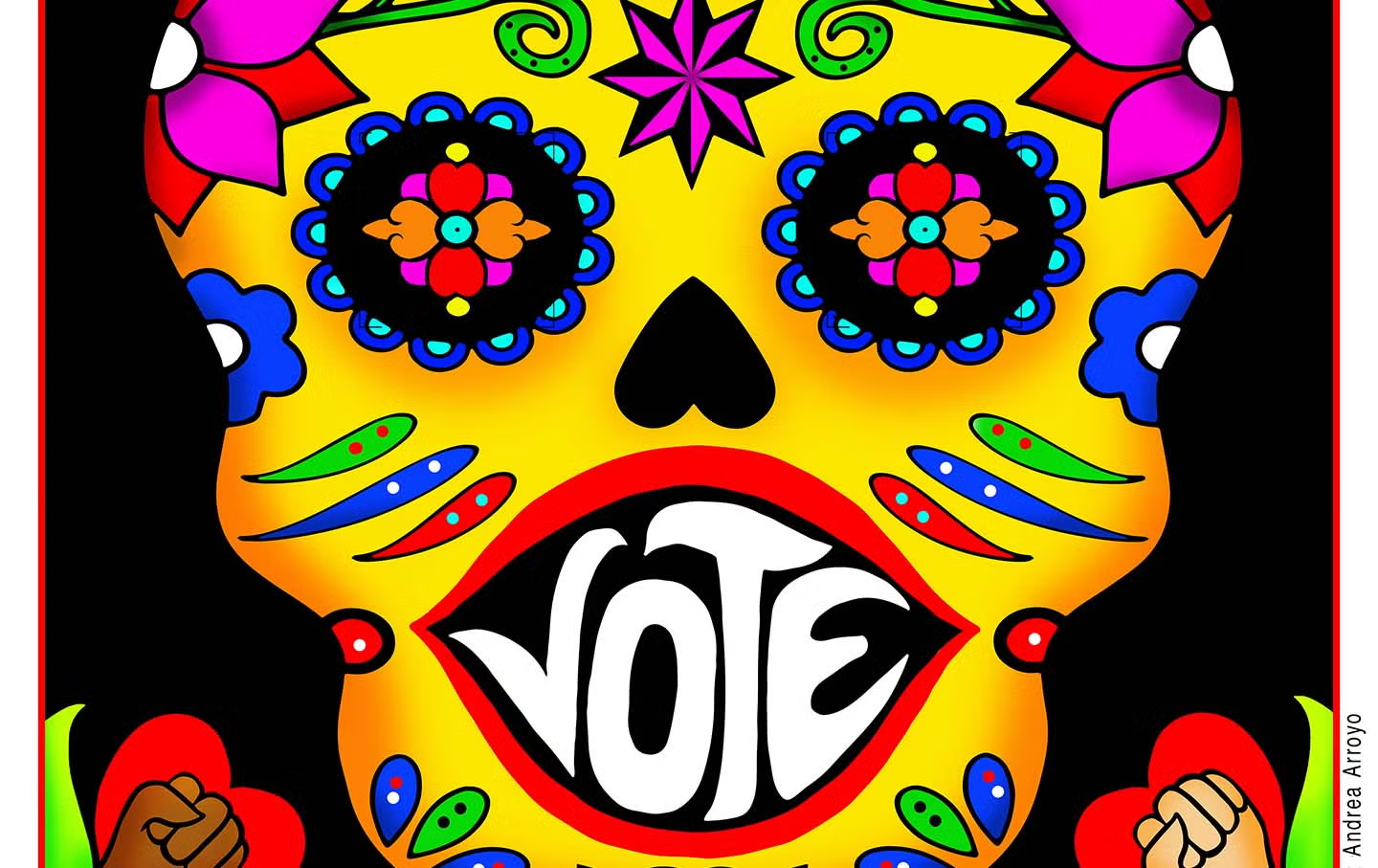
Because it does. The midterm elections are November 3, 2026, with control of the Senate and House at stake. Every vote matters.
Sure, a Democratic win next Tuesday would be a relief—but we still need to repudiate all facets of MAGA authoritarianism.
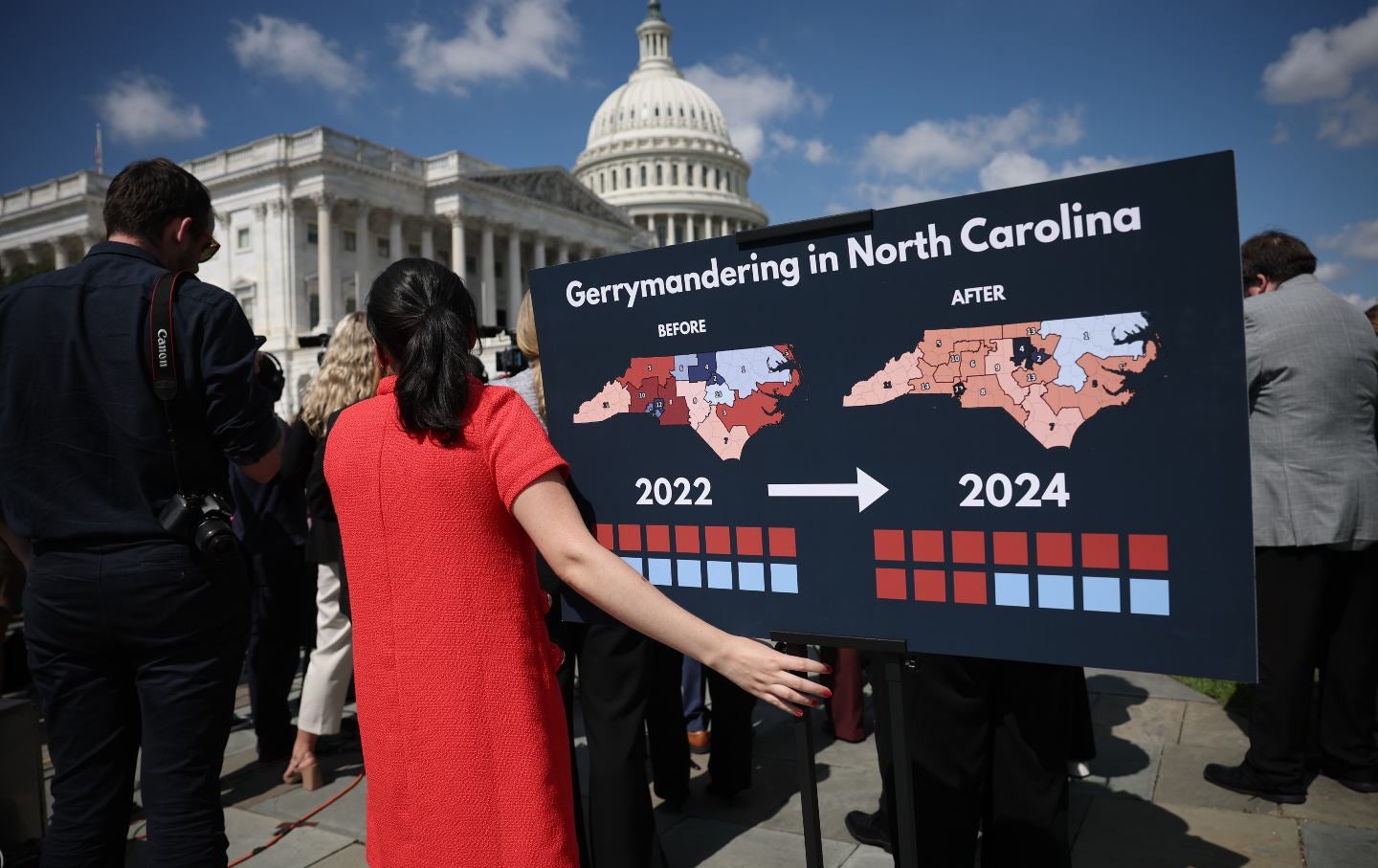
As part of a Trump-led gerrymandering effort, North Carolina GOP leaders redrew the state’s congressional district map in 2025 with the hopes of achieving an 11–3 majority.
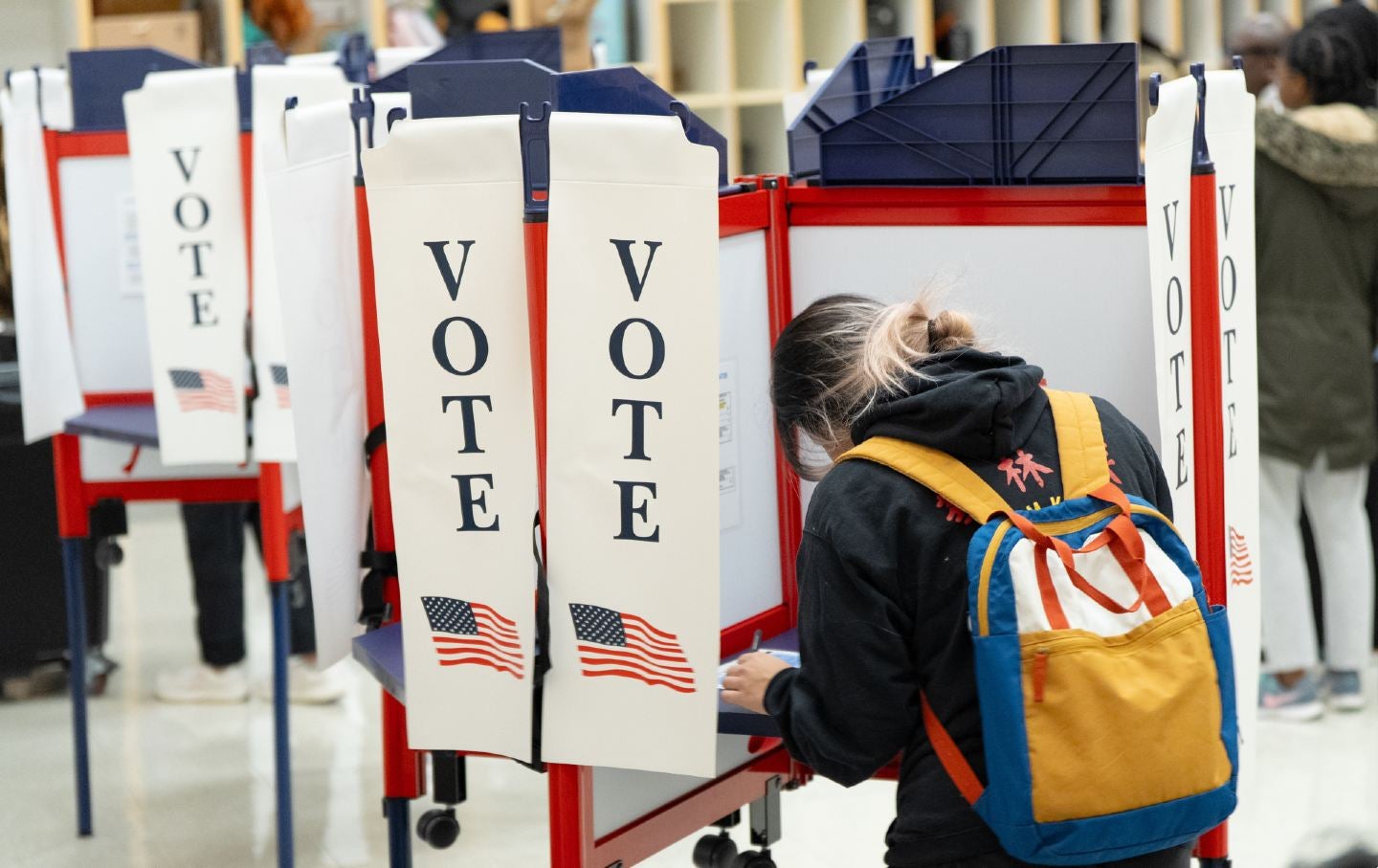
Republican-led efforts threatening young people’s rights to the ballot have sparked efforts to protect the youth vote across college campuses.