
Does Google still believe in the open web? With the launch of its new Googlebooks, it doesn’t feel that way.
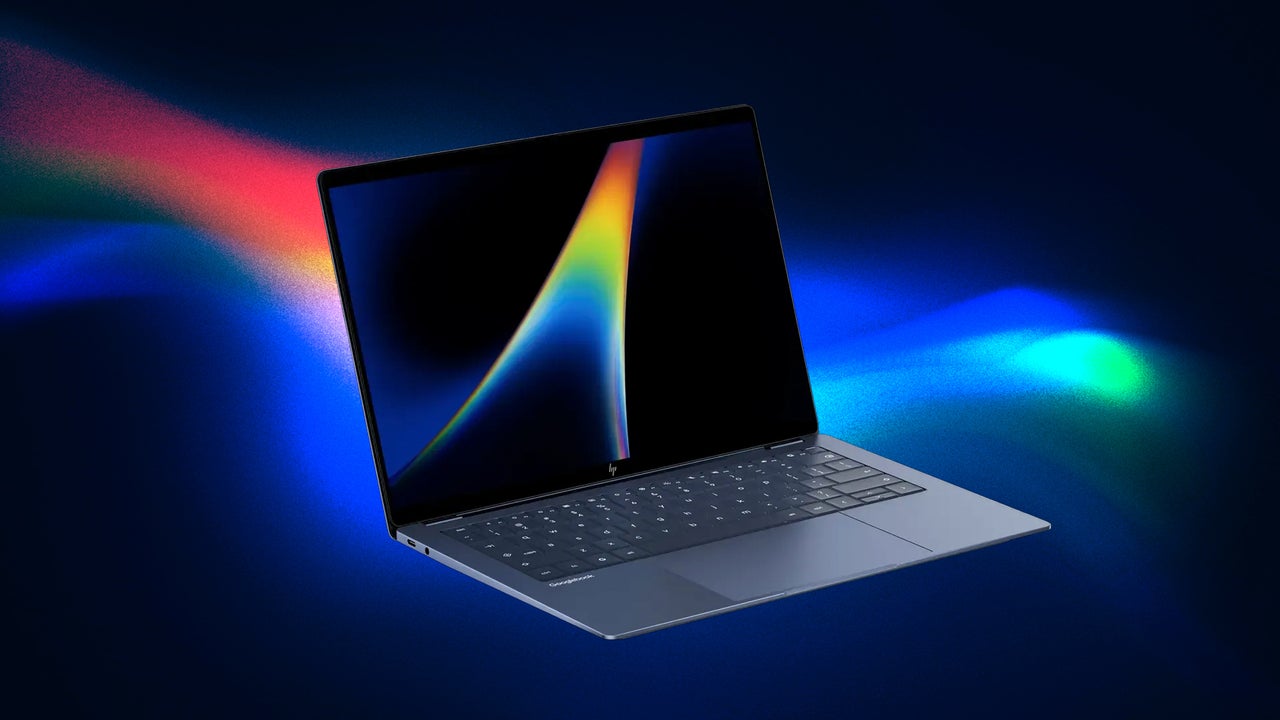
Googlebooks are Google’s attempt to establish a new platform of Android-based laptops, with native Android app support and tight connectivity with Android phones. They’re also an extension of Google’s efforts to rebuild Android around AI, with Gemini features just a quick cursor gesture away.
At the same time, Google plans to phase out ChromeOS, which it introduced in 2009 as a lightweight platform for the web. While Chromebooks remain popular in the education sector, Google says it will convert many existing models to Googlebooks, and it will end support for ChromeOS entirely by 2034.
it’s a sad end for what once represented Google at its most idealistic. Chromebooks weren’t just a breakthrough in speed and simplicity for laptops, they were also a bold bet on the open web as the next great computing platform. As the web becomes more walled off, and Google pivots to a platform more directly under its control, that dream has finally run its course.
How Chromebooks lost their way
The original goal for Chrome OS was to strip away all the overhead of a traditional laptop to make computing faster and easier. Here’s what Google wrote about the project in 2009:
“Speed, simplicity and security are the key aspects of Google Chrome OS. We’re designing the OS to be fast and lightweight, to start up and get you onto the web in a few seconds. The user interface is minimal to stay out of your way, and most of the user experience takes place on the web. And as we did for the Google Chrome browser, we are going back to the basics and completely redesigning the underlying security architecture of the OS so that users don’t have to deal with viruses, malware and security updates. It should just work.”
The first Chromebooks, which arrived in 2011, were basically just laptops that ran the Chrome browser, plus some extra window dressing. They had minimal internal storage and couldn’t run regular desktop software, but this allowed them to stay nimble, with speedy boot times, frictionless software updates, and minimal risk of malware. If a user lost their Chromebook, they could simply set up a new one and pick up where they left off.
In essence, Google was betting that nearly everything people did with their laptops would happen in a browser through sites like Gmail and Google Docs, so they could cut out all the other bloat to make those web apps shine.
To that end, Google encouraged app makers to build for the open web, with applications that could run in any browser, Chromebooks included. Although Google maintained a “Chrome Web Store” for web apps and extensions, the platform was only limited by the web itself. Anything you could run in a browser, you could run on a Chromebook, and that benefitted Google because it meant more people were using its search engine to find things.
“[A]ny time our users have a better computing experience [with Chrome OS], Google benefits as well by having happier users who are more likely to spend time on the Internet,” the company wrote in its 2008 blog post.
Over time, Google wavered on that original vision. It brought Android apps to Chrome OS in 2016, then added support for Linux apps in 2018. It even made a big foray into installable high-end gaming with Steam support.
While these inclusions made Chromebooks more capable, they also added new layers of complexity and demanded laptops with more storage. Setting up a new Chromebook became more of an ordeal, and preserving security became a bigger challenge. In shifting away from laptops powered by the open web, Chrome OS became exactly the kind of heavyweight computing experience it was trying to replace.
All this helped open the door for a new operating system built on Android instead. While Googlebooks will include a desktop-class version of Chrome, the emphasis now is on running Android apps and using AI.
Meanwhile, the original tenets of ChromeOS have disappeared. Look through Google’s announcement post for Googlebooks, and you will not find the words “speed,” “simplicity,” or “security” mentioned even once.
Times have changed, and so has Google
Google’s pivot away from a web-based operating system shouldn’t come as a major surprise. After all, Googlebooks are arriving at a time when the open web is destabilizing, in part because of Google itself.
Along with other tech companies that are all-in on AI, Google is betting on a world where browsing the web is increasingly unnecessary. Instead of using Google Search as a gateway to other sites, Google intends to have AI generate whatever information you need. Instead of managing your own email inbox, chatbots like Gemini will manage it for you. Instead of visiting websites to shop or make restaurant reservations, AI companies want to deploy fleets of AI agents to navigate those sites on your behalf.
As a result, using the web as a human is becoming more difficult. A growing number of websites are blocking themselves off from search engines and archival services in an attempt to keep AI crawlers out. Amazon has been limiting how many customer reviews some users can read because it thinks their behavior looks too robotic. Even just proving that you’re not a bot requires increasingly complicated steps, as in Google’s new ReCAPTCHA systems that demand phone-based verification or a recording of yourself performing hand gestures.
It’d be wrong to say that Google’s strategy with Chromebooks had anything to do with this. The company faltered on its original vision for a variety of other reasons, and the rise of AI would have been inevitable anyway.
Still, the arrival of Googlebooks serves as one final reminder of what we’ve lost. There was a time when Google believed in the open web more than anything, and it was committed to a platform with no real boundaries.
But that was back when getting folks to spend more time on the web was Google’s ultimate goal. Googlebooks exist for a world in which Google is clawing back more of that time for itself.