
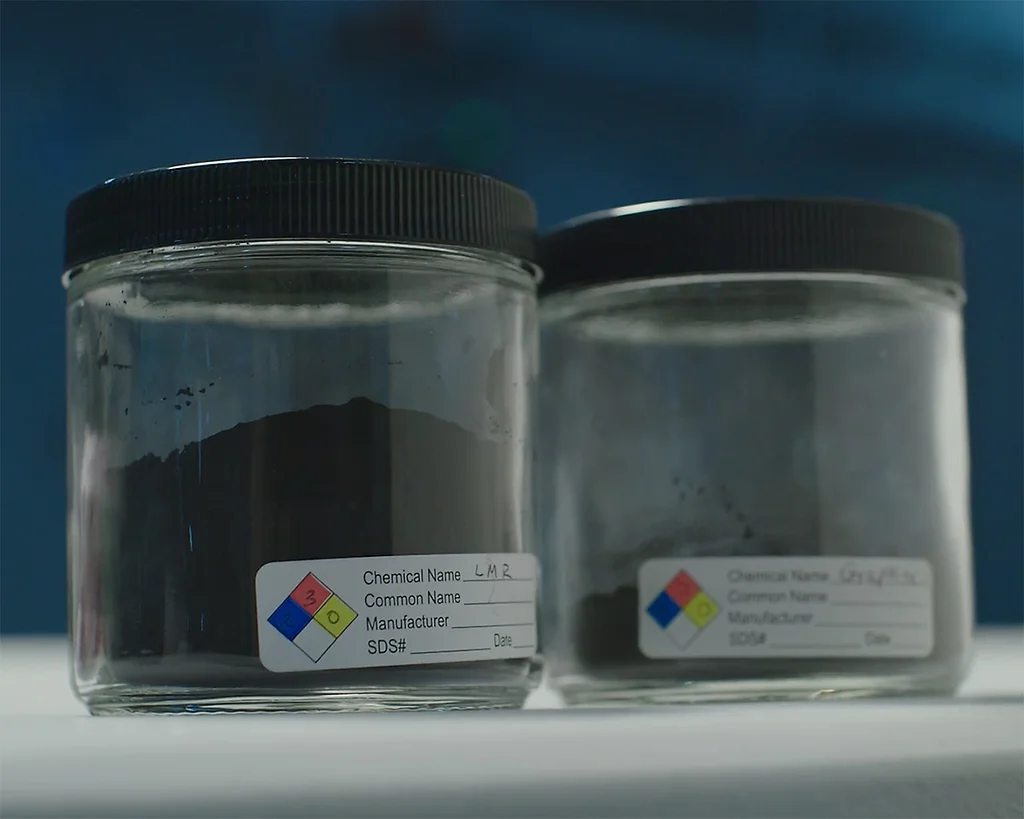
Developing new EV battery technology takes years of research. General Motors, for example, says it’s put a decade of effort into lithium manganese-rich, or LMR, batteries, which aren’t yet in any of their vehicles on the road.
But recently, the automaker says it made a big leap in that work. Using computer modeling, GM was able to virtually test more than 300,000 LMR battery pack configurations, advancing from first concept to formal approval in under a month.
That represents more than 300 million CPU hours, which would take a typical computer 34,000 years, while running 24 hours a day, to complete, according to GM.
GM is leaning into artificial intelligence and virtual simulations to develop its vehicles. That not only speeds up the time to do testing, per the company, but allows it to test more options, rather than picking the best of just a few configurations.
Those 300,000 formulations, for example, looked at different chemical combinations, temperature cycling, and other approaches to creating a battery cell, Sterling Anderson, GM’s chief product officer, told Fast Company.
“If we had not had the luxury of some of these tools, we would have had to sample more sparsely from what was possible,” he says.
Speeding up vehicle development
GM is bringing this AI approach beyond battery testing and into all areas of its vehicle development, with the aim of slashing the time it takes to develop a car in half.
Typically, cars are developed within a four- or five-year time frame. That allows a “limited number” of all kinds of tests, Anderson says, from wind tunnel to crash tests.
“Now in the virtual world, instead of the X crash test that we could have done, or Y prototypes that could go through, we can run X times 100 and Y times 1000,” he says.
GM is also working to advance its autonomous driving capabilities with real-world and virtual testing. Hundreds of data-collection vehicles are currently driving across the country collecting 1 million miles of data a month, while virtually, GM systems drive more than 3 billion simulated miles a day.
By cutting vehicle development down to about two years, GM also says it can adapt more quickly to external challenges. Many car makers were counting on Biden-era EV tax credits to help their sales, for example, but then the Trump administration cut those credits.
Tariffs, the war in Iran’s effect on gas prices, changing regulations, and uneasy consumer sentiments have all added uncertainty to automakers’ future product lineups, which may have been in development for years.
A shorter development cycle “makes you more agile,” Anderson says.
LMR batteries in the works
GM wants to be the first automaker to deploy LMR batteries, and Anderson says they’re on track to make that happen.
LMR batteries can have 33% more energy density than lithium iron phosphate chemistry, and use a higher amount of less-expensive minerals (like manganese) rather than more of the most expensive minerals like cobalt and nickel. That allows them to offer more range—potentially more than 400 miles—at a lower cost and lighter weight.
GM is also preparing to roll out its fourth-generation EV platform, which includes not only LMR batteries but a centralized, upgraded computing system, and new electrical work.
It will have 30% less wiring than GM’s current EVs and 40% fewer parts in its motors and power electronics, which make it lighter and more efficient.
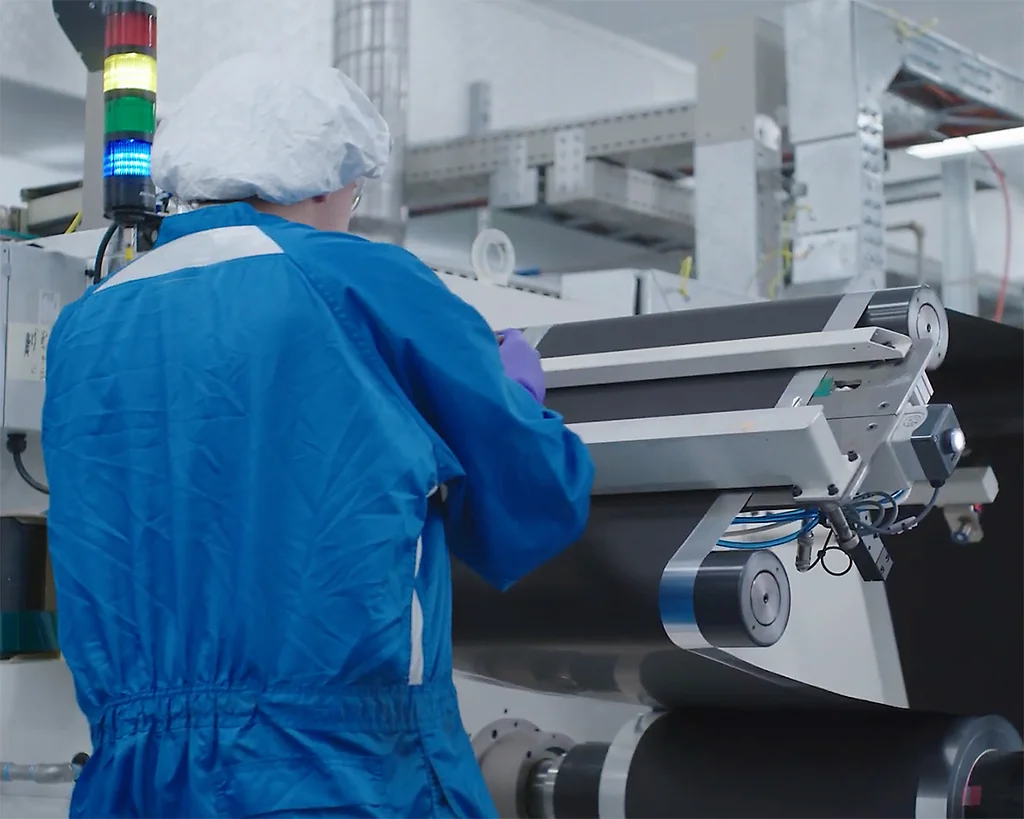
GM and LG Energy Solution are working on these batteries as part of a joint venture called Ultium Cells. They plan to start commercial production of the LMR battery cells in the U.S. by 2028, at the Ultium Cells facility in Spring Hill, Tennessee.