
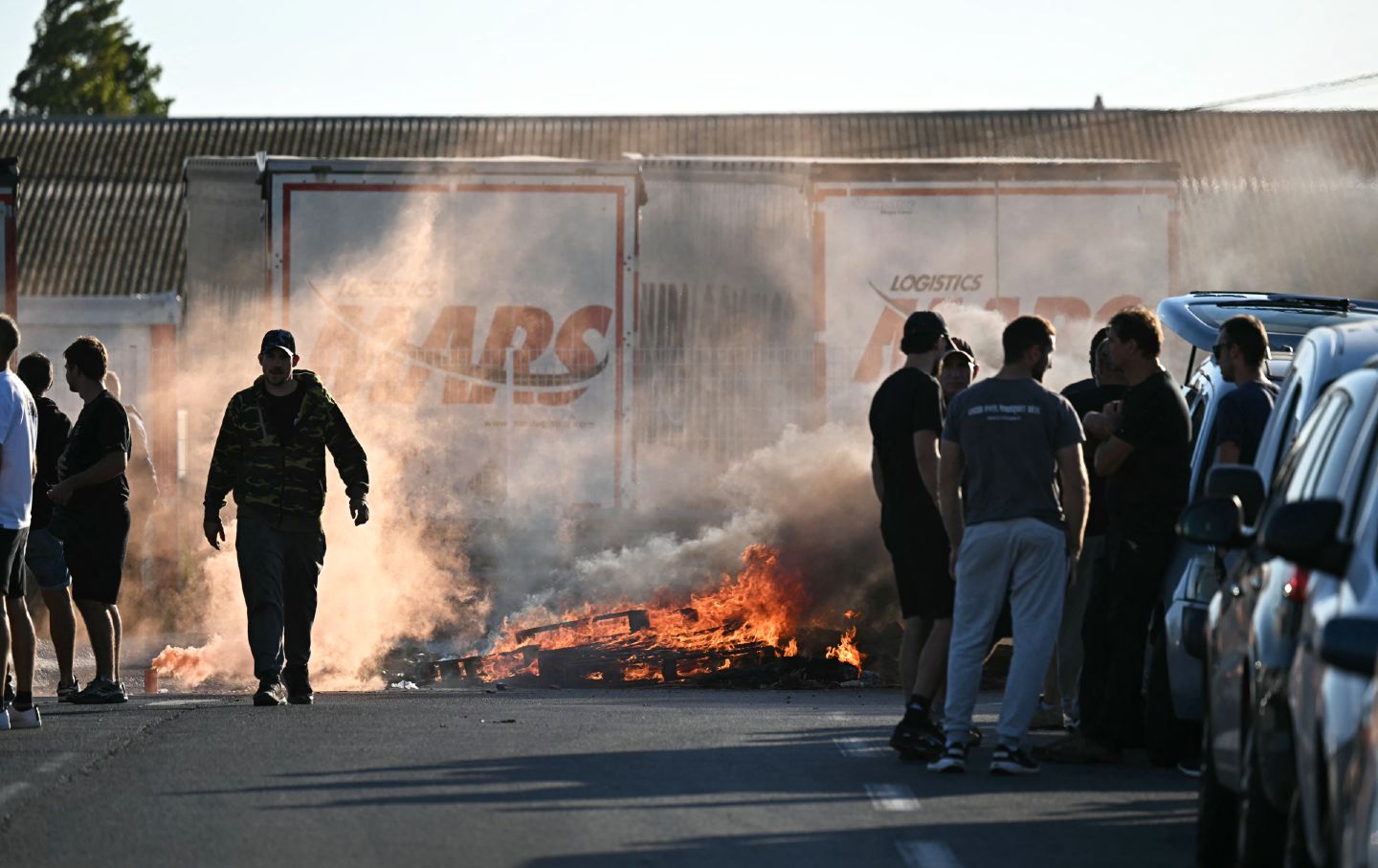
Between a budget crisis and a cost-of-living squeeze, Macron is leaving a country feeling more insecure than ever—and ready to take to the streets.
In inviting some 12 chiefs of France’s leading political formations to a closed-door meeting at the Élysée palace on September 18, President Emmanuel Macron hoped to claw back at least the appearance of control in the face of the multiple crises confronting the country. Because there’s no point in denying that the current situation makes for a bitter final act to Macron’s two terms in office, as soaring gas prices raise the specter of protests and demonstrations over the cost of living.
In the midst of a frozen conflict in the Middle East, and little immediate hope for an end to a blockade in the Strait of Hormuz that has launched global energy markets into disarray, diesel prices in France hit a record average of €2.41 per liter on September 22. Some stations went further still, with prices edging close to the symbolic €3-per-liter threshold. That’s $12.92 per gallon by current exchange rates. Chronically high energy prices are metastasizing into a broader cost-of-living crunch. In August, consumer price indexes rose to 2.4 percent on an annualized basis—adding to the double-digit cumulative inflation recorded since 2020.
Conditions like these are not exclusive to France. Yet the lame-duck Macron knows from experience that public frustration with energy prices is not something to be taken lightly.
Current Issue

Macron’s biggest worry is likely that this situation could spill over into some form of protest movement this autumn, with Parliament in a state of paralysis and few avenues for compromise before highly anticipated presidential and parliamentary elections scheduled for spring 2027. Starting in mid-September, calls already began to circulate for a revival of the so-called Yellow Vests, the grassroots protest movement that shook the president’s first term in office. The situation is wildly different, as the 2018 explosion was provoked by an ill-conceived gas tax. Nonetheless, average diesel prices in November 2018 were a mere €1.50, a pittance compared to their current levels.
Wildcat protest movements have a habit of petering out. The “return” of the Yellow Vests—October 17 is the date currently circulating on social media for a new nationwide round of protests—has often been predicted in the past. But there are already signs of mounting tensions.
On September 15, fishermen took to blockading an oil terminal in Fos-sur-Mer, on France’s Mediterranean coast, before being cleared out by police. The action followed protests in nearby towns such as Sète and Port-Vendres. Among their grievances, the fishermen point to soaring fuel prices. Speaking with France Info, one interviewee from Marseille explained the cruel economics of high gas prices: “A boat that goes out to sea for five days will bring in €10,000. Before the crisis, we had €3,000 in expenses. Today, €7,000 goes straight into fuel.”
And the fishermen are far from alone. Protest and strike dates are multiplying across key economic sectors in the coming weeks, from health workers and police officers to firefighters, teachers, farmers, and truck drivers. While France’s established labor organizations are traditionally hesitant to throw their support behind nonunion movements, labor groups are calling for a day of mobilization on September 29, when public-sector workers will go on strike for salary increases in the face of mounting calls for renewed cuts in the 2027 state budget.
Macron’s best hope in his final months likely lies in the degree to which he’s able to defray the mounting anger as an imported crisis, one coming downstream of Donald Trump and Benjamin Netanyahu’s disastrous war on Iran. Speaking to journalists on the heels of the September 18 meeting with opposition forces, Macron urged calm: “We need to stay united because in this situation division will make us weaker in confronting these crises. Social mobilizations are legitimate, but they’re only effective when their target is in the government’s control.”
Yet that makes light of the creeping impression of governmental inaction. Citing a tight budget, Macron and his allies have resisted calls for government-supported gas price caps. “Germany and Spain have announced plans to suspend consumer taxes and impose a price cap while France remains mostly silent on the issue,” warned Aurélie Trouvé, an economist who’s now a left-wing MP with La France Insoumise. She also urges the government to tap the windfall profits accrued by the oil major TotalEnergies, which in July reported $11.2 billion in profits over the first six months of 2026, surging over 72 percent since the onset of the Iran War.
Instead, Prime Minister Sébastien Lecornu announced on September 22 a series of measures that can best be described as a Band-Aid solution. The government plans to earmark €450 million to distribute €100 stimulus checks for drivers hit hardest by the oil shock—at the cost of further subsidizing the fossil fuel industry with taxpayer money.
On top of the cost-of-living crisis, making matters worse is a fiscal gulf hamstringing the government’s response.
Expected to reach 5.4 percent of GDP in 2026, France’s annual budget deficit ranks as the highest in the eurozone. In a sign of growing tensions on bond markets, yields on 10-year French government securities climbed to over 4.5 percent in mid-September, their highest level since 2008. On September 17, Lecornu announced that the minority government in power would seek €54 billion in savings for the 2027 fiscal year.
The proposed cuts in next year’s budget weigh most heavily on healthcare, housing aid for young people, and retirees, while the defense budget is set to rise by about €6.4 billion to a total of €57 billion. Speaking to The Nation, Trouvé, who chairs the National Assembly’s Economic Affairs Committee, sums it up bluntly: “A lot is being asked of impoverished youth, old, or sick people while nothing is proposed to tax the ultra-wealthy.” In fact, the government even wants to expand the gift-tax exemption from estate charges. In an olive branch to big business, Lecornu is likewise proposing to reduce a corporate surcharge instituted in prior budget wranglings as a concession for calls for more fiscal equity.
Still, the budget faces an uphill path to adoption, with both of Lecornu’s predecessors‘ having been ousted over similar pledges to extract massive savings from France’s hung Parliament. The center-left Socialist Party, which in 2025 ultimately agreed to prop up Lecornu in exchange for a suspension of Macron’s 2023 increase in the retirement age, would likely in an election year seek an even steeper price for cooperation. The prime minister is now rumored to be looking to the far right: Marine Le Pen of Rassemblement National has indicated that her party could extend its tacit support to what she called an “imperfect” budget.
As Macron’s government eyes yet another austerity package, it is likely to only exacerbate the growing sense of economic insecurity. Director of the nonpartisan Economic Inequalities Observatory Louis Maurin argues that the French public is able to understand that some reforms are necessary. What they’re dubious about is the central conceit of Macron’s presidency: his favoring of the ultra-wealthy. Since 2017, Macron has watered down France’s wealth tax, instituted a flat tax on capital gains and investment income, and reduced property charges across the board. While not solely responsible for France’s budget crisis, this has played an undeniable role in the country’s increasingly untenable fiscal trajectory. One study estimated the total cost of Macron’s fiscal largesse at €207 billion between 2017 and 2023.
No French politician will entirely ditch lip service to what is often referred to as the “French social model.” Rather, Maurin sees a campaign to “erode it by other means.” This is a ticking time bomb, he warns: “It’s quite simply politically impossible to have adopted such drastic tax cuts for the wealthy and, on the other hand, finance it through welfare reductions for the poorest in society.”
“We’ve been taking the French people, and specifically the working classes, for dupes,” Maurin continued. “Voters are not so easily swindled and are more than capable of making sense of what’s been going on.”
With French GDP growth expected to reach only 0.4 percent this year, the public has ample reason to reject the president’s broader economic legacy. France will be ending Macron’s presidency below the European average in terms of per-capita GDP. That’s a bitter pill to swallow for a country that has long viewed itself as the second pillar, with Germany, of the European Union.
Popular
“swipe left below to view more authors”Swipe →
Maurin is nonetheless skeptical of the growing complaints within French business circles about a great economic “drop-off” between France and its European peers—a narrative that often serves to revamp the very same calls for pro-business tax cuts and labor market reforms that have failed to deliver Macron’s oft-promised growth.
Rather, Macron’s two terms in office will have only deepened the increasing divisions within French society. “There’s a large segment of the population whose revenues have fallen off within a wider society that continues to stay afloat and accumulate wealth,” Maurin told The Nation.
Then there’s the turn toward employment “flexibility” that has been a watchword of the Macron era. On the one hand, according to Maurin, a privileged core in society continues to “have predictability in terms of work and lifestyle trajectories.” For those at the margins, on the other hand, particularly young people entering the labor market and workers in the service industry, Maurin warned against “the steady extension of chronic precarity.”
Across the board, the signs are increasingly visible that Macron’s term will not have been a positive one in terms of the concrete material conditions in which many French people live. Published in July, the latest figures from the authoritative national statistics bureau INSEE counted at 15.4 percent the share of the broader population living at or below the poverty line, a record since 1996.
Those INSEE figures are the tally for 2024—and therefore don’t take into account the economic shocks of Trump’s trade-war-induced slowdown, to say nothing of the impact of the Gulf crisis. But it’s just about written on the wall that the crunch is there: In August, one study estimated that over 60 percent of the population has identified inflation as having a negative impact on their ability to make ends meet, with nearly a third in overdraft on their checking account at some point in the past 12 months. With wages largely stagnant, a recent study also found that 46 percent of French people say they have had to cut back on monthly spending.
As the line between homegrown and imported crises becomes increasingly blurry, Macron too might be forced to reckon with his own responsibility.
Between the reemergence of right-wing red-baiting and Donald Trump’s use of the chilling National Security Presidential Memorandum–7 to criminalize left political organizing, we’re seeing McCarthyism reborn before our eyes.
This assault on democracy cannot be ignored or wished away. Resisting it requires bravery in the face of threats and repression, a steadfast commitment to the truth, and the unwavering belief that we can—and will—overcome this darkness.
We must have an independent media that sets the record straight, unearths corruption and abuses of power, and advances a politics of justice and dignity for all if we’re to win this fight.
That’s why I’m writing to you today. This September, The Nation needs to add 100 monthly donors to sustain our progressive journalism. Your contribution makes the next investigative report, the next truth-speaking column, and the next pathbreaking essay all possible.
I hope you’ll support our work with a recurring donation today. If you donate $10 or more a month, we’ll send you a brand new “Hands Off the Free Press!” sticker to recognise your commitment to our cause. Please, donate today.
Onward,
Katrina vanden Heuvel
Editor and Publisher, The Nation
More from The Nation
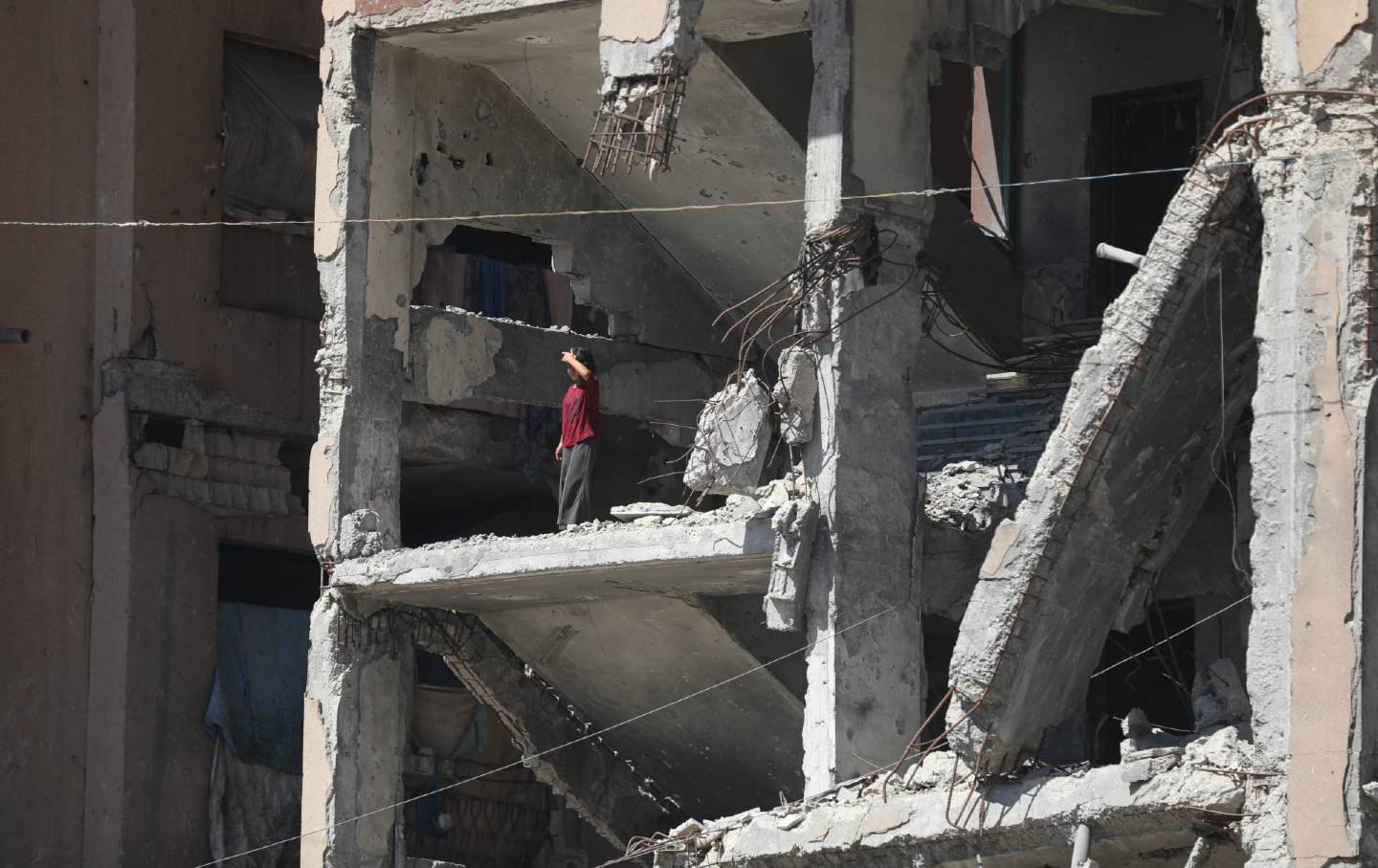
The fundamental problem is not the name of the prime minister, but rather the actions of the Israeli government and the urgent issues that need to be addressed.
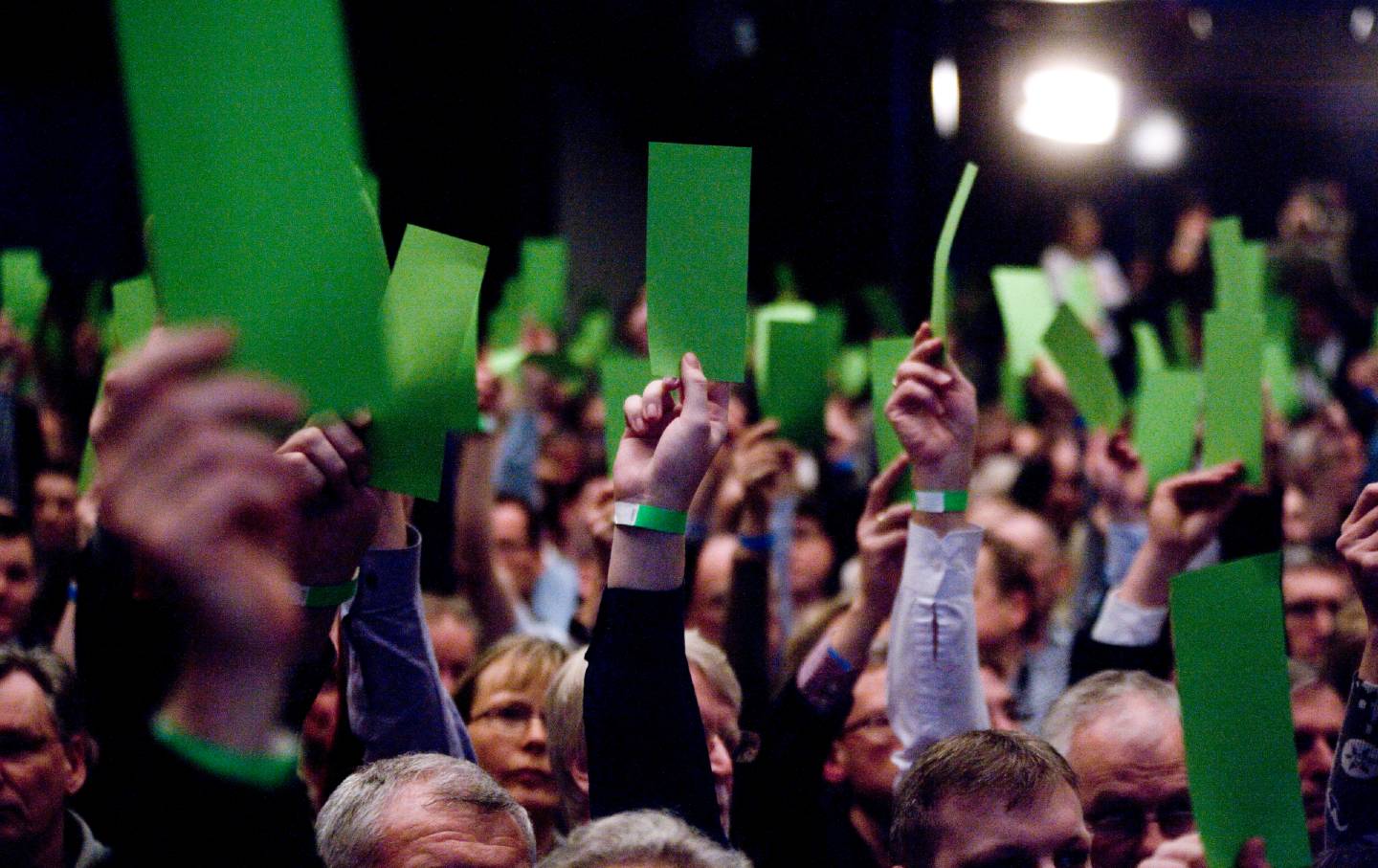
The Alternative für Deutschland has a stable national poll lead, including in the former West Germany. Its rise owes to much more than Eastern grievances.
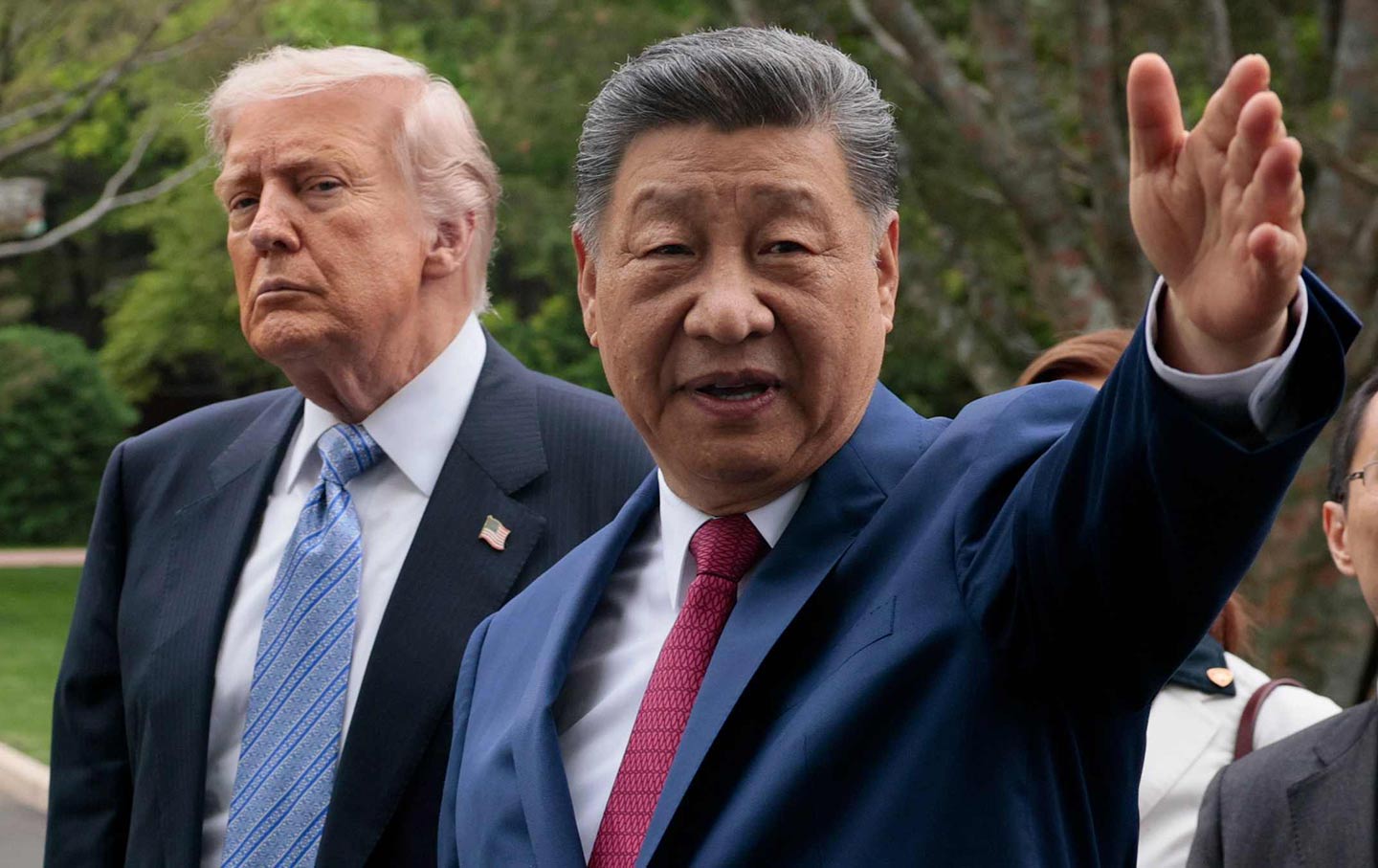
The prospects for Xi Jinping’s visit are dim because American leaders are blaming China for the failures of globalization.
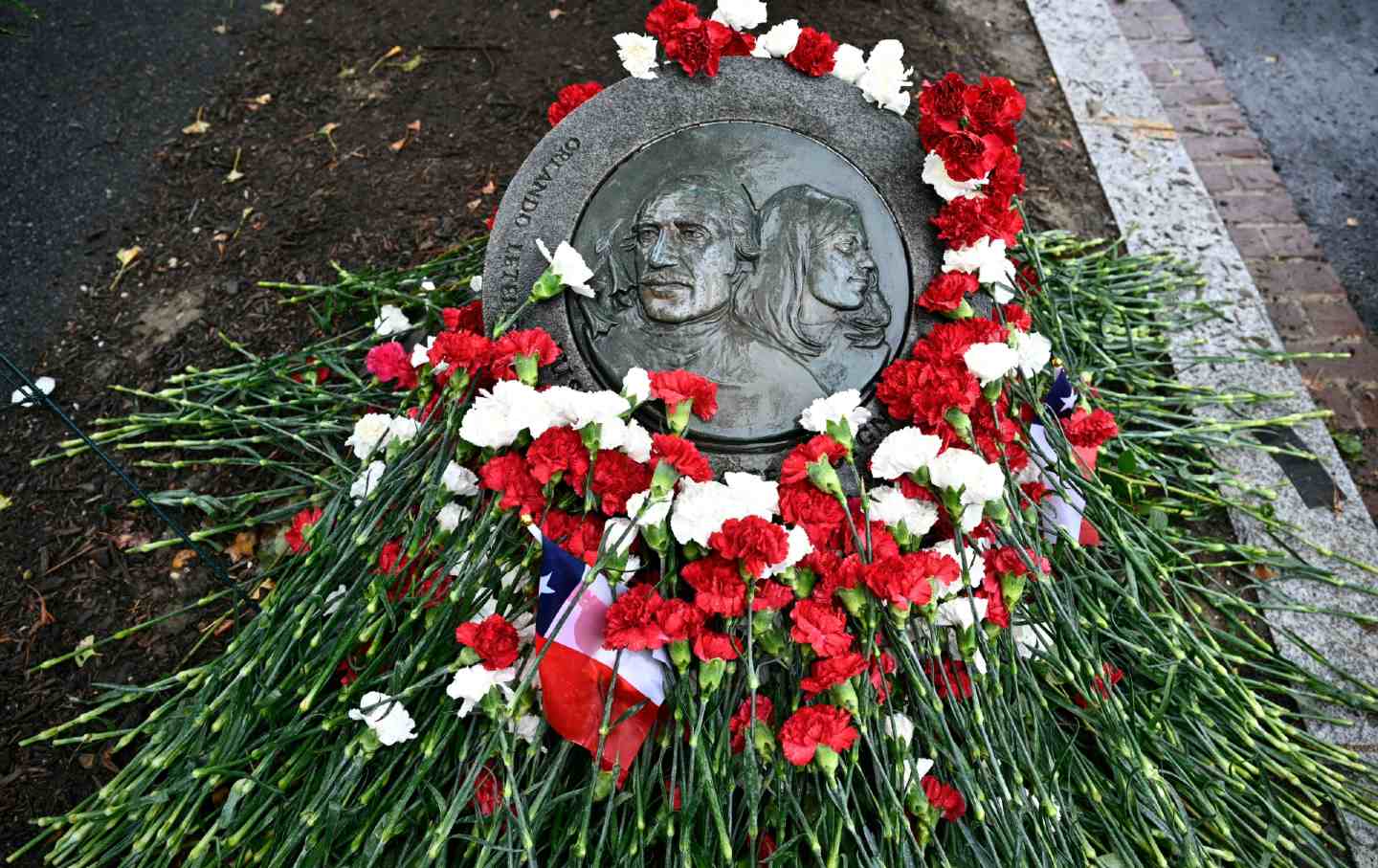
An act of international terrorism on the streets of Washington, DC, still reverberates 50 years later.
As long as we have nuclear weapons, the job of ending humanity will continue to be as easy as the push of a button—or an AI agent hacking into a nuclear command-and-control system…