
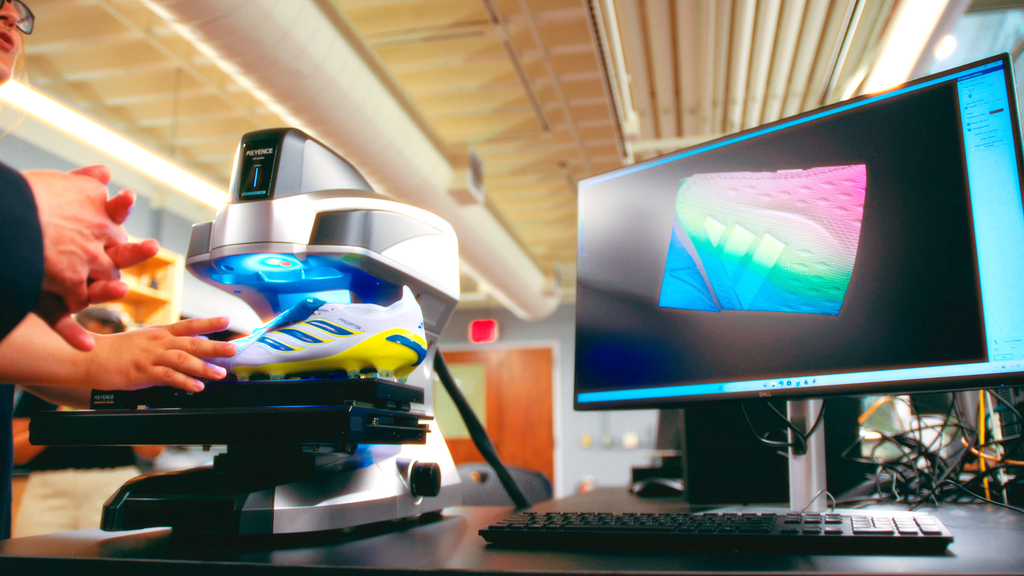
When Spanish midfielder Pedri zips across the field this Sunday, microscopic pillars on the Nanostrike+ fabric of his Adidas Predator cleats will help him control the ball.
The microstructure technology—designed by University of Illinois Urbana-Champaign mechanical engineering professor Bill King—uses a friction-engineered surface mesh to give World Cup players a constant level of grip in rain, shine, or mud.
When a player dribbles with low pressure, the cleats have a low grip level. But when a player strikes, it activates the microstructures’ grip, hitting the ball with increased force and spin.
But King’s technology wasn’t originally designed for the pitch.
“We started working on it for electronics, fabrication, and micromechanical devices,” says King. “But what I was excited about was how we could take these microstructures and then make them at huge scales and then bring them into consumer products.”

An insect’s grip on a consumer product
On an insect’s foot, thousands of tiny spines called the tarsus grip into a plant as the bug walks, but leaves the plant unscathed. When King and his lab started their research 20 years ago, the goal was to harness the same friction an insect uses to engineer a simultaneously water-repelling and grippy surface.
The project originally focused on designing micro-assembled electromechanical equipment for the Department of Defense and microstructures inside engines and pumps for the Department of Energy.
In 2006, King met Ralph Hulseman, who was then an engineer at the tire company Michelin. The pair founded Hoowaki to scale the technology to a commercial level. They made more than 800 micro-patterns.
Today, Hoowaki sells materials that can grip nearly anything—on and off the pitch.
Hoowaki creates multiple medical devices, including a tube that eliminates the need for stitches after esophagus surgery and can repair the colon after colon cancer, instead of rerouting a patient’s gastrointestinal tract to an ostomy bag.
“The microstructures provide friction and help your body hold itself together and accelerate the healing process,” says King. “There’s hundreds of patients that are walking around with these microstructures inside their bodies right now.”

Bringing the tech to a new playing field
Earlier this year, Adidas reached out to Hoowaki to advance the technology for their Predator cleats.
Previous Adidas cleats used thick lumps of rubber to increase friction. But the cleats’ rubber was slippery in wet conditions, and didn’t perform well in low pressure moves like dribbling.
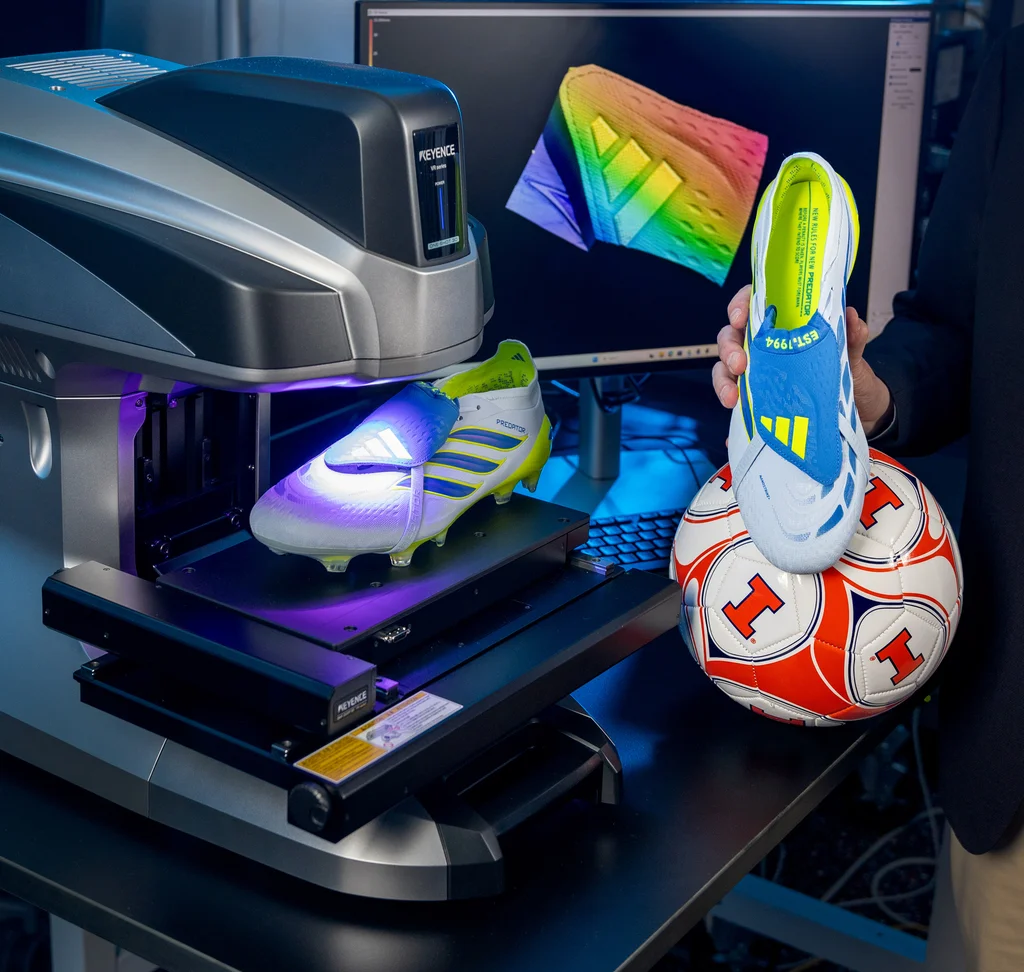
“If you’ve got a soccer ball coming in, it’s spinning on the ground, coming up against the foot, and if all of a sudden the cleat gets too sticky and it grabs the ball, it’ll spin off erratically,” says Hulseman.
But King’s microstructures make it possible to change friction as the player moves—optimizing performance and making the player feel better in their boot.
Players who wear the Nanostrike+ cleats are the control type players, like England’s Jude Bellingham and Spain’s Pedri. Fans with a keen eye can look for the cleats’ tiny ridges in this Sunday’s final match.
“It’s been so much fun watching the World Cup,” says King. “The level of play is just extraordinary, and just having a little bit of understanding about one of the technologies that’s in play has really made it fun.”
When asked who he’s rooting for this Sunday, King replied, “I’m rooting for the shoes.”