
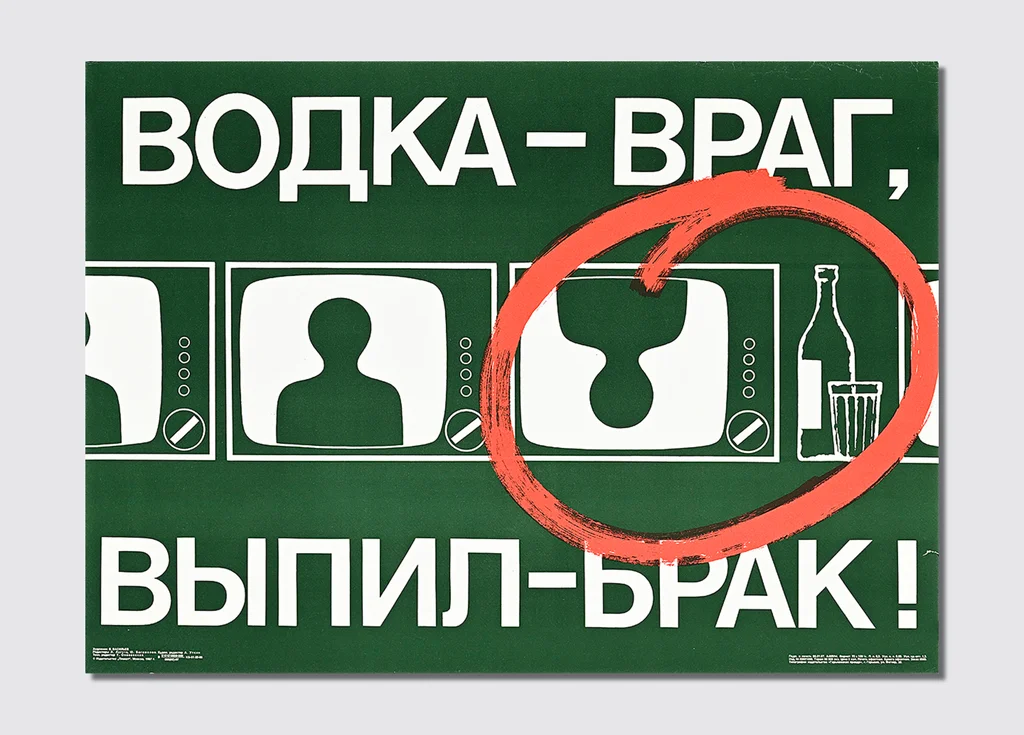
In the final years of Soviet Union, the government tried curbing drinking with public service announcements that visualized alcohol as death. A new exhibition called Just Say Nyet collects the best of them from the late 1980s that looks a little different than what you might first think of when it comes to Soviet propaganda.
Curated by B.A. Van Sise, the exhibition runs from November 12 to April 11, 2027 at Poster House in New York City. This work shows a visual style distinct from the early-20th century Russian constructivist style of big, bold, blocky typography paired with grids and diagonals, or socialist realism, a style associated with mid-20th century Soviet propaganda showing images of people working together in solidarity or depicting the work of the individual as for the good of the whole.
The look of Soviet public health PSAs in the 1980s involves simple symbols like alcohol bottles and labels that are centered in the messaging. The idea is to make visual metaphors about why drinking is deadly as minimal and easy to understand as possible.
“It echoes, in many ways, all the other efforts happening in the waning days of the Soviet Union,” Van Sise tells Fast Company, which he describes as a “humanist view of the problem,” for lack of a better term, because it “focused more on individual health and wealth rather than a person’s value to the state.”
This more humanist approach to government propaganda can also been seen in other antidrug and morality PSAs of the ’80s.
“What’s different here is that you see the concept move from stick to carrot,” Van Sise says.
The work doesn’t depict alcoholism as a drag on the wider society; it asks viewers to consider why quitting drinking is better for them. The message is individualistic, not collectivist. The artist behind one poster called “Don’t Lose Face” replaced a young person’s face with an alcohol bottle as a warning that drinking could cost them their personal identity.
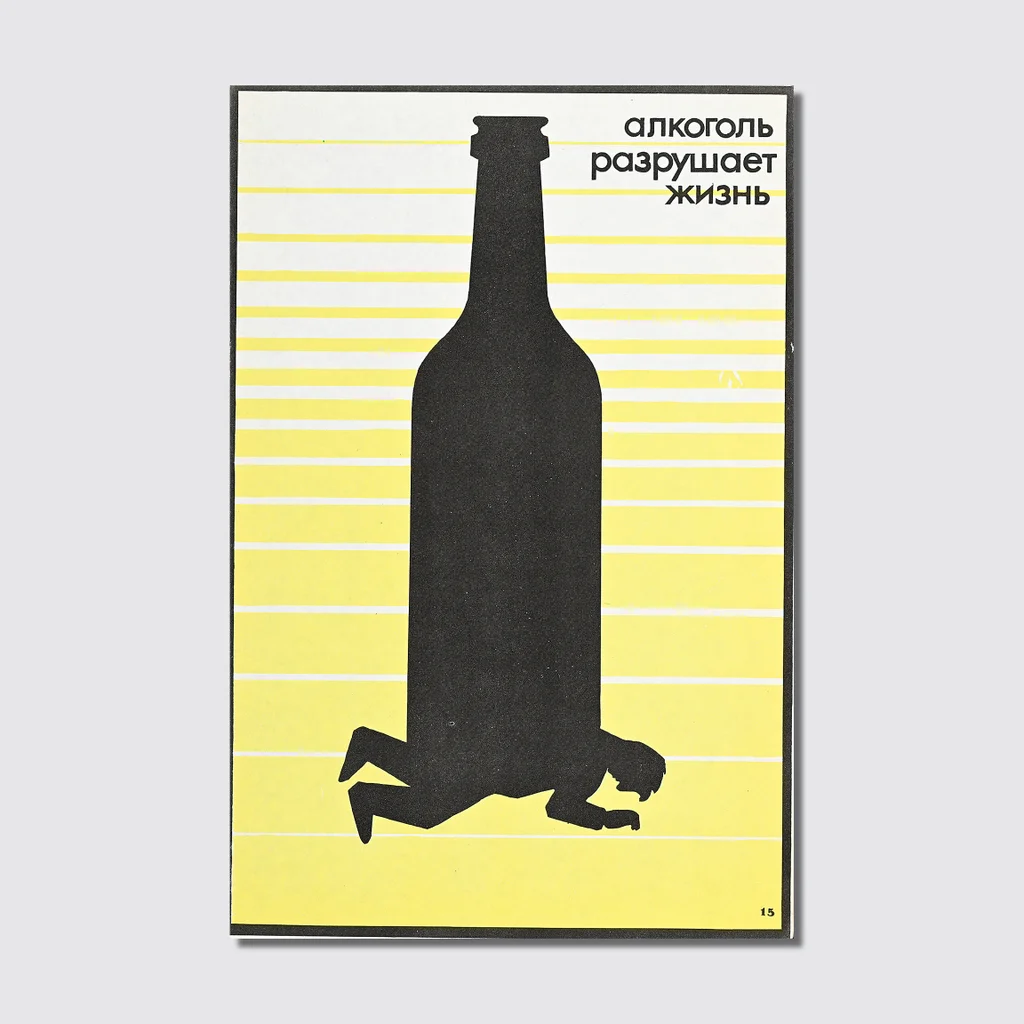
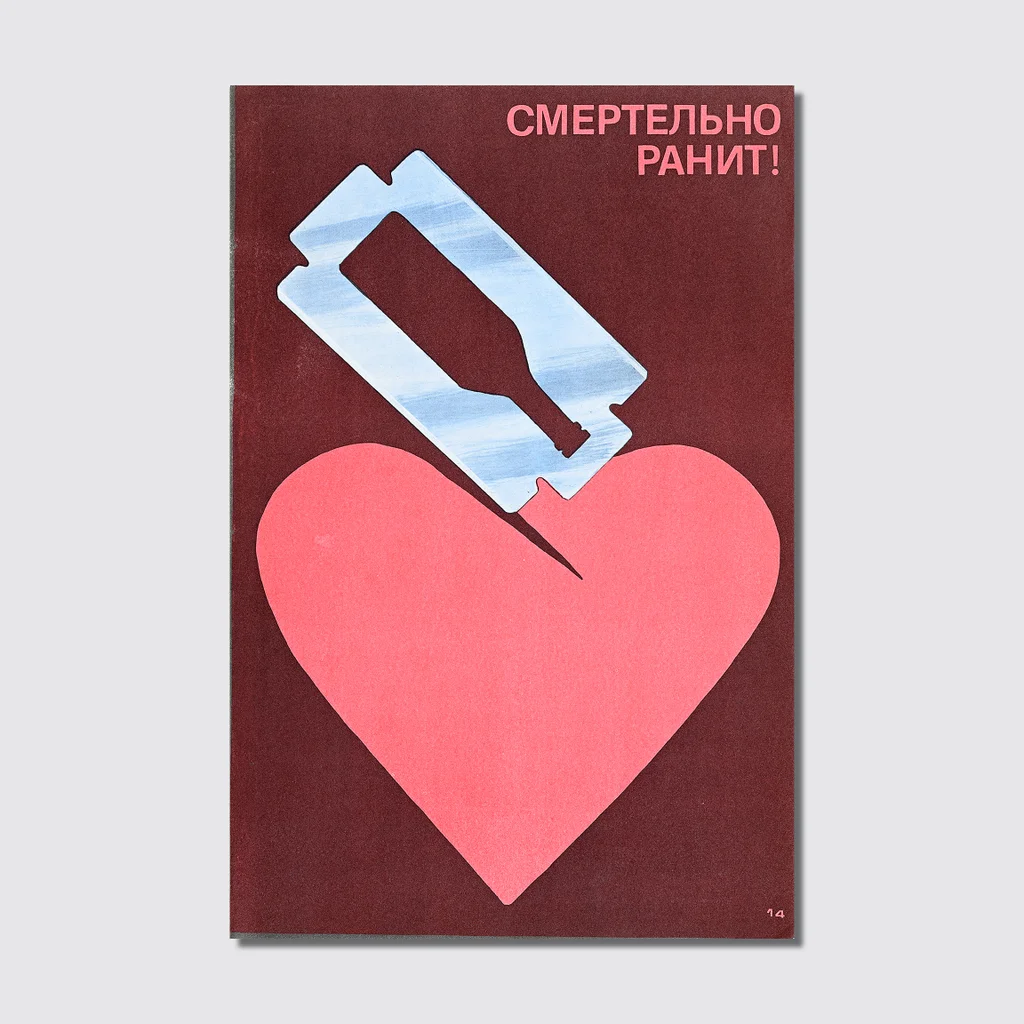
The exhibition also includes work like “Alcohol Destroys Life,” a 1989 poster that shows a bottle crushing a man, and “Lethally Harmful” from the same year, depicting a bottle shape inside a razor blade cutting into a heart shape. The message is that alcohol kills.
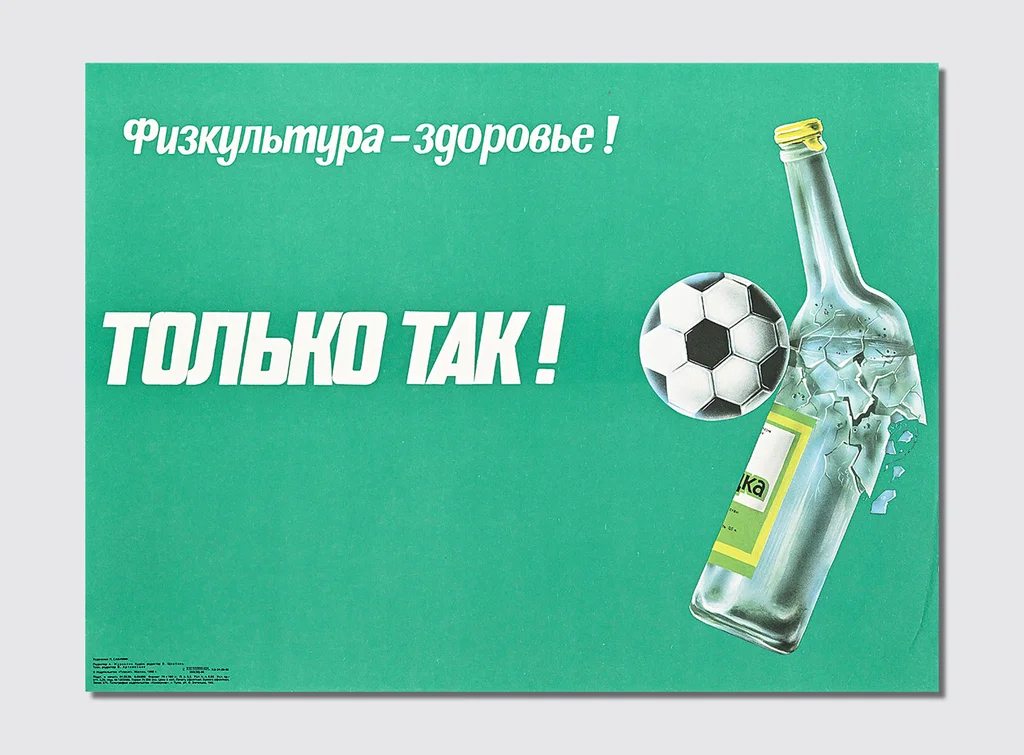
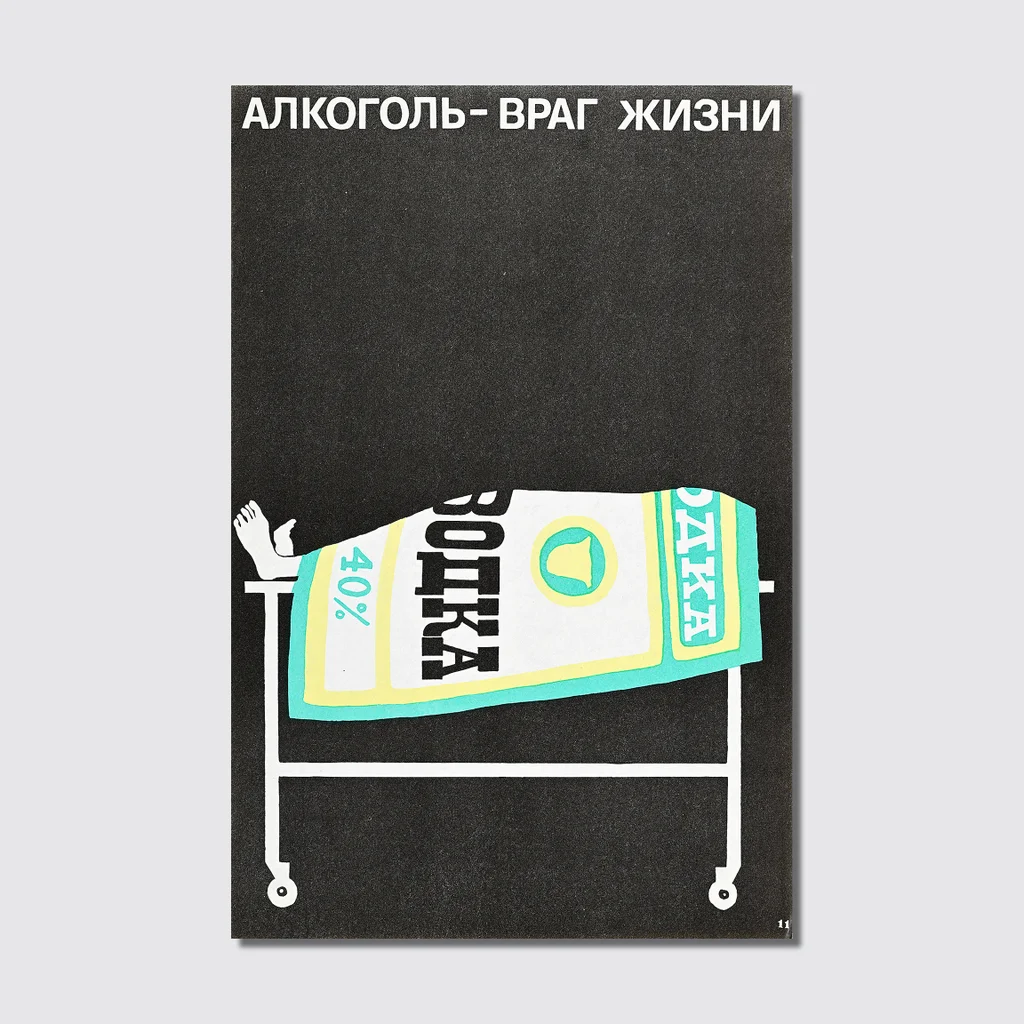
“Physical Education is Health! That’s the Only Way!” from 1988 shows a soccer ball smashing a bottle of vodka, while “Alcohol is the Enemy of Life,” by the designers Sergei Bulkin and Evgeniya Mikheeva, the team that also designed the razor blade and heart poster, uses the label from a bottle as a sheet draped over a dead body on an autopsy table.
The Soviet government launched the anti-drinking campaign in May 1985 as the most serious state-sanctioned effort to curb alcoholism since prohibition during World War I. The truth was, the country had a long-running drinking problem.
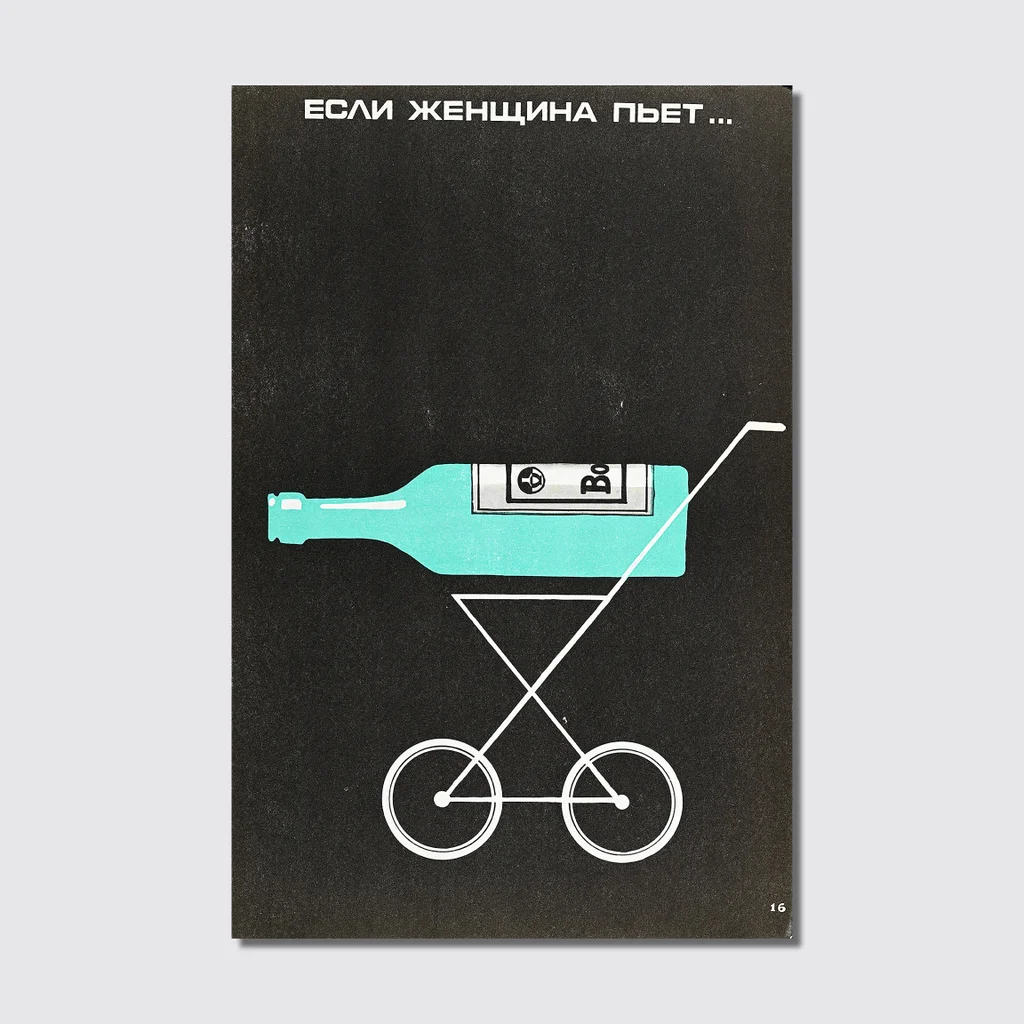
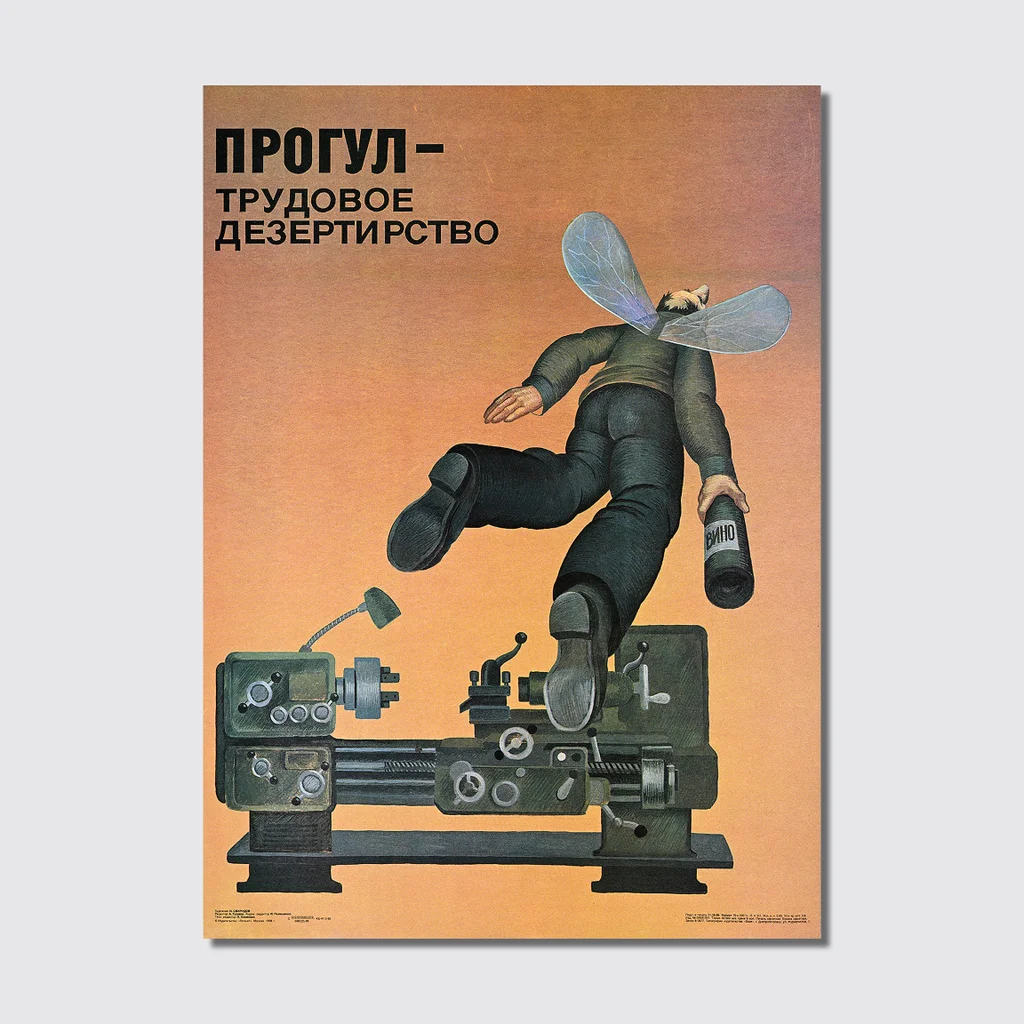
By 1986, per capita alcohol consumption in the USSR had doubled over 30 years, the CIA estimated at the time. The agency blamed rising alcoholism there on factors like societal stresses and a low quality of life, and said it contributed to problems like industrial accidents, worker absenteeism, violent crimes, and declining life expectancy.
By 1985, the Soviet government enacted stricter rules around alcohol consumption and sale, and cut back on state production of alcohol while launching the PSA campaign. The campaign ultimately wasn’t successful, however. It failed for the same reason the U.S. ended Prohibition during the Great Depression and a French sobriety campaign in the 1950s and ’60s floundered: A lot of people drink to make the world hurt a little less for them, and that can’t be conquered with sloganeering.
“People like a drink. Some people need a drink,” Van Sise says. “Americans made liquor illegal, the French made it questionable, the Soviets made it undesirable. But at the end of the day, no slogan is going to dissuade somebody with tremors.”