

June 23, 2026
The vice president claims to have reached a new level of spiritual maturity, but the evidence is nowhere in the pages of Communion.
JD Vance at a 2024 campaign stop in Milwaukee
(Anna Moneymaker/Getty Images)
A few weeks ago, I had lunch with a friend who was born in Venezuela and moved to Texas when he was a child, to a town near the border. He is a from-the-cradle Catholic who wears a cross around his neck, and we talked amiably about Portugal, where he’s been living and working for the last few years.
The conversation turned to religion—more specifically, American Catholic converts, who often share key defining traits. They’re drawn to the pomp and ritual of the church, its formality and intellectual veneer. These qualities are increasingly absent in the more popular Protestant denominations, with their ersatz indie rock and country praise music, casual dress, and the widespread adoption of TED talk-style headset microphones by preachers who scorn conventional pulpits. My friend knew the type, but he said he was more deeply struck by the way American Catholics in Europe were so much more serious about ritual and aesthetics. He wasn’t talking about the theology or values or the way Catholic values might permeate one’s culture or life; rather, he was stressing the outward performance of Catholicism and its physical accoutrements. I was thinking about that as I read JD Vance’s new memoir, Communion.
First, let me get this out of the way: I don’t like JD Vance, and JD Vance and I also have quite a bit in common. I grew up Southern Baptist in rural Alabama in the foothills of Appalachia, and was the first person in my family to go to college. I went to Duke, the only school I applied to, via a combination of scholarships and student loans. I didn’t really know much about the school and suffered a great deal of culture shock when I landed at what turned out to be a kind of boarding school full of rich kids from New York and California instead of the quiet Southern school full of overachieving nerds like me that I imagined. In the eyes of people I grew up with, I went from being the daughter of a local lineman and a part-time contractor to a de facto defector to the “liberal elite” just by attending and graduating. This all roughly corresponds to Vance’s account, in his first memoir, Hillbilly Elegy, of his awkward matriculation into the American power elite after his hardscrabble upbringing in southeastern Ohio.
Like Vance, I also had a Mamaw and Papaw I loved. They were also Southern Baptists who liked guns and cussin’ and talked a lot about loyalty to family. And in my 20s, I cared more about external markers of achievement more than I do now. But unlike Vance, I don’t now imply that if I had to do it all over again, maybe I’d have stayed in my hometown and taken up welding, which would have been just as good. It wouldn’t have—largely because of the kind of policies that Vance and other Republicans support, and their unwillingness to do things that directly and materially help people who are struggling.
Here I should also disclose that I have some recent experience with Vance that doesn’t exactly make me like him more. When Charlie Kirk was shot, I wrote scathingly about his bigotry in this magazine. I had expected right-wing backlash, but I did not expect Vance to call me a soulless hack on national television and claim that I had been paid by George Soros’ Open Society and the Ford Foundation to disparage Kirk—which was all news to me. (If anyone from either organization is reading this: perhaps you’d like my address for the check? The Nation paid me in the low three figures for the column, and my rent is quite a bit higher than that.)
At any rate, thanks to Vance the number of death and rape threats my family and I got were far in excess of what I’d normally get for a column criticizing a high-profile right wing figure. The difference between Vance getting threats and me getting threats is that when a guy sends me a photo from the viewpoint of a shooter holding an AR-15-style platform gun and tells me he’s going to use it on my family—a typical email—I don’t have a Secret Service retinue to check it out. I can only call and be ignored by the FBI after going through an extensive automated system and leaving voice messages that never get returned. I don’t mind criticism, but I do resent the vice president of the United States, whose salary my taxes pay, targeting me individually from a perfectly secure perch in his bulletproof bubble. That said, I hardly represent the worst example of figures in the Trump administration weaponizing their government positions against individual journalists. They do it every day.
Current Issue
But the main reason I disliked Vance well before all of that was because I read Hillbilly Elegy. I didn’t know who he was when the book came out, and I picked it up, hoping someone would finally get the contours and messiness of how I grew up right. By the end of it, I wanted to hurl it across the room: it wildly caricatured what poor rural people are like, in a way that was uniquely flattering to JD Vance. It made broad generalizations indicating that the kind of people I grew up with were, as a class, lazy, and unwilling to pull themselves up by their bootstraps as he did.
I remember having that attitude when I was 19 or so. My logic was that if I could work hard and read books and put myself through college, then, well, anyone could. But I grew out of that because I was exposed to the real world. I met people who had struggled more than I did, were smarter, and worked harder—as well as many people who struggled and worked little, if at all. I soon realized that, all too often, the former group suffered while the latter prospered. I saw people who were vulnerable further harmed and even destroyed by the policies that Vance now espouses. Seeing that disparity first-hand is what radicalized me, moving me well to the left from my conservative upbringing. The injustice of it made me angry. It still does. I remember the person I was when I thought anyone who didn’t do what I did just hadn’t made enough effort, and I’m relieved that I outgrew her in my 20s.
Vance, meanwhile, still hasn’t. He leans hard on anecdotes in both of his books. His first big example of the stubborn shiftlessness of the Appalachian poor comes early in Hillbilly Elegy, when he recounts the unreliable work habits of an 19-year-old couple raising a newborn child whom he worked with at a tile warehouse. I don’t doubt that they were prone to flake out on the job, but they were also teenagers whose brains were still developing and were probably not equipped to raise an infant. Of course they were unreliable.
Thanks to people like Vance, they also have no safety net: no health insurance outside of employment and little in the way of maternal care. If they need food assistance, they will have to jump through endless hoops to get it. There are now work requirements for most federal income supports, which means if they can’t get a job, they’re left to fend for themselves with a dwindling supply of resources. In order to qualify for many forms of assistance, they also might have to be married, regardless whether they want, or feel ready, to be. In Vance’s ideal world, had the pregnant teenager who seemed so work-averse to him in his youth had decided she was not ready to be a mother in the first place, she would not have been able to get an abortion.
That anecdote stands out to me because in Communion—the newly published account of Vance’s spiritual odyssey—he comes very close to suggesting that teen pregnancy is a good thing because birth rates are low. This is, I expect, where the pro-natalist movement—which is right-wing in nature and rejects immigration as the fastest way to increase birth rates—is headed. After decades of decrying teen pregnancies (attributed to the coarsening and liberalization of culture, MTV, or the overall laxness of the liberal ethos), the right has reversed course. White-nationalist thought leaders like Vance’s private-sector boosters Peter Thiel and Elon Musk now hold that white women must have more babies at the earliest opportunity.
This mandate comes through strongly in a key anecdote in Communion. Vance describes watching a pair of women he’s seated with on a train in Connecticut; he projects all manner of maliciousness onto a woman traveling alone and dressed like a professional as the woman seated opposite her—a young mother with a crying infant—comes across far more sympathetically as the object of the professional woman’s scorn. Vance expresses admiration for the mother, claiming that teen moms are typically treated with variations of this same alleged elite hauteur.
Popular
“swipe left below to view more authors”Swipe →
Vance of course presents no evidence that the young mother was a teen, or that the nicely dressed woman was childless, or that she was somehow offended by the baby; he didn’t bother to talk to either of them in order to find out. Nevertheless, he builds out his pet culture war narrative of heroic natalism from this locomotive set piece, treating the scene as emblematic of all that now ails an American social order besieged by liberalism, secular fatalism and hostility to family values.
In the vernacular of my hometown: do what, now? (That’s southern Appalachian for “Pardon?” “Excuse me?” Or “What the fuck did you just say,” for those who aren’t fluent.) This sort of prefab cultural lamentation, plucked out of the stuff of an Amtrak commute, is what makes Communion an intellectual failure. It’s less the searing introspective study you’d find in classics of Catholic conversion such as Thomas Merton’s The Seven Storey Mountain than a haphazard collection of talking points and could-be-anybody vignettes a politician would deploy on the campaign trail. As fodder for spiritual reflection, Communion is unconvincing at best and irritatingly trite at worst. It assumes a stupid reader, or the very least, an unsophisticated and inattentive one. This is, I expect, how Vance views his constituents—the people who are most likely to pick up this book.
The body of the book also feels slapped together—precisely the kind of work you see from writers who got a two-book deal from a publisher and are late delivering the second one. It doesn’t have a coherent arc, vacillating instead between Vance’s struggles in coming to grips with what Christian faith means and requires and his boilerplate defense of the Trump administration’s contradictions of those demands. The two throughlines never really meet up—except in the case of abortion, which Catholics of J.D. Vance’s persuasion and Trump supporters oppose.
The most interesting thing about Communion are its inadvertent moments of self-disclosure. In fiction, there is a kind of narrator that I think of as practicing the “naive” style, which has a narrator revealing things about themselves unwittingly. The naive narrator lacks self-awareness, leading to the delusional conviction that they are controlling their narrative when that’s anything but the truth. One of my favorite examples of this comes from a short story by Adam Haslett, titled “Notes to my Biographer.” Here is Haslett’s narrator:
Two things to get straight from the beginning: I hate doctors and have never joined a support group in my life. At seventy-three, I’m not about to change. The mental health establishment can go screw itself on a barren hilltop in the rain before I touch their snake oil or listen to the visionless chatter of men half my age. I have shot Germans in the fields of Normandy, filed twenty-six patents, married three women, survived them all, and am currently the subject of an investigation by the IRS, which has about as much chance of collecting from me as Shylock did of getting his pound of flesh. Bureaucracies have trouble thinking clearly. I, on the other hand, am perfectly lucid.
Vance is not personally naive, but as a narrator, he comes off that way. That’s because despite all of Communion’s yammering about spiritual introspection, he lacks basic self-awareness. He displays the same arrogance and certainty that he did in Hillbilly Elegy but casts it here as an evolved worldview he came to over years of introspective moral interrogation. As a result, his own actions and policy positions directly repudiate the Christian values he claims to hold dear.
He does this because Communion is another performance, in the same vein that Hillbilly Elegy’s moralizing over the feckless moral character of his fellow Appalachians permitted Vance to claim status as a cultural outsider in the bastions of elite liberal power while forging a successful career as a venture capitalist and politician from those same bona fides. This deft maneuver spared Vance from the familiar ordeal of code-switching his way back and forth from his upbringing to his future prospects. That’s the option forced on many of us who grew up lower-income and blue-collar and now have the privileges associated with white collar jobs and elite educations, even when we’re not conscious of it.
In Communion, Vance has evidently become very conscious of it, and apologizes for missteps in the first book, which he now realizes probably alienated a great many women and rural people. After suggesting in Hillbilly Elegy that people in Appalachia didn’t overcome the challenges he did because they’re lazy, he now goes out of his way to venerate people in blue-collar jobs—something that behooves his present post as de facto emissary to heartland America in the second Trump administration. He’s now hymning the soulcraft of blue-collar work, and suggesting that a fulfilling career as a welder affords a quality of life equivalent to any benefits he got from Yale Law School. He claims his Papaw only wanted him to get an education because society misleadingly persuaded his Papaw that a white-collar job and the credentials admitting entry into one were superior to the life he knew in Appalachia.
I’d bet Vance’s Papaw would beg to differ if he were still around to do so. Welding is hard and physically destructive work. It’s especially difficult to do in middle-age and beyond. The ceiling on a welder’s income is much lower than that of anything Vance was able to pursue with his law degree—notably during his tour as a Silicon Valley venture capitalist, which got him on the radar of power players like Musk and Thiel. Papaw likely wanted young Vance to have a desk job not because he thought desk jobs were more valued by society but because he believed, quite rationally, that Vance would be far better off economically while being spared the brutal long-term physical demands of welding.
On some level, Vance has to know this; unlike his boss, he’s not wildly ignorant of the downsides of jobs like his Papaw’s. But now that he offended all white non-college educated welders in Ohio with Hillbilly Elegy, he has to make amends. And since he’s not really able to speak to them from shared experience, he’s left pandering to them in a patronizing quasi-spiritual register, akin to the one adopted by the comforters of Job.
It’s extremely convenient for Vance to express contempt for elite education and credentials, after he’s acquired them in abundance and has cleaned up as a result. A more Christian outlook would involve making such benefits available to all Americans, regardless of their class backgrounds or present incomes. But the reason to deride elite education from the standpoint of a MAGA political leader is to keep exploiting any education-based resentments as endlessly renewable fodder for culture warfare—a ploy that will never entail any actual downward redistribution of educational resources.
Vance’s sermonizing on the virtues of welding reflects another narrative reversal in Communion. Here both Mamaw and Papaw—the central figures of Vance’s Appalachian upbringing in Hillbilly Elegy—have undergone complete personality transplants. One thing that put me off in the earlier book was how proud Vance was of their hotheadedness and knee-jerk gravitation toward violence, as evinced in his quasi-admiring accounts of their gun waving, and frequent temper tantrums. He proudly recounts how his grandparents wrecked a pharmacy because the clerk told his young Uncle Jimmy to stop playing with an expensive toy on display. Mamaw grabbed things off the shelves and threw them while Papaw told the clerk he’d “break your fucking neck.” Vance was amused by their behavior and implied that this is just what hill people are like.
I grew up around plenty of poor Appalachians; being a hot-headed asshole is not a cultural folkway shared among my people, and neither is threatening people with guns, which happens quite a bit in Hillbilly Elegy too. (Vance again reports lovingly that his Mamaw died with 19 loaded firearms, even though as we’d say in Alabama, anyone with a lick of goddamn sense knows all that artillery wasn’t for huntin’ deer.) In Communion, these same people seem to have undergone a backwoods version of Vance’s own conversion experience. So instead of wreaking mayhem on family members and local retail employees, they’re now outfitted with more tempered, wise and thoughtful miens. Instead of reaching for a cache of firearms, they’re seen periodically dispensing pearls of wisdom, or platitudes seemingly drawn from Chicken Soup for the Soul: “Too much TV will rot your brain,” for example, and “When you see an old person trying to do something, get off your butt and help them.” But to keep the local color quotient high, they still do so with a few f-bombs thrown in.
In recounting his own spiritual growth, Vance also tries to rebut the idea that he hasn’t exactly been respectful to his wife, Usha, who in one notorious instance, he once introduced in a speech with a sentence beginning “she’s not white, but…” It’s hard to thread the needle when you’ve built your political persona around arguments that brown immigrants who don’t speak English and come from poorer countries are bad for the country and women should spend less time worrying about their careers and more time figuring out how to make more babies when your wife is a successful and well-educated lawyer and the daughter of Indian immigrants. In Communion, Vance mostly acts as though the needle isn’t there in the first place. He puts Usha on a pedestal while suggesting that most working women are the miserable victims of a hoax perpetrated on them by a soulless individualist social order that stresses career achievement above all else. This leaves him in the awkward position of insisting Usha hasn’t fallen for the same line; she’s simply not ambitious because she values work that is meaningful. In reality, she is a Yale Law grad who clerked for John Roberts. That she is and was not ambitious is a lie—but the larger point here is that ambition is no obstacle to doing meaningful work. It does not make women subpar mothers any more than achievement makes men crappy fathers.
The most excruciating parts of the book, however, are where Vance employs a tortured moral calculus that prioritizes small violations of etiquette over high-stakes moral issues in order to paper over his own hypocrisy. He chides himself for things like looking at his phone when he should be paying attention to his toddler—what a wholesome dad! But he doesn’t seem deeply troubled over immigrant toddlers torn away from their parents because someone neglected to fill out paperwork or because ICE has apprehended them under false pretenses, and the lifelong trauma that can cause. He disparages economists and their profession, but doesn’t question a Republican political establishment that wants elderly people to work longer so they can continue to contribute to the GDP, seeks to roll back child labor laws, and forces parents juggling multiple jobs to prove over and over again that they deserve food aid and health insurance.
The logic behind this gnat-straining pseudo-moralizing is familiar to me because it’s part of the hypocrisy that drove me away from my particular childhood faith: a manners-obsessed Christianity that considers a swear word a bigger harm than tormenting a trans child or cutting SNAP benefits or deciding that it’s okay for people to start dying of AIDS again because the government shouldn’t fund effective HIV prevention like PrEP. It’s the kind of faith that prompted a woman in my church to tell me I should go home and change clothes because she could see my pantyline through my knee-length skirt, but would later vote for accused pedophile Roy Moore and accused rapist Donald Trump. It’s a white, conservative praying-in-public kind of Christianity that thrives on selective virtue-signaling and contravening Christian values in everyday behavior.
This dynamic holds especially true when God’s children aren’t white, straight, or native-born Americans. The church I grew up in brought gifts to poor Black people at Christmas while making them feel unwelcome if they tried to join the all-white congregation. This kind of Christianity pats itself on the back for sending rescuers to other states in the aftermath of high-profile natural disasters, but calls ICE on the contractors fixing a roof next door—and who in all likelihood rebuilt half the town after the last tornado. People I know who have turned away from the church have not done so because they’ve been indoctrinated by liberal elites at Harvard—they left the faith behind because they know Christianity primarily through this kind of behavior.
It makes sense then that Vance’s preferred brand of Catholicism plays up rituals and performance. The highest values of real Christianity are difficult to uphold. They require personal sacrifice on behalf of others—strangers, even. That’s a wholly alien precept for a Republican party that rejects the social contract and dogmatically insists that individuals are not responsible for the welfare of others. Christian charity plays no role in a MAGA regime that refuses to direct aid to vulnerable people unless they are able to demonstrate that they personally deserve it—and are then subject to bureaucratic manipulation and malign neglect from the Elon Musks and Russell Voughts of the world. It’s easy to imagine a modern-day version of Christ, who upon taking up the cross to suffer for the sins of others would be accused by people like Vance of “suicidal empathy”—the justification du jour of conservative Christians who believe sacrificing self for others is a bridge too far.
In Communion, Vance repeatedly comes back to Matthew 17: 15 – 20, which says:
Beware of false prophets, who come to you in sheep’s clothing, but inwardly they are ravenous wolves. You will know them by their fruits. Do men gather grapes from thornbushes or figs from thistles? Even so, every good tree bears good fruit, but a bad tree bears bad fruit. A good tree cannot bear bad fruit, nor can a bad tree bear good fruit. Every tree that does not bear good fruit is cut down and thrown into the fire. Therefore by their fruits you will know them.
Communion fails on exactly these terms. J.D. Vance is the kind of person who claims on the page that his spiritual journey is rooted in humility and inquiry, then turns around and lectures the actual Pope about theology. He cannot convincingly portray himself as someone who has thought hard about what Christianity has to teach about what we owe our fellow humans Nor can he persuasively show that he respects people who are struggling, or that he places his family above his own ambitions and quest for power. The fruits of Vance’s work exist in plain sight—and they are eroding the foundations of any Christian social ethic.
To repeat a platitude my Mamaw, and probably his, liked to invoke: actions speak louder than words. We know JD Vance by his fruits, and they’re overwhelmingly rotten.
With the midterm elections now firmly upon us, the question is whether Democratic candidates will do more than merely occupy ballot lines as mild alternatives to the red-hot crisis that is Donald Trump.
As Trump spends over $1 billion a day on a globally destabilizing war on Iran and admits that he doesn’t “think about Americans’ financial situation,” millions across the country are struggling with the surging costs of essentials. Democrats must seize this moment and advance bold, small-“d” populist ideas—not settle for cynical caution that once again snatches defeat from the jaws of victory.
The Nation elevates progressive ideas, movements, and elected officials achieving real change across the country into the national conversation. At the same time, our journalists are exposing how crypto and AI-funded super PACs are spending hundreds of millions of dollars to knock out candidates they oppose, reporting on the devastating impact of the Supreme Court’s evisceration of the Voting Rights Act, and sounding the alarm on attempts by red states to quickly redraw electoral maps, disenfranchising Southern Black voters.
We can play this critical role because of support from readers like you. This June, we’re raising $20,000 to power The Nation’s independent journalism in the run-up to November’s immensely consequential elections.
It’s in our power to build a more just society, and your support at this critical moment brings us closer to that bold vision. I hope you’ll donate today.
Onward,
Katrina vanden Heuvel
Editor and Publisher, The Nation
More from The Nation
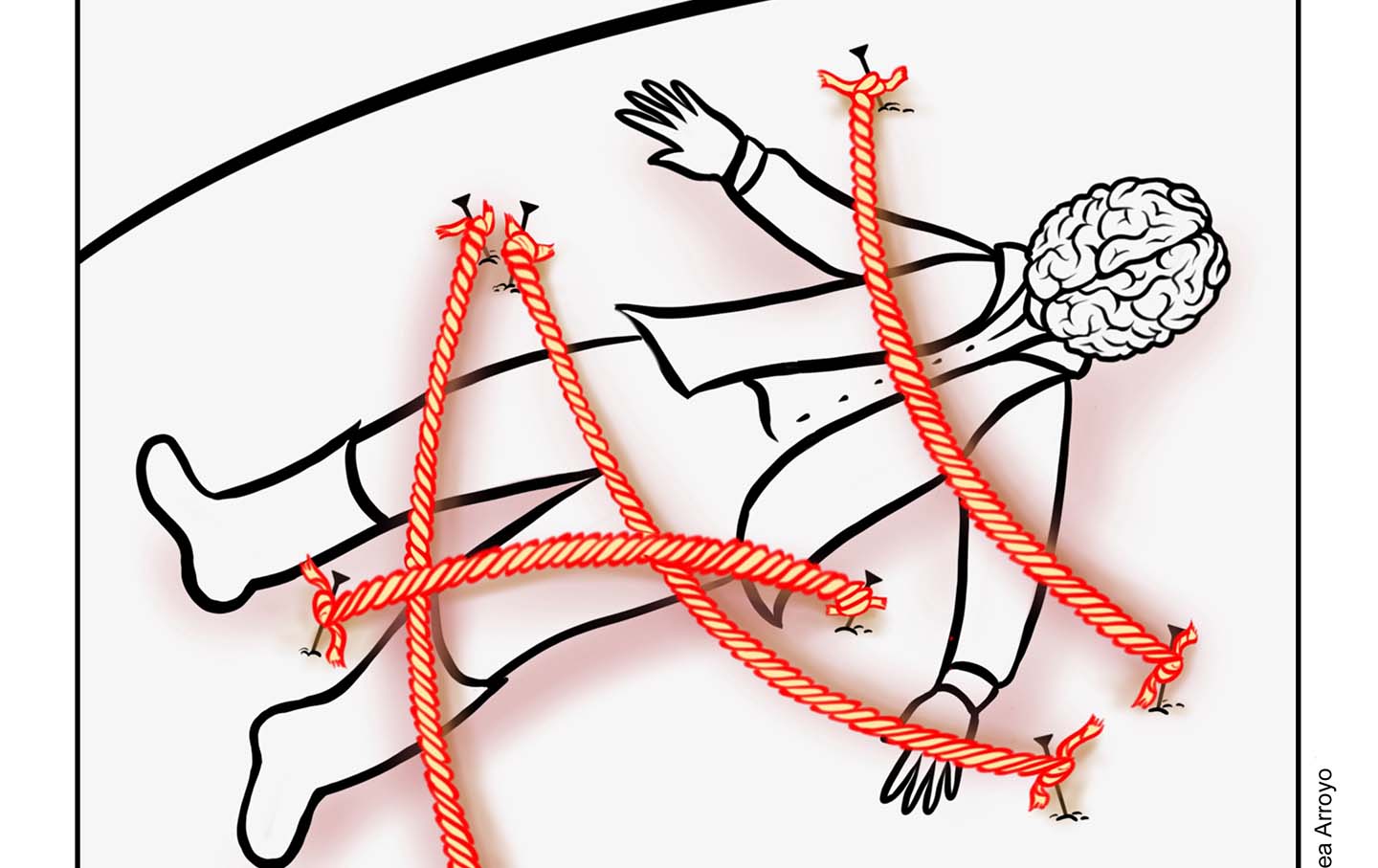
The promise of AI comes with risks—from misinformation and bias to the erosion of human agency.

The president’s attempt to make his mark on the National Mall has become a big, wet mess.

It’s not enough to draw “neutral” districts. We need to overhaul the entire voting system.

As a critical primary approaches, we talk to the organizer and congressional candidate about Palestine, New York City, and her experience of an unexpectedly vicious campaign.

His name isn’t on the ballot, but the veteran congressman’s working overtime for Micah Lasher.