
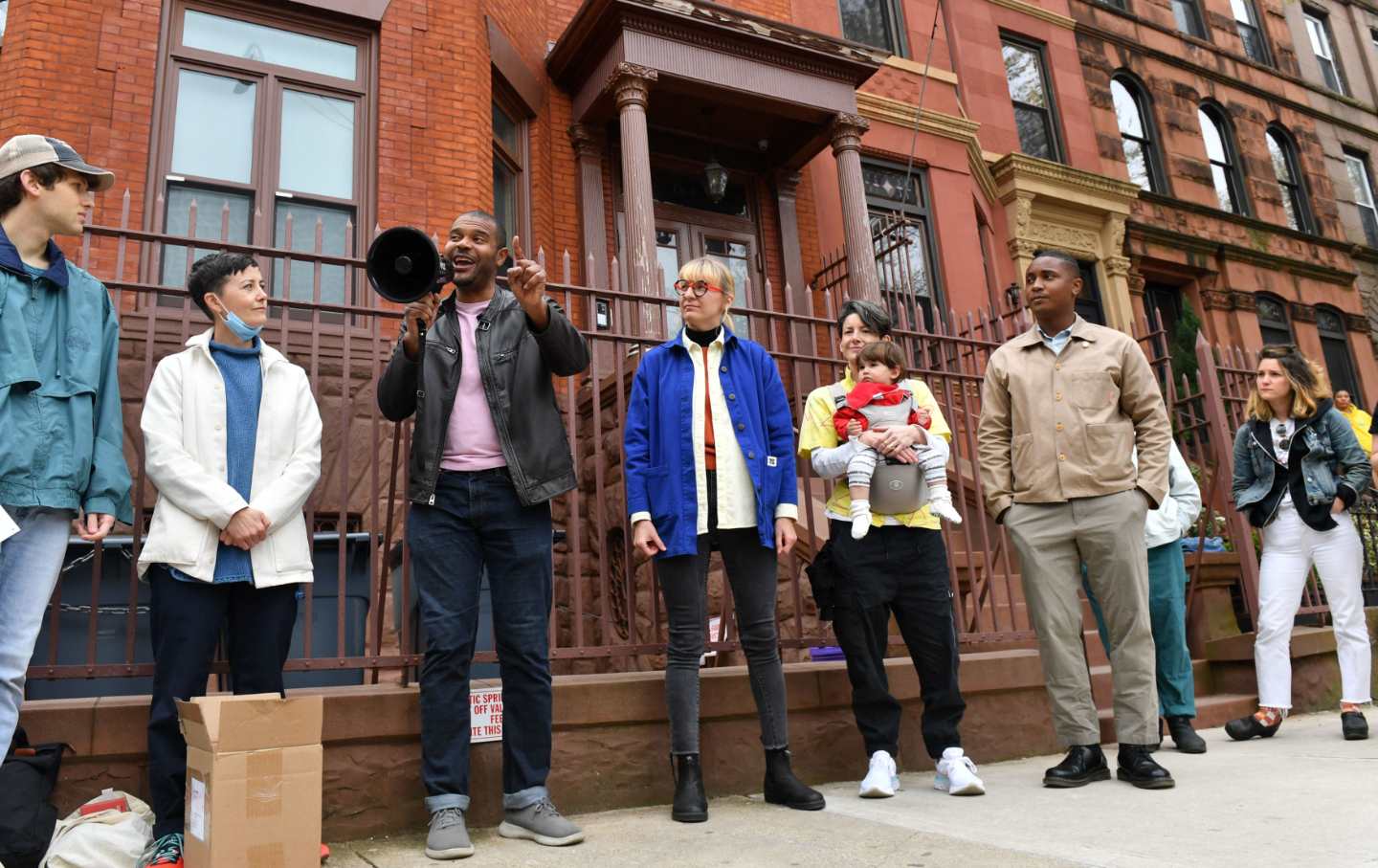
It was a mild June day in 2020 when the tensions simmering between Brooklyn’s Black political establishment and a group of political insurgents broke into the open. Jabari Brisport and Phara Souffrant Forrest, candidates endorsed by the Democratic Socialists of America for seats in the New York State Senate and State Assembly, led approximately 200 fellow DSA members in a demonstration outside the home of then–City Council member and majority leader Laurie Cumbo. Using a bullhorn and a level of direct action that was uncommon among Central Brooklyn politicians, Brisport, Forrest, and demonstrators were calling on Cumbo to strip $3 billion from the New York City police budget.
The moment reverberated loudly through the storied political corridors of Central Brooklyn. For Cumbo and other long-established Black political leaders who claim Black Brooklyn as their turf, the protest amounted to an invasion, an act of anti-Blackness meant to intimidate Cumbo, and a warning shot across the bow of the reigning political order. Although Brisport and Forrest are themselves Black and longtime Brooklyn residents, those in their contingent, according to press accounts at the time, were not just mostly white but also new to the neighborhood. So at the height of the Black Lives Matter protests, here were people reported to be white gentrifiers making demands on a Brooklyn-born Black elected official.
Cumbo was having none of it. A week after the rally, she led a contingent of her Black supporters, including Velmanette Montgomery, the longtime incumbent retiring from the state Senate seat Brisport was vying for, on a counterdemonstration to Brisport’s house, where press accounts reported that Kirsten Foy, a former regional director for the National Action Network, Al Sharpton’s organization, hurled the epithets “coon” and the N-word at Brisport. In Foy’s eyes, Brisport, whom Cumbo publicly tagged as the original protest’s ring leader, represented “the reason Harriet [Tubman] carried a gun…. Because only someone with that character would bring a white lynch mob, and that’s what it was, a white lynch mob, to a Black queen’s home to terrorize her and to terrorize her child.”
Brisport and Forrest, now a sitting state senator and state Assembly member, respectively, told me recently that they felt that the blowback they received from Cumbo and her allies was exaggerated and that they exploited the incident to score political points. “[Prior to that demostration], there were pretty regular protests outside the home of [Senator] Chuck Schumer, which I believe is what inspired organizers to go to Cumbo’s home,” Brisport explained. “This was during Covid and organizers felt they couldn’t go to her office. It was pretty respectful outside of her apartment. I’m pretty sure I said, ‘thank you’” to Cumbo for her service on the City Council.
Almost six years later to the day, the New York State Democratic primary will represent the latest and possibly most defining chapter in this conflict. On June 23, a number of competitive races in the deep-blue districts of Central Brooklyn will feature face-offs between these rival formations.
On one side of the ledger is the legendary Black Democratic club Vanguard Independent Democrats Association, widely known as VIDA, which represents a voter constituency that identifies with a 50-year legacy in Central Brooklyn. Candidates affiliated with VIDA tend to focus their campaigns on the delivery of vital services, improving education, and supporting seniors. And in a nod to the outsize influence of homeowners in Central Brooklyn—even though the vast majority, 78 percent, of residents of the Bedford-Stuyvesant neighborhood, for instance, are renters—fighting deed theft has become a signature issue.
On the other side is the Central Brooklyn contingent of the Democratic Socialist of America, an activist organization designed to “fight for reforms that empower working people.” DSA is the largest socialist group in the nation and the Central Brooklyn branch of the New York chapter is the political home to a membership that is largely white, relatively new to the neighborhood, and mostly under the age of 40. According to DSA’s website, the DSA is running 10 insurgent candidates in New York City this primary season. Half of these candidates are Black or brown candidates, most with little to no electoral experience, running against Black or brown Democratic establishment candidates in rapidly changing districts. All but one is under 40. DSA-endorsed incumbents and insurgents across the country almost uniformly emphasize “universalist” principles: protecting the rights of tenants, taxing the rich, and providing universal childcare, while highlighting that they take no money from corporations, the real estate lobby or any outside interests.
DSA’s 38-year-old Jabari Brisport, who defeated former New York State Assembly member and establishment candidate Tremaine Wright in a shocker in 2020 to become state senator for the 25th Senate District, is being challenged by Marlon Rice, a 51-year-old who has focused his career on community-based work in Central Brooklyn, and is backed by VIDA. At a recent debate, Rice interpreted any policy deemed hostile to homeowners—like Mamdani’s flirtation with a reduction in the state’s estate tax threshold—as an attack on Central Brooklyn’s long-standing Black population. And in the overlapping New York State 56th Assembly District, the 61-year-old incumbent and VIDA candidate, Stefani Zinerman, is being challenged by DSA’s Eon Huntley, 41-year-old PTA president and fashion retail specialist who barely lost to Zinerman in 2024. (A third candidate, Michael Bailey, is also on the ballot.) The Primary also features races in which DSA-affiliated and VIDA candidates are vying to represent Democratic Party voters at the county and state levels as District Leaders.
Although local, these races have attracted state-wide and even national attention. At stake is the political and narrative control of one of the nation’s largest and most iconic clusters of neighborhoods with historically substantial concentrations of Black residents – starting from Fort Greene and moving east through Clinton Hill, Prospect Heights, Bed-Stuy, Crown Heights, Ocean Hill and Brownsville and then south into East Flatbush—known as Central Brooklyn. Prominent Black elected officials including House Minority Leader Hakeem Jefferies, Representative Yvette Clarke, New York Attorney General Tish James and New York City Public Advocate Jumaane Williams have lined up for the VIDA candidates, while Mayor Mamdani, Representative Alexandria Ocasio-Cortez, Senator Bernie Sanders and former representative Jamal Bowman have endorsed the DSA candidates.
Tiffanie Burt, VIDA’s current president, does not fit the VIDA-member archetype of the 45-year-old-plus, homeowning, long-standing Bedford-Stuyvesant resident. The 38-year-old transplant from Cincinnati arrived in New York in 2013 and lived in Harlem before eventually settling in an apartment that she rents in Bed-Stuy in 2018.
But Burt might just be the new blood that VIDA needs at this moment. As a Democratic political club rooted in Bed-Stuy, VIDA’s battle against obsolescence reflects the existential threat experienced by the surrounding historically Black population that has helped define New York since the 1830s. Bed-Stuy has been transformed by an exodus of Black homeowners and renters, some of whom have cashed out of their wildly appreciated homes to go live in more retirement-friendly cities like Atlanta and Durham. Others have been forcibly pushed out by predatory lending and title transfer practices and rising unaffordability.
As these Black folks left, families and young single people moved in, eager to gain a foothold in an area known for its Victorian brownstones, tree-lined blocks, cultural vibrancy, and a profound sense of community. According to the Furman Center, Bed-Stuy was 75 percent Black in 2000; by 2024, that share had dropped to 38 percent. In 2000, households making under $20,000 per year represented the largest share of households (30.4 percent). By 2024, households making between $100,000 and $250,000 represented the largest share of households (31.4 percent), and households with children 18 years and younger dropped from 45 percent to 20 percent.
With family connections to the Bronx, Burt represents one of the relatively few young Black professionals who have managed to repatriate to New York in recent years. “I went to school at City College for my master’s. I graduated, turned 30, and moved to Brooklyn, all in the same month,” described Burt. “I was honestly just looking for a safe haven. I knew somebody who knew someone else. And that’s what brought me here.”
Burt’s communications background and civic interests led to her involvement in judiciary campaigns supported by VIDA, where she quickly rose to leadership. VIDA is one of hundreds of neighborhood improvement organizations—economic and housing development corporations, block associations, churches, cultural centers, and political formations—in Bed-Stuy that enabled this neighborhood to become a stable community for Black working- and middle-class folks. But with the decline of the Black population, the glory days of those institutions are behind them. Burt, with her millennial and first-generation Bed-Stuy sensibilities, paired with her personal investment in other Bed-Stuy legacy institutions, like Mount Lebanon Baptist Church and Community Board 3, is the personified bridge between the old Bed-Stuy and the new.
For Burt, her connection to VIDA enables her to feel rooted in her community. “A lot of us are not paying attention. They’re taking away our reproductive and voting rights. We’re losing our voice.” Burt told me that she has been mentored by VIDA members who are Generation X, baby boomers, and pre–baby boomers. “As a transplant from Ohio, I get family, people who defend me, a body of elders and a sense of belonging,” she said.
You can’t understand the “new” Bed-Stuy without knowing its history. Starting with the 1975 election of Al Vann, who grew to public prominence as the leader of a movement for Black community control of schools in Ocean–Hill Brownsville, a young generation of left-leaning local Black activists and civic leaders, steeped in the tradition of the civil rights and Black power movements, began to challenge the white political structure in their own backyards. By the late 1970s and early ’80s they began mounting successful campaigns for city, state, and federal offices against the formidable Brooklyn Democratic Party machine. As newly elected officials, savvy field organizers, and brilliant legal strategists, figures like Major Owens, Ed Towns, Roger Green, Annette Robinson, Velmanette Montgomery, Clarence Norman Jr., Thomas and Frank Boyland, John Flateau, Esmeralda Simmons, and Paul Wooten became identified with this new insurgent energy.
Vann consolidated power in Bed-Stuy through the creation of his own political club, VIDA. But he was also the central figure in organizing this new guard of Black elected officials and their operatives into a loose federation called the Coalition for Community Empowerment.
For most of the 1980s, ’90s and early aughts, VIDA and the Coalition for Community Empowerment (CCE), dominated the political ecosystem in Central Brooklyn by directing public money into local organizations and institutions, establishing patronage mills, coordinating field operations for campaigns, and gatekeeping political candidacies. CCE not only successfully broke the hold that the powerful Brooklyn Democratic Party machine had on Central Brooklyn but also went on to replace it with its own machine, form one of the largest concentrations of Black elected officials in the nation, and expand voting rights in New York City.
Vann, VIDA and CCE also went on to claim a rich legacy. Vann represented Bed-Stuy in the New York State Assembly and then the New York City Council continuously for almost 40 years and helped steward Central Brooklyn’s rise into one of most important Democratic voting blocks in the state. He and the members of CCE are credited with founding community anchor institutions, including the Center for Law and Social Justice and Medgar Evers College. The journalist Ron Howell recounted that, in the early ’80s, the CCE legal team “filed a series of lawsuits arguing that district lines should be redrawn to allow for more minority representation. One of the suits went to the US Supreme Court and was decided in their favor. All together, the actions resulted in the creation of a dozen new minority legislative seats in New York state.”
The peak of VIDA and CCE’s ambitions came in the mid-1980s when they unsuccessfully tried to run Herman Badillo for mayor and Vann himself unsuccessfully ran for Brooklyn Borough president. But slowly, in a story as old as politics itself, the upstarts who initially challenged the political establishment became the palace guards for the establishment itself. VIDA, an organization once known for aggressive field operations and street campaigns, began to rely on the name recognition of incumbency. And even some of its founding leaders now admit that they held on too long before handing leadership over to a new generation—without updating its mission and social-change strategies to fit a new era of politics. Esmeralda Simmons, the founding executive director of the Center for Law and Social Justice, marks the moment the Coalition for Community Empowerment completed its transition from insurgency to establishment when Coalition member Assemblyman Clarence Norman Jr. became the Democratic Party boss in Kings County in 1990. By 1997, the local newsmagazine City Limits published a piece titled “Al Vann and the Revolution. Unplugged” that lamented that “Vann has left behind the revolutionary rhetoric. He speaks more about business enterprises as Bed-Stuy’s salvation, and focuses his attention on finessing contracts and grants for organizations and businesses in his home turf.”
CCE faded away once the founding generation of elected officials retired. VIDA proudly continues to support candidates, assign poll workers, run field operations, give out awards to local leaders, and organize community programs. Burt says it maintains a modest but active membership of over 150 people. Simmons regrets that younger political activists aren’t more aware of CCE and VIDA’s roots. “The old guard had a presumption that everybody knew what VIDA was, and we handed it over to younger people and didn’t give them any direction or didn’t tell them any history,” says Simmons. “There was very little political education about Pan-Africanism and the whole radical side of VIDA. That’s on us.”
Like Tiffanie Burt, Maya Meredith came to New York for college and then stayed—first in Crown Heights, then in Clinton Hill and now in Bed-Stuy. Meredith, now a leader in DSA’s New York City Afrosocialists and Socialists of Color Caucus, grew up in mostly white, suburban neighborhoods in Massachusetts and Florida.
As a Black DSA member, Meredith is no stranger to the political group’s internal struggles with questions of race. The “left has been inside of arguments about class reductionism versus identity politics for like 100 years,” she told me, and DSA is no exception. She sees herself as working to help DSA evolve. In a candid 2024 self-published article, Meredith wrote that inside DSA the perspectives of people of color within the organization are often marginalized. NYC-DSA has struggled “to recruit and retain working class people of color because we’ve failed to build trust with these communities,” she wrote.
Despite this, Meredith finds that DSA offers opportunities for young people of color to be involved in electoral politics that she argues exist in few other places. When I asked her what drew her to DSA, she cited a unique blend of ideological grounding, a commitment to political education, and an infrastructure that allows DSA members to have real impact along a wide range of issues and campaigns. And because it is a highly functioning democracy that is self-funded and remarkably responsive to its base, even a minority voice can eventually be heard.
Meredith is living proof of that. She was part of a team that drafted and won adoption by DSA of the “Socialism Is the People” resolution that was presented at DSA’S City Convention. The proposal calls for the creation of “‘community solidarity committees’ within each branch that map the community-based organizations in our neighborhoods, build relationships with them, and develop opportunities for collaboration and partnership.”
Still, Meredith admits that it stings when critics refer to DSA as “colonizers” and Black DSA candidates as “puppets.” Ironically, it’s a criticism reminiscent of the one that Black Democrats level at the Republican Party and Black Republican candidates for office. DSA candidates are often grassroots organizers in their own right—PTA presidents, tenant leaders, and community organizers. But without a membership pipeline that is, in Meredith’s words, successfully recruiting and retaining working-class people of color in their organization, Black candidates that are drafted from DSA’s mostly white ranks will inevitably be set up, rightly or wrongly, to face the accusation that they are being tokenized.
DSA functions as an alternative to mainstream political machinery that is often rife with conflicted interests. Instead of cycling through Election Day patronage assignments, working for a nonprofit funded with political earmarks, or serving on the host committees for events for veteran incumbents, DSAs members cut their teeth on groundswell movements like Occupy or Black Lives Matter and the high-energy, low-dollar-donor campaigns of Bernie, AOC, and Mayor Zohran Mamdani.
Although DSA organizes issue-oriented campaigns, it also prioritizes pragmatic electoral campaigns that are built to win, not just wave an ideological flag. So as demographic shifts took shape, DSA’s interest in Central Brooklyn in recent years became inevitable. NYC DSA, DSA’s biggest chapter, has been around since the birth of National DSA in 1982, but it has since experienced two pivotal growth spurts: One in 2016 when Bernie’s candidacy and Trump’s win gave DSA national exposure and shocked people into action. The second was the Zohran Mamdami campaign, which inspired the new voter base growing in Central Brooklyn.
According to Austin Dilley, the branch representative for Central Brooklyn DSA and Assembly member Phara Souffrant Forrest’s campaign manager, New York’s DSA has approximately 14,400 dues-paying members, about 4,000 of whom are in Central Brooklyn—making Central Brooklyn NYC DSA’s largest branch. These are not passive card carriers but a highly activated, vast reservoir of volunteers who flood the zone with social media, knock on doors, and animate campaigns at every administrative and mobilization level.
At a time when the Trump administration and its MAGA supporters are systematically seeking to dismantle the legacy of the civil rights movement, it feels particularly important for political organizers to understand the modes of struggle that brought Black people this far. When I’ve talked to DSA organizers for this story, most were familiar with names like Al Vann and Annette Robinson, but they knew very little about the Coalition for Community Empowerment, the history of VIDA, or the ways these formations made DSA’s own electoral victories possible. Few people of any stripe under the age of 40 in Central Brooklyn can speak to these strategies and history.
As far apart as they are on issues like taxes, renters vs. homeowners, and the value of capitalism, DSA and VIDA share more than they might admit to. DSA and VIDA have each thrived because they have managed to connect and enfranchise their constituencies through a sense of purpose and community and the building of effective political apparatuses. DSA’s disciplined campaign field ethic and spirit of radicalism, though it may lack a robust race analysis and doesn’t define itself around Black self-determination, resembles VIDA’s earlier days.
It’s not surprising that some local community members are turned off by insurgent Black candidates seeking the endorsement of a political group with a mostly white membership, but that process is arguably more democratic than the crony systems that party machines often use to determine who is worthy of running for office. And if DSA is indeed a midwife to Central Brooklyn gentrification by building power among white newcomers, the Black political establishment in Central Brooklyn was gentrification’s deadbeat dad. Not only did high housing costs and displacement happen on the watch of the CCE generation and their heirs, but many among them received over the years campaign contributions from the real estate industry and developers. One longtime City Council representative and Democratic Party official in Central Brooklyn, Darlene Mealy, has not only received thousands in real-estate and special-interest dollars, but her relatives have also been accused of running a deed theft ring in Harlem.
The big question is, does this phenomenon exist beyond Central Brooklyn and what does it say about American urban politics?
Popular
“swipe left below to view more authors”Swipe →
When I asked DSA national co-chair Ashik Siddique if Black DSA candidates were taking on Black establishment figures outside of the bubble of New York City, he said, “This is absolutely a definitive trend. We can especially say this after the [recent] elections results in Atlanta, where DSA scored major wins for Black candidates against the Black establishment in DC and Atlanta.”
Siddique was referring to Janeese Lewis George, a 38-year-old, Black, DSA-endorsed member of the Council of the District of Columbia, who beat fellow Council member Kenyan McDuffie in the Washington, DC’s Democratic mayoral primary. Siddique noted that George won predominately Black wards like the seventh and eighth, and lost in more predominately white, affluent areas like Georgetown.
And in Atlanta, Mathewos Samson won the Democratic primary to represent the majority-Black district 58 in the Georgia House. A political newcomer who joined the DSA in 2025, Samson, according to the Atlanta Civil Circle, was drafted to run by the DSA literally a day before the primary filing deadline in March. If Samson wins the general election in November, he will be joining white City Council member Kelsea Bond as the second DSA representative in Martin Luther King Jr.’s old neighborhood, according to New York DSA co-chair, Gustavo Gordillo.
The competitiveness of DSA candidates in urban areas with significant Black populations has “been decades in the making,” said Siddique. “A strong universalist message that’s coming from Democratic Socialist candidates is resonating deeply, especially in increasingly immigrant and Black and working-class racialized communities where the political establishment has been really out of touch.”
Inside New York, you don’t have to look too far beyond Central Brooklyn to find similar dynamics in Democratic Party primaries. Throughout the city, the replacement of New York’s second Black mayor, Eric Adams, by Zohran Mamdani at the hands of an emboldened left flank of the party has put existential fears in the hearts of mainstream Black and brown Democratic politicians in gentrifying districts across the boroughs. In Bushwick, Brooklyn, DSA’s Christian Celeste Tate is going up against Assembly member Erik Dilan. In Manhattan’s Washington Heights and Harlem, New York’s most famous Black mecca, DSA’s Darializa Avila Chevalier is challenging US Representative Adriano Espaillat, and DSA’s Conrad Blackburn is going up against Assembly member Jordan Wright, who represents Harlem. Even those who consider themselves unimpeachably progressive aren’t immune, like former Mamdami ally Brooklyn Borough President Antonio Reynoso, who is being challenged by DSA Assembly member Claire Valdez in western Queens and northern Brooklyn.
A new New York is not on the horizon. It’s already here.
With the midterm elections now firmly upon us, the question is whether Democratic candidates will do more than merely occupy ballot lines as mild alternatives to the red-hot crisis that is Donald Trump.
As Trump spends over $1 billion a day on a globally destabilizing war on Iran and admits that he doesn’t “think about Americans’ financial situation,” millions across the country are struggling with the surging costs of essentials. Democrats must seize this moment and advance bold, small-“d” populist ideas—not settle for cynical caution that once again snatches defeat from the jaws of victory.
The Nation elevates progressive ideas, movements, and elected officials achieving real change across the country into the national conversation. At the same time, our journalists are exposing how crypto and AI-funded super PACs are spending hundreds of millions of dollars to knock out candidates they oppose, reporting on the devastating impact of the Supreme Court’s evisceration of the Voting Rights Act, and sounding the alarm on attempts by red states to quickly redraw electoral maps, disenfranchising Southern Black voters.
We can play this critical role because of support from readers like you. This June, we’re raising $20,000 to power The Nation’s independent journalism in the run-up to November’s immensely consequential elections.
It’s in our power to build a more just society, and your support at this critical moment brings us closer to that bold vision. I hope you’ll donate today.
Onward,
Katrina vanden Heuvel
Editor and Publisher, The Nation
More from The Nation
The new initiative enlists Black college students and athletes to face down Jim Crow rule in the South, while the group remains silent on boycotts targeting Israel’s apartheid rul…
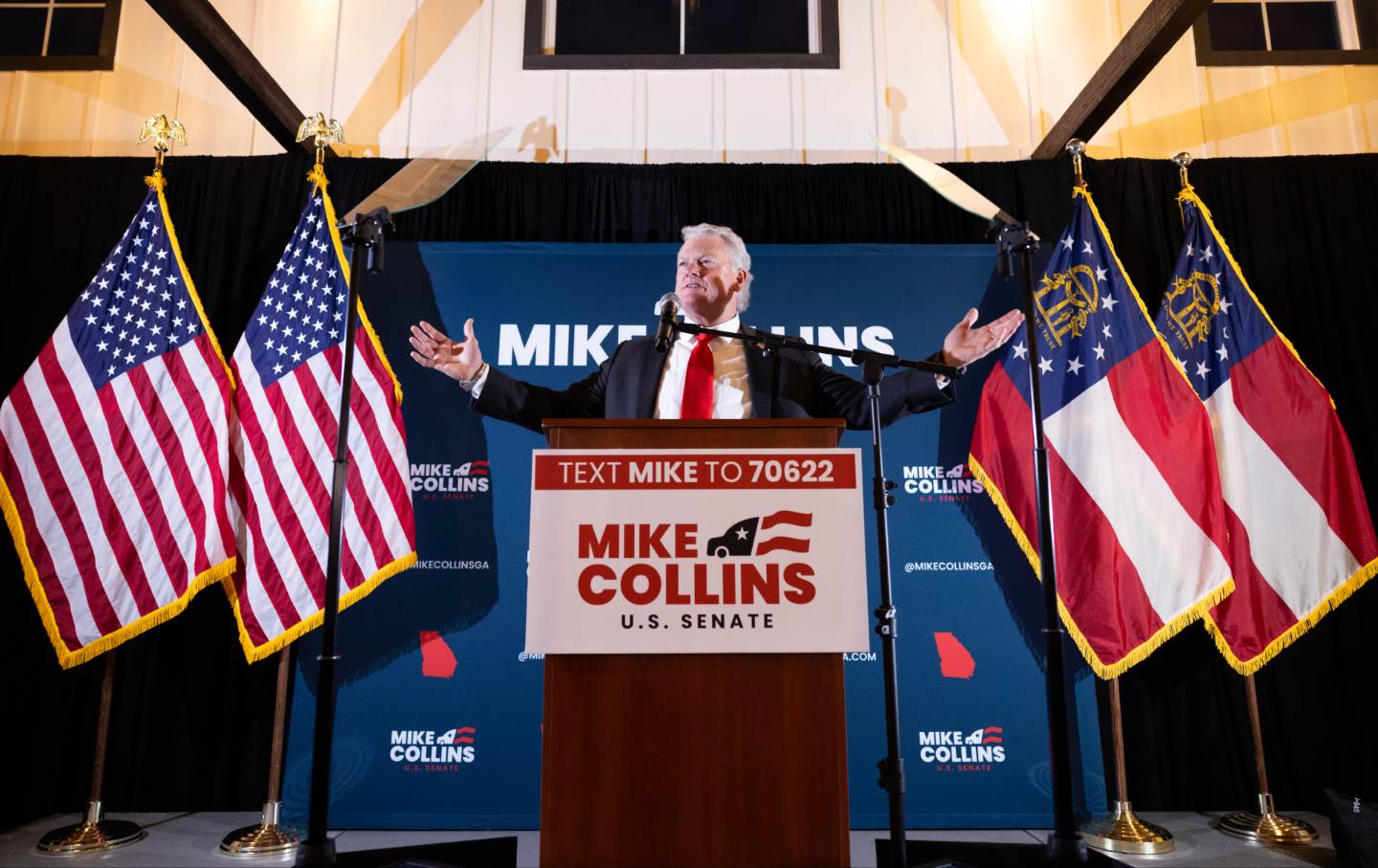
A Trump-backed, scandal-tainted nepo baby will challenge Democratic Senator Jon Ossoff in the fall.
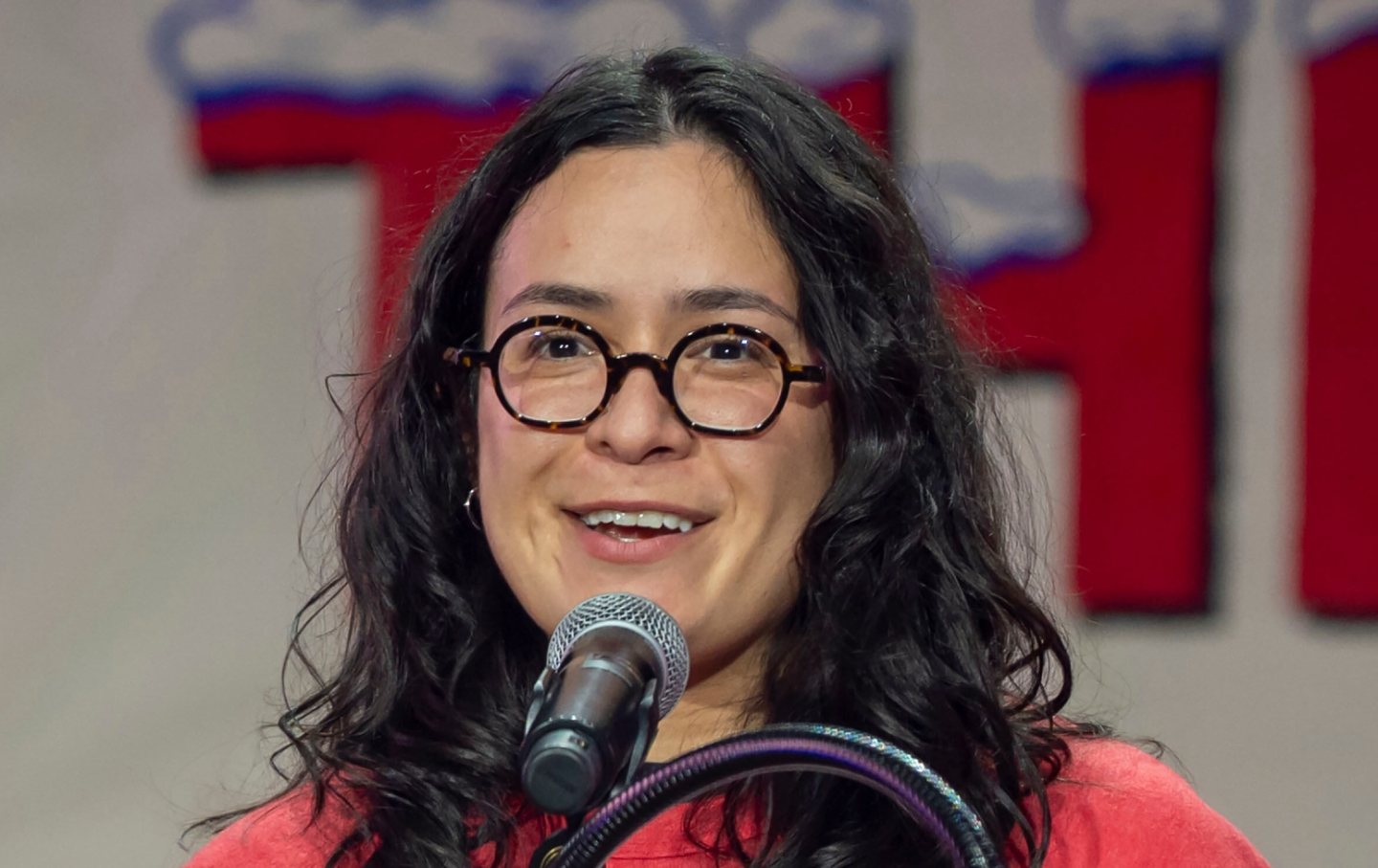
The RNC keeps attacking the popular ideas of a democratic socialist who is running for Congress in New York City.
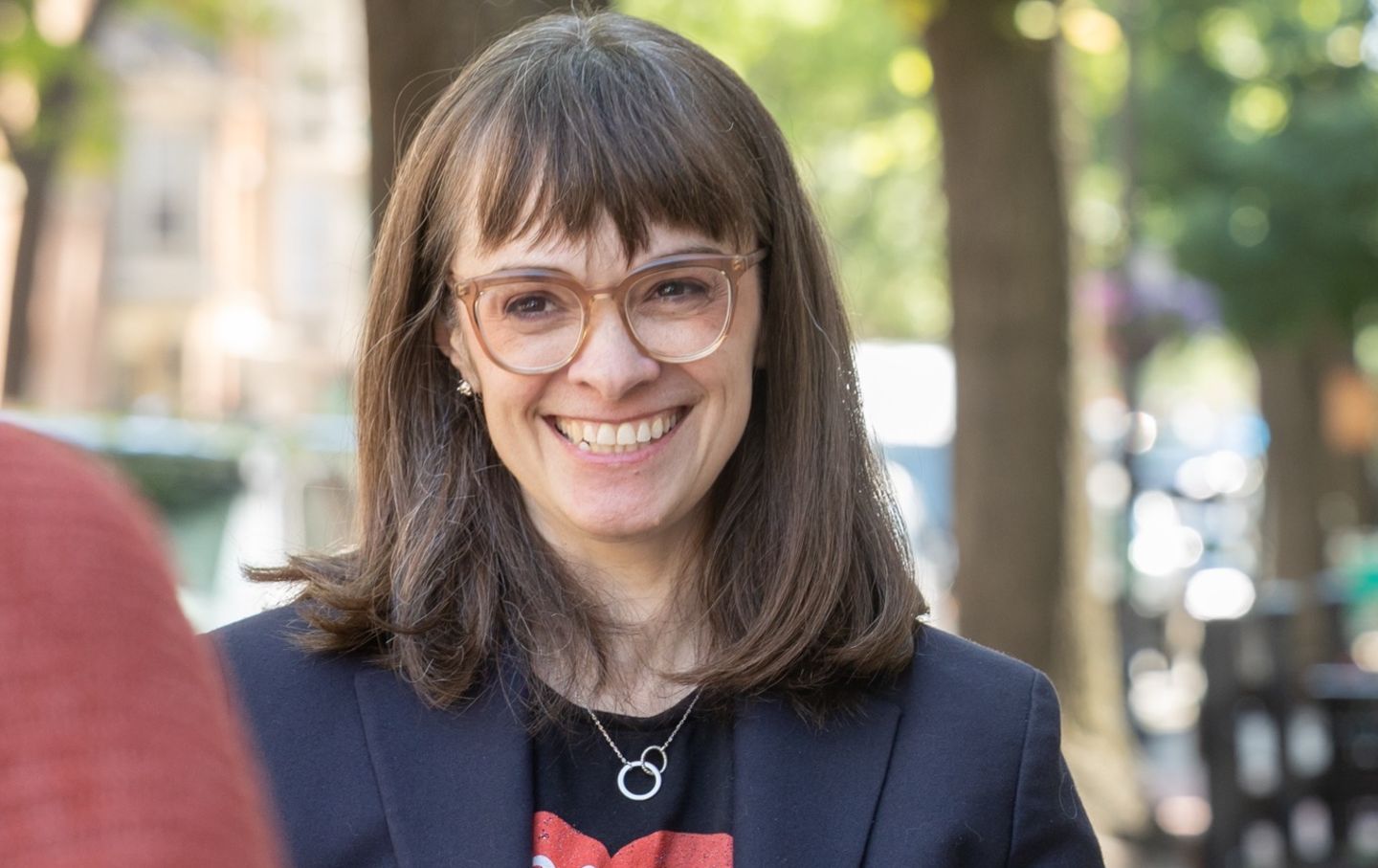
The Maryland congressional candidate is running to ban data centers, abolish ICE, and get back what the rich have stolen.