
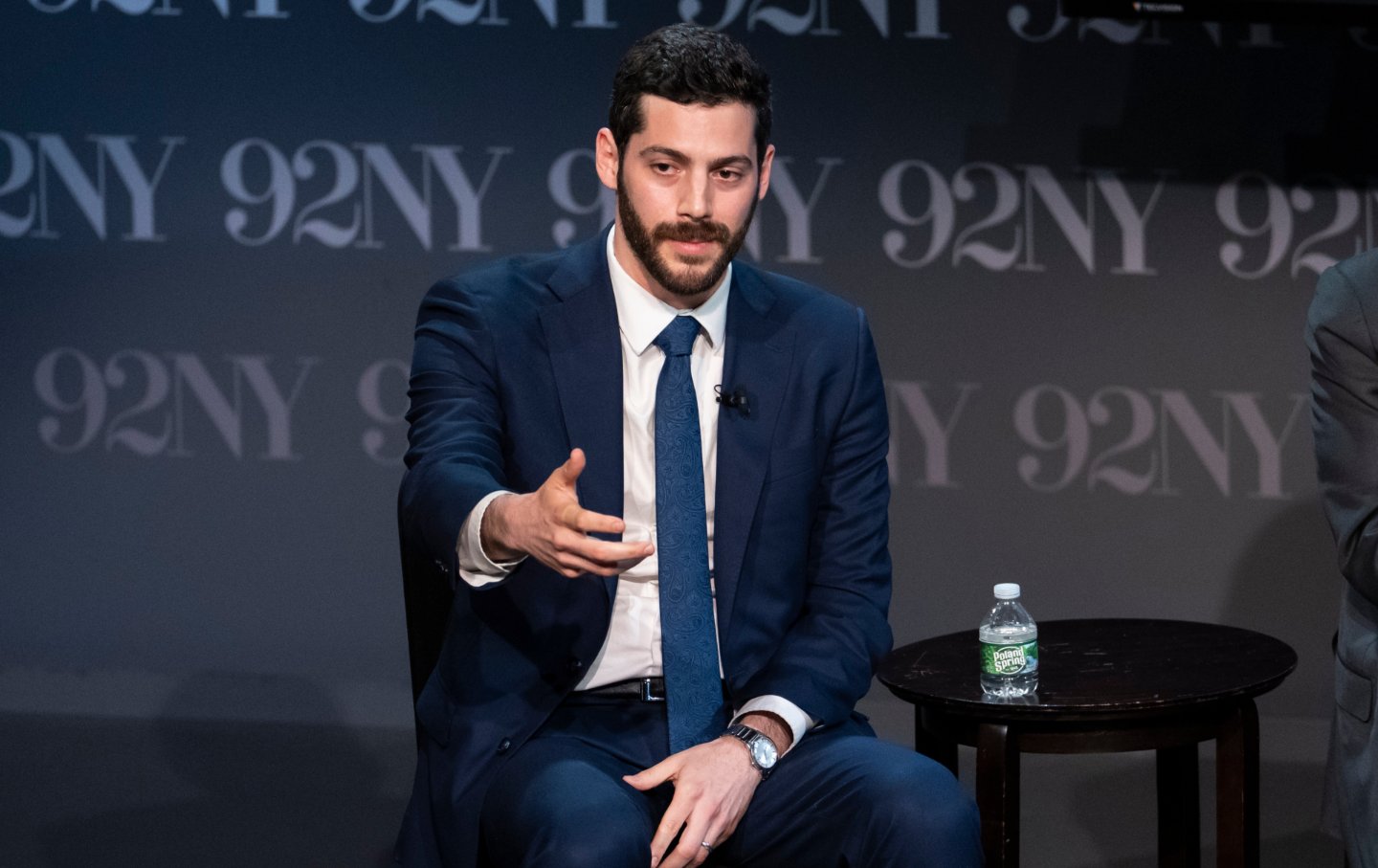
Alex Bores is engulfed in a brutal (and super-expensive) battle over how technology will change work, life, and society.
Alex Bores, democratic candidate in New York’s 12th Congressional District, speaks during the NY-12 for Congress: Candidate Forum at 92NY, April 15, 2026, in New York.
(Yuki Iwamura / AP)
New York City’s 12th Congressional District, in its many forms over the past century or so, has a rich history of influencing the national discourse. This was the Manhattan district that sent the great Socialist Party stalwart Meyer London to Washington before and after World War I. When it was redrawn into Brooklyn, it elected first Edna Kelly, the pioneering champion of “equal pay for equal work” protections for women, and then Shirley Chisholm, the first Black woman to mount a serious bid for the presidency. More recently, again as a primarily Manhattan-based district, it was represented by Carolyn Maloney, a chair of the House Oversight Committee and a steady champion of the Equal Rights Amendment and the Smithsonian American Women’s History Museum. Now it is represented by Jerry Nadler, the great advocate for civil liberties, LGBTQ+ rights, and social justice, and the longtime top Democrat on the House Judiciary Committee, which he chaired during both of Donald Trump’s impeachments.
So it comes as no surprise that, with Nadler stepping down, the primary to replace him in the overwhelmingly Democratic district is shaping up as a referendum on where the Democratic Party, Congress, and the nation should head.
Or, to be more precise, several referendums.
Backers of New York State Assembly member Micah Lasher, a former aide to New York Mayor Michael Bloomberg and Nadler who has the endorsement of both men and many of the influential Democratic clubs in the district, wouldn’t mind if the race were seen as a referendum on whether to maintain the retiring incumbent’s detail-oriented committee work and liberal advocacy.
For supporters of George Conway, the former Republican lawyer who in 2018 emerged as one of the president’s sharpest critics and has remained so ever since, the primary offers an opportunity to issue an unmistakable call to “bring back rule of law to our government and hold Trump and the GOP accountable.”
For Nina Schwalbe, a well-regarded healthcare researcher who has worked with UNICEF and USAID, this is a chance for Democrats to elect a policy expert with plans for strengthening the country’s existing public health infrastructure while advancing a practical agenda for “incrementally lowering Medicare eligibility until all Americans are covered.”
Current Issue

For influencer and activist John Bouvier Kennedy Schlossberg—though you can call him “Jack”—this is, fairly or not, a test of whether the Kennedy name retains the magic that made his grandfather president and two of his uncles serious contenders for the job. (Schlossberg’s mother, Caroline Kennedy, just weighed in with a TV ad that suggested President John Fitzgerald Kennedy and former US Senator Edward Kennedy would be proud of the bid.)
All of those considerations are worthy of note in a congressional race. But none of them has generated the attention as the fight surrounding the other major contender in the contest, New York State Assembly member Alex Bores.
Bores—who, along with Lasher, has emerged as something of a front-runner in the race—is the central figure in a very different kind of referendum: what The New York Times refers to as an “AI Proxy Fight” and The Wall Street Journal describes as “a Bitter AI War.”
At issue are separate but obviously intersecting questions about whether and how to regulate artificial intelligence, at a moment when polling shows that half of Americans fear AI will put someone they know (or, presumably, themselves) out of work, and according to a new Johns Hopkins University survey, “Most Americans, even those who most appreciate artificial intelligence, strongly support more regulation of it.” Specifically: “More than 70% of Americans want the right to interact with a human rather than an AI in medical, legal, educational, and government settings.”
Bores, a computer scientist by training, favors meaningful regulation. And he has a record of enacting it. As a member of the New York legislature, Bores and Democratic state Senator Andrew Gournardes championed what the congressional candidate describes as “the strongest AI safety law in the country.” That measure, the Responsible AI Safety and Education (RAISE) Act, was approved last year and requires the largest artificial intelligence developers to develop safety plans and incident-reporting standards “to protect against automated crime, bioweapons and other widespread harm and risks to public safety.”
Bores says he wanted to develop “a bill at the state level because nothing was happening at the federal level.” That federal vacuum—at a time when President Trump spent much of 2025 cheerleading for the agenda of the worst players in the AI industry, and when congressional Democrats were largely silent—meant that the New York bill and its sponsor got a lot of national attention. “Time magazine named me one of the 100 most influential people in the world in AI, on a list with [Meta founder and CEO] Mark Zuckerberg and [Open AI CEO] Sam Altman and the pope,” notes Bores. “There were only two other elected officials on it. They were both US senators: [Tennessee Republican] Marsha Blackburn and [Connecticut Democrat] Chris Murphy.”
All of this has changed the character of Bores’s bid to replace Nadler. In many senses, he is still running a conventional progressive campaign, one that has attracted strong support from organized labor—including the New York State AFL-CIO and powerful New York Unions such as AFSCME’s DC37, the United Federation of Teachers, and UAW Region 9A—and LGBTQ+ groups such as Equality New York and the Stonewall Democrats of New York. But Bores, whose campaign website features a New York Times headline that identifies him as “A Congressional Candidate Feared by the Tech Oligarchs,” has become overwhelmingly associated with the broader fight over the future of AI. And it’s a fight he seems eager to engage with.
Bores is proposing a detailed AI Policy Framework for Congress. I don’t necessarily align with every aspect of the plan, but, as someone who has written about the intersection of tech and politics for many years, I can attest that it is a good deal more comprehensive than anything most members of Congress have produced—or even imagined.
That has made the NY-12 campaign a battleground where tech giants are spending obscene amounts of money to influence not just a result on primary day but also a debate about whether and how federal regulators should address AI.
“Angered by Bores’ legislation regulating artificial intelligence, a political group underwritten by investors in OpenAI spent more than $7 million on ads designed to crush the former computer engineer, who’s running in the ultracompetitive June 23 Democratic primary for a Manhattan-based U.S. House district,” explains the Associated Press. “That group, Leading the Future, counts titans of Silicon Valley, major venture capitalists and alumni of President Donald Trump’s Republican administration (including Trump donors like OpenAI President Greg Brockman, venture capitalist Marc Andreesen and Palantir cofounder Joe Lonsdale) among its donors.… But, then, another wing of Silicon Valley rode to Bores’ rescue. Political groups partly funded by Anthropic, the maker of the chatbot Claude, have spent more than $10 million boosting Bores’ campaign. Crypto billionaire Chris Larsen, an Anthropic investor, has pledged another $3.5 million.”
Some media outlets have suggested that this is merely “a family feud” between AI investors. But it goes deeper than that. As Morten Bay, an award-winning research fellow at the Center for the Digital Future at the University of Southern California’s Annenberg School for Communication and Journalism, told the AP, “The lines are being drawn, and this primary is very much an expression of that. The core divide is regulation—whether you’re for or against it.”
For my part, I don’t want OpenAI, or Palantir, or Anthropic to tell Americans how to regulate AI. Anthropic may currently have a milder public image than other tech giants—especially since its cofounder Christopher Olah joined Pope Leo XIV for the unveiling of the pope’s powerful encyclical on AI and capitalism, Magnifica Humanitas—but it is still investing heavily in the data center developments that have raised bipartisan alarm in communities nationwide, and its technology is still reportedly being used by the US military to kill people overseas. And we should all be profoundly unsettled by the way that money from AI giants has overwhelmed the discourse in this district and so many others across the country.
But there is little question that, as Charlotte Alter, the veteran political writer who now writes the New Humanism Project blog on Substack, says of the NY-12 race, “This is basically the bellwether race for whether America asserts any regulatory control over AI or whether AI oligarchs will simply own our system of government.”
Or, as Bores says, “This campaign is really a test about whether our democratic institutions can govern this technology before it ends up governing us.”
If Bores wins the primary, it has the potential to clarify and perhaps even transform the federal debate about regulating artificial intelligence. On the other hand, if he loses, Bores and others fear that cautious Democrats—in New York and nationally—could be even less likely to stand up to the AI tech billionaires.
Those are the stakes, as Bores sees them—not just because he is facing an onslaught of negative messaging from the industry he proposes to regulate but also because of the prospect that, in a Congress where few members are up to speed on AI, he could serve as a member who understands both the technical and the political sides of the issue. “Obviously, in the AI conversation, I’m going to come in with just a huge megaphone,” he says.
“If I win the primary, having defeated the super PAC that is trying to intimidate every other member of Congress, and having defeated their promised $10 million against me, yes, then that gives me a voice—not only because I’m coming in having run and won (on the regulation issue),” he explains. “But because maybe I can help show other members of Congress how you can stand up on what is objectively a very popular issue.”
Bores and his supporters point to several reasons for why this is so.
For one thing, Bores has an uncommon résumé for a potential member of Congress. A fifth-generation New Yorker who grew up in a union family, he earned an undergraduate degree in industrial and labor relations from Cornell and a master’s degree in computer science from the Georgia Institute of Technology—with a specialization in machine learning. He worked for economic consulting and tech start-ups in the early stages of an AI revolution that is only coming to be understood by political elites, media commentators, and an increasingly concerned electorate.
Bores also had a stint at the notorious tech firm Palantir. That work has led to a bizarre twist in the current campaign that was well summed up by a headline from the tech journal Fast Company: “A Palantir cofounder is backing a group attacking Alex Bores over his work with… Palantir.”
While hostile ads “allege that Bores made hundreds of thousands of dollars building and selling technology for the agency,” and try to tie him to the company’s current work with ICE, Fast Company explains:
Inside Palantir, the ads are starting to irk some employees. Two current employees and three former employees tell Fast Company that they view the campaign as opportunistic. Some believe the ads misrepresent Bores’s record at the company. Others say Palantir’s approach to its work with ICE has changed since Bores left the company many years ago. Several employees said they see the ads as less about immigration enforcement and more about politics within the tech industry. They point to the PAC funding the campaign, Leading the Future, as evidence that the effort is primarily about countering Bores’s support for AI regulation. That view is shared by one former Biden administration staffer who, speaking on condition of anonymity, emphasized that the ad campaign was “almost certainly” a response to Bores’s role as a lead sponsor of an AI safety bill in New York.
Popular
“swipe left below to view more authors”Swipe →
It may also have something to do with the fact that AI regulation is becoming an increasingly important dividing line in our politics. While few places are experiencing campaigns like the one playing out in the 12th—where AI has come up in debates and where other candidates have felt compelled to outline their own regulation agendas—these issues will only become more central as AI deepens its grip on our lives.
Bores says the campaign has turned into “a live focus group” on concerns about AI. What he’s hearing is that many people are “terrified” by the speed with which technological change is already remaking their lives—and could remake them more substantially in the near future.
“Eighty percent of Americans are like: ‘Sure, I see some benefits. It could be exciting for medical research. I use it to do A, B and C. But what does it mean for my kids? What does it mean for my job? What does it mean for the environment?’” explains Bores, who says people tell him: “This is moving so fast. There need to be some guardrails.… Why do we not have a say? Why is Congress not doing anything here?”
At a point when AI is evolving at breakneck speed, and threatens to overwhelm our workplaces, our communities and our lives, those are questions that Americans in every congressional district should be thinking about. What distinguishes the race in NY-12 is that the issue is front and center. It has been ugly and, at times, confusing, and Bores does not doubt that part of the attack on him is designed to scare other Democrats who might be inclined to champion AI regulation with the threat that billionaire tech giants are prepared to make things “painful” for them. But he argues, “This a campaign with a chance to beat the machines, both artificial and political. And, you know, we can be team humanity in both regards, letting voters actually pick their elected representatives instead of being told who to vote for by either the establishment or by a bunch of Trump mega donors.”
With the midterm elections now firmly upon us, the question is whether Democratic candidates will do more than merely occupy ballot lines as mild alternatives to the red-hot crisis that is Donald Trump.
As Trump spends over $1 billion a day on a globally destabilizing war on Iran and admits that he doesn’t “think about Americans’ financial situation,” millions across the country are struggling with the surging costs of essentials. Democrats must seize this moment and advance bold, small-“d” populist ideas—not settle for cynical caution that once again snatches defeat from the jaws of victory.
The Nation elevates progressive ideas, movements, and elected officials achieving real change across the country into the national conversation. At the same time, our journalists are exposing how crypto and AI-funded super PACs are spending hundreds of millions of dollars to knock out candidates they oppose, reporting on the devastating impact of the Supreme Court’s evisceration of the Voting Rights Act, and sounding the alarm on attempts by red states to quickly redraw electoral maps, disenfranchising Southern Black voters.
We can play this critical role because of support from readers like you. This June, we’re raising $20,000 to power The Nation’s independent journalism in the run-up to November’s immensely consequential elections.
It’s in our power to build a more just society, and your support at this critical moment brings us closer to that bold vision. I hope you’ll donate today.
Onward,
Katrina vanden Heuvel
Editor and Publisher, The Nation
More from The Nation

This Primary Day, New York City’s leftist insurgents and the borough’s Black political establishment are headed into their biggest face-off yet.
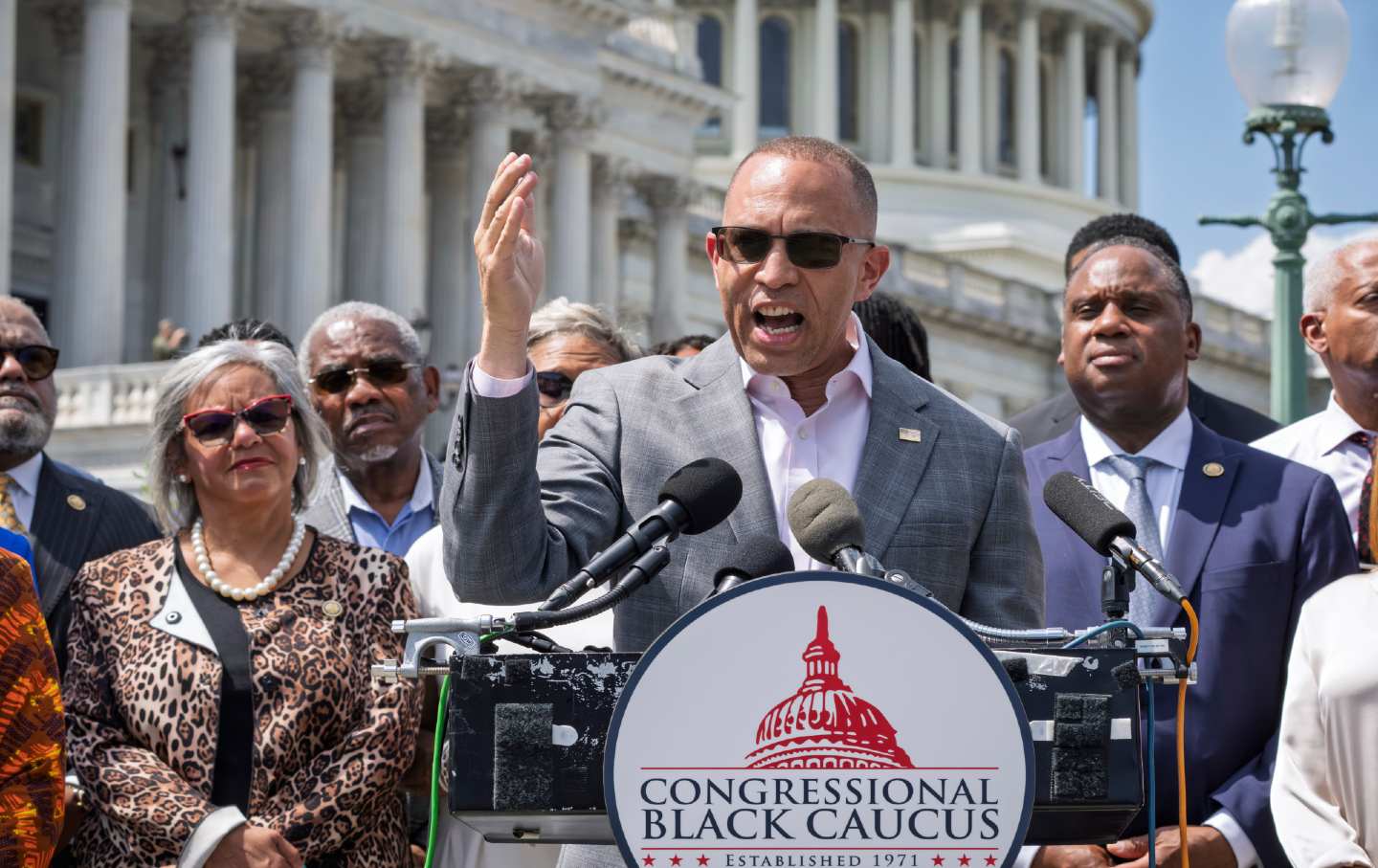
The new initiative enlists Black college students and athletes to face down Jim Crow rule in the South, while the group remains silent on boycotts targeting Israel’s apartheid rul…
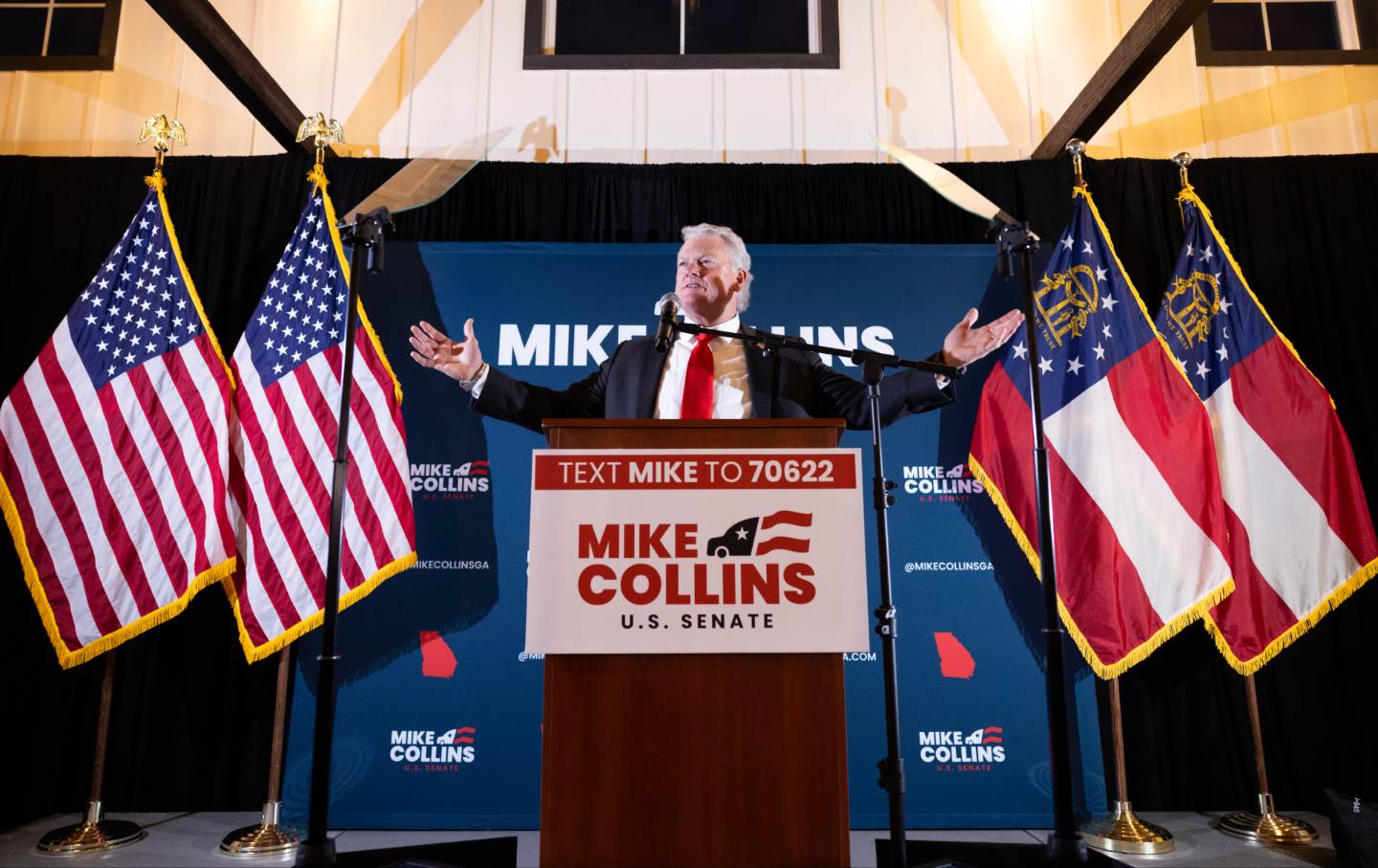
A Trump-backed, scandal-tainted nepo baby will challenge Democratic Senator Jon Ossoff in the fall.
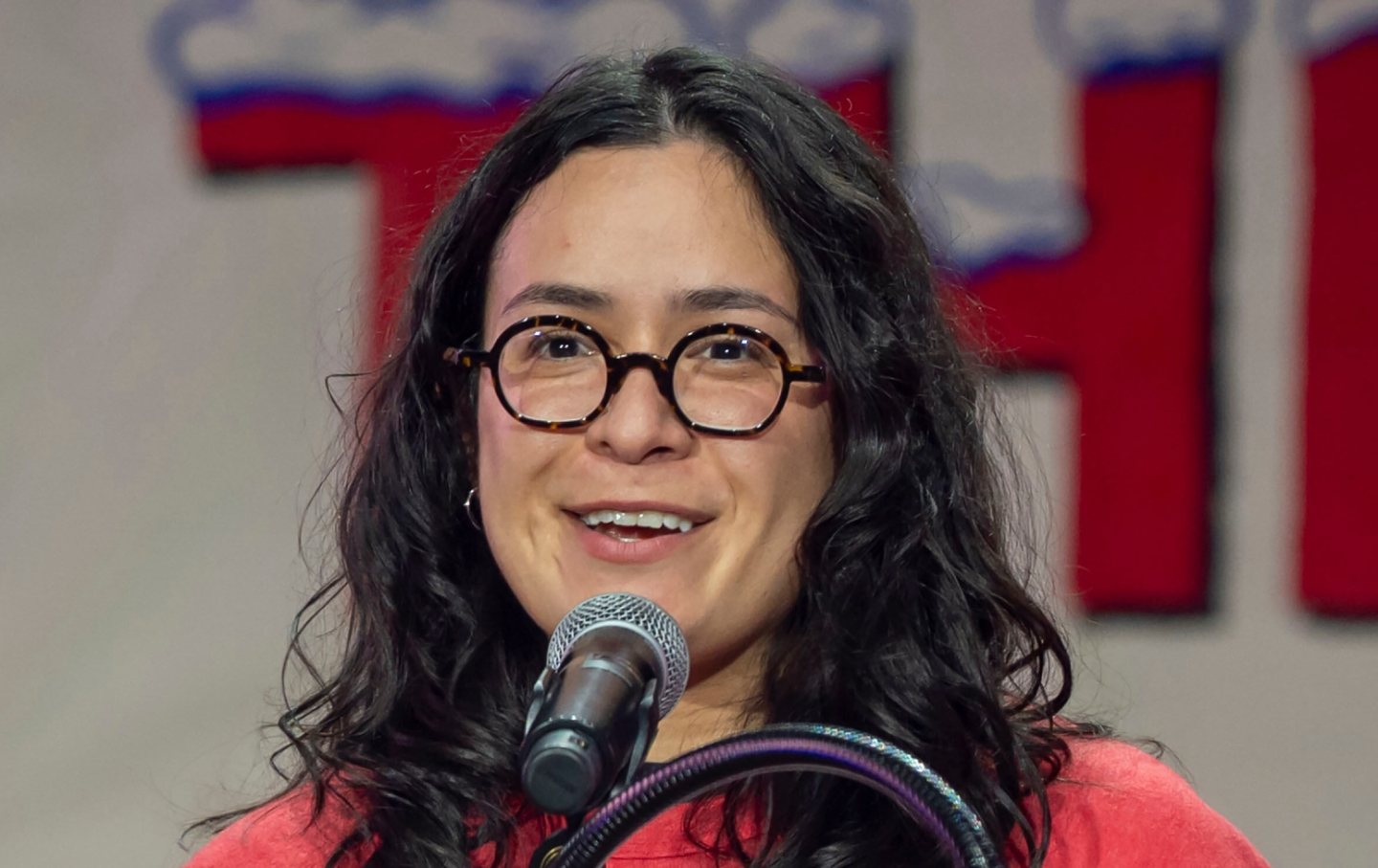
The RNC keeps attacking the popular ideas of a democratic socialist who is running for Congress in New York City.