
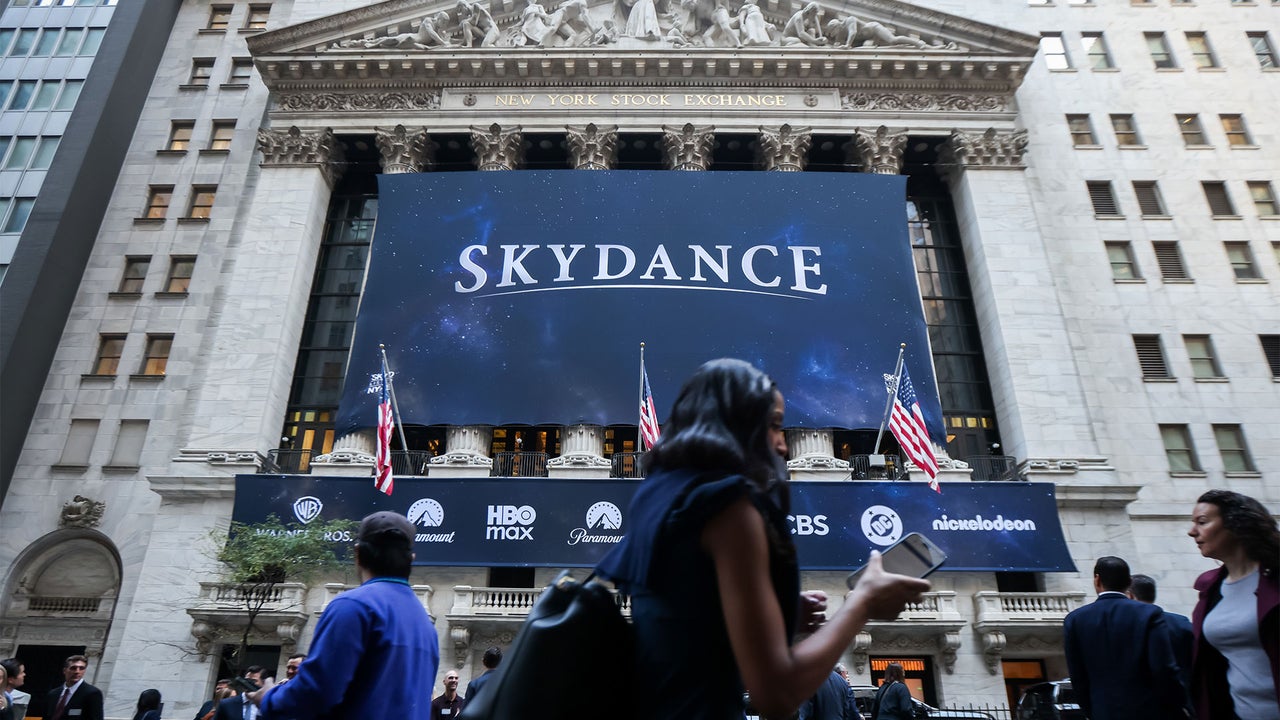
Media critic Ben Bagdikian warned in 2004 that five corporations had accumulated “more communications power than was exercised by any despot or dictatorship in history.” More than 20 years later, a major media merger is bringing his warning back into focus.
Paramount’s acquisition of Warner Bros. Discovery in October 2026 created a new company, Skydance Corporation. It now owns CNN and CBS News, Warner Bros. and Paramount Pictures, HBO and Paramount+, along with a sprawling collection of cable networks, live sports and entertainment franchises. The deal is valued at about US$110 billion including debt, and Skydance expects to cut at least $6 billion in costs within three years.
A coalition of 12 states sued to stop the merger on antitrust grounds, arguing that it would reduce competition in movies and television. The eventual settlement required a multiyear movie production and theatrical release guarantee and an editorial independence board for CNN and CBS News. CNN chief Mark Thompson and CBS News Editor-in-Chief Bari Weiss remain in charge, but both ultimately report to Skydance CEO David Ellison.
Lawmakers have already raised concerns about possible political influence over CBS News, though Ellison has denied interfering with coverage. President Donald Trump, a frequent CNN critic, publicly praised the merger.
As a scholar who studies the role of media in democratic societies, I believe that size and ownership matter. Whoever owns the media chooses its leaders, approves its budgets and decides where to cut $6 billion. The same market pressures pushing media companies toward greater scale and efficiency can undermine the independent reporting and diversity of voices that democracy depends on.
When media are more than ordinary products
Since broadcasting began, American media policy has wrestled with how to support the information needs of a democracy.
As my work on the origins of media systems shows, the United States built a largely private, commercial broadcasting system while Britain created the publicly funded BBC. Behind those choices were different ideas about whether broadcasting should operate primarily as a business or carry broader obligations to the public.
The market view became increasingly dominant in the U.S. In 1981, the Ronald Reagan-era chairman of the Federal Communications Commission, Mark Fowler, famously described television as “a toaster with pictures.” He argued that broadcasters should largely respond to audiences through ordinary market forces.
But as media scholar Robert McChesney argued in 1999, concentrated commercial media had become a “significant antidemocratic force.” What makes money for a media company and what citizens need from a media system are not always the same thing.
We’ve seen this film before.
Local television stations acquired by Sinclair Broadcast Group in 2017 shifted coverage away from local politics and toward national political stories. As research shows, communities that lose local media coverage can see less competition and participation in elections.
Mergers, however, make sense in the logic of the market. Warner and Paramount must compete with Netflix, YouTube, Amazon, Apple and other companies with enormous resources and global reach.
But having fewer competitors can also mean there’s less pressure to improve quality or hold down prices. And the efficiencies of media consolidation often come from producing less original content with fewer people.
The new gatekeepers
Concerns about media power are hardly new.
The 1947 Hutchins Commission on Freedom of the Press warned about control of mass communication becoming concentrated in fewer hands, and it encouraged greater social responsibility. For decades, the FCC placed limits on broadcast ownership to support competition and diversity.
Digital media seemed to blow open the gates that limited participation, but a new class of gatekeepers arrived. While Bagdikian mainly worried about companies that owned newspapers, TV networks and movie studios, today’s media power lies in the hands of platforms, streamers and tech giants.
Social and video platforms have overtaken TV and news sites as the most common way people access news in dozens of countries studied in 2026 by the Reuters Institute. News organizations may still produce a story, but Google, YouTube, Facebook, TikTok and artificial intelligence can determine whether anyone sees it.
For social platforms, attention is the commodity. Likes, shares, comments, clicks and watch time help determine what gets promoted. And more time on the platform means more opportunities to sell ads.
It’s now well documented that social media feeds ranked for that kind of engagement expose people to more toxic political content and moral outrage than chronological feeds. They also increase perceptions of hostility between political groups.
Americans certainly consume enough media, with combined use at more than 13 hours a day.
Yet Americans do not seem especially well-informed or confident about the information they receive. Only 33% say they trust mass media to report the news fully and fairly, compared with 68% when Gallup first asked in 1972, and about half say they have difficulty determining what is true in the news. More than a third cannot name all three branches of the federal government.
Media concentration did not cause all of these problems. But decades of greater media abundance have not solved problems of knowledge, misinformation or trust.
Who produces the information democracy needs?
Democracy assumes that citizens will have enough information to make choices and hold powerful institutions accountable. But markets provide no guarantee that anyone will produce it.
As media scholar C. Edwin Baker explained in 2009, journalism creates benefits that extend far beyond the person who buys a newspaper or subscription. A monthslong investigation of corruption might benefit an entire city, including thousands of people who never pay for the reporting. But the media organization still has to cover the cost.
That’s why restoring journalism requires public and nonprofit alternatives to combat market failures, as media scholar Victor Pickard has laid out.
Other democracies already rely more heavily on a mix of commercial and public media. Research in 2009 comparing the U.S. with Britain, Denmark and Finland found that stronger public service outlets carried more public affairs and international news and were associated with greater political knowledge.
This doesn’t have to be a partisan issue. Regardless of who is in power, citizens benefit from vibrant journalism with the resources and independence to investigate government, business and other powerful institutions.
Media literacy can help citizens understand why the system works this way. As I argue in my 2019 book, News Literacy and Democracy, examining media means understanding the structures and institutions behind it—who owns them, how they make money and what pressures shape what gets produced.
But there are limits to what we can ask individual news consumers to fix.
People can learn to check sources and spot misinformation, but they can’t change market forces. The Paramount-Warner merger makes sense according to the logic of the market, and I believe that’s the problem. The same pressures that push media companies toward greater scale and lower costs can work against creating the media environment that democracy needs to thrive.
Seth Ashley is an associate professor of journalism and media communication at Colorado State University.
This article is republished from The Conversation under a Creative Commons license. Read the original article.