
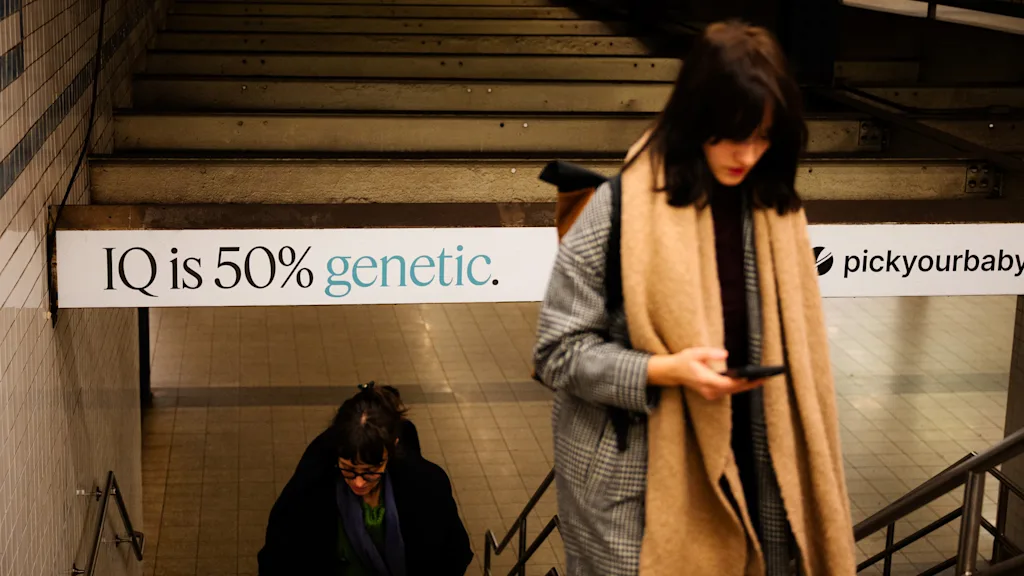
If you ask New Yorkers on the street what they think about the giant, controversial print ad campaign in the NYC subway system, their initial response might be, “Which one?” In the past two months alone, not one, but two advertising campaigns fitting that description have appeared there.
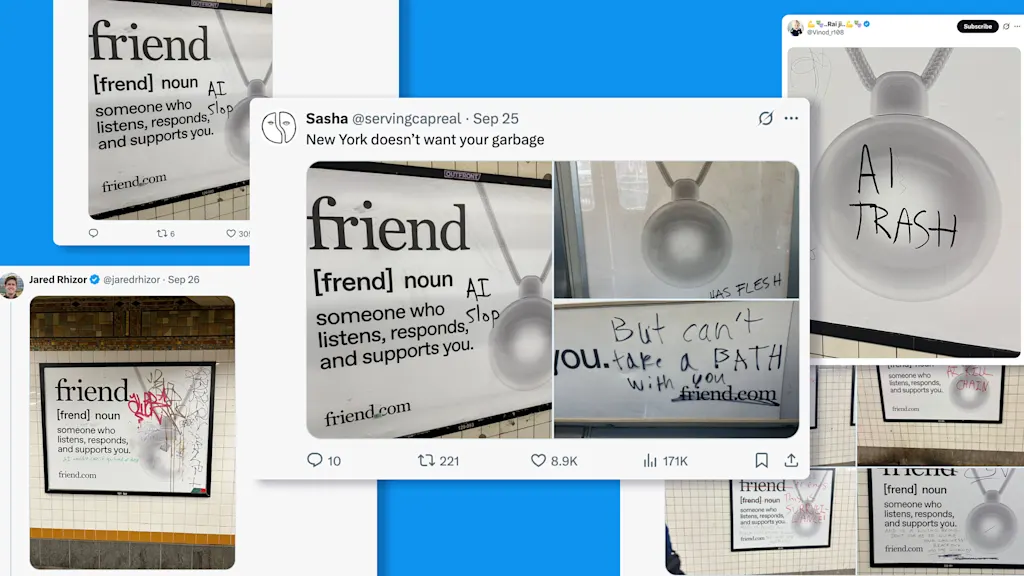
The first debuted in late September, when Friend, an AI company that sells portable “companions,” ran a $1 million print campaign featuring a variety of servile messages like, “I’ll never leave dirty dishes in the sink.” The campaign received massive criticism—to the point that the MTA was forced to continuously remove Friend’s vandalized ads. In an interview with Fast Company, Friend CEO Avi Schiffmann said he “expected that would happen,” and, in fact, he designed the ads with white space so as to invite graffiti.
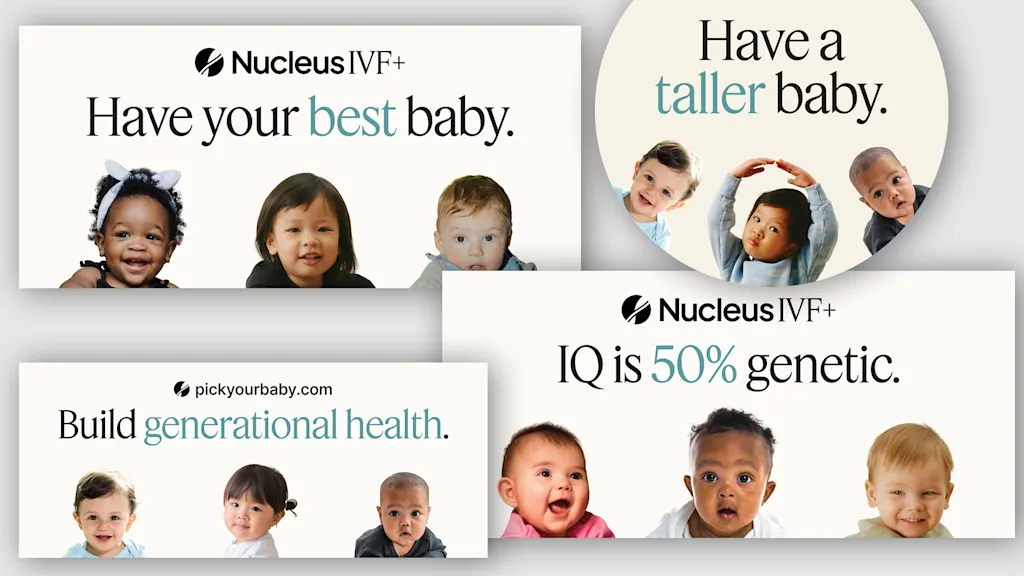
Now, another controversial print ad campaign has joined the fray. The new ads are paid for by Nucleus Genomics, a genetic health company specializing in genetic testing, in vitro fertilization services, and embryo screening. The company’s ads include phrases such as “Height is 80% genetic,” “IQ is 50% genetic,” “Have your best baby,” and “These babies have great genes.” In emails to Fast Company, Nucleus said that its new campaign was inspired by yet another contentious ad from this year: Sydney Sweeney’s recent American Eagle partnership, which sparked backlash for what many people believed was a casual promotion of eugenics.
Shock value marketing is as old as advertising itself. But Friend’s and Nucleus’s recent campaigns represent a novel kind of rage-bait marketing that is primed for the current moment of political and technological divide. This new era of attention-seeking provocation, incubated on social media with companies like Cluely, has now made its way into the physical world, with brands looking to double down on turning backlash into opportunity.
We spoke to leading experts about the rise of rage-bait marketing and where it goes from here.
- An NYU Stern School of Business professor on why the new crop of tech startups is perfectly primed for rage-baiting.
- The head of strategy at the Martin Agency on the advantage that provocative marketing campaigns give young companies—and what it might cost them.
- The cofounder of Joan Creative on what comes next after this initial wave of rage-bait campaigns.
What is Nucleus Genomics trying to do, exactly?
Nucleus was launched in 2021 by the now-25-year-old Kian Sadeghi. According to Sadeghi, the company is dedicated to “helping parents have healthier children” through what he calls “genetic optimization.”
In practice, Nucleus provides a few different services. Its first offering was a proprietary DNA testing kit that uses cheek swabs to, per its website, “uncover your genetic risk for 2000+ conditions.” This summer, Nucleus partnered with a company called Genomic Prediction to begin offering an embryo screening service that allows patients to look at their embryos’ statistically predicted traits—including the potential likelihood of developing conditions like autism or Alzheimer’s disease, alongside eye color, height, hair color, and IQ. Later, in August, the company bundled that service with a new full-service IVF program called IVF+.
Nucleus isn’t the only company that’s started offering more advanced embryo screening services in recent years. Several others, like Orchid and Genomic Prediction, have emerged within the last decade. All of these companies are facing intense debate from the scientific community over the legitimacy of their prediction models, the morality of screening for certain traits, and the long-term repercussions of a future in which embryo optimization becomes commonplace.
This discussion around the ethics of Nucleus’s core premise is actually what sets it up for a successful rage-bait campaign, according to Joshua Lewis, an assistant professor of marketing at New York University’s Stern School of Business. For companies like Friend and Nucleus, he says, some level of polarization is intrinsic to the product itself. AI companions, for example, will inevitably have detractors who find the premise objectionable, as well as champions who believe in it wholeheartedly; the same goes for embryo screening companies.
By employing “rage-bait” tactics, Lewis says, these companies can start broader cultural dialogues and build affinity with their target audiences without losing too many potential customers.
“To polarize intentionally can make some sense because ultimately, what you want in marketing is to have your target segments be loyal. Polarizing can be quite good, as long as your nontarget segments are experiencing the rage, and your target segments are appreciating what the brand is doing,” Lewis says. Regardless of Nucleus’s actual intentions, he adds, “it doesn’t cost them much to upset people who weren’t going to be using their products anyway.”
For companies in nascent fields, there’s an added advantage to aiming for shock value in campaigns, says Elizabeth Paul, chief strategy officer at the Martin Agency, an award-winning advertising company.
“If you’re in the business of genetically engineered babies or AI companions, controversy is baked into the product,” Paul says. “It seems to me like Nucleus Genomics and Friend AI decided to lean into that reality and make their backlash bug a feature. If anyone’s wondering, Why would you do that? I think their tension-filled campaigns better amplified mass awareness for what are very nascent categories.”
Inside Nucleus’s latest campaign
In an email to Fast Company, Nucleus’s PR firm described the subway campaign—which includes a full takeover of the Broadway-Lafayette Street station, more than 1,000 subway car ads, and another 1,000 street ads—as “the first mainstream campaign to openly champion advanced embryo selection for specific traits.” Several of the ads call out physical attributes and IQ, and most direct viewers to Nucleus’s landing page at pickyourbaby.com.
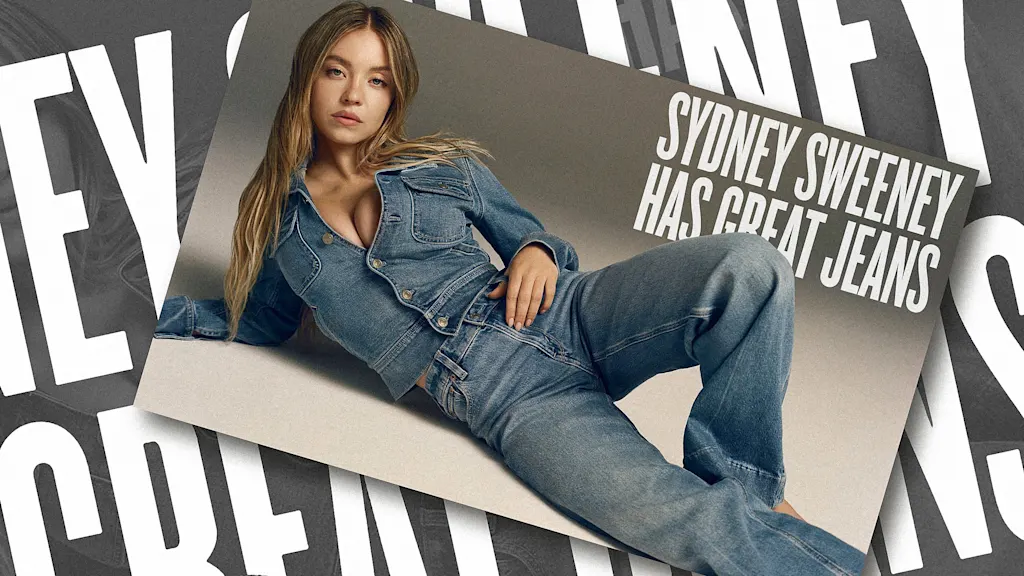
The Nucleus team says it was inspired by “the controversial ‘Good Jeans’ campaign featuring Sydney Sweeney.” In that campaign, a denim-clad Sweeney narrates: “Genes are passed down from parents to offspring, often determining traits like hair color, personality, and even eye color. My jeans are blue.” A male voice-over adds, “Sydney Sweeney has great jeans.” It almost immediately entered the sphere of marketing infamy for (likely inadvertently) promoting genetic ideals, given Sweeney’s blue eyes, blond hair, and white skin.
When Sadeghi saw the reaction to the Sweeney ad, he noticed a lot of what he calls “DNA dissonance”—or what he considers a widespread misunderstanding of what DNA actually is, why genetics matter, and how far along genetic testing has come in the scientific community. He claims that Nucleus’s products are “just another tool parents are going to use to help give their child the best start in life,” and that the ads can help parents better understand how to achieve that advantage.
While Sadeghi benignly frames the campaign as an educational tool, it doesn’t exactly line up with the actual ads. Much of the copy feels designed to generate a reaction—good or bad—to what Sadeghi refers to as the “sci-fi narrative” surrounding embryo optimization.
The internet reacts
On Threads, one post about an ad reads: “Every single day there’s a new dystopian subway ad.” On TikTok, a video with nearly 200,000 views critiquing the campaign is captioned: “We need to have some very serious conversations about eugenics cuz we’re losing ground here.” Another TikTok with more than 2.4 million views shows a camera panning around the Broadway-Lafayette station with the overlaid text: “Uhhh sorry, but what in the eugenics is this?” More than 8,000 other users have sounded off about the campaign in the comments.
On the surface, rage-baiting might seem counterproductive—who wants people to hate their product? But for companies like Friend and Nucleus, the numbers may speak for themselves.
Nucleus says that since the campaign debuted, the company has seen more than a 1,700% increase in sales, primarily driven by sign-ups to its IVF+ services. Across organic responses, it’s achieved almost 5 million impressions. Similarly, Friend’s earlier campaign sparked dozens of stories in the media and commentary across social media, causing Schiffmann to deem it an “overwhelming success.”
The vast majority of marketers are not going to want to test the adage “all press is good press” by courting controversy, Paul says. Still, most can probably understand the desire to break through the noise in an environment where consumers are bombarded with content on a daily basis. On social media, one algorithmically backed way to achieve those ends is by eliciting fear or anger.
“The reality is, according to Kantar, 85% of ads right now fail to meet the minimum threshold of attention for comprehension,” Paul says. “In other words, they are so bland and boring and invisible that people did not pay enough attention to even process what they said. In an environment like that, brand invisibility is a bigger threat than brand rejection.”
View on Threads
“Companies are choosing to say the quiet part out loud”
Risk and provocation in marketing is a tale as old as time. Paul points out that such tactics trace back as far as P.T. Barnum’s shock-value stunts for his circus events. But Jaime Robinson, cofounder of the agency Joan Creative, believes there is something entirely unique about Friend’s and Nucleus’s recent campaigns: the willingness to openly address—and even emphasize—intrinsically controversial elements of their products.
Robinson recalls a 1974 ad in which a brand called Beautymist featured football player Joe Namath pictured with his legs smoothed by a pair of nylons. And Lewis remembers a 2018 Nike ad featuring Colin Kaepernick after he took a knee during the national anthem. Each of these examples, they told me in separate interviews, was made with the knowledge that there would be some backlash from the public.
The difference with Friend and Nucleus, Robinson explains, is that pantyhose and sneakers are not inherently controversial, while AI companions and embryo screening are—and instead of hiding the elements of these products that consumers are most wary of, both companies are bringing them to the fore.
“[Nucleus’s] product is something where you can not just look out for potential diseases your embryos might have, but also pick out features like eye color and hair color. They’ve made a really provocative choice in their product and their use case,” Robinson says. Last year, she adds, a company like Nucleus might have shied away from talking about those features, and instead emphasized “the health aspects” of the marketing. Now, they’re “putting it front and center.”
“It’s about saying things that go against some of the most deeply held convictions of most of us, and the things that we find most uncomfortable in the world: being replaced by robots; having babies being picked by their physical features and IQ,” Robinson says. “These are the things that we find the most abhorrent, just as human beings.”
Robinson believes that part of this marketing strategy might be attributable to “a political climate in which authority figures are constantly testing the boundaries of what is acceptable to say.” Lewis noted that, in a sense, President Trump often uses similar rage-bait techniques in order to communicate his own personal branding. Now, we might be seeing that political tenor bleed into the marketing sphere. Both Robinson and Paul predict that, in the wake of the Friend and Nucleus campaigns, we’re likely to see an uptick in “rage-bait” marketing in the months to come.
“What’s interesting now is how companies are choosing to say the quiet part out loud, and doing it fearlessly,” Robinson says. “It’s almost as if they’ve thrown away the dog whistle and traded it for a foghorn.”