
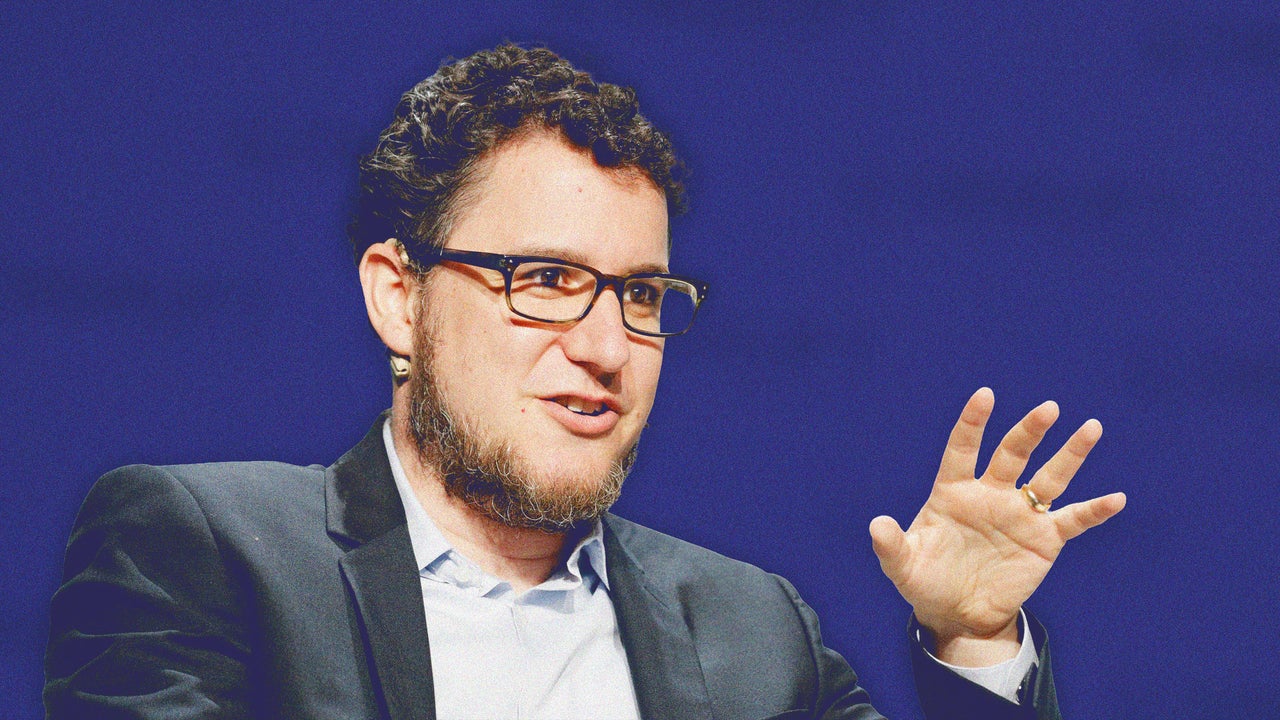
Eric Ries’s The Lean Startup changed how a generation of entrepreneurs build companies. In his new book, Incorruptible, Ries takes aim at some of the most sacred business assumptions and explores why he believes the current system is failing the very people it’s supposed to serve. Plus, Ries shares what he witnessed firsthand in the clash between Anthropic and the U.S. government.
This is an abridged transcript of an interview from Rapid Response, hosted by former Fast Company editor-in-chief Robert Safian. From the team behind the Masters of Scale podcast, Rapid Response features candid conversations with today’s top business leaders navigating real-time challenges. Subscribe to Rapid Response wherever you get your podcasts to ensure you never miss an episode.
There’s this declaration in Incorruptible where you say shareholder supremacy is over. It doesn’t feel that way to me, so what makes you feel like shareholder supremacy is over?
My personal view is that this fight has already been lost. First of all, shareholder primacy was supposed to be for investors, but like I said, it’s actually turned out to be really bad for investors. And I think we’re actually in a world of extraction primacy now.
I always think of rich investors, the investors today.
Yeah, we’re running for the benefit of the shortest-term, most extractive investors.
Yes.
Secondly, there’s a generational thing. The new generations coming into the workforce now have lived only under this idea. This idea is very recent. I always tell people if you can see a park with a tree in it, you’re probably looking at something older than shareholder primacy. The key date for the adoption of shareholder primacy in Delaware is 1986. That’s not that long ago. We’re talking about Depeche Mode, not monks in some monastery. A very recent occurrence.
But we now have people entering the workforce who have lived under this idea their whole lives. So when I teach them about the collapse of trust, for example, if you look at the data on trust—trust in governments, trust in big business, trust in doctors, trust in hospitals, trust in journalism—the graph is just straight down.
They don’t really understand how trust could have collapsed because they can’t imagine living in a world where anybody trusted any institution for any reason. They’re like, “You would trust your doctor? You would trust your government? You would trust big business?” And I’m like, “Look at the data: 70% of Americans used to trust big business. Now it’s like 20%.” They can’t imagine it because all they’ve ever known is extraction, exploitation, and weakness. For all their power and all the money they’re making, these are the most inconstant, pathetic organizations ever. Think about the people who’ve succumbed to public pressure in just the last couple of years.
So when you talk to younger people about shareholder primacy, they’re just so over it, it’s unbelievable. I think the argument is already lost, so we better get busy thinking about what comes after shareholder primacy. What is the new thing that we’re going to do? The number-one protection investors want most is limited liability. Ultimately, our entire economic system is powered by the fact that investors are not liable for the actions of the companies they invest in.
We are putting that protection at risk. Our modern ideas of fiduciary duties rest on both trust law—the idea that a director is a trustee of the corporation—and what’s called agency law. When you’re my agent, your job is to maximize outcomes for me. Whereas if you’re a trustee, your job is to protect the thing that is held in trust. So shareholder primacy is basically taking out the trustee aspect of fiduciary duty and being all agency all the time.
The idea is that every corporation is obligated to maximize returns for its investors. But the most ancient legal traditions—the entire common law going back to the Roman era—say that if you are my agent, then I am liable for your actions. Because if you walk into the marketplace and, to maximize returns for me, you stab somebody, that’s my responsibility, because I sent you as my agent to do that.
It is intellectually incompatible to have both shareholder primacy and limited liability. We can’t have completely unaccountable corporate behemoths, accountable to no government, no process, no nothing, doing whatever they want, and investors saying, “I wash my hands of this, but also I insist everything be done for my benefit.” Sorry, it doesn’t work that way.
In the context of all this, I have to ask you about AI. OpenAI and Anthropic have clashed over how they engage with the U.S. government, the Department of Defense. Where do they fall in this incorruptible lexicon, between positive model and cautionary tale?
I happen to know the Anthropic story better because I was involved. I’m not an investor or anything, but I helped them set it up. The conflict between Anthropic and the DOD, I think, is really instructive. Anthropic was put into an absolutely untenable situation by an unprecedented act of government overreach. Given that the government did this thing—and you can debate whether they did the right thing or the wrong thing; it’s actually irrelevant for our analysis—it’s unequivocal to me that Anthropic did the right thing in resisting.
And we have to ask ourselves, in order to make a statement like that, what does it mean for an organization to do the right thing? We can say three things. One, they acted in a principled way in defense of their own values. Two, their values align with a notion of human flourishing. I think companies that have purely extractive values and wear them proudly on their sleeves can never be said to do the right thing.
And the third thing is they had the courage, the institutional strength, to resist outside pressure. That’s what makes them trustworthy. When I talk to normal people—not the excessively online hyper-posters who are trying to win a culture war every five seconds—they are perfectly capable of saying that they trust a company that did the right thing, even if they disagree with the decision.
I know people who are like, “I don’t agree with what Anthropic did. I personally think it would have been fine for them to sign that contract, but I respect that they had the courage, the strength, and the principled consistency to stand up for their own values.” And I loathe the companies that rushed in to grab that contract.
Again, even though I think it was a perfectly fine thing to do, the opportunism of it makes me suspicious of their motives. If they’ll betray their principles for $200 million, what if I’m the principal one day?
Anthropic was consistent in its decision, in the way it approached this, and in some ways OpenAI was consistent with its history and culture in jumping in.
Consistent with its behavior, yes, but not with its stated principles. I think that’s really the issue.
Behavior really is what states your principles. It’s what you do that matters, right?
Just think about law firms, universities. I can’t remember how many big companies in the last two years you would have thought were big enough and strong enough to resist outside pressure have basically proven they’ll do anything for a dollar. It’s pathetic, it’s sad, and there are very few companies on the other side of that ledger.
Now, here’s what really blew my mind. Anthropic did this, and I wasn’t involved. They didn’t consult me about it. I was not an insider to the decision, but I know for sure, because I know the people they go to for advice, that a lot of people they went to for advice were probably like, “Don’t make a stink. This is the U.S. government. Who are you?” You can just imagine the advice they got. So I don’t think there was any way they could have anticipated that as soon as they did this, Claude would go to No. 1 on the App Store.
That night, at their headquarters in San Francisco, the sidewalk was chalked up with thank-you messages all around the office. They got very unanticipated benefits, so much so that a couple of people have argued that they cynically did this as virtue signaling, knowing that somehow it would benefit them. Nobody could have predicted that this would go as well as it did. You stand for what you stand for, you think it through, you try to make the best decision you can, and you live with the consequences. People respect that because they can trust that if you’ll do it in this situation, you’ll probably do it in the situation that affects them, too.