
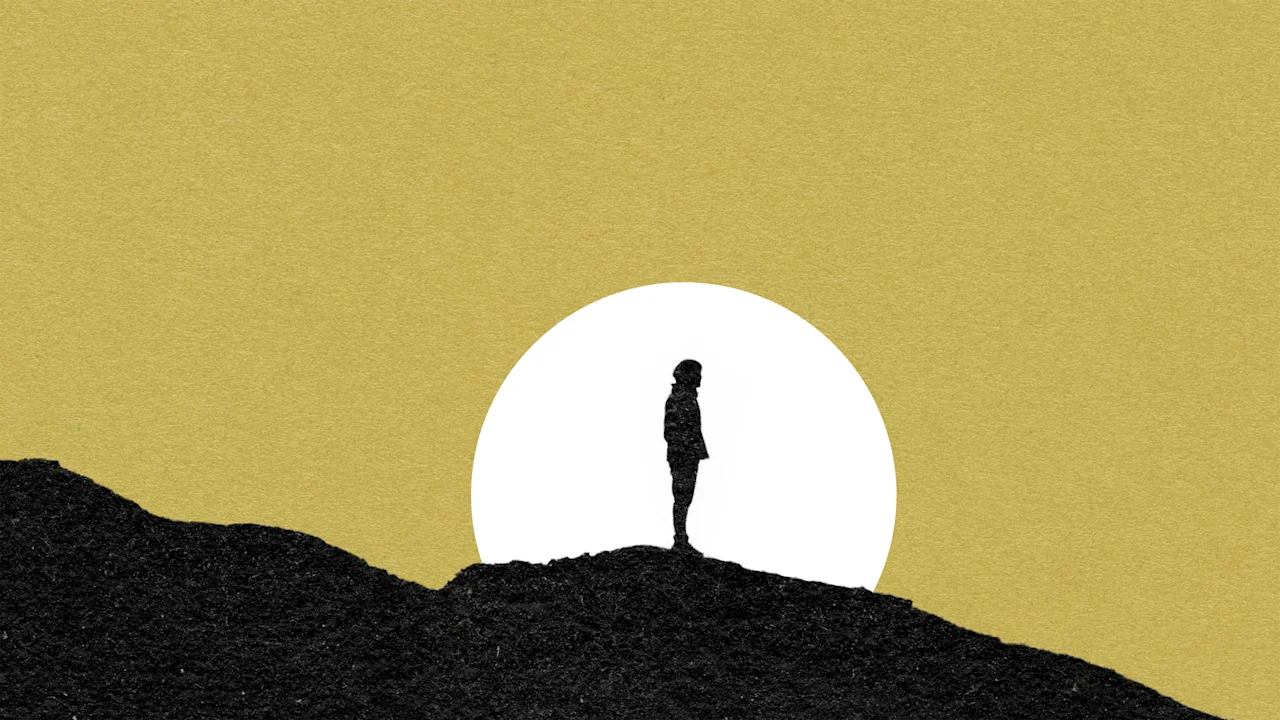
A few times every month, I push and force my brain to come up with new ideas. The process is counterintuitive. I become bored on purpose. I believe an idle mind connects better dots. I feel guilty every time. But I push through it. I’m supposed to be working. I have a to-do list and emails to respond to. And I deliberately allow my mind to do nothing.
This idea is a hard sell right now. People swear by all sorts of productivity frameworks. We’ve built entire work cultures around the idea that idle time is wasted time. So we fill every moment with work or content. With something. Anything to avoid the discomfort of just being.
History’s great minds understood the value of boredom. Isaac Newton was sent home from Cambridge in 1665 when the plague shut the university down. No lectures, no colleagues, no structured work. He spent 18 months at his family farm in Woolsthorpe, largely alone, with nothing obvious to do. In that stretch of “forced” idleness, he invented calculus. Developed his theory of optics. And worked out the foundations of universal gravitation. He later called it his annus mirabilis, the miracle year. His non-busy year turned out to be his most productive year.
Unexpected connections
There is tons of research that supports the value of boredom. When you’re not focused on a specific task, your brain doesn’t switch off. It switches into the default mode network, a system of interconnected regions that becomes more active during rest. This is where you make unexpected connections. Where you integrate knowledge. Where the distant idea meets the half-remembered fact, and suddenly, something new becomes obvious.
You’ve probably experienced this before. The solution that comes during a walk when you were not even thinking about the problem. The answer you get when you were not even trying. Your brain does its best work when you finally stop interrupting it.
Walk this way
Charles Darwin was obsessive about his daily walks. He built what he called the Sandwalk at Down House, a circular gravel path in his garden. And he’d pace it for hours each day. Just walking, thinking, letting ideas make connections. He used to count his laps with a pile of stones, kicking one away each circuit. The Origin of Species was, in many ways, assembled on that path.
Tchaikovsky believed walking was essential to composition. The composer did it twice a day, for exactly two hours each time, regardless of the weather. He said he was certain that if he skipped the walk, he would fall ill. Whether or not that’s literally true, the walks were clearly doing something. The creative output they sustained was extraordinary.
Beethoven walked after lunch every single day, carrying a pencil and some piece of paper in his coat. The walks were not breaks from his work. They were his work. The thinking and the strolling were inseparable.
Getting away from it all
The fascinating thing right now is that we have more tools than ever to be productive. But creative breakthroughs don’t seem to be happening faster. If anything, many people report feeling less creative, more stuck, more anxious—the people who were meant to benefit most from “always-on” connectivity. Writers, designers, and scientists say they do their best thinking outside those hours. When they are away from it all.
Part of the problem is that we’ve collapsed the space between stimulus and response to almost nothing. A thought appears, and before it has time to become anything, we’ve checked Twitter. An idea starts to form, and we’ve opened Slack. We’re in a permanent state of reaction, which means we’re rarely in a state of creation.
Novelist and poet Gertrude Stein understood this. She and Alice B. Toklas used to drive through the French countryside, and Stein would sit in the back and stare out the window. For hours. Alice would wait. Stein explained that she needed to see the countryside moving, to let her eyes travel without her mind following. This was, she said, how she thought.
Poet William Wordsworth composed poetry in his head while walking, then dictated it when he got home. The countryside was his permission to be slow and present, and let thought arrive in its own time. John Keats coined the term “negative capability” in 1817 to describe the ability to sit with questions and doubts without anxiously reaching for answers. The poet thought it was the defining quality of great writers and thinkers.
The long game
Modern creative industries have stumbled onto this accidentally. Pixar, the animation studio, has notoriously long production timelines. Films take years. And a significant portion of that time is spent in what the studio culture calls “failing forward.” Making something bad, stepping back, thinking, walking away, coming back.
John Lasseter used to talk about how his team would go home when they were stuck on a story problem because they knew the answer wouldn’t come at the desk. Finding Nemo almost didn’t exist. The story broke repeatedly. Director Andrew Stanton spent months doing nothing productive on the film while the team tried to figure out what was wrong. The answer only came when he stopped pushing.
The people we call creative geniuses were better at not working. They protected their idle time the way we protect our calendar. They treated it as productive, even when it looked like nothing. Their sudden illuminations were the product of the unconscious work of the brain. We can all learn from them. Do your conscious struggle and then step away. Make space for your brain to connect the dots.
Maya Angelou wrote in spare hotel rooms, with almost nothing in them. No family photos, no interesting views. She wanted a blank space where nothing could happen. She arrived early in the morning, lay on the bed with a legal pad, and spent hours writing very little. Just existing in that room, letting time pass. She said the blankness was the point. You had to give yourself enough boredom that the imagination got desperate enough to start working.
I suspect most of us know the wisdom of doing nothing. We just don’t trust it.
Boredom feels like failure. Like laziness. Or proof that we’re not trying hard enough. We mistake busyness for virtue. But the best ideas don’t run on a schedule. You can’t force them. You can only clear the conditions in which they might arrive. A walk in nature, a blank notebook, a window with something passing outside it, and the patience to wait. Put the phone down. Go for a walk. Stare at the sky for a while. You’re not wasting time. You’re doing the work.