

June 12, 2026
The tech mogul will leverage the initial public offering of SpaceX into more sociopathic wealth-hoarding.
An inflatable effigy of Elon Musk in New York’s Times Square is displayed on the eve of the SpaceX IPO.
(Anthony Behar/Sipa USA)
With this week’s IPO for Elon Musk’s tech megafirm SpaceX, he is on track to become the world’s first trillionaire, thanks to generous government subsidies, years of government-funded research, and government contracts. All these public-sector boondoggles have made SpaceX successful enough to make the world’s richest man even richer.
You’d think this might cause Musk to appreciate the value of what government does. Yet the arch-right mogul is dogmatically opposed to any such concession; indeed, his high-profile and stunningly ineffectual initiative to eliminate government spending, the Department of Government Efficiency, is the reason why multiple crucial agencies and programs have decimated, including a program that worked to prevent the deadly screwworm parasite from infecting U.S. livestock.
As Musk’s wealth multiplies, he continues to prosper on the public dime. In 2018, Musk paid nothing in federal taxes, and because much of his wealth is tied up in Tesla stock, it can continue to grow without being taxed until he chooses to sell it. (In order to avoid taxation, billionaires like Musk sometimes take out loans using the equity they claim in their corporate properties as collateral.) The Securities and Exchange Commission settled with Musk for $1.5 million over charges that he failed to properly disclose his purchase of Twitter shares in 2022—a large civil penalty for the SEC, but chump change relative to the $150 million he may have gained through the late disclosure, much less compared to his overall net worth.
The Twitter agreement came after Musk had battled with the SEC for years, settling in 2018 on securities fraud charges, and generally thumbing his nose at any effort to restrain him. Given all of this, it seems fair to say that his overall orientation toward government is that it’s an entity ripe for plunder. In any instance when it does not contribute directly to his personal wealth, he is happy to weaken, if not destroy it. In a just world, someone who has benefited as much as Musk has from government resources would be compelled to put money back into federal coffers via taxation, but tax avoidance is the favored sport of billionaires.
What Musk has contributed to the public good is minimal compared to the scale of this pillaging. Years ago, I was a buy-side tech equity analyst, and watched the net worth of many mediocre C-level officers balloon way out of proportion to their contributions. This was because the stock market often values companies based on things that have little to do with their fundamentals. And apart from these rampant market distortions, there’s simply no good explanation for why one person who runs multiple companies at the same time and cannot focus on any single one of them with his full attention should be rewarded with a potential pay package that’s the equivalent of around 5 percent of the country’s GDP. Under Musk’s chaotic and often immature leadership, his companies have grown primarily by selling a narrative that their successes have happened because of him, and not in spite of him. But even if he were an exemplary CEO (for whatever length of time he’s chief executive-ing and not cheating at video games, shitposting, fomenting racist pogroms in Ireland, or taking ungodly amounts of ketamine), his contributions as a single human could not possibly justify the level of wealth and power he has accumulated.
Musk’s cosmic-scale wealth-hoarding is particularly abhorrent when you place it against the backdrop of how much damage he’s done. It’s hard to quantify the scale of destruction and deprivation that he will never personally be held accountable for. How do you value the lives of the hundreds of thousands of people who have died since Musk, in his words, gleefully “fed [USAID] into the woodchipper”? How do you value the lives of people who will die because DOGE cut major biomedical research funding? DOGE broke the government in countless ways. These costs go far beyond what you’re now going to pay for a burger because he and his army of swaggering and clueless tech bros thought the screwworm prevention program was stupid.
Current Issue
Worse, Musk appears to have no regrets for any of this. Like many of his ilk—wealthy tech barons who believe knowledge of their own domain is somehow transitive to any other—he believes he did a good job because he’s militantly ignorant of what a good job in the public sector actually looks like. All that DOGE actually generated was $21 billion of waste; if it generated any actual efficiencies they cannot be seen with the naked eye.
Musk’s wealth is also obscene relative to what he’s given back. He is one of the world’s stingiest billionaires in terms of philanthropic giving. What’s more, the bulk of the tiny fraction of his wealth that he has donated he gave to his own self-serving foundation. In a podcast interview, he claimed that “The biggest challenge I find with my foundation is trying to give money away in a way that is truly beneficial to people…It’s very easy to give money away to get the appearance of goodness. It is very difficult to give money away for the reality of goodness.”
This is the argument many technologists in Silicon Valley make to justify wealth hoarding and selective and narrow philanthropic efforts under the guise of “effective altruism.” That fatuous ideology, like most other entries in the wealth-hoarding catechism of the Valley, professes to evaluate charity prospects on a strict assessment of their effectiveness, but somehow always results in funding AI research or, you know, space colonization efforts. All you really need to know about effective altruism is that one of its most ardent apostles is the jailed crypto fraudster Sam Bankman-Fried, who is now petitioning for a pardon from Musk’s partner in nihilistic wealth-hoarding Donald Trump.
If Musk really wanted to give his money away to actually benefit to people, he could spend more time thinking about the real causes of human suffering and less time doing cringey and expensive stunts like shooting a Tesla roadster into space or buying an entire social network to stifle critics and amplify dumb memes. But the lives of others have no meaningful place in his consciousness. They exist primarily as obstacles or more productive inputs to be used—labor to exploit, women to impregnate, online trolls to weaponize. For an aspiring space conqueror like Musk, they are all equally expendable.
His orientation toward other human beings is as morally grotesque as his orientation to his own wealth. Together with many like-minded billionaires, Musk seems to regard his storehouse of wealth as a stat on a scoreboard in a game. By the same delusional thinking, the real life-and-death consequences of the poverty and hardship so many others experience are simply an abstraction and inconvenience—not even an afterthought to the prime directive of throwing life-saving initiatives like USAID into the woodchipper. (And if, by some disturbance in the force, any tech billionaires should somehow direct a tiny margin of their wealth to address those problems, they expect a tax break for it.) To hold onto such astronomical wealth when presented with the opportunity to do things broadly beneficial to your fellow humans is nothing more than rank sociopathy.
This is deeply anti-social behavior. Yet we live in an economic system where it’s uncritically revered, and compounded by policy failures that treat Musk’s wealth as if it is fully earned. A more just and rational assessment would begin with the obvious fact that Musk has enriched himself via a rigged investment economy ensuring that those with the most contribute the least—or in many cases, nothing at all. Abigail Disney, an heiress and political activist whose philanthropic efforts are far more impressive than Musk’s, said in an interview last year, “Every billionaire who can’t live on $999 million is kind of a sociopath.” This is a reasonable person’s appraisal of extreme wealth concentration and the greediness that compels men like Musk to keep accumulating money while giving little back. It also raises another critical question as Musk graduates into the trillionaire class: if someone who can’t live on $999 million qualifies as a sociopath, how much worse is the guy who can’t live on $999 billion?
With the midterm elections now firmly upon us, the question is whether Democratic candidates will do more than merely occupy ballot lines as mild alternatives to the red-hot crisis that is Donald Trump.
As Trump spends over $1 billion a day on a globally destabilizing war on Iran and admits that he doesn’t “think about Americans’ financial situation,” millions across the country are struggling with the surging costs of essentials. Democrats must seize this moment and advance bold, small-“d” populist ideas—not settle for cynical caution that once again snatches defeat from the jaws of victory.
The Nation elevates progressive ideas, movements, and elected officials achieving real change across the country into the national conversation. At the same time, our journalists are exposing how crypto and AI-funded super PACs are spending hundreds of millions of dollars to knock out candidates they oppose, reporting on the devastating impact of the Supreme Court’s evisceration of the Voting Rights Act, and sounding the alarm on attempts by red states to quickly redraw electoral maps, disenfranchising Southern Black voters.
We can play this critical role because of support from readers like you. This June, we’re raising $20,000 to power The Nation’s independent journalism in the run-up to November’s immensely consequential elections.
It’s in our power to build a more just society, and your support at this critical moment brings us closer to that bold vision. I hope you’ll donate today.
Onward,
Katrina vanden Huevel
Editor and Publisher, The Nation
More from The Nation
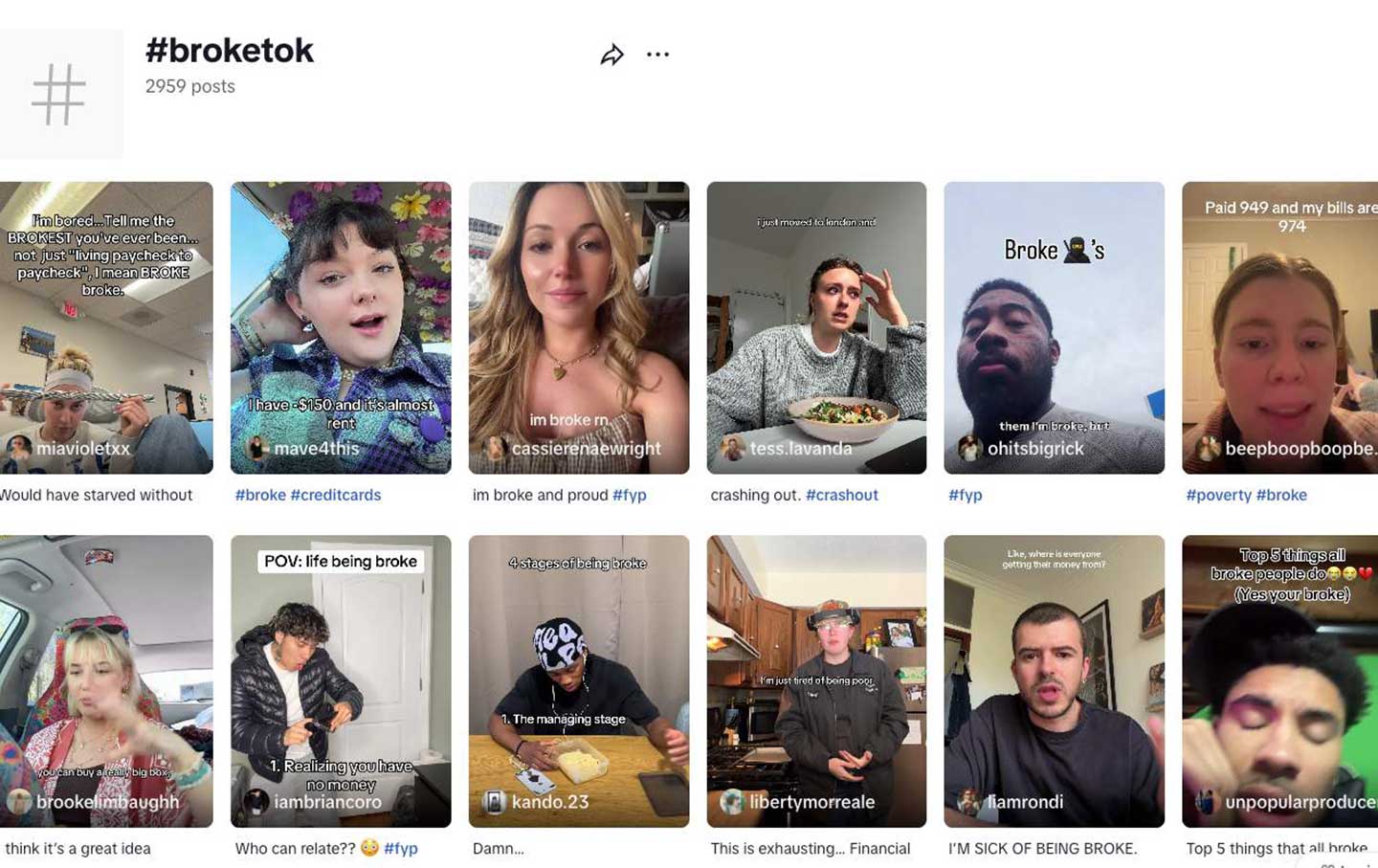
The majority of Americans are actively stressed about money. The rich have never been richer. No wonder we’re so mad.

The gap between what the numbers say and how people are feeling has only grown wider.
A conversation with the author about her new book’s regretful relevance amidst escalatingly violent ICE detainments.
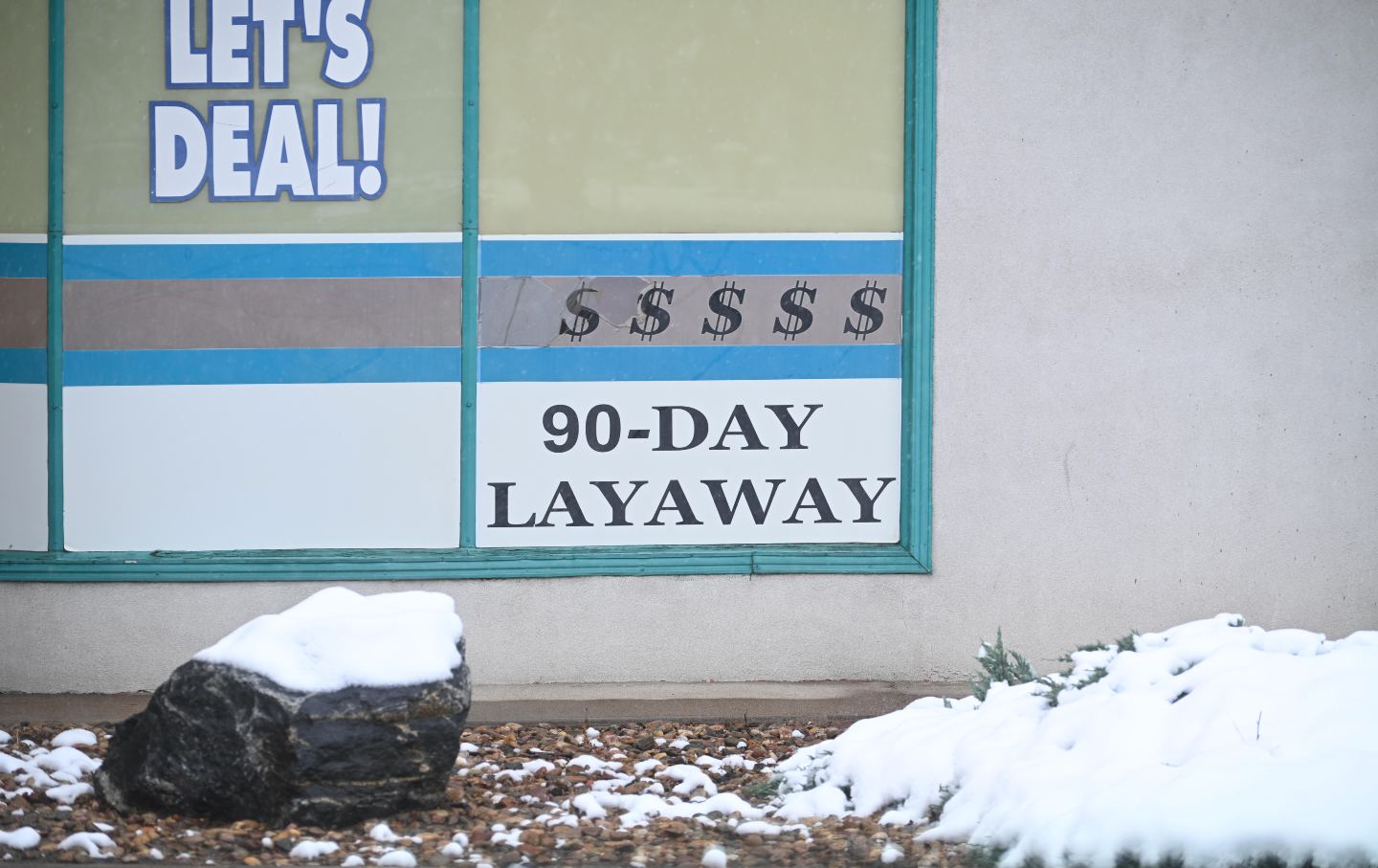
Our economy allows poor and working people to be shafted every day—does anyone care?
American plutocrats can’t stop whining about how extremely modest tax increases are killing their initiative.

Three private taxes are pushing electricity costs far above what ordinary people can afford.