
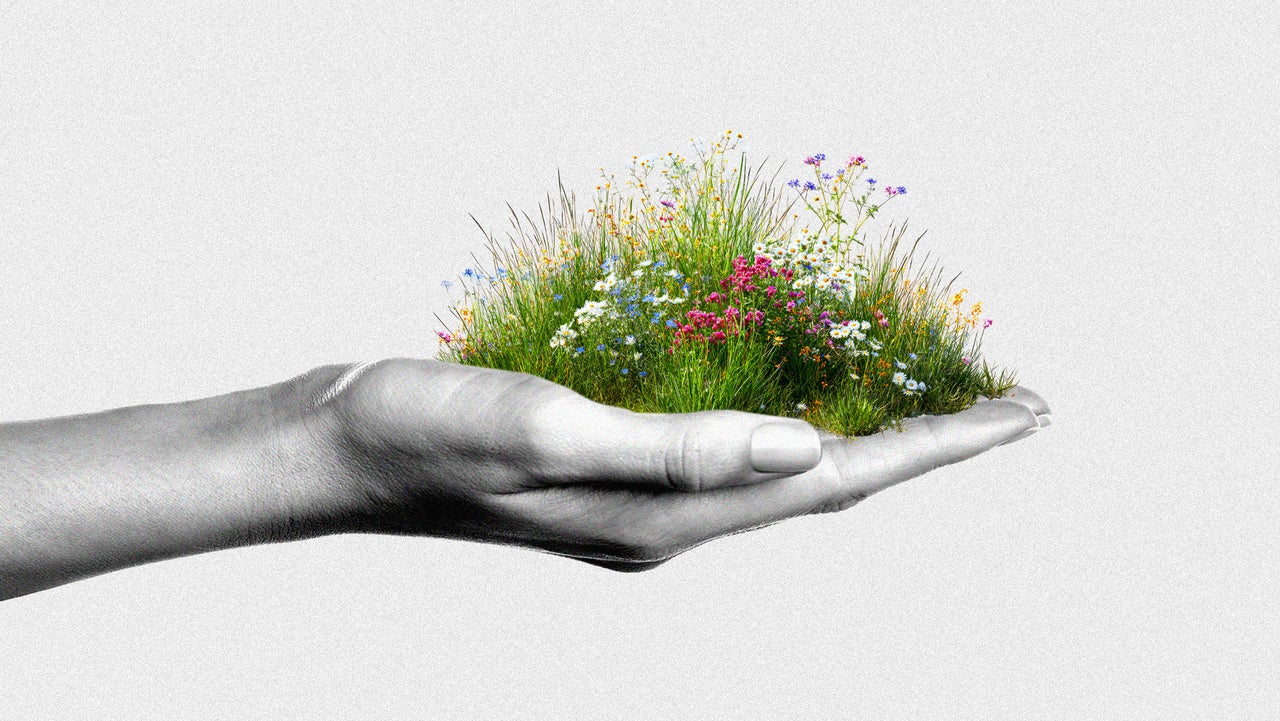
You might have heard the term “wildflowering” in the dating world. According to a piece in Psychology Today, it “means allowing a relationship to either wilt or bloom completely organically without enforcing any particular timelines, labels, or expectations.” In other words, it’s the idea of letting relationships unfold instead of trying to force them.
According to Macaire Montini, VP of People and Culture at the HR platform HiBob, it’s also how careers should work in the AI era.
Artificial intelligence is reshaping jobs faster than organizations can redesign careers. Montini believes companies should stop trying to fit employees into rigid career paths, and instead help them grow around their individual strengths.
Rather than climbing a traditional ladder, workers grow what Montini calls “career mushrooms”—expanding sideways across projects and new skills before eventually moving upwards.
Working in an AI world means human skills become the differentiator, Montini argues, and wildflowering is the company’s attempt to make sure the right people end up using those skills in the right places.
“Instead of homogenizing, it actually is leaning into someone’s gifts,” she tells Fast Company.
Don’t expect a workplace symphony automatically
The career ladder has seen better days. Entry-level jobs are becoming harder to find in some industries as AI takes over more routine work, leaving some employers wondering where tomorrow’s managers will come from. Meanwhile, flatter organizations have left many middle managers overseeing ever-larger teams while opportunities for promotion become harder to find, stressing them out as they survive another day from being axed.
The traditional route from junior employee to manager feels less certain than it once did, and some people are checking out of the rat race altogether. That’s why Montini believes careers should become broader before they become higher.
“This concept of wildflowering means that I’m going to give you what you need as an individual to succeed, as opposed to giving you this firm rubric that you need to work within—which has always been the layers of the hierarchy,” Montini says. “It really is planting the seed in your employee, and then letting that seed grow in a way [that] is very unique to them.”
Employers are scrambling to adopt AI in meaningful ways. But Montini argues that too many companies are treating AI like a box-ticking exercise rather than a creative tool. Without teaching employees how to use those tools, or giving them permission to experiment, they won’t get the creativity they’re hoping AI will unlock.
“A lot of companies are giving people AI tools like musical instruments, and they’re expecting a symphony to come out of that,” she says. “People are going to be too busy trying to teach themselves how to use the clarinet, or that AI tool that you gave them, and not how to work harmoniously together.”
Titles are important, but they need improvement
Of course, titles serve an important purpose. People still need them in some form for salary benchmarking and external job searches. Having a totally flat organization can create ambiguity about accountability, and worries about certain people taking on more work than others without recognition or reward.
What Montini thinks will convince skeptics is that in this world, job titles become less meaningful. Instead, she says “skills passports” where stamps are earned are a clearer route of progression than promotions, which can sometimes be given as titles alone, not necessarily benefits. It’s a more human way of looking at career progression, she argues, because it considers that individual’s future too.
“In the U.S., we have a lot of title inflation, because it’s been the only way to actually retain the employees that are job hopping that want to move up or out,” Montini says. “I really want to get us to a place where we make sure you have the skills that will make it here, or make it elsewhere, because we are looking at you as a whole person.”
Montini points to Microsoft’s neurodiverse hiring program as an example of designing work around how people naturally think and solve problems, tapping into creativity rather than expecting everyone to succeed in the same way.
“I really latched onto that idea because what we’re trying to do here is flatten the org,” Montini says. “More access to more information means that we don’t necessarily need as many layers of decision-making. But what I need is pods of individuals that are seated together with common purpose, and with common information, and see what they can do.”
Montini says this method allows her to see her team members’ strengths more clearly, such as if someone is a natural leader, more creative, a problem solver, or a negotiator.
Rather than asking employees to map out every career move in advance, the organization watches for strengths that emerge naturally, and helps people build on them.
“A company with a common knowledge base; that’s sort of like your soil,” Montini says. “Then you plant your seeds in that soil, give them the skills they need, and then the individual can grow from there.”
Career ladders that crumble are out. Mushrooms that spread wide are in
The next two to five years are going to feel “very shaky,” Montini says, especially with the generational dynamics of the current workforce.
“You have four generations in the mix right now,” she says. “The concept of wildflowering can jive with your younger aged employees, but not necessarily with the older ones.”
People are also anxious about what the future holds. Nobody can know the future, Montini says, especially with AI rapidly changing and evolving. It’s a real opportunity for employers to put their money where their mouth is and give their talent the training and the skills that they need, she says.
“Your job is going to change. The nature of your job is going to change,” she says. “We really need to invest in those people that are willing to take that journey with us.”
The leaders who will win in the AI-powered future are the ones who build workforces with a focus on strengths, not titles, Montini argues. And the workers who will grow the most resilient careers will be the ones that spread the widest.