
You’re at the playground, making small talk with another mom while your kids dig in the sandbox. The conversation follows a predictable script: sleep schedules, daycare waitlists, whether your toddler will eat anything green. It’s pleasant enough, but you’ll forget about it by the time you pile your kids into the car for nap time.
But what you really wanted to ask is: What’s something about birth and postpartum that surprised you? What do you wish your partner understood? How did becoming a mother change your marriage?
Those are the conversations that actually matter, because they deepen relationships and allow mothers to pass their wisdom to one another. But they feel impossible to start without seeming intense or intrusive.
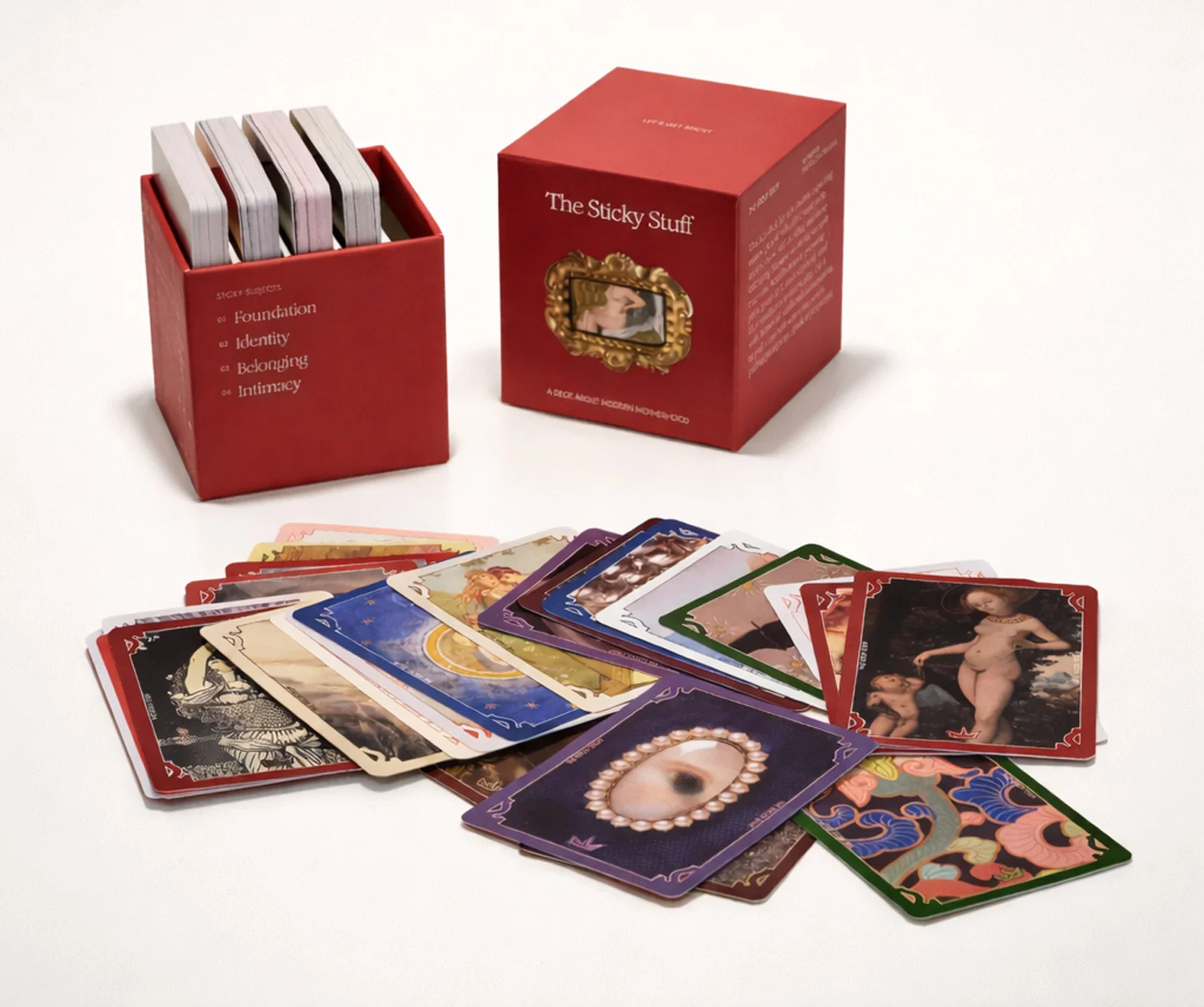
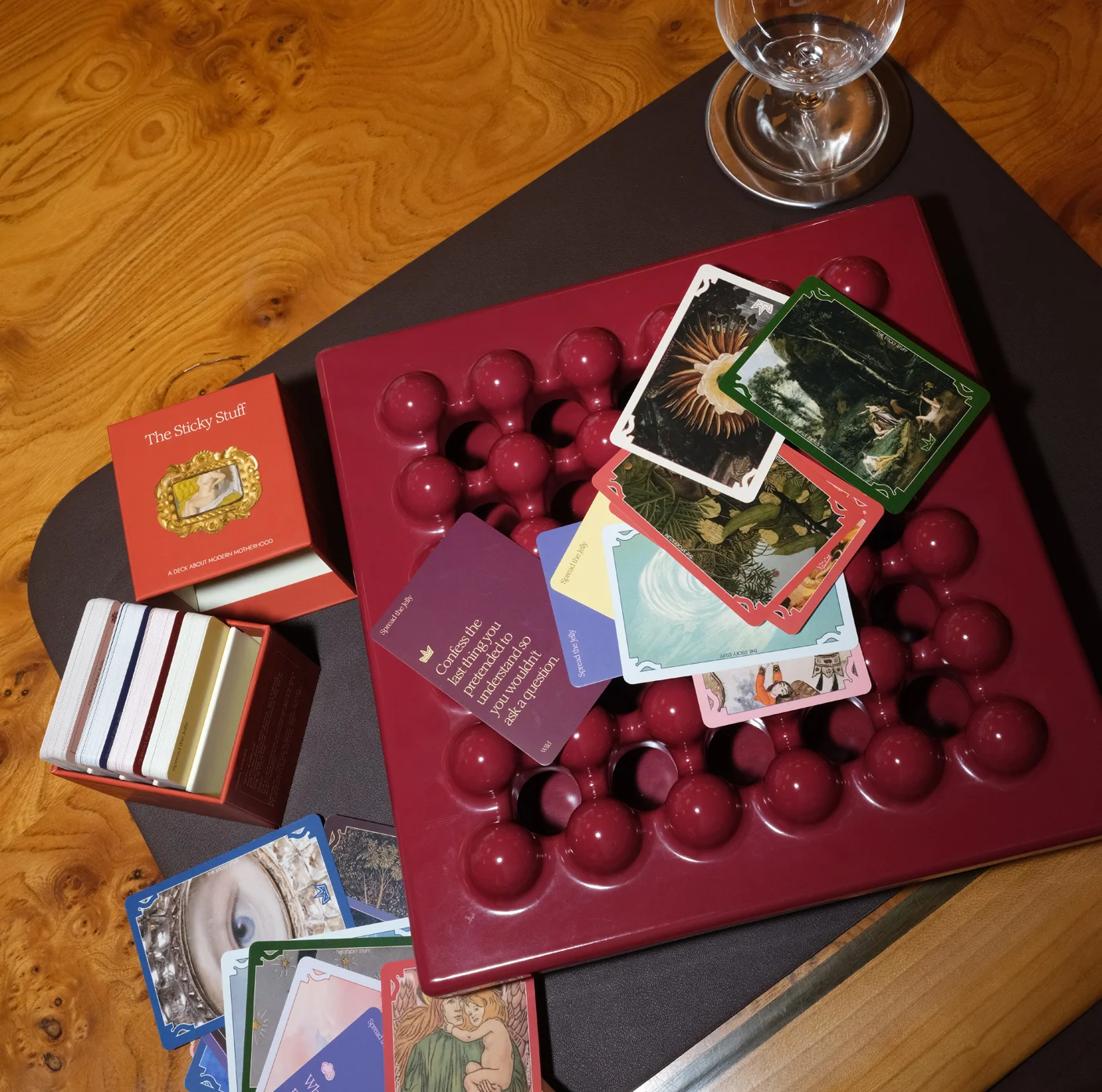
Spread the Jelly, an 18-month-old media platform, wants to help. It has just launched a deck of cards called The Sticky Stuff, meant to prompt mothers to have deeper conversations faster. “Everything we’ve been doing is about like breaking people open, allowing people to be their messiest or their happiest selves at the same time,” says Amrit Tietz, who founded the company with Lauren Levinger in late 2024.
The Sticky Stuff, which is available on the Spread the Jelly website for $45, joins a growing number of conversation cards that have entered the market, including therapist Esther Perel’s Where Should We Begin? cards that launched in 2021, Tales, which facilitates conversations with kids, and even the fast food chains Chick-fil-A, which gives out cards meant to prompt conversations around the meals.
“The popularity of the cards highlights how we desperately want to talk about deep issues,” says Nicholas Epley, a professor at the University of Chicago Booth School of Business who has been studying conversation for two decades.
Modern Motherhood
The idea for Spread the Jelly’s conversation cards didn’t start with market research or a business plan. It started with two women in Los Angeles who desperately needed someone to talk to. Lauren Levinger had recently had her son when Amrit Tietz, pregnant and without mom friends in her life, reached out via social media. “From social media, you look like you’re doing motherhood pretty well,” Tietz wrote to her. “Can we connect?”
When they finally sat down together months later, they were surprised by how good it felt to have an honest conversation. They quickly began to discuss the things that nobody talks about, from how lonely it can be to spend your days with a non-verbal human, to postpartum sexuality. “We realized how starved we were for community,” says Levinger.
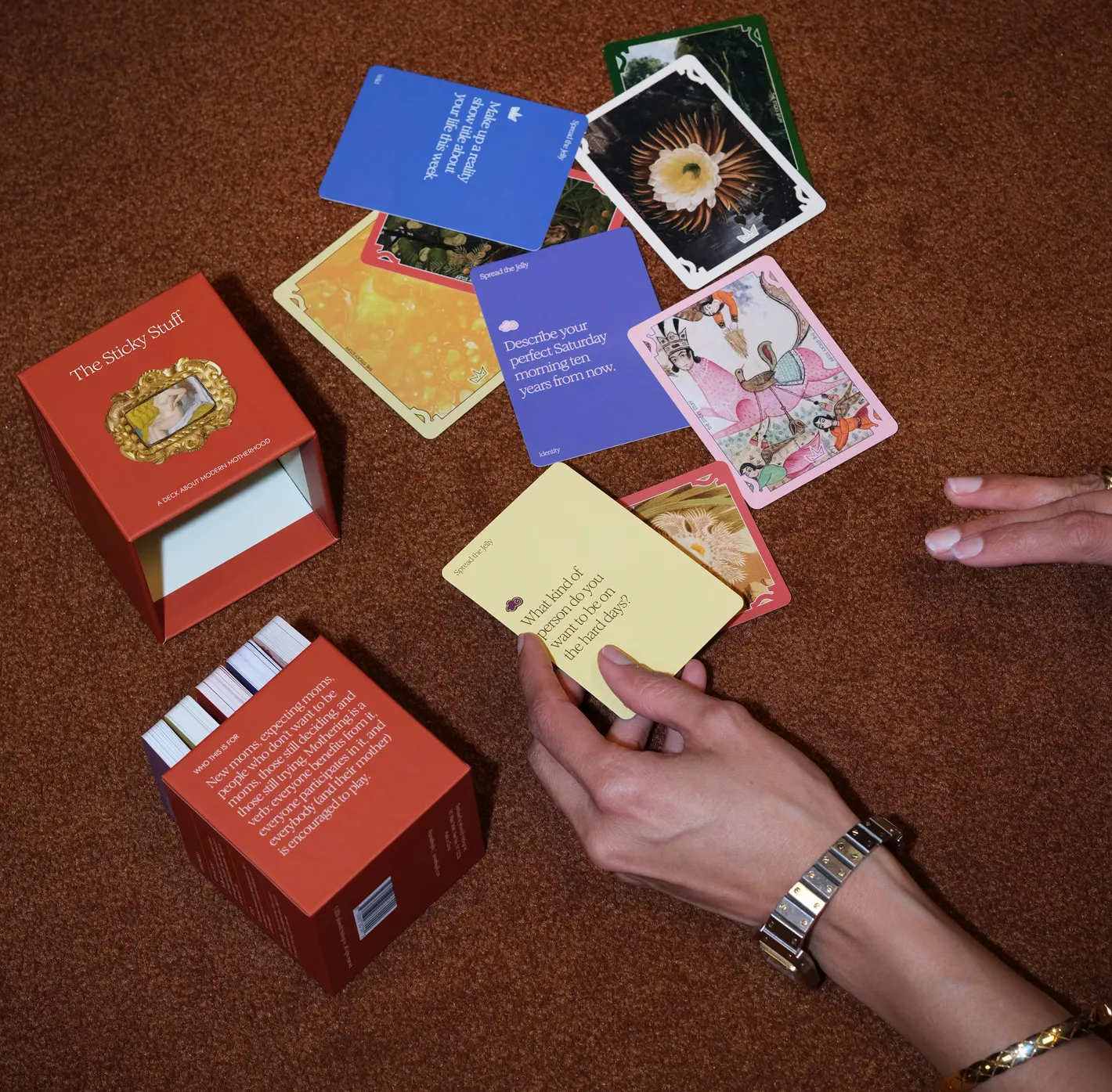
This prompted them to launch Spread The Jelly, as an online magazine for radical honesty about modern motherhood. The conversation cards came later, as a natural extension of that mission. Tietz and Levinger began to build out a deck of questions, and tested them out with their partners, families, and friends. They ended up encompassing four different categories: foundation, identity, belonging, and intimacy. They included prompts like, “Describe your childhood in one sentence;” “Describe a moment you’re not proud of,” and “How do you show up for your loved ones?”
Levinger points out that everyday conversations at the dinner table have a way of becoming stagnant. The cards suddenly unlocked a way to venture into new territory with the people in our lives.
Why Cards Work
Deeper conversations are scientifically proven to make us happier. Epley conducted these studies himself. In a 2021 research paper, he brought together thousands of people, pairing strangers up randomly to discuss questions like “Can you tell me about one of the last times you cried in front of another person?” “We typically don’t ask those kinds of questions,” Epley reflects. “We don’t probe into people’s lives like that because we don’t think it’s okay to do so.”
After these conversations, by a very large margin, participants said that they felt better, and they wished more of their conversations were as deep or deeper. The research foud that thing that holds people back is that they believe that other people don’t want to engage with these topics, so it would be intrusive and inappropriate to bring them up.
“I’ve now done this with almost 5,000 people,” Epley says. “The results are very consistent. People wished they were having deeper conversations.”
A Skill You Can Learn
Conversation cards are having a moment now, but Epley argues that it has always been hard to have deep, meaningful conversations in everyday life: He cites a famous study from 1973 by psychologist Stanley Milgram, who found that nobody spoke to one another on the subway.
But there are now new dynamics at work now. There’s growing awareness about the loneliness epidemic in the United States, thanks to people like Vivek Murthy, the Surgeon General who has brought it to the public’s attention. “There cost of social isolation and disconnection is crystal clear,” he says.
Epley also points out that technology and phones have made it harder to connect to other people. While we feel like we have large networks of friends on social media, these connections are very weak and generally don’t involve profound conversations. “For much of human history, connecting with other people just happened in everyday life,” he says. “But now, when everybody on the train is on their phone, we have a lot more independence from strangers.”
The popularity of these card games suggests that people do want to connect more deeply. And Epley says that if they do become more common—and they people use them with their families at dinner time or with their friends at parties—they’ll become better at having deeper conversations in everyday life. “It is something you can practice and get better at,” he says. “You learn how to do it, what to ask, how to ask.”
For new mothers, the benefits could be profound. Postpartum depression and isolation are widespread. Many mothers spend their days physically with other adults—at playgrounds, in parent groups—making meaningless small talk and feeling alone. A deck of conversation cards won’t fix the loneliness epidemic. But they might buy the someone social permission to forge a deeper connection with an acquaintance.
For Tietz and Levinger, the cards are just one part of a larger mission. They want Spread the Jelly to be different from traditional parenting media, which tends to be very prescriptive about what motherhood should look like. Instead, they’re hoping to create a space where women can honestly share their diverse experiences. “There is no blueprint in parenting—everyone’s journey is so radically different,” says Tietz. “And I think people just want to feel less alone in whatever they’re experiencing.”