
Roughly 2,400 years ago, Socrates warned that a dangerous new technology would hollow out the human mind. In Plato’s Phaedrus, he tells the story of the Egyptian god Theuth, who presents writing to the king as a gift that will make people wiser. The king doesn’t agree. Writing, he replies, will do the opposite: People will stop exercising their memory because they’ll trust the marks on the page instead. They will have the appearance of wisdom without the reality of being wise.
He was right. The prodigious oral memory of the ancient world did wither once knowledge could be set down and retrieved. A skill that is not used atrophies.
Socrates’ warnings came to my mind because we are having the Phaedrus conversation again. Author Matt Beane drew my attention to a recent Boston Consulting Group study of 70 senior executives. BCG found that the thinking skills leaders prize most, including judgment, problem framing, and original analysis, are eroding fastest as AI saturates daily work. They call it distributed de-skilling. Half of the leaders they interviewed are already seeing it.
This can be a critical loss of organizational capability. Workflows and handoffs can be absorbed into an AI-informed system, whose workings nobody understands, making the organization incredibly vulnerable to unexpected shocks. And yet, so many of the remedies offered for the loss of skill, such as AI-free Fridays, red-team prompts, and mandatory human sign-offs don’t get at the real problem, which is the loss of the apprentice-mentor connection.
What we built last time
Humans eventually designed systems that took advantage of the power of writing. We built schools and universities. We built libraries to curate and organize what writing made abundant. We invented citation and attribution, so that a claim came with a chain of accountability. We developed peer review, the seminar, the disputation, and the scientific method. All of these things were specifically designed to take advantage of this massive technological shift. Those designs are what turned a skills apocalypse into the scientific revolution.
Economic researcher Carlota Perez observes that every great technological revolution unfolds in two acts. First comes an installation phase: The new technology races ahead, capital floods in, the old institutions strain and crack, and turbulence is everywhere. Then, after a turning point, comes a deployment phase, when society reshapes its institutions to match the technology’s potential. The extraction of capital from the financial casino and the productivity boon created by a new technological regime can precede a golden age, but only once we design new institutions.
The de-skilling that BCG documents is the unmistakable signature of the installation phase. Technology has outrun the institutions built for the previous era. Our organizations were designed to develop judgment through an apprenticeship path. Junior people learned by doing the analytical grunt work, learning by repetition, earning discernment one hard problem at a time. AI has eaten the bottom rungs of that ladder, and we have not yet built the new one.
Sabotaging the expert-novice bond
The researcher who has probably thought hardest about this is Beane, whom I had the pleasure of hosting on my ThoughtSparks podcast. He spent a decade watching how intelligent machines break skill: in operating rooms, on warehouse floors, and in dangerous wartime situations. His finding is that valuable skill grows from three things—challenge (working right at the edge of your ability), complexity (seeing the whole system around a task, not just the task), and connection (trust between the one who knows and the one learning). All three are carried by the expert-novice bond. The signature damage of intelligent machines, he finds, is brutally specific: They insert themselves between novice and expert.
He offers the example of the introduction of robotics into surgery. The console now lets the senior surgeon perform an entire operation alone, hands on the controls, while the resident who used to learn by assisting now just watches a screen. The machine did not replace the surgeon. It replaced the apprentice. AI does the same to knowledge work. The bottom rung is not merely automated. The relationship that ran through it disappears.
Aviation already lived this — and built the answer
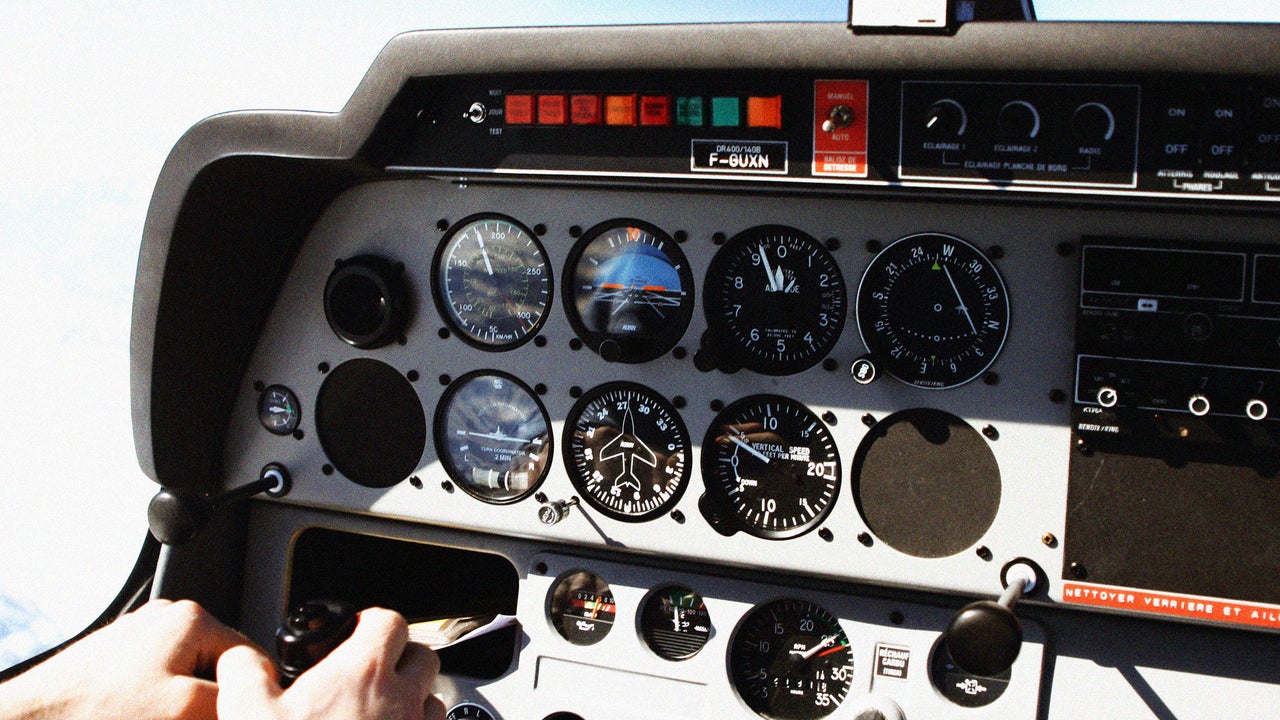
In 1997, American Airlines captain Warren Vanderburgh gave a now-legendary lecture warning about the risks of cockpit automation. The “children of the magenta line” were pilots so dependent on the guidance on their screens that they had lost the stick-and-rudder skill and the judgment to simply fly the airplane. He and his group analyzed accidents, incidents, and violations and determined that 68% of them were caused by automation mismanagement.
When Air France 447’s autopilot disconnected over the Atlantic in 2009, the crew was so accustomed to the automation flying the plane that they couldn’t diagnose a basic stall; 228 people died. A few years later, an Asiana crew crashed at San Francisco because they couldn’t hand-fly a routine visual approach without the autothrottle. Automation hadn’t removed error. It concentrated error into rare, high-stakes moments.
Aviation’s response was not to ban the autopilot. It was to introduce the flight simulator, and require ongoing training built around it.
The simulator is the innovation that solves Beane’s problem head-on. It delivers challenges on demand. You can simulate an engine failure, an iced-over sensor, or a stall without putting a real aircraft at risk. It delivers complexity, in that the equipment represents full-system fidelity, the whole environment, including the high-consequence emergencies that actual flying almost never (thankfully) serves up. And, done right, it delivers connection: an instructor sits beside you, injects the failure, and runs the debrief afterward. A simulator without that instructor and that debrief is just a video game. Repetitive practice builds muscle. The relationship converts muscle into judgment.
Steal this idea!
The practice every organization should adopt is to build the simulator and put the novices back in charge of the controls. Decouple the formative repetitions from live production so that juniors can struggle productively against hard, rare, consequential problems in an arena where failing, learning, and getting feedback is the point.
The same AI that erodes skill is extraordinary at building the simulator. It can generate realistic scenarios by the hundred, inject curveballs and failure modes, play the difficult client or the skeptical board or the patient whose symptoms don’t add up. It can turn the de-skilling engine into a skill-building one. AI builds the arena, the human does the flying, and the expert runs the debrief. Make that debrief run both directions, and you get what Beane and a collaborator call an “inverted apprenticeship.” These are juniors, who fly the new tools fastest, teach the technology upward, while seniors teach judgment down. The bottom rung gets rebuilt, and it now carries traffic both ways.
You may not even have to design the first simulator from scratch. Beane’s most subversive finding is that in almost any workplace optimized for productivity, roughly one in ten people is already building real skill by quietly bending the processes. This could be the resident who finds unsanctioned ways to practice, or the analyst who rebuilds the model by hand just to see what the tool hid. Find those shadow learners. They have usually already rigged a private simulator against the grain of your own metrics.
Writing did not make us stupider. It forced us to rebuild how one generation passes ability to the next. Cockpit automation forced aviation to do the same. AI is forcing the reckoning on the rest of us now. The good news is that practical solutions have already been invented. We just need to adapt them to our specific circumstances.