
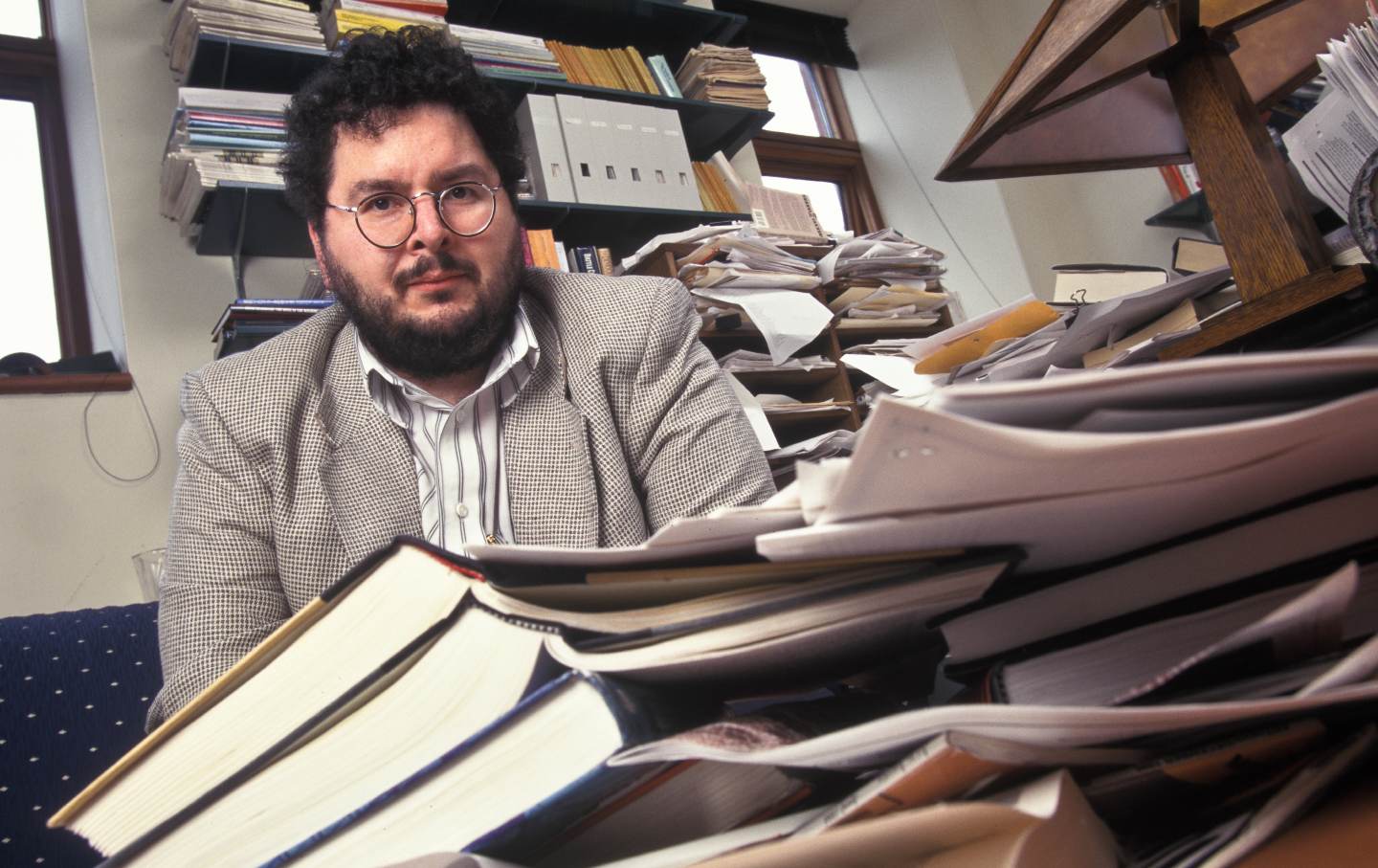
After outcry from students over e-mails showing David Gelernter’s relationship with Jeffrey Epstein, the computer science professor is under review by the university.
David Gelernter, professor of computer science and a specialist in artificial intelligence at Yale University.
(James Leynse / Getty)
On an ordinary Thursday, in June 1993, on the fifth floor of Arthur K. Watson Hall at Yale, a computer science professor opened mail in his office. David Gelernter believed that what sat on his desk was a stack of letters, one of the packages probably a dissertation from a graduate student. But when he tore open the package, it began smoking. It was an explosive device from Ted Kaczynski, the Unabomber. Upon detonation, the bomb damaged four fingers on Gelernter’s right hand along with his right eye.
Still, Gelernter survived one of the Unabomber’s attacks against influential academics leading the digital revolution. At Yale, Gelernter is best known for being the worst-ranked professor in the university’s computer science department. Nationally, he’s known for being a contrarian in academia and clashing against scientific consensus on climate change. For that role, Gelernter met with Donald Trump in 2017 and was floated as a potential science adviser during his first term.
In January, another explosion rocked Arthur K. Watson Hall: the revelation that Gelernter had a relationship with Jeffrey Epstein. In dozens of e-mails, between 2009 and 2015, Gelernter corresponded with the convicted sex offender, according to files released by the Department of Justice.
In 2010, Gelernter invited Epstein to New Haven, even offering the hospital’s heliport for his helicopter to land. In April 2011, Gelernter seemingly solicited money and advice from Epstein for a business venture, discussing operating budgets and development costs, including “executive salaries” for himself and two others. In another e-mail, released in late January, Gelernter recommended one of his female students to Epstein for an unspecified job. On October 11, 2011, three years after Epstein’s conviction in Florida for soliciting prostitution from a minor, Gelernter wrote: “I have a perfect editoress in mind: Yale sr, worked at Vogue last summer, runs her own campus mag, art major, completely connected, v small goodlooking blonde.”
Days later, when the Yale Daily News reached Gelernter for comment on the horrified reactions from students, he told reporters, “Anyone planning to censor my rec letters for my students might just as well go back to sleep.… And who gives you the idea that you or anyone else are qualified to edit my private correspondence, in order (what’s more) to apply your own worn-out 1990’s platitudes to the letters I write?”
Current Issue

The Epstein files also include e-mail correspondence with other scientists and academics across the country, including at Stanford, Princeton, UCLA, and more. At Harvard, economist and professor Larry Summers’s remarks about women in science sparked backlash and faculty revolt in 2005, culminating in his resignation as president a year later. Last semester, he again faced scrutiny when e-mails revealed continued contact with Jeffrey Epstein, leading to dismissal from the course he was teaching.
As the week went on, and students continued to speak out about the Yale professor’s connection to Epstein, it seemed Gelernter’s job was safe. Even though, for those on campus, the professor’s defiance was unsatisfactory. On the anonymous social-media app “Fizz,” there were posts with thousands of upvotes telling fellow Yale students to interrupt Gelernter’s lectures. I conducted an anonymous poll on the site, which received hundreds of responses, asking students if they liked or disliked Gelernter. Over 90 percent responded that they disliked him, and more than 80 percent said that he should be fired.
On February 3, outside Gelernter’s classroom, a scene started. He was 20 minutes late for his lecture (which a student said was “not out of the ordinary”). The crowd mostly dispersed when Gelernter got to work, the Yale Daily News reported. A student shouted out the name of his old friend: “Epstein!” Gelernter went along teaching the class like nothing had happened. “Students who are bored enough to spend their time demonstrating against the use of descriptions in private correspondence have got this whole Yale thing wrong,” he told the paper. “Is that why you came to Yale?”
Then, on Tuesday morning, the Yale Daily News published a letter by Elizabeth Chivers, a senior studying economics and the humanities, titled “Discipline Gelernter.” Gelernter’s comments, Chivers wrote, and his “shameless defense of them,” undermined her hope that her professors’ impressions of her are based on “character, intellect and effort” and not “size or hair color.” In her letter’s last lines, Chivers wrote: “I hope [Yale] will share with us the steps they will take to assess this professor’s history, actions and statements, and how they will continue to ensure that all members of Yale’s community are respected and safe.”
On February 10, as the dean of Yale College acknowledged the letter in an e-mail to Chivers, a message from Gelernter to his students began circulating: “I’ve been relieved. From now on I no longer teach CPSC 4500”—his only class at the university. Gelernter went on to repeat his earlier claims that he did not know Epstein was a “convicted felon,” as he put it. “I’m accused of describing a student in email as ‘worked for Forbes last year, runs her own campus newspaper, knows everyone, is [perfectly] informed.’”
“The university does not condone the action taken by the professor or his described manner of providing recommendations for his students,” a university spokesperson told the Yale Daily News. “The professor’s conduct is under review. Until the review is completed, the professor will not teach his class.”
“Given his flippant tone about such a serious issue, it’s good that he’s no longer around undergraduates,” said Miles Kirkpatrick, a junior at Yale studying classical civilizations and the chair of the university’s Progressive Party. “In a world where he took responsibility, there might be a conversation about appropriate discipline—but to say he was ‘very glad’ he wrote that note, knowing what we now know about Epstein, is ludicrous.”
Hours after Gelernter was pulled from teaching, Chivers told The Nation that she wasn’t shocked that a Yale professor showed up in Epstein’s inbox—elite institutions and powerful men tend to find each other—but the way Gelernter described that student stuck with her. “It was a really inappropriate way to speak about a young person,” she said. What pushed her to write the letter wasn’t just the original e-mail, but Gelernter’s response to getting caught. His public defenses suggested he saw nothing wrong with how he talked about young women in academia, and violated the university’s basic commitment to protect their students. Gelernter’s message to students struck Chivers as self-pitying, marked by what she called a “lack of remorse.”
She reviewed some of the Epstein correspondence herself. Parts were mundane, even banal. But Gelernter’s later insistence, after the exchanged e-mails surfaced, that Epstein was among the most brilliant people he’d known disturbed Chivers.
Popular
“swipe left below to view more authors”Swipe →
Defending the relationship on those grounds felt defiant. “It reinforced my sense that there wasn’t real remorse,” she said. “He did not seem defiant because he was an exception; he seemed defiant because he had been exposed.”
More from The Nation

What is being described as “reform” in Washington will only make the abuse and wage theft that plague the program even worse.

Forget the useless so-called “reforms” to ICE and policing currently on offer. We need much more fundamental change.
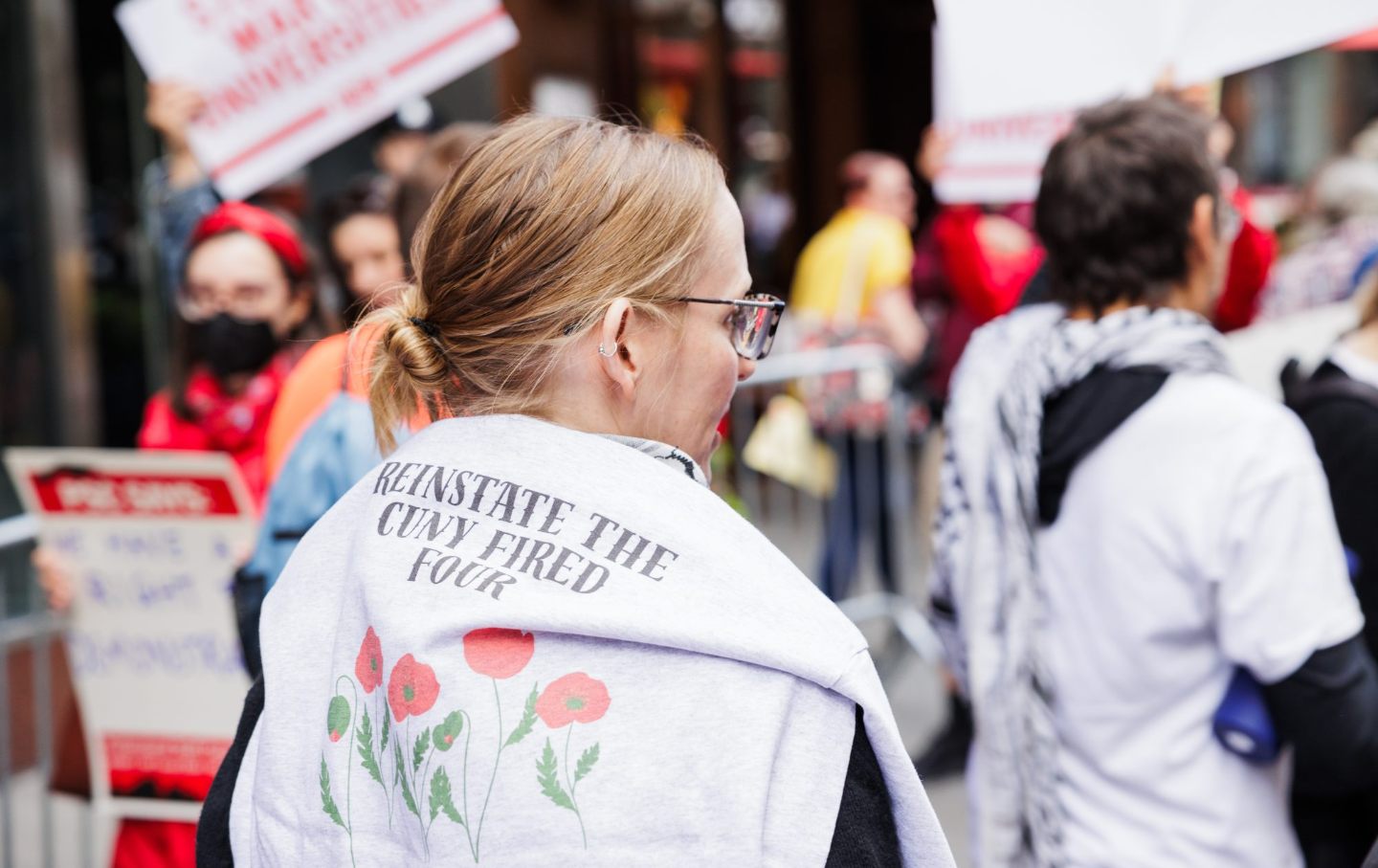
Following the Mamdani administration’s talks with the CUNY faculty union, three professors have returned to class after losing their jobs for their pro-Palestine activism.
Miller was not elected. Nor are he or his policies popular. Yet he continues to hold uncommon sway in the administration.
In the extensive correspondence between the Silicon Valley venture capitalist and the late pedophile, both men expressed a deep aversion to democracy.

In her new book, Alyssa Battistoni explores how nature came to be treated as a supposedly cost-free supplement of capital accumulation.