
The United Arab Emirates said Tuesday it will leave OPEC effective May 1, stripping the oil cartel of one of its largest producers and further weakening its leverage over global oil supplies and prices.
The UAE’s decision had been rumored as a possibility for some time, as it pushed back in recent years against OPEC production quotas it felt had been too low — meaning it wasn’t able to sell as much oil to the world as it had wanted.
“Having invested heavily in expanding energy production capacity in recent years, the bigger picture is that the UAE has been itching to pump more oil,” Capital Economics wrote in an analysis. “The ties binding OPEC members together have loosened,” it said, particularly after Qatar withdrew from the cartel in 2019.
Regional politics are also likely at play. The UAE has had increasingly frosty relations with Saudi Arabia, OPEC’s largest producer, over political and economic matters in the Mideast, even after both came under attack by fellow OPEC member Iran during the war.
No immediate impact likely for world oil markets
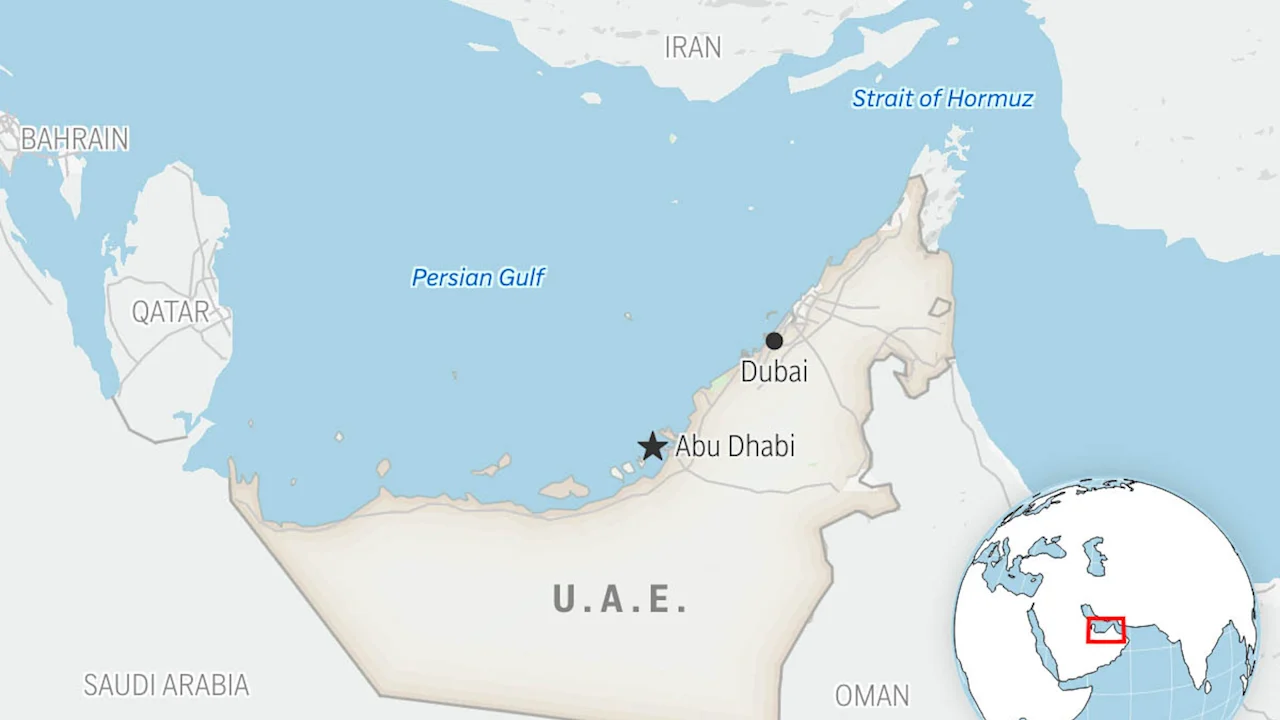
The UAE’s withdrawal from OPEC won’t necessarily have any immediate effects on markets. That’s because world oil supplies are sharply constrained by the war in Iran, which has closed off the Strait of Hormuz, a waterway through which one-fifth of global oil supplies — including much of the UAE’s — is transported. On Tuesday, Brent crude, the international benchmark, traded above $111 a barrel, or more than 50% above its prewar price.
OPEC’s market power had already been waning in recent years as the United States ramped up its production of crude oil. Saudi Arabia had been pumping over 10 million barrels of oil a day before the war. The U.S. pumps more than 13 million barrels a day.
U.S. President Donald Trump has been a steady critic of the cartel during his two terms in the White House.
The UAE, which joined OPEC through its emirate of Abu Dhabi in 1967, had been producing around 3.4 million barrels of crude a day just before the U.S.-Israeli war with Iran began on Feb. 28. Analysts say it has capacity to produce roughly 5 million barrels a day.
In its announcement on Tuesday, made via its state-run WAM news agency, the UAE said it also would leave the wider OPEC+ group, which Russia had led to try to stabilize oil prices.
“This decision reflects the UAE’s long-term strategic and economic vision and evolving energy profile, including accelerated investment in domestic energy production,” the UAE said, adding that it would bring “additional production to market in a gradual and measured manner, aligned with demand and market conditions.”
The UAE’s withdrawal removes one of OPEC’s few members with the ability to quickly increase production, said Jorge Leon, head of geopolitical analysis at Rystad Energy.
“A structurally weaker OPEC, with less spare capacity concentrated within the group, will find it increasingly difficult to calibrate supply and stabilize prices,” he said.
Saudi Arabia, UAE increasingly at odds
Saudi Arabia and the UAE increasingly have competed over economic issues and regional politics, particularly in the Red Sea area. The two countries had jointly fought against Yemen’s Iran-backed Houthi rebels in 2015. However, that coalition broke down into recriminations in late December, when Saudi Arabia bombed what it described as a weapons shipment bound for Yemeni separatists backed by the UAE.
As tensions rose in recent months, Saudi broadcasters long based in Dubai, the economic hub of the UAE, have pulled back to the kingdom.
“This exit of OPEC fits into the UAE need for flexibility with key energy consumers as well — including a future relationship with China and a more competitive relationship with Saudi Arabia,” said Karen Young, a senior research scholar at Columbia University’s Center on Global Energy Policy.
While Saudi Arabia and OPEC had no immediate reaction, Emirati Energy Minister Suhail al-Mazrouei insisted his country’s decision did not stem from any dispute with its Gulf neighbor.
“We’ve been working together for years and years. We have the highest respect for the Saudis for leading OPEC,” al-Mazrouei told CNBC.
However, the UAE sent its foreign minister rather than its ruler to a Gulf Arab leaders’ meeting held Tuesday in Jeddah, Saudi Arabia, hosted by Saudi Crown Prince Mohammed bin Salman.
The UAE hosted the United Nations COP28 climate talks in 2023, a conference that ended for the first time with a pledge by nearly 200 countries to move away from planet-warming fossil fuels. But the UAE still plans to increase its production capacity in the coming years, even as it pursues more clean energy at home, a move decried by climate activists.
“The demand for power is going to go up and up and up,” U.S. Interior Secretary Doug Burgum told an Abu Dhabi oil conference in November. “Today’s the day to announce that there is no energy transition. There is only energy addition.”
He drew widespread applause from his Emirati hosts.
—Jon Gambrell, Associated Press
Associated Press writer David McHugh contributed to this report.