

Two years after Trump’s infamous invitation to the National Association of Black Journalists’ convention, the organization is adapting and bracing for escalating hostility.
Iremember, after standing in a line that spanned at least four hallways in the Hilton Hotel on Chicago’s Michigan Avenue, finally entering a crowded, almost vibrating conference floor. The murmur of reporters already rife with questions permeated the room. I sat near the back and stared at an illustration of bold, yellow lettering with blue skyscrapers emerging from above. The letters read, “NABJ.” At my first National Association of Black Journalists Convention, in 2024, I waited for then–presidential candidate Donald Trump to emerge.
At the time, NABJ’s decision to invite a hostile actor to a Black advocacy space in the name of journalistic tradition left many professional Black journalists reeling. Almost two years later, in the wake of the Trump administration’s blatant attacks against Black journalists, the decision seems even more incomprehensible. From the federally backed arrests of Georgia Fort, Don Lemon, and Jerome Richardson in January, to Trump’s recent racist social-media post depicting Barack and Michelle Obama as monkeys, the president’s hostility toward Black people, immigrants, and anyone who questions power has been transparent. Even his social-media tribute to Jesse Jackson on Tuesday sparked heated backlash for using the civil rights leader’s death as self-inflating PR fodder.
“When you have an autocratic presidential candidate, you don’t treat that person like a normal presidential candidate,” Nikole Hannah-Jones, New York Times Magazine correspondent and a longtime NABJ member, told me. “NABJ in particular was created to advocate for Black journalists. We didn’t learn anything new about his views. There was nothing there that journalists got. What journalists did get was completely disrespected in our own territory.”
Before the Lemon and Fort arrests, before Karen Attiah—who stepped down from her position as NABJ convention co-chair in 2024 after learning Trump was invited to the conference—was fired from The Washington Post, there was Hannah-Jones in 2020, navigating a conservative backlash to The 1619 Project. The renowned collection of essays that interrogated the nation’s relationship to chattel slavery and Black America had US Senators like Tom Cotton smearing it as “revisionist” history and President Trump forming the Advisory 1776 Commission in an effort to keep the material from being taught in schools.
Current Issue

Hannah-Jones sai00d NABJ as an organization did not speak up for her. “I believe deeply in the organization, but when I was being attacked by the administration, the organization was silent,” she said. “Free speech organizations were quiet and other journalists were largely quiet, not all of them, but largely as a profession. I think that then helped enable the administration to do what it’s doing now.”
Today, a number of journalists say that Trump’s presence at the convention has yet to be truly reckoned with in light of the escalating hostility we’re witnessing right now. In a recent editorial in Black America Web, journalist and researcher Dr. Stacey Patton asks, “Can NABJ Protect Black Journalists—Or Just Mourn Us After?” The Howard University professor writes, “Two Black journalists arrested in one weekend is not a policy debate. That is a signal. And if we are honest, 2024 was a signal too.”
Elections for NABJ national leadership occur every two years. In 2026, Errin Haines, the current NABJ president and editor at large of The 19th, has brought a sense of bold direction organizationally and an apparent willingness to speak truth to power, something Hannah-Jones has expressed gratitude for. In a January 30 press release condemning Lemon and Fort’s arrest, Haines states, “As journalists, our first obligation is to bear witness and to inform. When those obligations are met with detention or prosecution instead of protection, we must ask: what message are we sending about who gets to report and who gets silenced? A free press, not a penalized one, is essential to democracy; especially, when coverage intersects with contentious public issues.”
Indeed, these times are a very persistent echo of the past. Ida B. Wells relocated to Chicago after her Memphis newsroom was burnt down in retaliation against her lynching investigations. Decades later, Black journalists during the civil rights movement relied on a network of legal defense funds and community members for protection, like Dorothy Butler Gilliam sleeping in a Black funeral home while reporting on integration efforts in Mississippi.
On both the local and national level, NABJ chapters have been adapting past lessons for present circumstances. In April, when a television network that serves a predominantly Black county in Maryland was under threat of losing funding, Washington Association of Black Journalists (WABJ) president Philip Lewis testified at a council hearing to defend the station. This was an unusual choice, Lewis said, but WABJ understood the ramifications of further entrenching the county as a news desert.
“We need to be able to do more if we are serious about protecting democracy,” he said. “Journalists being laid off and disappearing, removing journalists from war zones, like the Post just did in Ukraine—that’s dangerous. People will not know where to find up to date information, and misinformation and disinformation will seep in, because people will be looking for things to replace it. Unfortunately, we know what that looks like.”
In addition to providing training or supporting local newsrooms, chapters like NABJ-Chicago have been offering mental health resources to help journalists navigate traumatizing events. “In a moment like this, mutual aid, mutual care, collectives—that matters,” Brandon Pope, president of NABJ’s Chicago chapter, told me. “That’s why NABJ matters.”
On February 2, NABJ held an emergency town hall to analyze recent attacks to press freedom and understanding what collective action looks like. The two-hour livestream featured leaders from the Freedom of the Press Foundation, the International Women’s Media Foundation and the Committee to Protect Journalists, among others. What struck me most about the gathering was the swath of journalists and media professionals that united to pave a path toward meeting the moment.
Two years ago, as Trump made his abrupt exit, a young journalist a couple rows in front of me shouted, “What about Gaza?” No one on stage answered. After being flushed with feelings of alienation and isolation at what I had witnessed, I was relieved to see someone ask at least one question everyone refused to broach. The two of us took the liberty of approaching journalists still milling about the hall to express our disappointment that Trump was invited and that the opportunity to ask hard-hitting questions was missed.
But it is time to move beyond only asking difficult questions. It is time to build systems that can stand against this depravity. I look forward to attending the upcoming NABJ conference in Atlanta this summer and, more importantly, stepping into the legacy paved by the Black newsrooms of America’s past. I hope NABJ does the same.
Popular
“swipe left below to view more authors”Swipe →
More from The Nation
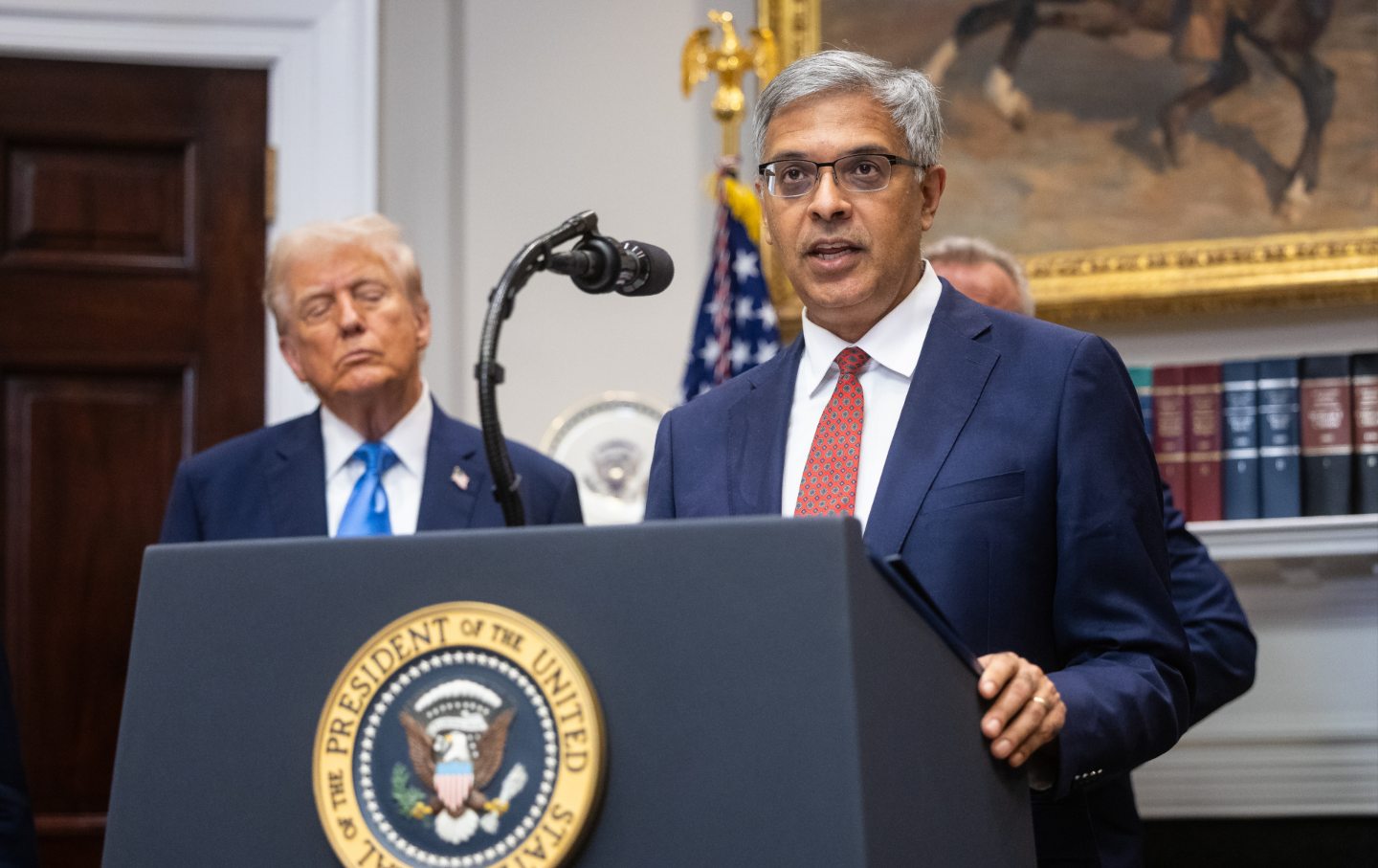
The government has pulled back from massive cuts to the NIH, but it’s still destroying scientific research. So why are some groups appeasing the president?
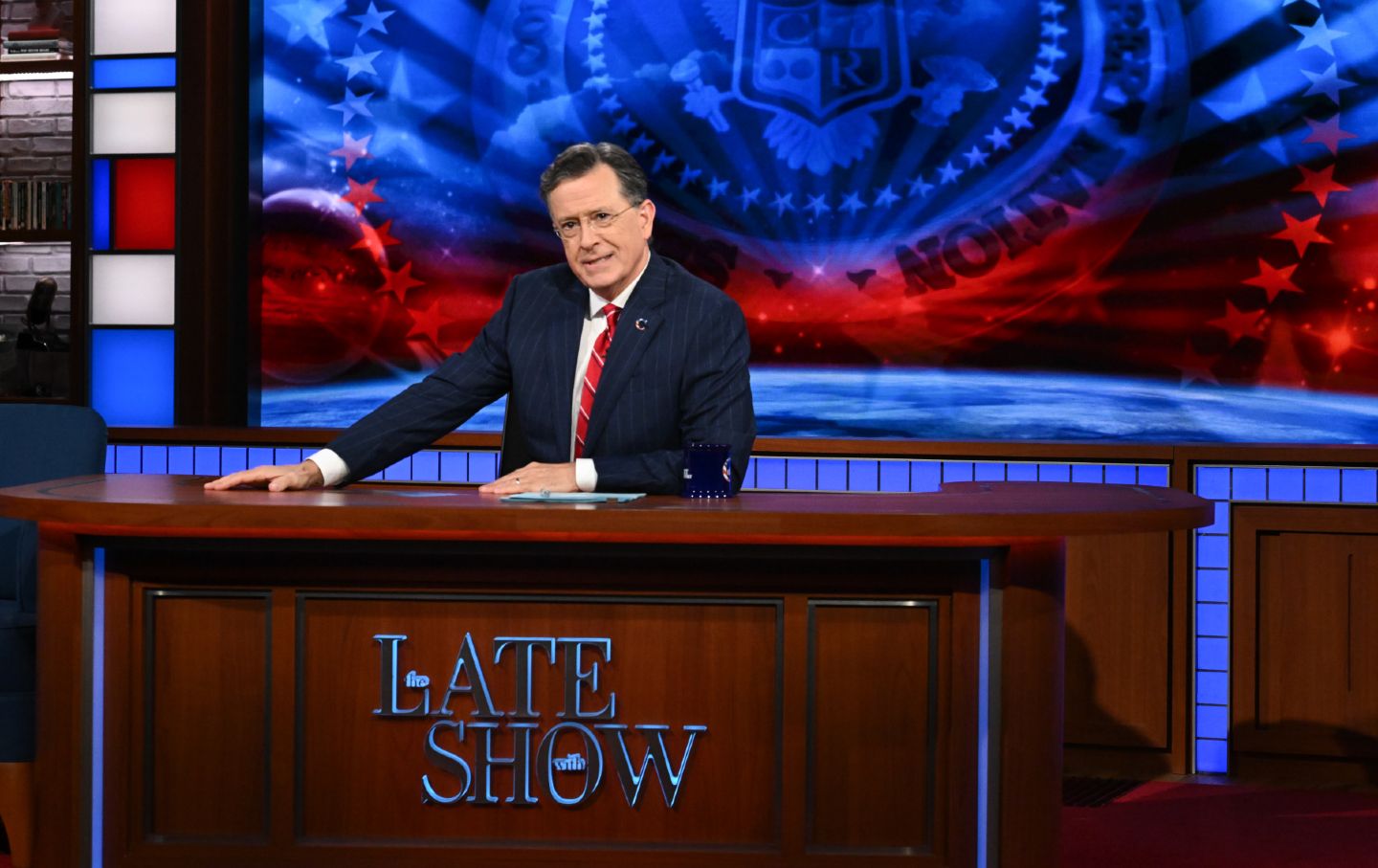
The network tried to bury an interview critical of Trump. Stephen Colbert made it an indictment of the administration’s assaults on the First Amendment.
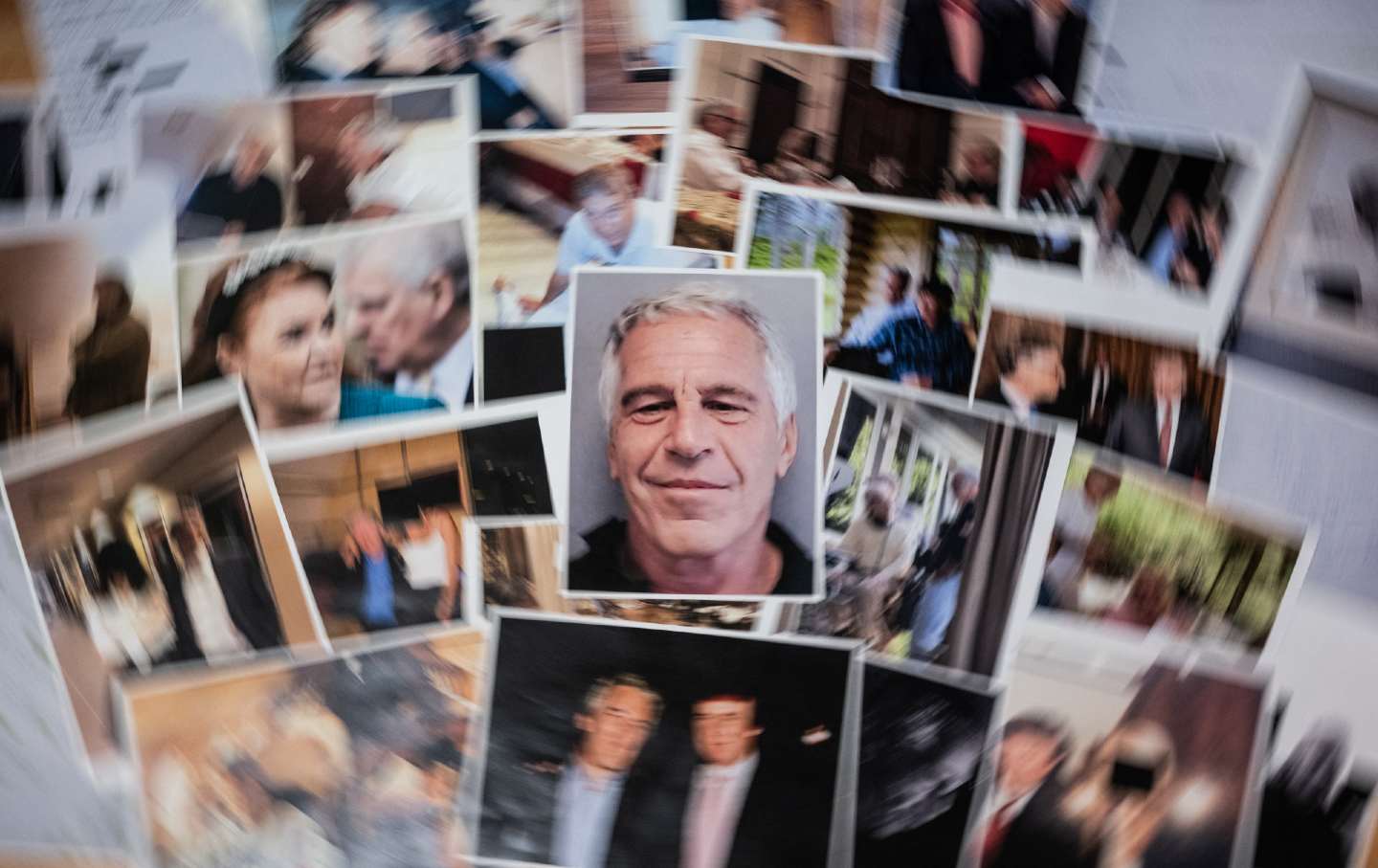
One key revelation in the wide correspondence of the late pedophile: The rich and powerful just aren’t all that bright.
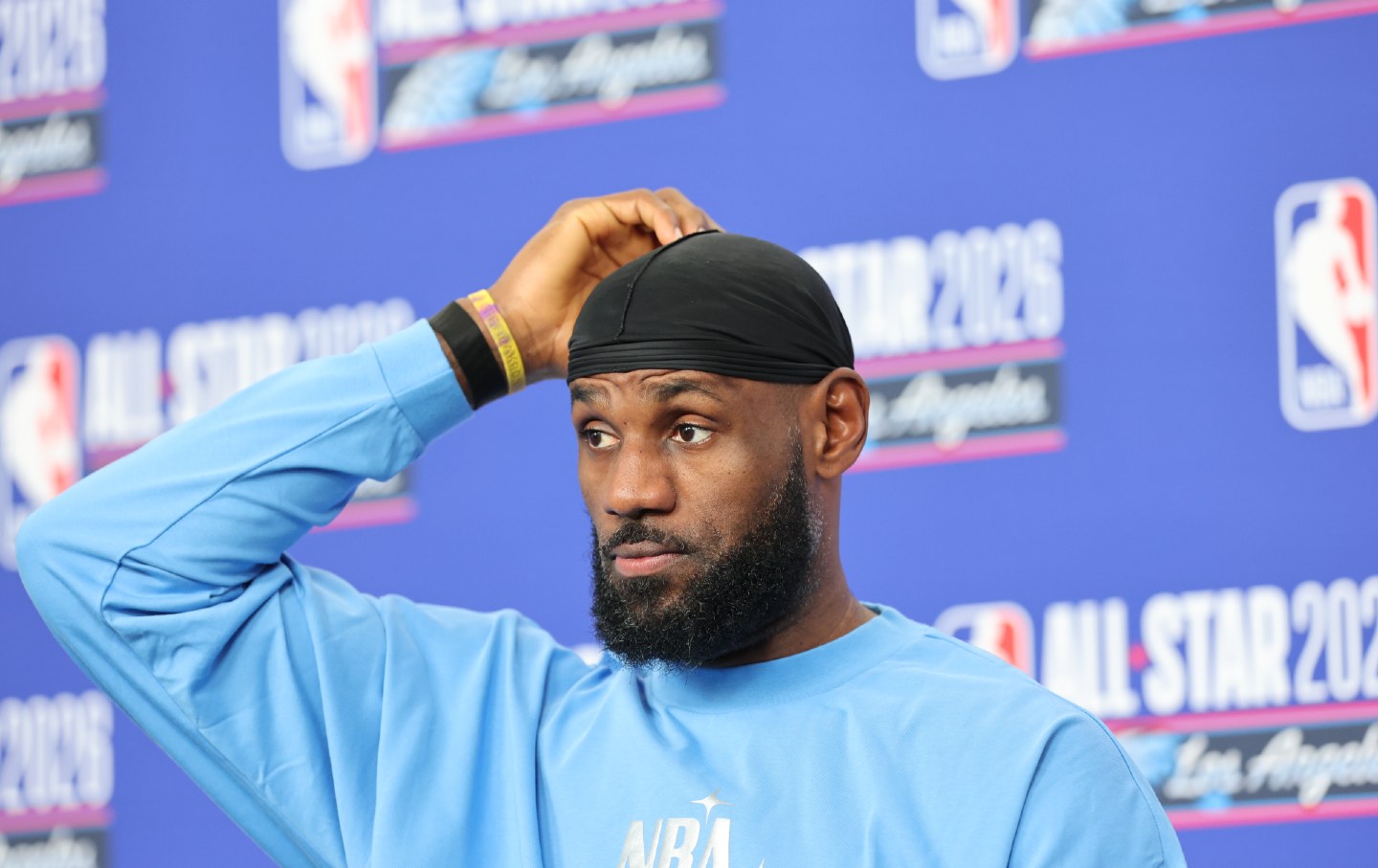
The basketball great once said he wanted to be like Muhammad Ali. He can’t do that and shrug off Israeli war crimes.
Constructing new residential buildings, let alone those with rental units that New Yorkers can afford, is never an easy task.
I trudged through Spain as a rift grew within American Catholicism. I returned home with a renewed sense and understanding of faith.