
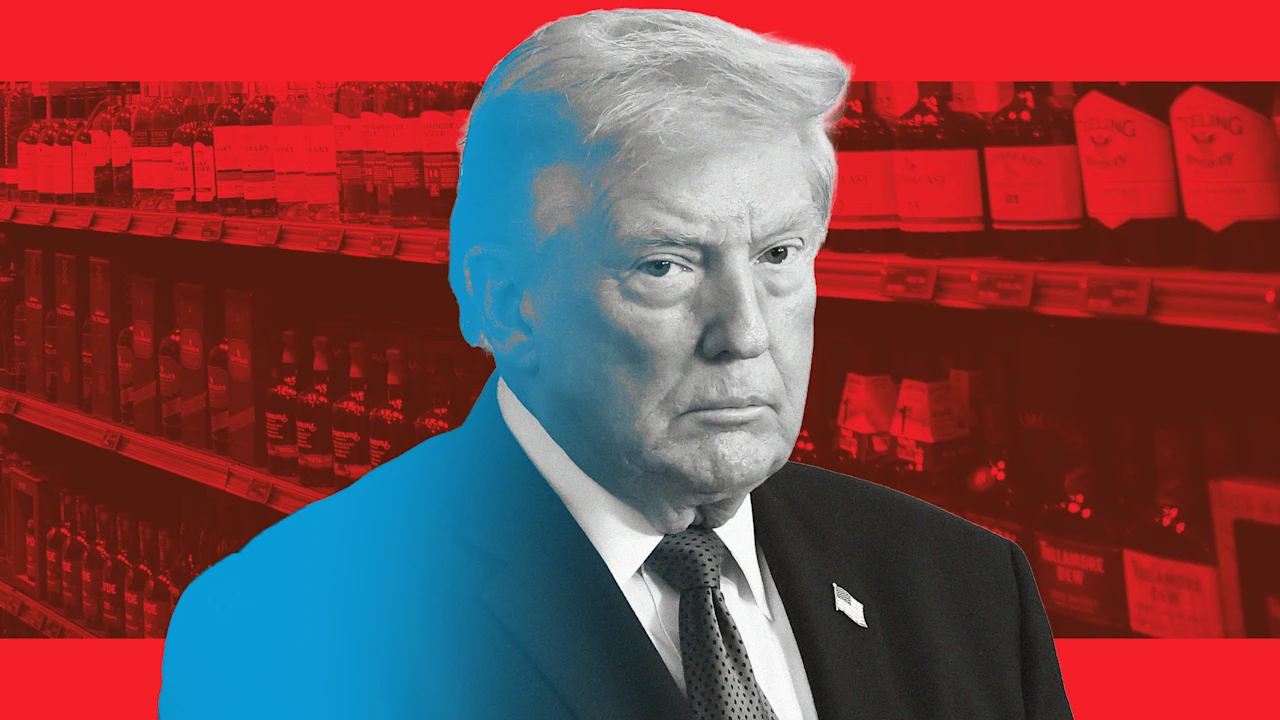
Last year, Canada was one of the most reliable international buyers of American whiskey. Now it’s become one of the industry’s biggest losses.
U.S. spirits exports to Canada have plunged by nearly 70 percent, collapsing from what had been a roughly $250 million annual market for American distillers to just $89 million, according to data compiled by the Distilled Spirits Council of the United States (DISCUS).
The sharp downturn followed a trade clash sparked by President Donald Trump’s tariffs, which prompted several Canadian provinces to remove American alcohol from store shelves. The owners of iconic American whiskey brands, like Jack Daniel’s and Jim Beam, have responded with layoffs and pausing production.
Even after some tariffs were lifted, many provincial liquor systems have continued to keep U.S. spirits out of their retail stores, delivering a devastating blow to one of the industry’s most important foreign markets, according to Fox News.
From second to sixth: canada’s rapid market exit
Canada, once the second-largest destination for American spirits exports, has now fallen to sixth place, Fox News reported. The collapse, notably, came quickly. From March through December, U.S. spirits exports to Canada dropped from $203 million in 2024 to just $60 million in 2025, a loss of roughly $143 million, Fox News reported.
Trump has repeatedly used tariffs as economic leverage, arguing that the strategy helps strengthen American manufacturing and correct trade imbalances. But the spirits industry says retaliatory actions by Canada have wiped out one of its most lucrative export markets.
“Our industry thrives in a zero-for-zero tariff environment,” says Chris Swonger, president and CEO of DISCUS. While Swonger said distillers recognize the administration’s efforts to address trade imbalances, he added that the provincial bans have been especially damaging.
“Since Liberation Day, it’s unfortunate to report that our industry has lost over 70 percent of our exports to Canada because many provinces have decided not to carry American spirits,” he said.
Few places have felt the impact more than Kentucky, the epicenter of America’s bourbon industry. The state produces 95 percent of the world’s bourbon supply, supports more than 23,000 jobs, and generates about $9 billion annually, according to the Kentucky Distillers’ Association.
The export collapse is landing at a moment when the bourbon industry is already under mounting financial pressure. Several distillers have scaled back production, struggled with slowing demand, or faced mounting debt over the past year.
Major producers are beginning to feel the strain. Japanese beverage giant Suntory—which owns Jim Beam, Maker’s Mark, and the House of Suntory portfolio—reported weaker whiskey sales last year. Brown-Forman, the parent company behind Jack Daniel’s Tennessee Whiskey, has also warned of declining sales and profits as global demand softens.
Why small brands are breaking first
Smaller and midsize players are under even greater stress. Premium whiskey brand Uncle Nearest is insolvent and owes millions of dollars to vendors, including WhistlePig and American Spirits, creditors say. Meanwhile, MGP Ingredients, one of the largest contract distillers in the United States and a key supplier for many whiskey brands, has reported a sharp drop in whiskey sales as the broader market cools.
The trade tensions are affecting more than just export numbers. Owen Martin, master distiller at Angel’s Envy, said the fallout from tariffs reaches deep into the bourbon-making process itself, according to Fox News.
“There are the tariffs on finished goods and on us shipping abroad, but I’m even thinking a step below that,” Martin said. One example involves barrels.
By law, bourbon must be aged in new American oak barrels, which can only be used once in bourbon production. But finishing casks—such as the port barrels Angel’s Envy uses to finish its bourbon—can be reused multiple times, creating a different set of logistical considerations when global trade conditions shift.
“Those are the sorts of things, as a maker, that I have to be aware of in any given year,” Martin said. “You have different opportunities and different challenges.”
For decades, the U.S. and Canada have been among each other’s most enthusiastic whiskey consumers. That mutual demand is what makes the current standoff particularly striking.
“American consumers love Canadian whisky, and Canadians love Kentucky bourbon,” Swonger said. “We’re hoping this gets resolved.”
—Leila Sheridan
This article originally appeared on Fast Company’s sister website, Inc.com.
Inc. is the voice of the American entrepreneur. We inspire, inform, and document the most fascinating people in business: the risk-takers, the innovators, and the ultra-driven go-getters that represent the most dynamic force in the American economy.