

Palisades Village, the high-end outdoor mall in Los Angeles’s Pacific Palisades, is a rare chunk of the neighborhood that wasn’t destroyed in the wildfires that struck the region in January 2025. More than 6,800 structures perished in the Palisades fire, but aside from a few singed awnings and roasted patio cushions, the mall was relatively unscathed. After a year-and-a-half smoke cleanup and refresh, the shopping destination recently reopened, even as the neighborhood around it remains a mix of homes under reconstruction, charred land, and general uncertainty.
Controversially, the mall remained standing through the fires partly because it had what many of those lost homes didn’t. Caruso, the developer of the mall and other L.A. shopping centers including The Grove, had a private firefighting service on call ahead of the fires, and its firefighters were on site protecting the property within hours of the wildfire’s first spark.
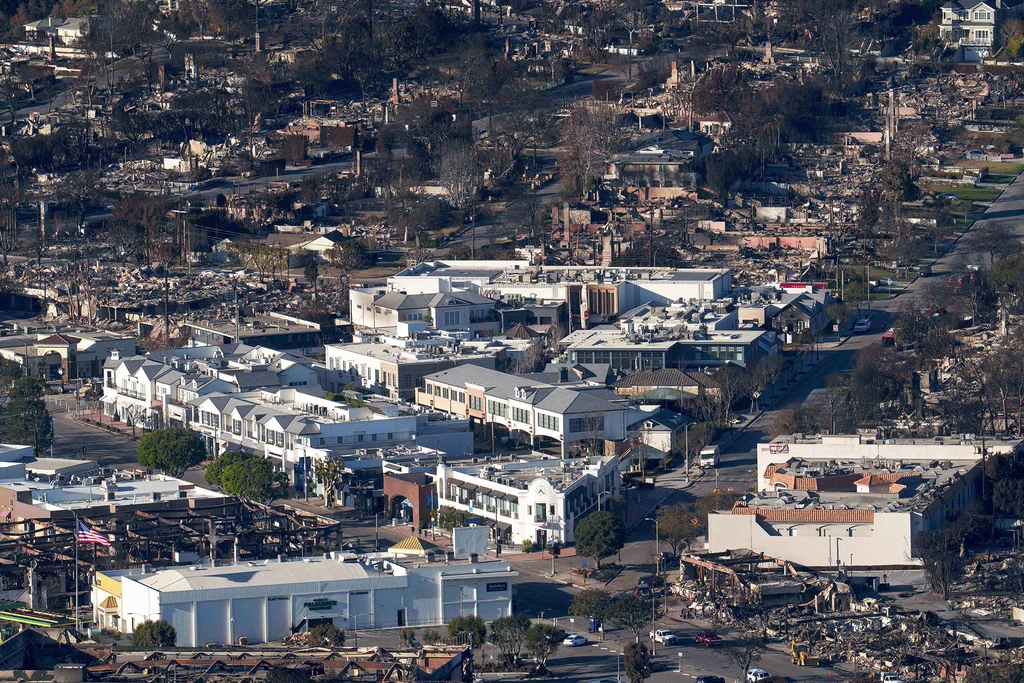
Caruso and its billionaire founder Rick Caruso, who ran for L.A. mayor in 2022 as a Republican, aren’t hiding the fact that hired firefighters helped keep the mall intact while much of the Palisades burned. Rather, the company sees the approach of prioritizing wildfire mitigation in its building practices and operations as part of the new way real estate developers have to do business in vulnerable areas.
“We learned very early on that building systems and materials were very important, as well as fire prevention protocols and having an emergency response team on hand,” says Corinne Verdery, CEO of Caruso.
Responding to a new reality
In December 2017, the company was less than a year away from the opening of the $200 million Palisades Village project when another of its major developments nearly burned to the ground. The Rosewood Miramar Resort, a 153-unit luxury beachfront property in the affluent Santa Barbara enclave of Montecito, was in the wood frame stage of construction and just months away from completion. Then one of the largest wildfires in California history, the Thomas Fire, broke out nearby.
The flames came within a few miles of the project and the local fire department notified Caruso that because the site was unoccupied, it wouldn’t be able to use firefighting resources if the property caught fire.
“We totally understood that,” Verdery says. “So we immediately started making some phone calls.”
The company hired a private firefighting company with its own trucks and water, and retired or off-duty firefighters on staff, to protect the project. “They were there for several weeks, fighting the fire when embers were flying onto the site,” Verdery says. “They were aggressively clearing brush, watering down our wood structures. And then at one point, the embers got quite intense and we deployed this fire-retardant material onto the wood framing, which protected the building materials.”
The Thomas Fire was eventually contained in early 2018, and the construction site for the Rosewood Miramar Resort was spared any major damages. It opened in March 2019.
Expanding a proven solution
In the meantime, Caruso realized the scale of the risk it dodged. Its other properties are scattered throughout Southern California, including several in high-risk wildfire zones. After the close call in Montecito in late 2017, Caruso began hiring private firefighting companies to protect its properties every fire season. “They’re part of our normal operating processes and procedures,” Verdery says.
The company had those firefighters on hand during the rest of construction at Palisades Village, and they were on call when the Palisades Fire broke out in early 2025.
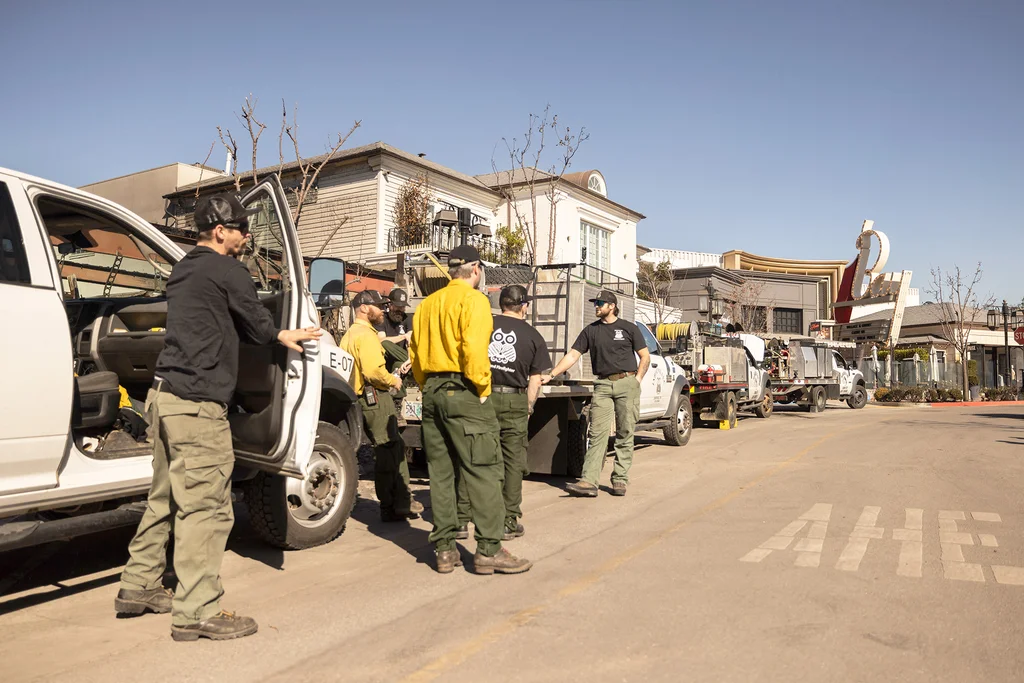
Rick Caruso, the company’s founder, says this approach to fire preparedness is not just about protecting a building or an asset, but keeping at least part of a community standing after a major disaster.
“Developers have a responsibility to be good stewards of the communities they serve, and that requires a long-term commitment,” Caruso tells Fast Company by email. “We need to build thoughtfully, understand the risks, and develop strong partnerships with local leaders and first responders.”
Designing a fire-resistant mall
The physical and architectural attributes of Caruso’s developments also help them stay standing.
Tom Veje, Caruso’s executive vice president of construction, says the company’s projects all use fire-resilient materials, including plaster, brick, stone, cementitious siding (made from a mixture of cement, sand, and cellulose fibers), and noncombustible poly-slate tile roofing. Utility lines are buried underground, and every building is equipped with fire sprinklers. Screened vents block embers from flying into attics, which can happen and cause fires inside buildings with older, more open vents. “The codes are catching up with this and I’m pretty certain that, going forward, nobody will be building that way anymore,” Veje says.
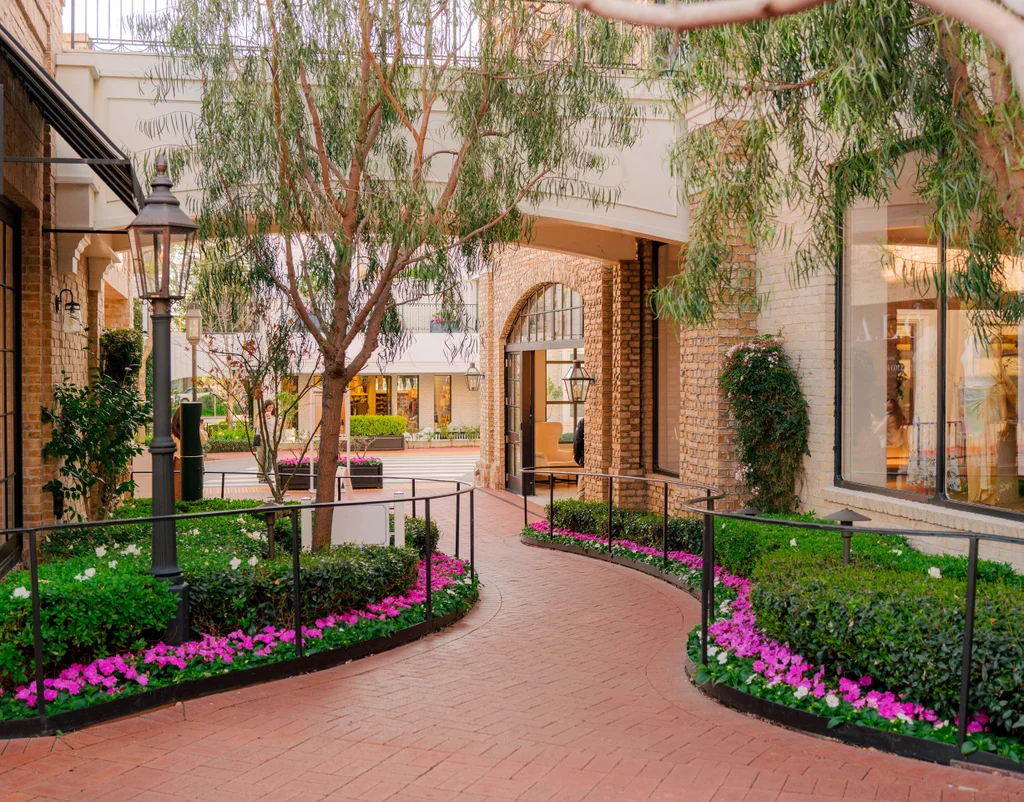
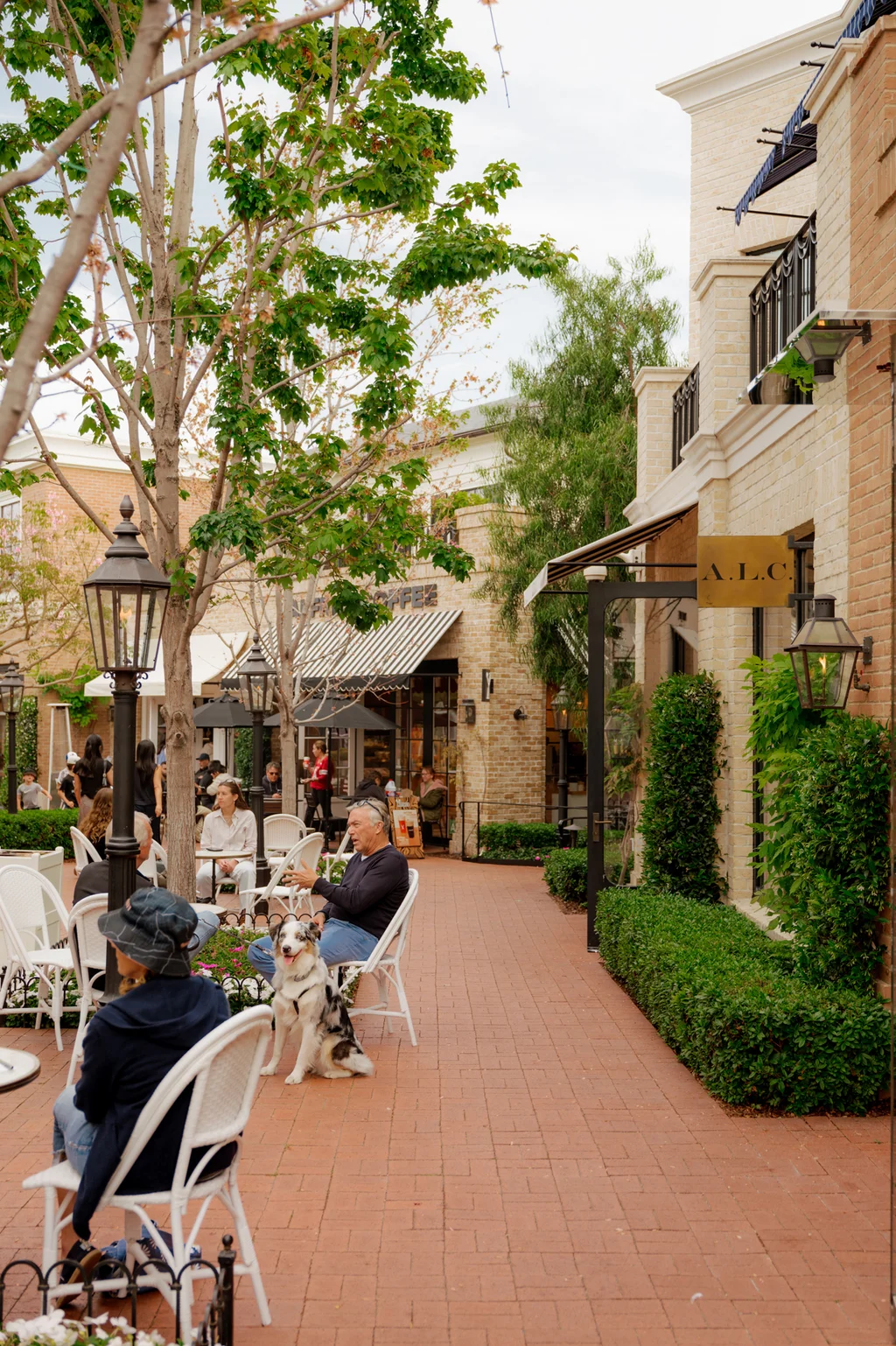
Veje says the company uses industry standard fire-resilience approaches, but also looks for ways to maintain its signature style of ornamental buildings that seem plucked from the set of a movie about a quaint town and the people who shop there. At Palisades Village, this means adapting storefront awnings.
“All tenants really love to have fabric awnings over their spaces,” Veje says. But these are obvious fire hazards. Instead of giving tenants a hard no, Veje’s team keeps the awnings and applies a fire retardant before they’re installed. At Palisades Villages, all the awnings survived the fires. “They may have had little char holes in them, but they didn’t catch fire,” Veje says.
A system in place
The biggest part of Caruso’s fire readiness is a set of protocols to provide its properties extra protection. Alerts about high winds or fires in proximity trigger processes for moving flammable materials indoors, covering other items with fire-retardant blankets, and, most significantly, calling in the private firefighters.
Those are steps most homeowners won’t be able to afford, but they may be efforts other developers will need to consider as the risk of wildfire spreads to more places. For Caruso, it’s proving to be a model that works. Crucially, it’s helping them stay competitive in a region that is shaped more and more by environmental risk.
After the 2017 fire in Montecito, the developer was hesitant about opportunities in fire zones. But Verdery says that seeing its building and operational approaches work as intended during fires has made the prospect of developing in fire-risk areas less of a concern as the company looks at new opportunities. “Palisades Village, in the way that we built it, in the way that we operate it, and the way it was able to withstand that devastation, shows us that we can develop in these fire zones and still come out the other end,” she says.