

Key Takeaways
- After exiting the Subway partnership, Hero Bread focused on five SKUs.
- The brand pivoted to DTC, then explored different retail channels.
- Now, it’s navigating what the CEO calls the third chapter in its DTC playbook.
In 2022, when YuChiang Cheng invested in Hero Bread on behalf of 444 Capital and stepped in as the company’s interim chief marketing officer, the low-carb, zero-sugar brand was at a critical crossroads.
Cole Glass had founded the company in 2019 to address his severe food allergies related to pollen. By October 2021, a partnership with Subway seemed like an exciting path forward. The idea was to get the macro-friendly bread products into as many hands as possible so people could taste it for themselves.
However, around the time Cheng joined the company, it was clear the unit economics didn’t make sense. The Subway deal wasn’t profitable; Hero Bread was running out of money.
“ We were just too small at the time and couldn’t service it, didn’t have the resources and all the infrastructure put in place to effectively deliver that,” Cheng says. “So we backed out of it.”
Hero Bread brought in $54 million in revenue last year
Cheng pivoted to a direct-to-consumer (DTC) strategy, allowing the brand to receive feedback from consumers more quickly and drive word-of-mouth sales, he says.
Cheng assumed the role of CEO in November 2023 and has continued to grow the company.
In a funding round announced in June 2024, Hero Bread raised $21 million in under 90 days. The round, co-led by Cleveland Avenue, DNS Capital and Composite Ventures, brought the company’s total funding to date to more than $68.5 million.
Hero Bread brought in $54 million in annual revenue last year. Additionally, the company more than doubled its retail presence in two years, expanding from about 4,000 to 10,000 doors, which includes a recent Target launch.
But Hero Bread’s successful push into retail — a feat many CPG brands that launch DTC hope to achieve — doesn’t mean the company plans to put the brakes on its DTC strategy anytime soon.
Entrepreneur sat down with Cheng to learn more about what he calls the “third chapter” of Hero Bread’s DTC playbook, and how it’s continuing to unlock growth for the company.
Hero Bread experimented with different retail channels
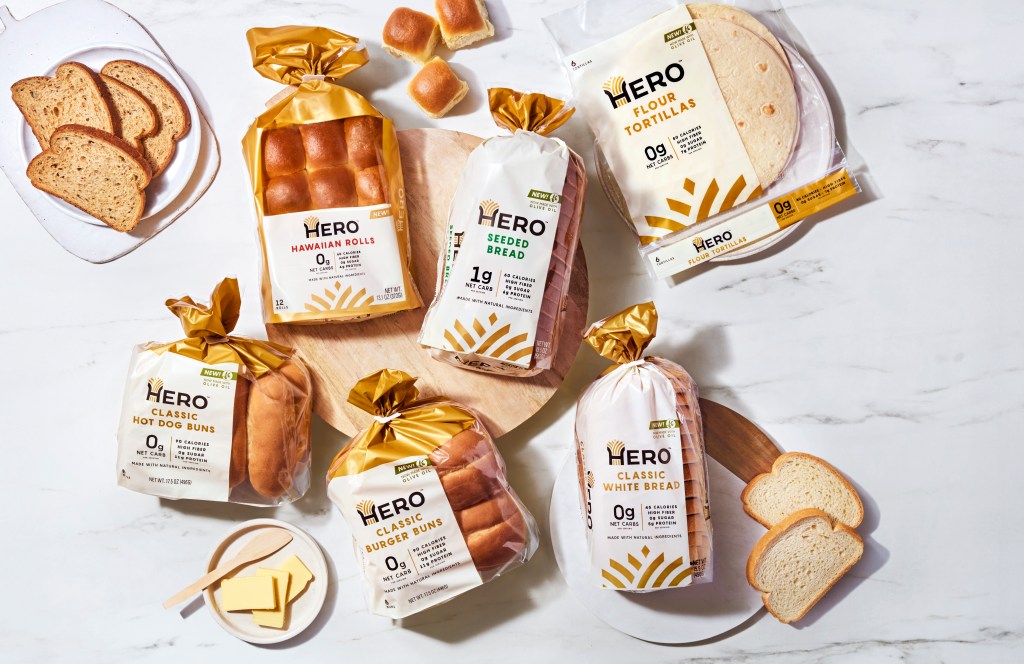
After walking away from the Subway partnership and prioritizing DTC sales, Hero Bread focused on five SKUs: white bread, seeded bread, burger buns, hot dog buns and flour tortillas.
The line-up also made sense as the company entered retailers: The goal was to offer everyday staples that would drive repeat purchases on a weekly basis.
Initially, though, Cheng and the team weren’t quite sure which retailers would be the right fit.
“It’s a very mainstream taste profile,” Cheng explains. “So there was a lot of debate, if this is going to be more of a Publix, Target type product, or is this going to be more of a natural Whole Foods, Sprouts, type of product.”
So Hero Bread opted to experiment with different types of retailers. The company launched in Market District, Publix and Sprouts and planned to lean into whichever channel performed best. But six months later, the company’s products had an impressive track record at all three.
“We were very, very fortunate in that,” Cheng says. “So instead of picking [retail] channels, we decided to pick retailers that were more enthusiastic regardless of what channel they were in.”
It’s a different tactic than many CPG brands use; they tend to zero in on one retail channel and go regional, the CEO notes.
Striking the balance between affordability and convenience
Of course, CPG brands that expand into retail have the advantage of economies of scale.
“You can move tons of pallets on a truck much more affordably than you can send individual packages through ecommerce,” Cheng says.
As a result, retail typically gives consumers a more affordable way to buy. DTC, on the other hand, serves as a more concierge path to purchase not only Hero Bread’s staple products, but also other offerings that might not be able to hit retail shelves as seamlessly.
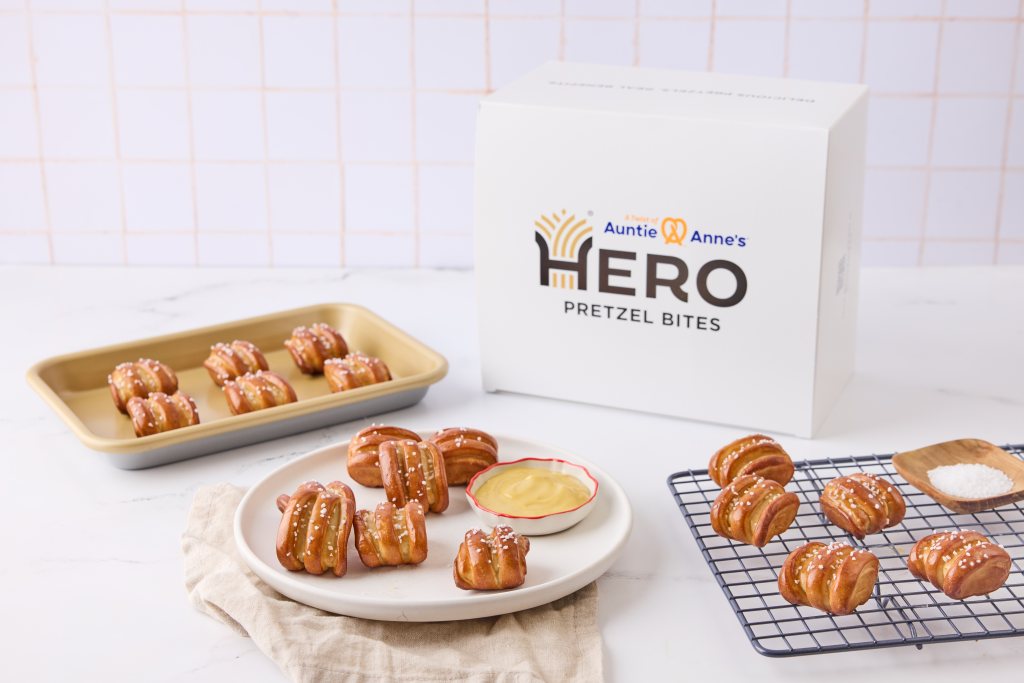
Hero Bread’s Crafted Collection, which includes items like croissants, lemon poppy seed scones, shortbread biscuits (hand-baked in Sonoma with brown butter made by a Michelin chef), lends itself well to the model. The company’s recent collaboration on pretzel bites with Auntie Anne’s does too.
“ [These are] small-batch, largely handmade products that are exclusive to hero.co, where it just wouldn’t make economic sense for us to hand-roll 300,000 to 400,000 croissants,” Cheng explains.
What’s more, DTC can act as an invaluable testing ground for products with the potential to sell effectively in a brick-and-mortar setting.
That’s exactly what the company did with its bagels, unveiling a limited-edition launch online in December 2024.
“ We weren’t sure if people would want to buy bagels from us,” Cheng says, “so we initially made them in smaller batches, sold them at hero.co, and they quickly became one of our best-selling items.”
Hero Bread’s bagels landed on retail shelves within six months.
Meeting Hero Bread’s consumers wherever they may be
Cheng doesn’t believe a successful entrepreneur or business leader is defined by how many times they win.
“It’s how many times you can try again, regardless of how many times you’ve fallen down or how much blood you get on your face,” the CEO says. “There is a level of courage that is really necessary.”
It’s a tendency toward resilience that’s helped Cheng lead Hero Bread through some crucial years that required an enthusiastic willingness to adapt to every challenge — and the CEO looks forward to what comes next.
“We’re always trying to meet the consumer where they are,” Cheng says. “There’s a specific Hero fan, and then there’s the overarching bread fan. We believe that the more people who try us, the more people who will believe [in us].”
Key Takeaways
- After exiting the Subway partnership, Hero Bread focused on five SKUs.
- The brand pivoted to DTC, then explored different retail channels.
- Now, it’s navigating what the CEO calls the third chapter in its DTC playbook.
In 2022, when YuChiang Cheng invested in Hero Bread on behalf of 444 Capital and stepped in as the company’s interim chief marketing officer, the low-carb, zero-sugar brand was at a critical crossroads.

Cole Glass had founded the company in 2019 to address his severe food allergies related to pollen. By October 2021, a partnership with Subway seemed like an exciting path forward. The idea was to get the macro-friendly bread products into as many hands as possible so people could taste it for themselves.
However, around the time Cheng joined the company, it was clear the unit economics didn’t make sense. The Subway deal wasn’t profitable; Hero Bread was running out of money.