
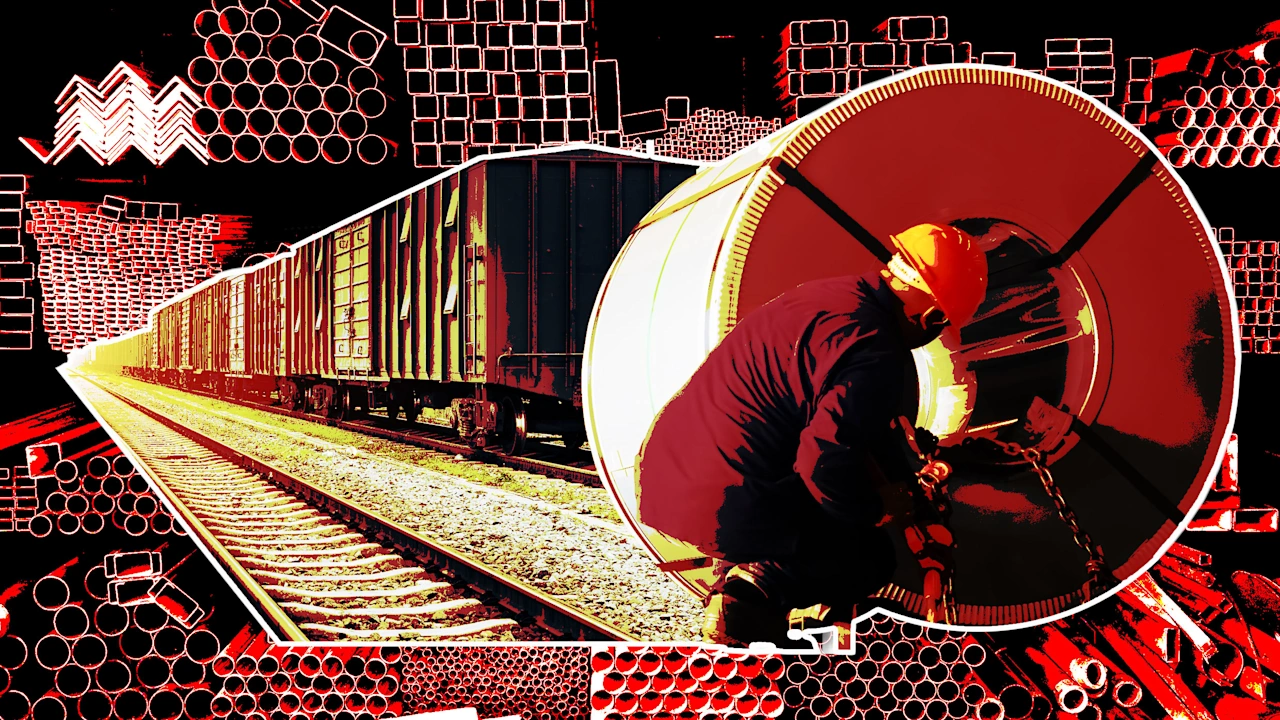
While many AI companies are betting their products can be useful to a broad segment of businesses, a startup called Emanate is taking the opposite approach, building highly targeted tools designed for complex sales transactions in the industrial materials sector.
Founder and CEO Kiara Nirghin says the somewhat esoteric market, which includes manufacturers, distributors, and service providers working with materials from steel building materials to metal piping, has intricate sales processes involving generating quotes for bespoke orders, connecting existing customers with goods they may need, and proactively finding new customers.
The industrial materials sector, which provides raw materials like steel and aluminum and manufactured parts like wire and pipe, is vital to both the push to boost U.S. manufacturing output and the shift to a greener economy, which itself requires manufacturing solar panels, wind turbines, and electric vehicle charging stations. The metals and minerals industry alone is a multi-trillion dollar sector, and Emanate argues quickly generating more precisely quotes and closing sales faster can boost productivity and reduce waste from mistargeted production.
But right now, even generating quotes with existing systems can take as long as three to four weeks, says Nirghin, and until recently AI
systems weren’t sophisticated enough to take over for humans. Now, she says, they can generate useful quotes close to instantaneously.
“That was only recent—in terms of the last approximately six to eight months,” she says. “So there is a very big change in quality and step function in terms of actually applying the models.”
But, says Nirghin, the real key isn’t the underlying AI models but the so-called harness—the framework of AI-callable tools, integrations with other systems like enterprise resource planning (ERP) software and databanks of corporate knowledge, and custom configurations—that wrap around them to form AI agents.
Emanate, which has received funding from investors including Andreessen Horowitz and M13 (though Nirghin declined to disclose the exact amount of funding the San Francisco-based company has raised) and currently has 10 employees, is explicitly betting that markets like industrial materials will benefit from sector-specific AI tools rather than simply adopting standard, off-the-shelf AI agents.
Setting up Emanate’s system for a new customer isn’t simply a matter of activating a chatbot. It’s a process that can take from eight to 12 weeks, including identifying critical data sources from ERP databases to repositories of past sales email correspondence and PDFs containing valuable data, then getting set up to securely connect to them. Once the system is set up, customers can also continue to build upon and customize the AI agents involved, says Nirghin.
The specialized approach is designed for greater accuracy than general-purpose AI tools, and the company also works with its customers to track data points like number of quotes processed, hours spent by human workers, sales leads handled, and outbound messages sent before and after the technology is deployed. And while some other AI companies more heavily focus on helping customers cut costs through automation, Nirghin says Emanate is focused on revenue growth, aiming to give its customers a revenue boost of 40% or more.
“We capture a full baseline before we go live, and then we track every metric,” Nirghin says. “We’ve been very clinical in measuring these metrics so that we can actually report and communicate on them.”
Naturally, at the start of a new deployment, humans typically also review quotes and messages generated by the AI before they’re sent to customers. But over time, they’re typically willing to defer more to the AI.
Nirghin, who has previously received support from a fellowship program run by Alexis Ohanian’s 776 Foundation and the Thiel Fellows program, says she believes the company’s specialization and industry focus will give it a sustainable advantage in catering to the industrial materials sector as it works to meet the needs of a growing U.S. manufacturing economy. The AI’s success at helping secure deals can even help boost production and employment among materials companies, many of which have the capacity to grow as they secure customers, she says.
But in the future, she says, the same approach could serve other industries with similar specialized sales and distribution needs, she says, including the electrical and chemical industries.
“That is obviously our broader vision, and what our investors obviously get really excited about as well,” she says.