
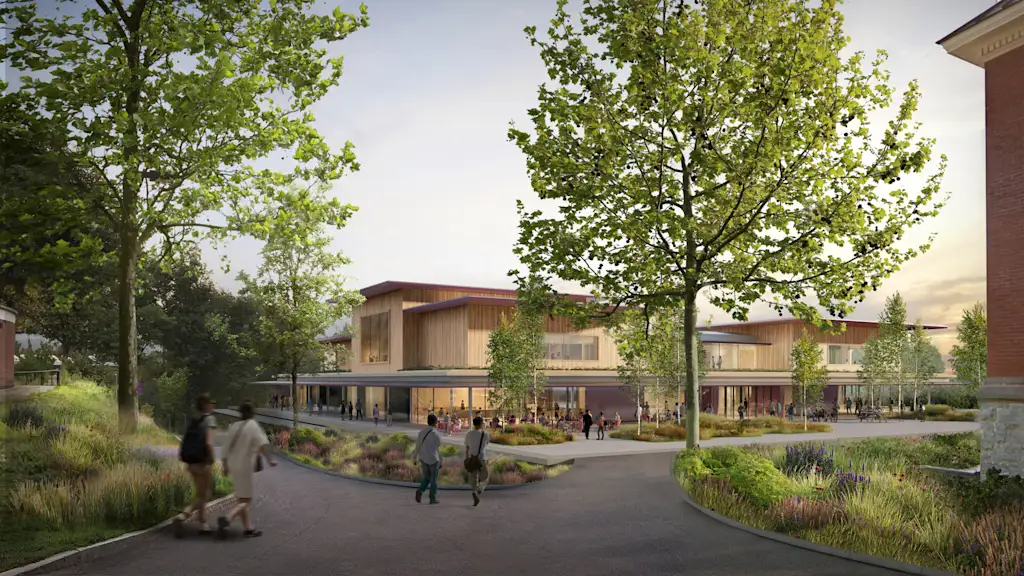
It became clear in the late 2010s that Amherst College’s science center had aged far past its prime. As the concrete building fell into disrepair, school leaders suspected a demolition was in order.
Old, poorly insulated, and inadequate for the technical demands of today’s research, it seemed like too steep a challenge to repurpose, says Tom Davies, the school’s Executive Director of Planning, Design, and Construction. Especially after a new science center opened on campus in 2020.
“It was a stranded asset with essentially no value,” he says. “But what our consultants were able to show is that it does have quite a bit of value.”
In the course of exploring options, engineers and the architectural team at Herzog & de Meuron devised a different future for the building, firmly rooted in its past. They decided that the hefty concrete frame could be stripped down, and two comparatively lightweight floors of mass timber could be added on top to create additional space. This approach, which stays within the school’s commitment to reduce its carbon footprint, was approved, and the repurposed building will soon reopen as a new student center in the fall semester of 2026.
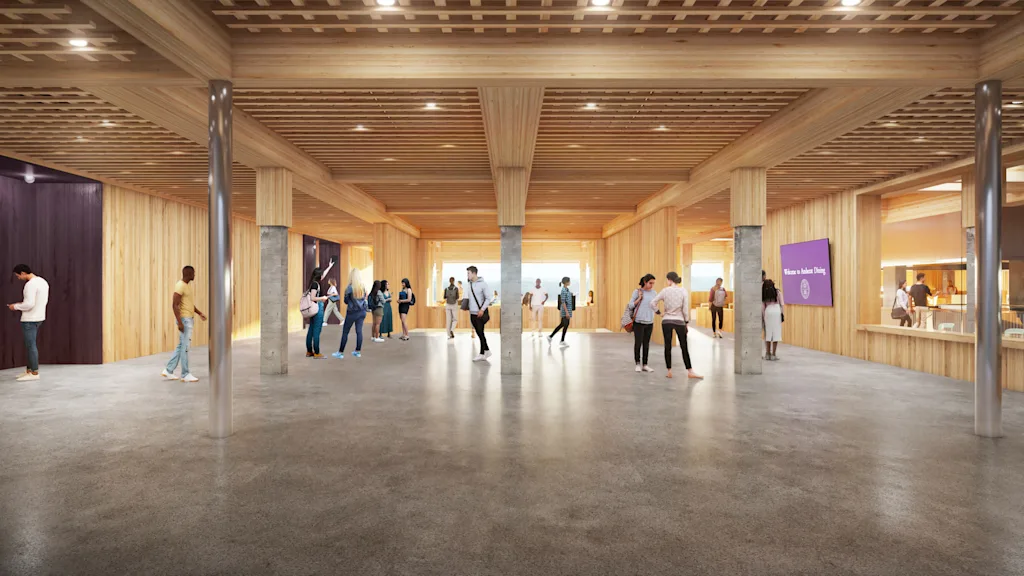
The Amherst project exemplifies the potential of found capacity, a concept advocated by Justin Den Herder, vice president and principal at global engineering firm TYLin, which worked on science center renovation. He believes there’s extensive opportunity in this form of mass timber top-off, but there’s simply not enough familiarity with this material, or enough examples, to spur additional investment and development.
Engineers like Den Herder have concluded that much of the older building stock in big cities, built with solid foundations able to hold additional weight, could easily support a few additional floors, especially if they were constructed of more lightweight material. More modern office projects, value engineered to cut costs, likely wouldn’t have this capacity.
“I would be willing to say the majority of buildings could accept this,” said Den Herder. “I think the number of buildings that couldn’t accept at least one story in mass timber are probably certainly in the minority.”
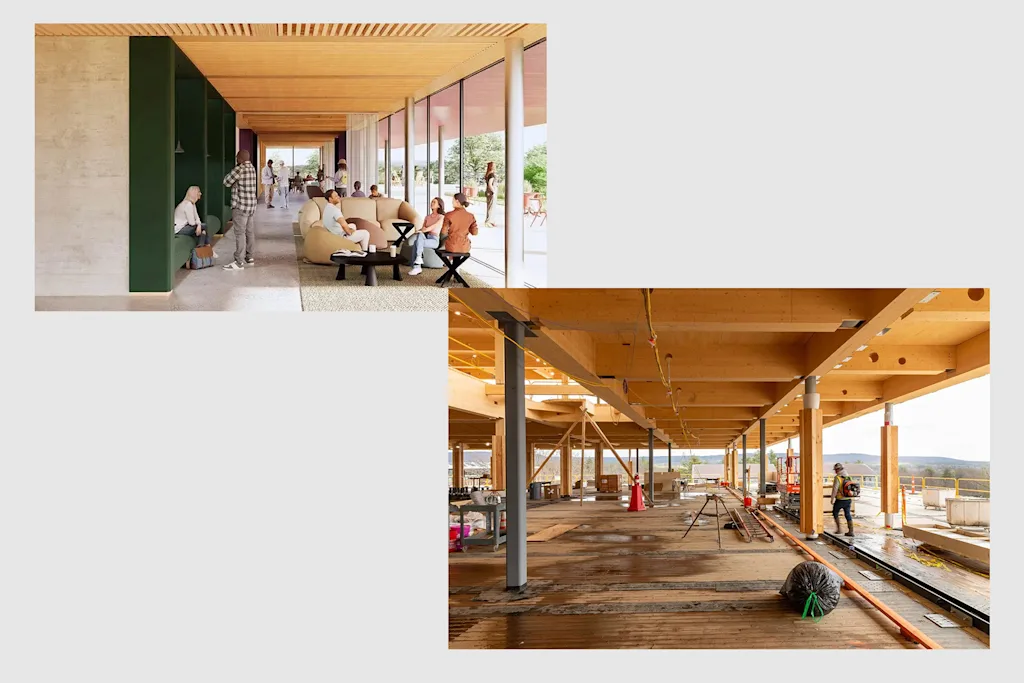
Mass timber—rising in popularity due to its biophilic properties and lower carbon footprint—fits this use case perfectly. A number of recent projects utilizing this concept of stacking additional floors on existing buildings suggests a new direction for those seeking added density in our downtowns.
Europeans have been doing these designs for years. There’s even a Dutch design concept, optoppen (topping up in Dutch) that describes these kinds of developments. A coalition of industry partners has gathered a portfolio of dozens of existing projects, and created tools to evaluate the potential of such projects in cities like London.
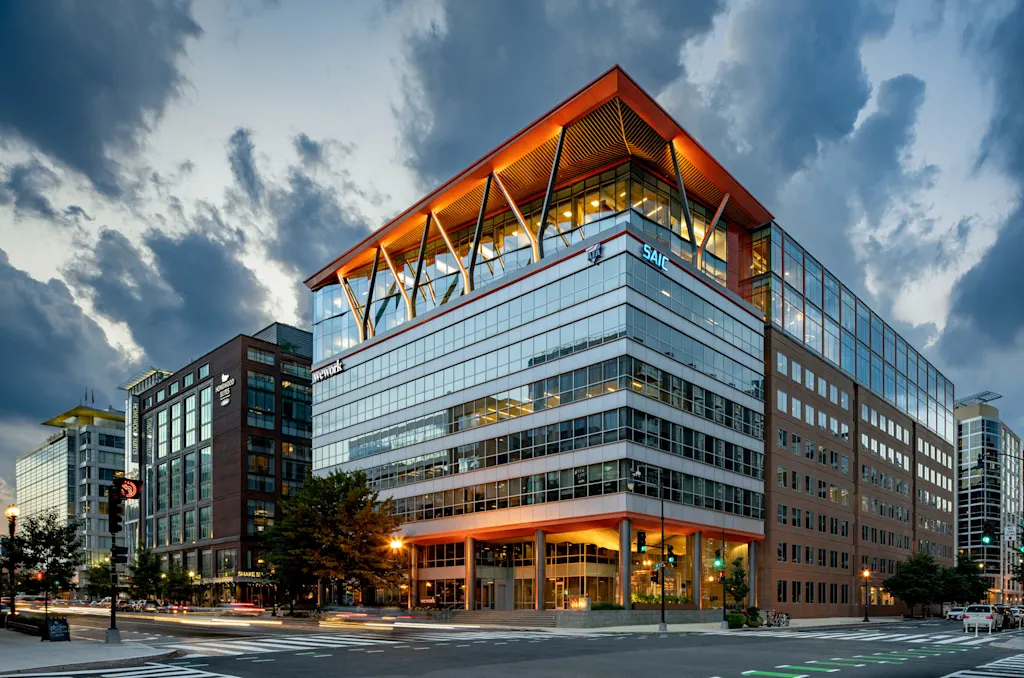
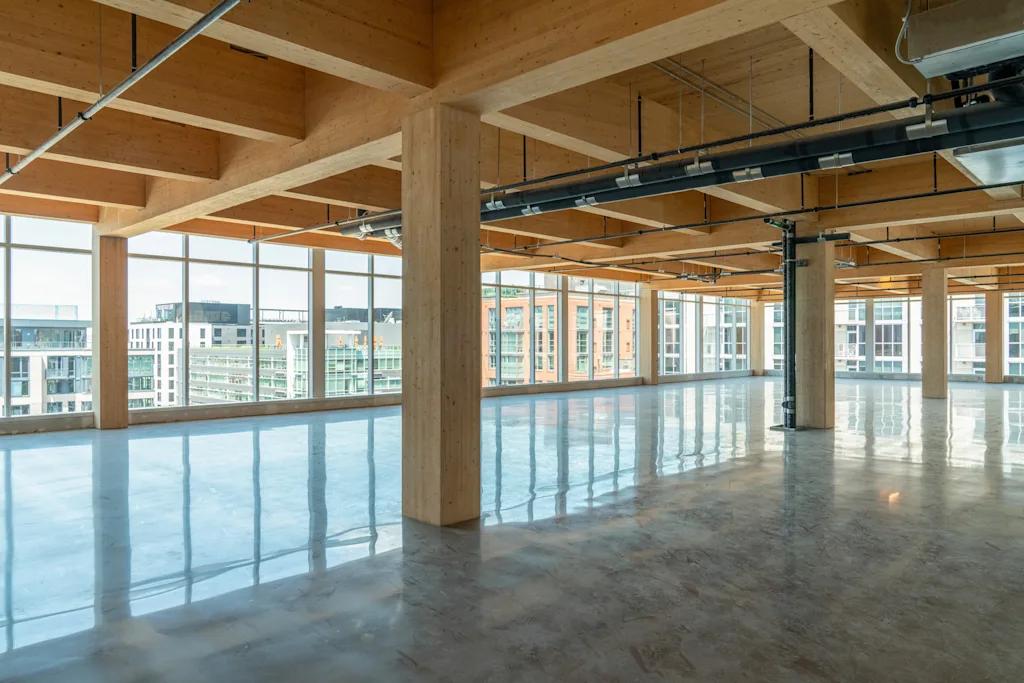
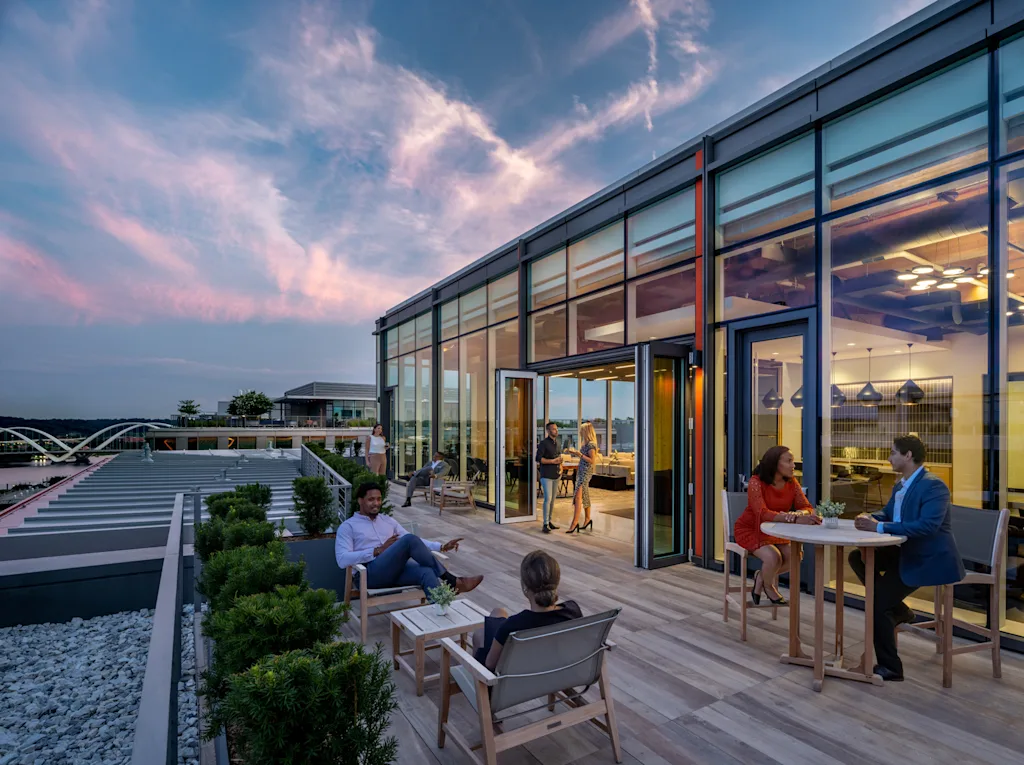
But it’s starting to see more recognition in the United States, with a few recent high profile projects. In Washington, D.C., the 80M building, which opened in the fall 2022, added three mass timber floors atop a downtown office, which were quickly leased by BP and the American Trucking Association. The project didn’t require costly reinforcement of the existing foundation, says Steve Trapp, executive vice president for Columbia Property Trust, and the wood interiors and 12-foot-tall windows with commanding views of the nation’s capital offered a compelling, unique office environment for tenants.
Other projects rely less on mass timber, but take a similar approach to expanding the square footage of an existing building. The Terminal Warehouse renovation in New York City, designed by CookFox, will add six floors of new office space, clad in glass and metal, atop a brick warehouse during renovations set to commence this year. Another recent project in Manhattan, 787 11th Avenue, added additional floors with floor-to-ceiling glass atop a ‘20s-era building that initially served as an automobile showroom.
Adding floors in this manner can work well, says Trapp, especially for something like a warehouse-to-office conversion, since the original structure has such a solid foundation. Columbia was also behind the Terminal Warehouse project.
However, the current office market, with demand down and vacancy rates over 20% in many U.S. cities, means there’s little to no appetite at the moment to stack new floors and add space when there’s already too much. “If we had the right investment conditions, we would absolutely go forward with [similar projects],” says Trapp. “Mass timber has really taken off since 80M was conceived. We just haven’t had the right circumstances.”
But the proof of concept for projects like 80M suggest the idea would work well when the economics become more favorable. And mass timber additions remain ripe for residential projects. Den Herder says that in New York City, for example, the building code allows for adding a few additional stories on many townhomes and brownstones, offering a potential pathway for more densification, especially in the outer reaches of boroughs like Queens and Brooklyn. By changing the lens by which you view a building renovation, this kind of vertical addition with mass timber can help save a building, instead of demolishing it.