
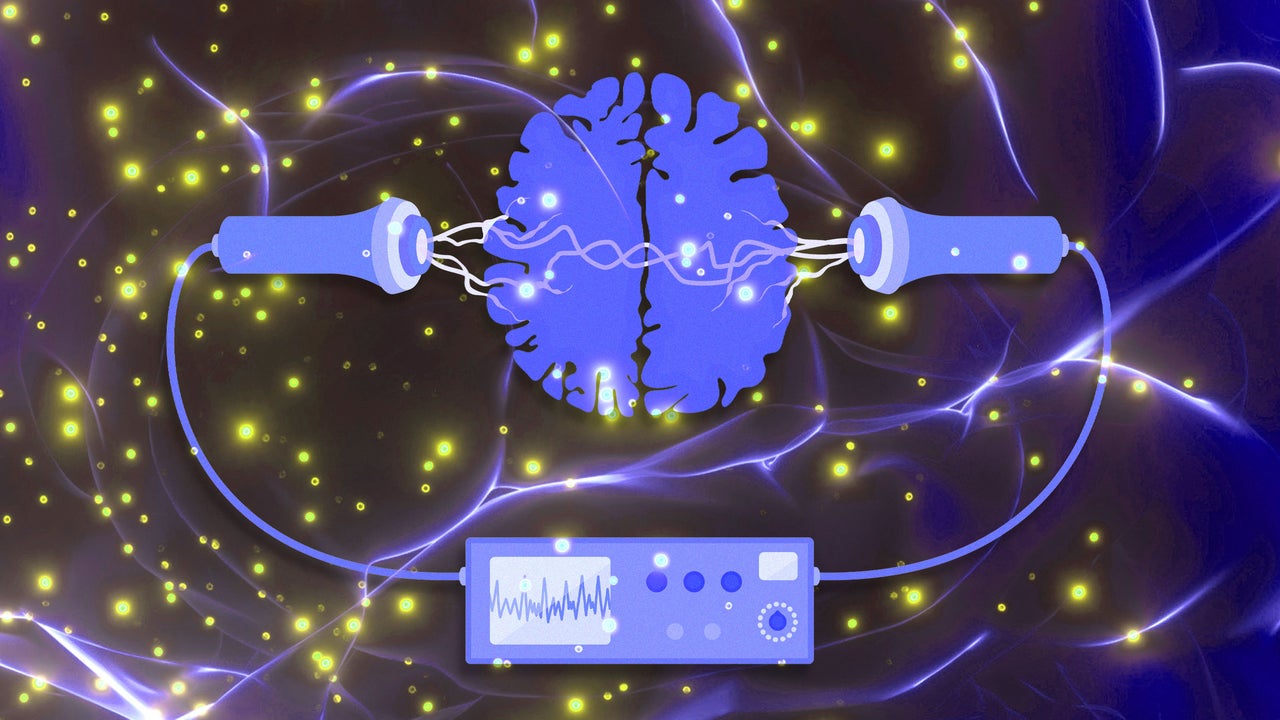
When I began considering electroconvulsive therapy, better known as electroshock, I assumed the “shock” part referred to the electrical zap you received. An electrode or two on your head. Some doctor pressing a button. A machine buzzed audibly. Zap, zap. You were shocked. Maybe changed forever. Maybe for good, maybe for ill. Zap, zap. Like a ray gun in a dystopian thriller. And no thriller was more dystopian (I flattered myself) than the anxious depression that had me in agony every waking moment.
Before I met those electrodes, accepted them onto my temples and into my life, my doctors gave me some books to read. I learned that most of what I thought I knew about ECT was deeply wrong. The real story was both grislier and more hopeful than you probably know.
THE FIRST SHOCK TREATMENTS: FEVERS, INSULIN, AND ELECTROCUTED PIGS
When the Romanian-born psychiatrist Constance Pascal began using the term “shock” (choc) in her psychiatric clinic in France, around 1926, she was referring to physical treatments meant to surprise or disturb the body and brain, restoring the mind to equilibrium. Pascal considered mental illnesses to be a kind of allergic reaction, and she argued that resetting the brain and nervous system would be necessary for recovery. Pascal’s first shock therapies, in the late 1920s, used various means to prompt a reset, including induced fevers. Around the same time, in 1927 Berlin, the neurophysiologist Manfred Sakel was developing a new form of shock treatment in which a patient received potent injections of insulin. At proper doses, Sakel found he could induce a grand mal seizure as the patient came out of a hypoglycemic coma.
Insulin coma therapy produced astonishingly positive results for mood disorders—sometimes. (One famous recipient was the storied mathematician John Nash, who received insulin shocks for schizophrenia in 1961.) But results were markedly uneven. Ladislas Meduna, the Hungarian neuropathologist, shared Pascal’s interest in the possibilities of shock therapies and came to wonder whether seizures might offer a better route to healing.
In autopsies of epileptics, Meduna observed that the brains showed “tremendous changes” that were “just the opposite of those found in schizophrenia” (then a broad term that could encompass depression, schizoaffective disorders, and much more). In particular, Meduna noted that the glia—supportive cells sometimes called the janitors of the brain, whose duties include tending to our neurons—were overproduced in the brain tissue of epileptics, and vastly underrepresented in the cranial autopsies of patients with advanced mood disorders.
Pursuing this apparent antagonism between seizures and psychosis, Meduna introduced a new shock therapy in late 1934, injecting a catatonic patient with camphor, the compound then used in mothballs. Three weeks and five camphor-assisted seizures later, the patient was moving and talking—two things he hadn’t done in four years. Meduna repeated this apparent success with four subsequent patients, sometimes replacing camphor with the synthetic compound pentylenetetrazol, branded as Metrazol or Cardiazol, which achieved a similar convulsion but faster. It was also safer than insulin comas, which carried a real risk of death.
Still, Metrazol had severe drawbacks. One of the biggest was that the chemical seemed to induce feelings of absolute terror in patients before they finally fell into the coma. Not ideal for subjects already managing profound mental disturbances.
Meanwhile, in Italy, they were beginning to practice a new form of shocking the system, one that worked faster and more effectively than insulin or Metrazol—even if no one quite knew how it worked in the first place.
At the Clinic for Nervous and Mental Disorders in Rome, a little after 11 a.m. on April 11, 1938, the neurologist Ugo Cerletti placed a pair of electrodes on the temples of a man identified as “Enrico X.” Cerletti and his colleague, Lucio Bini, used a rubber band to hold the electrodes in place and electrocuted Enrico over a period of months, around 11 times. By the end of his electro-treatments, Signore X, the first ECT patient in history, was apparently recovered. The next month, in a presentation at the Royal Academy of Medicine in Rome, Cerletti and Bini administered an electro-treatment to a patient before an audience. In 1939, Cerletti and Bini coined a verb for what they’d invented: zapare, literally meaning “to zap.”
Even from the start, Cerletti was uneasy about the awesome power he commanded with those two electrodes. “When subjecting unconscious patients to such an extremely violent reaction as these convulsions, I had a sense of illicitness and felt as though I had somehow betrayed these patients,” he recalled later. Though Cerletti didn’t dwell on it, there was also the small matter of Enrico X’s relapse. He ended up readmitted to a psychiatric institution two years later.
Prehuman trials of electroconvulsions give a taste of the freewheeling sensibility that led to the development of electroshock. For example, in order to determine whether epilepsy affected the hippocampus, Cerletti as early as 1933 had sought to induce epilepsy in dogs. To do so he placed two electrodes on each dog, one inside the mouth, the other inside the rectum.
In Shock Therapy, their comprehensive 2007 history of ECT, Edward Shorter and David Healy report with dry understatement: “There was nothing innovative about this as such, and the mortality of the procedure was very high because the current passed through the dog’s heart, disrupting its electrical (pacemaker) activity.” It was an ignoble end for the dogs. For future experiments, Cerletti and Bini began placing the electrodes on a dog’s head, adequately producing a grand mal seizure.
Later, members of the Italian team visited a slaughterhouse in Rome, where dual-electrode stunning was used to render pigs unconscious before slaughter. Bini reported that after the shock, the stunned pigs reliably experienced grand mal seizures. This was precisely the seizure response that the clinicians sought in humans, and, barring extraordinarily high voltages, it carried no threat of death. (That came later, when the meat packers slit the pigs’ throats.)
ECT COMES OF AGE
Simply reading about dog rectums and pigs for slaughter, I quickly grasped the enduring stigma associated with ECT from these two details alone.
In a few of the books my doctors had recommended, I read how insulin, Metrazol, and ECT jockeyed for primacy during a period of remarkable change in neuropsychiatry, when physical treatments challenged and then overtook the formerly dominant psychoanalytic model. Then the beginning of World War II cut supply lines, making insulin prohibitively expensive or unavailable in some areas of the globe; ECT was cheaper, safer, and clinically far more attractive than either insulin or Metrazol. The war also emptied parts of Europe, notably Vienna, of many of its psychiatric eminences: Freud moved to England, Meduna went to Chicago, and the Berlin-born psychiatrist Lothar Kalinowsky, who worked on ECT in Rome under Cerletti, decamped to spread the electric gospel in London and then New York.
ECT, then, much like gin or the novel, was born in mainland Europe, refined in England, and naturalized in the States. Many American psychiatrists welcomed the practice. “Coming at a time when war is subjecting the population of the whole world to those intolerable mental strains that precipitate mental disease,” the Science News Letter wrote with excitement in 1940, “this new use of electricity for mental health instead of for death is being enthusiastically welcomed by the medical profession.”
That was the year ECT took America by storm. “In the summer of 1940, the East Coast must have literally buzzed with electricity,” Shorter and Healy write in Shock Therapy. And those who recovered often evangelized. The procedure involved some discombobulation, many patients said, perhaps some memory loss. But it had been undeniably worth it.
At least that was the case for the success stories. There were many others. The asylum era was still chugging along in the 1940s, and asylums were justly feared and hated. Among the inmates, ECT became one more blunt tool for asylum keepers to overuse, at a time when patients had precious few rights. As with fever therapy and hydrotherapy (repeated, prolonged, and often nonconsensual dousing), some asylum doctors in the 1940s and ’50s seem to have taken on ECT as a challenge: How much of this can my patients stand? Bini himself advanced an argument for the metodo dell’annichilimento, or “annihilation therapy,” which required zapping a patient multiple times a day. Other doctors picked up this method with the express purpose of rebuilding the patient’s personality from scratch.
These were tantalizing and terrifying things to read when I was deeply depressed and considering submitting to ECT myself.
THE MODERN, SOFTER SIDE OF ECT
My doctors told me that today’s ECT was quite different. No one was doing annihilation therapy in the U.S. anymore, one said. Plus, modern or “modified” ECT was much more civilized because the electrical pulses were briefer and more targeted, and the doctors gave you anesthesia and muscle relaxers and even an oxygen tube to prevent asphyxia. All the horror stories, my psychiatrist said, dated from the era of “unmodified” ECT. “We’re past the grisly stuff now,” he told me.
But that didn’t make the history any easier to read.
Yes, anesthesia and tranquilizers entered the picture—particularly in 1951, with the introduction of the muscle relaxant succinylcholine, still used in ECT today. But many asylums and hospitals were slow to adopt these new, gentler practices. According to the science journalist and ECT skeptic Robert Whitaker, more than 1 million patients got forced ECT in the 1940s and ’50s. Even kids didn’t escape the electrodes. From 1942 to 1947, Bellevue Hospital in New York treated 98 children, some as young as 4, with a long sequence of ECT treatments.
My heart rate slowed a bit when I read about the softer side of ECT. It’s considered sufficiently gentle to be offered as a first resort for elderly patients who can’t tolerate SSRIs (selective serotonin reuptake inhibitors) or other pharmacological interventions. I was even more surprised to learn that ECT didn’t attain its stigma—its association with persecution and alleged brain damage—until the mid-1960s, thanks in part to emerging psychopharmaceuticals but mainly amid a frantic new campaign to abolish ECT.
THE CAMPAIGN AGAINST ECT
The antipsychiatry movement was a coalition between heterodox psychiatrists and members of the New Left. It emerged at a time when the antiauthoritarian ethos of young baby boomers came into conflict with a procedure that recalled the tyranny of asylum medicine. “Shock resonated because, like nuclear energy, [ECT] had the aura of an out-of-control technology imposed by an authoritarian society,” observed the journalist Larry Tye, who, with Kitty Dukakis, authored an illuminating 2006 book about electroshock. By the 1970s, Tye reported, detractors had begun “picket[ing] outside electroshock clinics with signs linking the practitioners to Spanish inquisitor Tomás de Torquemada and Nazi executioner Adolf Eichmann.” The anti-ECT campaign has been vigorous and well funded, thanks not least to munificent contributions from the Church of Scientology, which has also played a central role in organizing.
Accordingly, ECT therapy was severely curtailed in most parts of the country. Numbers are tricky, as there’s no central trove of data, but the most plausible estimate is that the yearly number of ECT patients in the U.S. fell from around 300,000 in the 1950s and ’60s to around 59,000 by 1975; by 1980, that number had dropped further, to around 32,000. “It is as though penicillin had suddenly gone into a decline in the absence of any objective circumstance that might discourage physicians from prescribing it or patients from accepting it,” Shorter and Healy wrote.
One can understand the skepticism. I know I did. But as I read about the campaign to expunge ECT, I wondered whether the problem was a failure to distinguish the baby from the bathwater. It seems statistically undeniable that, during ECT’s period in the wilderness, millions of depressed or bipolar or schizophrenic Americans were functionally denied recourse to ECT. One doctor told me we’d never know how many died because ECT was drummed out of so many American hospitals. ECT’s frequently lurid portrayals in popular culture only bolstered the eye-popping claims of the antipsychiatry camp: ECT turns you into a zombie; it erases your entire memory; it will literally break your back.
I found a few books that mounted a defense of ECT. Sometimes half-apologetic, other times closer to triumphant. I read the Shorter and Healy history, Carrie Fisher’s memoir about electroshock, and Tye’s book with Dukakis, entitled Shock: The Healing Power of Electroconvulsive Therapy. (“In some ways ECT is less traumatic for me than going to the dentist, and certainly less frightening than the root canal,” Dukakis wrote.)
But when I tried to find some authoritative consensus about memory loss, I kept meeting a chorus of contradiction from the medical literature. Some doctors said memory loss would be mild; others said it could be “more pronounced” (than what?); but the third and loudest group said that memory loss was a canard, a talking point for antipsychiatrists, adding that most patients reported few to no cognitive problems. When I went online to eavesdrop on patient forums, the consensus was clearer: Memory loss is very, very real.
I’m only speculating here, but I do wonder whether, in their zeal to defend a lifesaving treatment from demagogic skeptics, some ECT advocates may have pushed back with their own immoderate claims. Whatever the cause, it’s a strange experience to have different doctors tell you different things about what’s about to happen to your memory. It’s even stranger when, after a few treatments, you can’t quite remember which doctor told you what.
GENERATING NEW NEURONS (AND OFTEN HOPE)
The most baffling, endlessly intriguing questions about ECT are how and why it works. Physicians since ancient times have recorded the sometimes salutary effects of seizures on certain forms of mental illness, yet even today we don’t know precisely why a given brain is happier, or clearer, or calmer, following a few seizures. There’s an old saw comparing ECT to aspirin: We don’t know how it works, but it works magnificently. Still, a few general ideas about the mechanism of ECT are widely accepted.
During the seizure, affected neurons all fire at the same time, several times per second. Some doctors refer to this effect as the brain “resetting” itself. As a result of this firing, the brain releases a welcome surplus of neurohormones such as norepinephrine and neurotransmitters such as dopamine. The most intriguing recent account for ECT’s high rate of response—often reported at around 75% to 80% for major depressives who’ve failed to find relief with pharmacology—is that the release of these brain chemicals can stimulate neural growth across various regions of the brain. Per brain imaging, just a few ECT treatments are often enough to spur visible volume increases in multiple cortical regions, not least in the hippocampus, the area of the brain that is prey to atrophy during major depression and other maladies, including addiction, certain schizoaffective disorders, dementia, and Alzheimer’s.
ECT’s demonstrated neurogenetic properties offer a compelling explanation for why the treatment remains a most effective antidepressant. That the brain grows and shows markedly more, and more regular, activity after ECT treatment is potentially confusing to lay people, many of whom take the treatment to be inherently damaging—“scarring” is the preferred participle among the skeptics, as though doctors have applied a knife or a white-hot poker to your brain. Of course, surprisingly little electricity goes through you; not enough to singe or scar. Comparisons are tricky, because the human machine and, say, the refrigerator require different currents, but the amount of energy that zaps you during a single ECT session is mercifully modest—perhaps the equivalent of charging your phone by 1% or powering a lightbulb for a few seconds.
Discoveries about hippocampal growth after ECT are straightforwardly exciting. For those of us who grew up in the 1980s and ’90s, the essential unrecuperability of brain cells and memories was treated as a basic fact in “just say no”–style antidrug campaigns and even biology class. That was all wrong, even then. Neurogenesis had been established in small mammals and birds by the 1980s, while in the 1990s, we discovered that the human brain has its own stem cells—pluripotent little guys that can become new neurons, sometimes creating new connections that support neuroplasticity, as well as fresh glial cells to clean and maintain the brain’s circuits.
Still, certain disagreements persist. Some of the keenest students and proponents of ECT believe the seizure is the crucial mechanism, while other experts argue it’s the body’s postseizure response that hits the reset button, rather than the seizure itself. If the latter group is right, that opens the intriguing possibility that future advances in brain imaging and brain stimulation might reveal a gentler shortcut toward triggering an anticonvulsive response, hypergenerating these chemicals, and reinvigorating the hippocampus and its neighbors, all without the dreaded seizure.
Regardless, ECT remains the nuclear power of psychiatric treatment: much maligned, often misused, yet sturdy and powerful, the gold standard that we’ve somehow disowned. Among latter-day electrical treatments, which include transcranial magnetic stimulation and vagus nerve stimulation, none thus far has shown the efficacy of modern ECT. Particularly for acute cases—people who might not have the time to wait for another drug to work or not to work—ECT is unmatched.
It could also be on the verge of becoming much more effective. Cutting-edge research into ultrabrief pulses and hypertargeted forms of the treatment offer the tantalizing possibility that future patients might receive greater benefits with fewer side effects. But we’re not there yet.
There are, of course, legitimate lines of skepticism. Some skeptics raise reasonable methodological points. For example, while we can draw on various controlled trials into ECT’s efficacy, placebo-controlled trials—in which a control group undergoes a sham version of the treatment—are rare, largely because they raise major ethical concerns. (Fooling a depressive into thinking he’s had a seizure is both tricky and mean.)
The other major concerns involve consent and side effects. In the U.K., for example, there are complaints that some older patients, especially women, have received ECT against their will, and that doctors have minimized side effects, leaving patients shaken when they discover unexpected memory deficits.
Today, the anti-ECT movement is gaining ground again. In the U.S., opponents have once again taken to the courts, where litigation over undisclosed risks helped push one manufacturer of ECT machines into bankruptcy in 2021. A separate lawsuit produced a 2026 settlement from two psychiatrists accused of understating potential harms.
As a journalist rather than a researcher, all I can say with certainty is what I’ve seen empirically in myself and other patients: ECT can have miraculous-seeming positive effects for the deeply depressed. It also verifiably inhibits the consolidation of more recent memories. My treatment was voluntary, and I lost access to more of the previous months than I’d been prepared for. What I got in exchange, though, was real healing; slow at first, then undeniable. Without ECT, I could’ve harmed myself and continued courting death. Instead, I returned to life in all its mess and splendor. Historically, ECT has indeed been much abused. But among the many ways to abuse ECT is withholding it from a patient whose life it could save.
Excerpted from Jolt: My Electric Journey Out of Darkness by Ted Scheinman. Published by Simon & Schuster. Copyright © 2026 by Ted Scheinman. All rights reserved.