
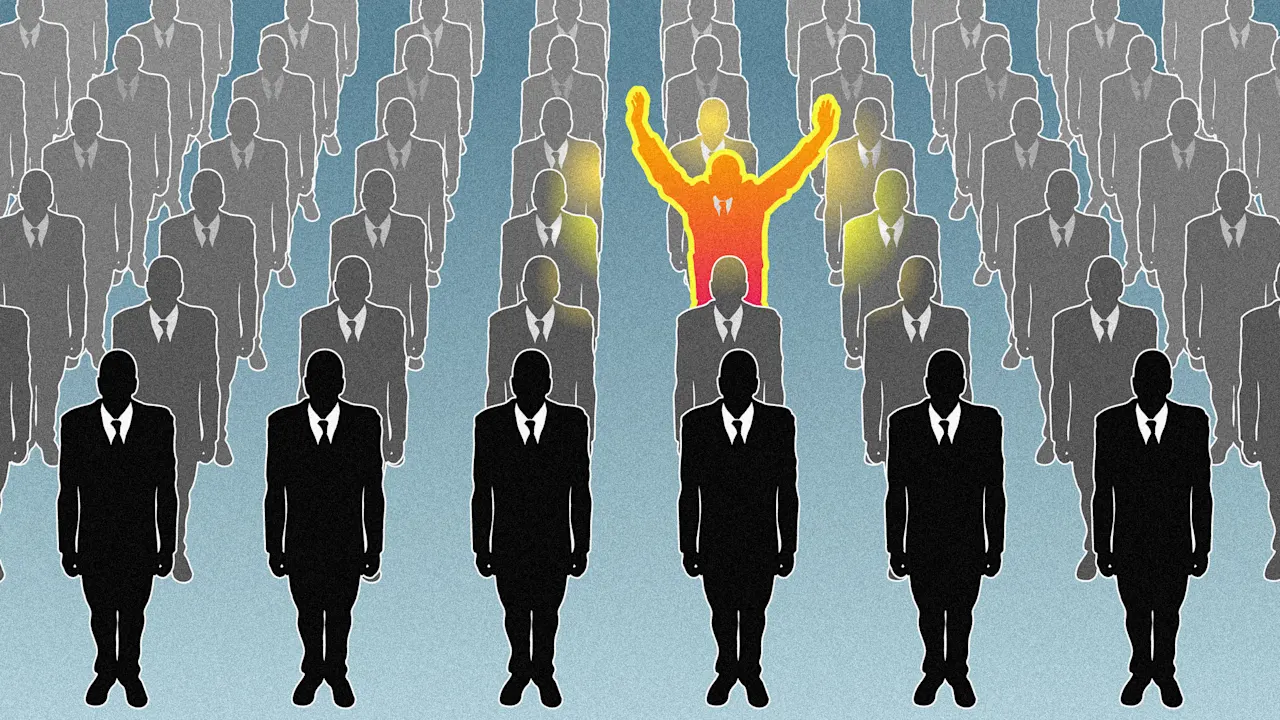
Most organizations still hire for culture fit—even those that loudly champion diversity and inclusion. The phrase sounds benign, even wise: who wouldn’t want colleagues who “fit in”? But behind this feel-good notion lies one of the biggest obstacles to innovation and progress in modern workplaces. Culture fit has become a euphemism for cultural cloning: selecting people who already look, think, and behave like the incumbents. It’s a polite way of saying, we want people like us, because there’s nothing more comforting than working—and hanging out—with people who are just like you!
The irony, of course, is that such homogeneity kills the very things organizations claim to want: creativity, adaptability, and innovation. As Adam Grant notes, originality thrives in contexts that tolerate dissent and deviance, not conformity. Yet the more organizations glorify “fit,” the more they drift toward cultish sameness. The difference between a culture and a cult, after all, is just one letter—and often one lawsuit.
This tendency isn’t new. Social psychology has long shown that we’re drawn to those who resemble us; similarity reduces friction and uncertainty. But comfort is the enemy of progress. Uniformity might make life easier for recruiters and managers, but it makes systems fragile. Nature offers a cautionary tale: the Irish potato famine. For decades, Ireland depended almost entirely on a single potato variety, the Lumper. When a blight struck in 1845, the lack of genetic diversity turned one crop failure into a national catastrophe. Organizations that over-rely on a single “type” of employee risk the same fate—a cultural monocrop vulnerable to shocks, blind spots, and collective stupidity.
{“blockType”:”mv-promo-block”,”data”:{“imageDesktopUrl”:”https://images.fastcompany.com/image/upload/f_webp,q_auto,c_fit/wp-cms-2/2025/10/tcp-photo-syndey-16X9.jpg”,”imageMobileUrl”:”https://images.fastcompany.com/image/upload/f_webp,q_auto,c_fit/wp-cms-2/2025/10/tcp-photo-syndey-1×1-2.jpg”,”eyebrow”:””,”headline”:”Get more insights from Tomas Chamorro-Premuzic”,”dek”:”Dr. Tomas Chamorro-Premuzic is a professor of organizational psychology at UCL and Columbia University, and the co-founder of DeeperSignals. He has authored 15 books and over 250 scientific articles on the psychology of talent, leadership, AI, and entrepreneurship. “,”subhed”:””,”description”:””,”ctaText”:”Learn More”,”ctaUrl”:”https://drtomas.com/intro/”,”theme”:{“bg”:”#2b2d30″,”text”:”#ffffff”,”eyebrow”:”#9aa2aa”,”subhed”:”#ffffff”,”buttonBg”:”#3b3f46″,”buttonHoverBg”:”#3b3f46″,”buttonText”:”#ffffff”},”imageDesktopId”:91424798,”imageMobileId”:91424800,”shareable”:false,”slug”:””}}
The cost of fitting in too well
Empirical research supports this. Studies show that while culture fit predicts short-term satisfaction and commitment, it’s often negatively related to long-term innovation and change readiness. A large meta-analysis by Kristof-Brown, Zimmerman, and Johnson found that person–organization fit strongly predicts employees’ attitudes but not their creativity or performance in changing environments. Similarly, Michele Gelfand’s cross-national study on cultural “tightness” found that organizations and societies that enforce conformity underperform in dynamic contexts, while “looser” cultures—those that tolerate rule-bending and deviance, are more innovative and adaptive.
There are also considerable costs for businesses that hire for culture-fit: when everybody thinks alike, nobody thinks at all! In line, cultural homogeneity reduces innovation, creativity, and curiosity, as well as increasing conformity and resisting change. By contrast, organizations that value constructive misfit—hiring people who stretch or challenge the dominant mold—show higher rates of creativity and problem-solving. Google’s famous Project Aristotle study on team effectiveness found that the best-performing groups weren’t the most harmonious or homogenous, but those with psychological safety—teams where people felt free to disagree without social punishment. The best cultures, in other words, don’t eliminate tension; they use it productively.
Unfortunately, many companies still confuse alignment with excellence. “Fit” becomes the criterion for hiring and promotion, even as executives pay lip service to diversity. As illustrated in Don’t Be Yourself: Why Authenticity is Overrated and What to Do Instead, in practice, “bring your whole self to work” often means “bring the parts of yourself that look and sound like the rest of us.” The result is a well-intentioned echo chamber. Everybody belongs—and nobody thinks.
The case for the moderate misfit
So, what happens if you don’t quite fit in? If you’re the person who feels slightly out of sync with the corporate rhythm—too analytical for the sales culture, too candid for the political one, too global for the parochial one? At first, it’s uncomfortable. You’ll have to work to fit in, even as the company insists you shouldn’t have to. “Inclusion” sounds effortless, but it usually requires emotional labor—the cognitive gymnastics of decoding unspoken norms, managing impressions, and adapting without losing yourself.
Yet being a moderate misfit—someone who respects the system but doesn’t worship it—comes with real advantages.
- You bring a different perspective. You see what insiders can’t because you aren’t fully hypnotized by the culture. Research on task conflict shows that moderate levels of disagreement improve decision quality and innovation, as long as they’re respectful. The worst decisions in history (from Enron to the Challenger disaster) share one trait: too much agreement.
- You’re more likely to become a change agent. Because you don’t fully identify with the status quo, you’re less invested in preserving it. Decades of research on minority influence show that consistent dissenters (even when initially unpopular) eventually shift group norms.
- You’ll stay an independent thinker. Irving Janis’s classic work on groupthink revealed that cohesive groups under pressure tend to suppress dissent, leading to catastrophic decisions. Misfits disrupt that comfort. They’re less likely to self-censor or outsource their thinking to the hive mind. Even when they play along, they keep a mental escape hatch open—a capacity for self-reflection that prevents total ideological capture.
- And you might even grow. Working alongside people who aren’t like you forces you to reconsider your assumptions. A widely cited meta-analysis shows that exposure to difference reduces prejudice and increases cognitive complexity. Growth happens when you’re challenged; when you collaborate, debate, and adapt outside your comfort zone.
Leadership, progress, and the art of misfitting
Ultimately, leadership is not about comfort but progress. As Gianpiero Petriglieri reminds us, leadership is always an argument with tradition, a dialogue between what is and what could be. Fitting in completely, therefore, is not a strength but a symptom of stagnation. When everyone agrees, nobody leads; they merely administer.
The playwright George Bernard Shaw put it even more bluntly: “The reasonable man adapts himself to the world; the unreasonable one persists in trying to adapt the world to himself. Therefore, all progress depends on the unreasonable man.”
Moderate misfits are those “unreasonable” people, balanced enough to survive within the system but different enough to question it. They’re the ones who stretch cultures, challenge orthodoxies, and prevent organizations from fossilizing. Yes, it can be exhausting to swim against the current. It takes empathy, restraint, and strategic impression management. But the payoff is immense: you remain curious, independent, and relevant in a world that worships conformity. To be sure, many don’t survive so pragmatically it is worth wondering whether you want to be part of an organization or system that regards and treats you as an outlier or part of the outgroup—it requires a great deal of willpower and resilience . . . the struggle is real!.
So, here’s to the misfits, the ones who don’t quite belong, who ask inconvenient questions, and who resist the seductive comfort of sameness. They may never win the “culture fit” award, but they’re the reason culture evolves at all . . . if we are brave to hire them in the first place!
{“blockType”:”mv-promo-block”,”data”:{“imageDesktopUrl”:”https://images.fastcompany.com/image/upload/f_webp,q_auto,c_fit/wp-cms-2/2025/10/tcp-photo-syndey-16X9.jpg”,”imageMobileUrl”:”https://images.fastcompany.com/image/upload/f_webp,q_auto,c_fit/wp-cms-2/2025/10/tcp-photo-syndey-1×1-2.jpg”,”eyebrow”:””,”headline”:”Get more insights from Tomas Chamorro-Premuzic”,”dek”:”Dr. Tomas Chamorro-Premuzic is a professor of organizational psychology at UCL and Columbia University, and the co-founder of DeeperSignals. He has authored 15 books and over 250 scientific articles on the psychology of talent, leadership, AI, and entrepreneurship. “,”subhed”:””,”description”:””,”ctaText”:”Learn More”,”ctaUrl”:”https://drtomas.com/intro/”,”theme”:{“bg”:”#2b2d30″,”text”:”#ffffff”,”eyebrow”:”#9aa2aa”,”subhed”:”#ffffff”,”buttonBg”:”#3b3f46″,”buttonHoverBg”:”#3b3f46″,”buttonText”:”#ffffff”},”imageDesktopId”:91424798,”imageMobileId”:91424800,”shareable”:false,”slug”:””}}
Source link