
Close Menu
    Facebook X (Twitter) Instagram
    TRENDING :
    • Scientists call it a ‘tragic loss.’ Why the U.S. is shutting down a major ocean monitoring network
    • The top 3 secrets of innovation that nobody talks about
    • El Niño is here—and it will ‘pour fuel on the fire of a warming world’
    • Anthropic’s Claude Fable 5 plays it too safe on safety, developers say
    • SpaceX IPO update: Latest SPCX stock price, trading start time for closely watched Nasdaq debut
    • With the Trump Stench Gone, the Knicks Make History
    • Here’s how much the 2026 World Cup will cost companies in lost employee productivity—the number is staggering
    • Market Talk – June 11, 2026
    Populist Bulletin
    • Home
    • US Politics
    • World Politics
    • Economy
    • Business
    • Headline News
    Populist Bulletin
    Home»Economy»The Oil Conspiracies | Armstrong Economics
    Economy 4 Mins Read

    The Oil Conspiracies | Armstrong Economics

    Economy 4 Mins Read
    Share Facebook Twitter Pinterest LinkedIn Tumblr Telegram Email Copy Link
    Follow Us
    Google News Flipboard
    Share
    Facebook Twitter LinkedIn Pinterest Email


    QUESTION: Mr. Armstrong, about half the cargo ships are headed to the US to get oil. Some have claimed that Trump is trying to replace the Middle East. This seems to be a conspiracy theory that contradicts what you have reported. What do you make of that?

    RW

    Trump Hormuz Blockaide

    ANSWER: I know, there are wild conspiracy theories being proposed. I have even heard that Trump did this to force the EU to collapse. Sending the world into recession/depression is absurd. Trump is trying to sell more widgets, not fewer. Plus, rising oil prices put the Midterms at risk. That just makes no sense. Most of these conspiracy theories assume the people in government are smart – that is NOT the case.

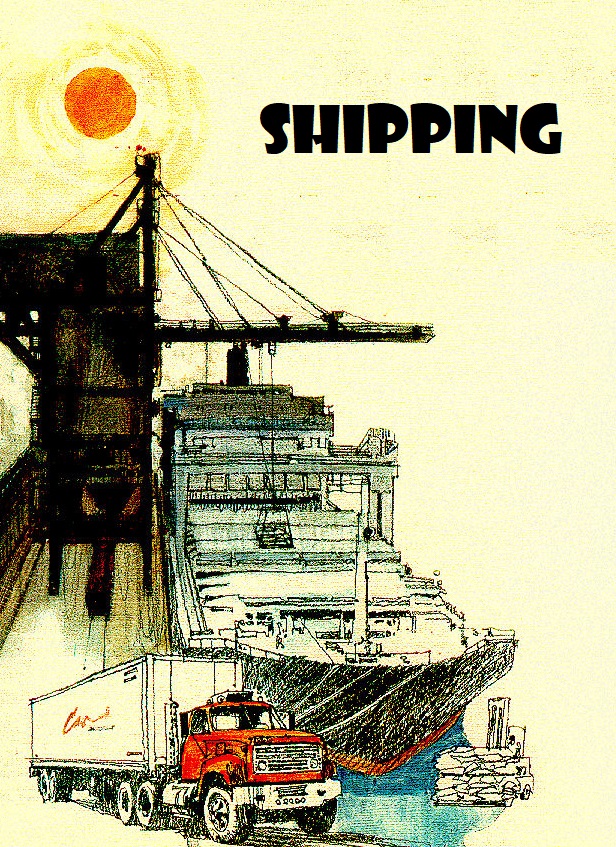
    As for tankers, there are not enough in the world to transport all the oil that needs to be transported. We have had some of the world’s largest shippers as clients for decades. There is what is known as “Tonne-miles” (or tonne-kilometers), which is the standard unit for measuring freight transportation volume, and it’s a key metric for understanding crude oil logistics.

    A single ton-mile represents moving one ton of cargo over a distance of one mile. In the oil industry, a “ton” of crude oil is approximately 7.5 barrels. This metric allows you to directly compare the total transport “work” done by different modes (pipeline, rail, ship, truck), regardless of the shipment size or distance.

    The most notable shift in the data is from water carriers to pipelines. In 1980, water carriers held a slight lead over pipelines for crude oil ton-miles. By 1999, pipelines had grown their share to over 75%, while water carriers had dropped to under 24%.

    On a global scale, the focus shifts to seaborne trade, which is measured in tonne-miles (the metric equivalent). Recent data shows this is a massive and growing industry, currently being reshaped by geopolitical events. Global oil tonne-miles (for all products) grew from roughly 15.3 trillion in 2020 to 16.4 trillion in 2024, an increase of about 6%. Crude oil itself constitutes roughly 70% of total global seaborne tonne-miles.

    In 2025, the global figure stood at approximately 12.2 trillion (year-to-date), indicating a contraction. This decline is partly due to the rerouting of tankers away from the Red Sea because of Houthi attacks, which caused tanker tonne-miles to hit a five-year high earlier in 2024 before the current dip. The reason this is critical to our analysis is that this is a core measure of economic activity. The total volume of crude oil moved is a key input for GDP figures, while changes in tonne-miles affect the costs of energy and consumer goods.

    This allows for a direct comparison of efficiency between modes. For example, pipelines and large tankers are far more energy-efficient per ton-mile than trucks or rail. Some look at this also as a carbon footprint and other environmental costs of transporting crude oil over long distances. Energy companies and governments rely on tonne-mile forecasts to decide where to build new pipelines, expand ports, or invest in rail infrastructure.

    The longer the trip to transport oil the higher the cost to ship that oil. Therefore, we have another variable here regarding the cost of shipping. On top of all of this, the claim that the United States is somehow displacing Iran is really absurd. The United States is a NET IMPORTER of crude oil. We may be able to facilitate some for geopolitical reasons and to try to keep prices down, but the US can in no possible way replace the Middle East. Who ever makes up these stories are really beyond hope.


    Source link

    Share. Facebook Twitter Pinterest LinkedIn Tumblr Email

    Related Posts

    Market Talk – June 11, 2026

    June 11, 2026

    War Is Now Appearing In Inflation Data

    June 11, 2026

    The Pacific Prize | Armstrong Economics

    June 11, 2026
    Top News
    Business 4 Mins Read

    Electronic Arts signs $55-billion deal with Saudi Arabia’s Public Investment Fund and others to go private. Analysts say it’s worth more

    Business 4 Mins Read

    Electronic Arts has announced plans to go private in what will be the largest leveraged…

    Trump’s Dictatorial Mania Is Increasing—but So Is the Public’s Fury

    February 6, 2026

    Market Talk – January 29, 2026

    January 29, 2026

    7 Essential Tips for Responding to Online Reviews

    November 30, 2025
    Top Trending
    Business 5 Mins Read

    Scientists call it a ‘tragic loss.’ Why the U.S. is shutting down a major ocean monitoring network

    Business 5 Mins Read

    The Ocean Observatories Initiative (OOI), a network that provides access to real-time…

    Business 4 Mins Read

    The top 3 secrets of innovation that nobody talks about

    Business 4 Mins Read

    “Innovation” is starting to become a buzzword. From keynote speeches to strategic…

    Business 5 Mins Read

    El Niño is here—and it will ‘pour fuel on the fire of a warming world’

    Business 5 Mins Read

    El Niño has officially arrived—and it could become one of the most…

    Categories
    • Business
    • Economy
    • Headline News
    • Top News
    • US Politics
    • World Politics
    About us

    The Populist Bulletin was founded with a fervent commitment to inform, inspire, empower and spark meaningful conversations about the economy, business, politics, government accountability, globalization, and the preservation of American cultural heritage.

    We are devoted to delivering straightforward, unfiltered, compelling, relatable stories that resonate with the majority of the American public, while boldly challenging false mainstream narratives that seem to only serve entrenched elitists, and foreign interests.

    Top Picks

    Scientists call it a ‘tragic loss.’ Why the U.S. is shutting down a major ocean monitoring network

    June 12, 2026

    The top 3 secrets of innovation that nobody talks about

    June 12, 2026

    El Niño is here—and it will ‘pour fuel on the fire of a warming world’

    June 11, 2026
    Categories
    • Business
    • Economy
    • Headline News
    • Top News
    • US Politics
    • World Politics
    Copyright © 2025 Populist Bulletin. All Rights Reserved.

    Type above and press Enter to search. Press Esc to cancel.