
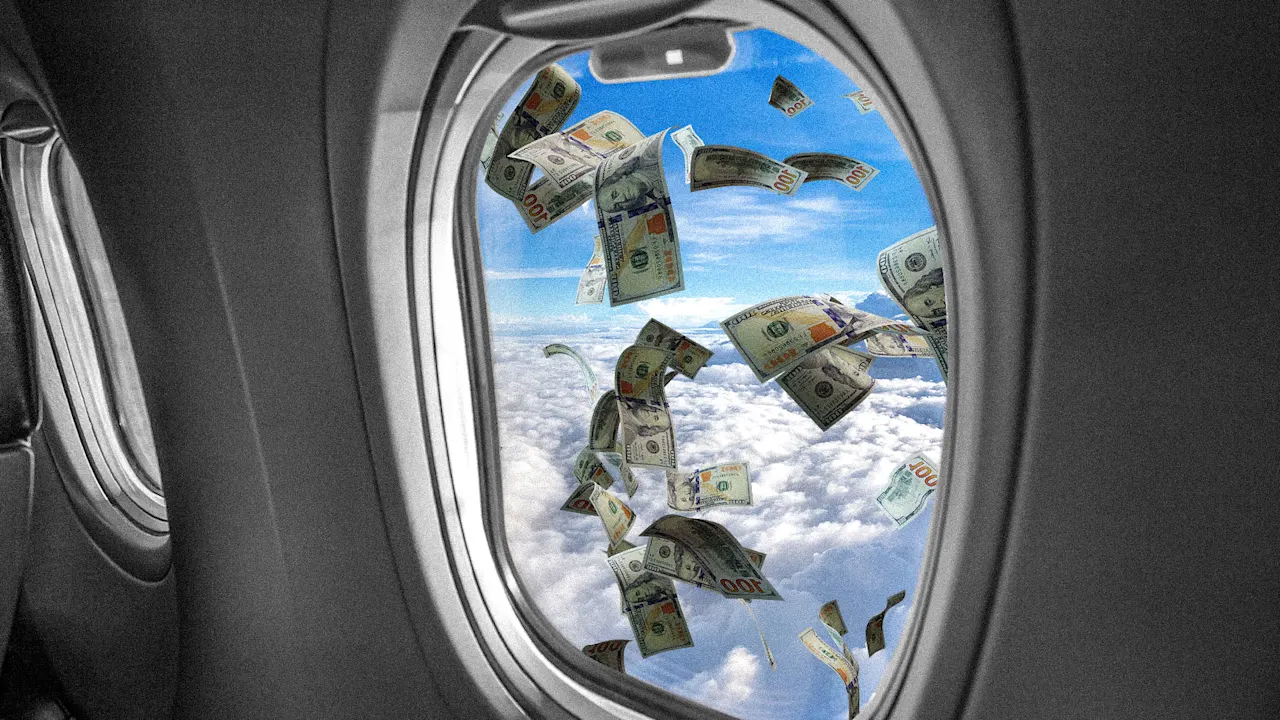
The Trump administration might save Spirit Airlines from its latest brush with death, and now more airlines are asking for a handout.
A budget airline coalition representing Frontier, Spirit, and Avelo has asked the federal government to consider setting aside a $2.5 billion pool of funds to offset the high price of fuel, as a result of the war in Iran.
The organization, the Association of Value Airlines, says that the cash could “stabilize operations and keep airfares affordable” and likens the proposal to the CARES Act, which kept businesses afloat in the early days of the COVID-19 pandemic.
“The market dominance of the country’s biggest airlines has never been greater, and smaller value airlines are disproportionately impacted by higher fuel prices,” the group wrote, adding that budget carriers play a “critical role” in making air travel affordable.
The request comes as the administration moves toward rescuing Spirit Airlines, which has declared bankruptcy twice in less than two years. The potential arrangement with Spirit would reportedly toss the company a $500 million taxpayer-funded life preserver, giving the government a chunk of the business in the process.
“They have some good aircraft and good assets, and when the price of oil goes down, we’ll sell it for a profit,” Trump told reporters last week. “I’d love to be able to save those jobs. I’d love to be able to save an airline. I like having a lot of airlines, so it’s competitive.”
Last week, Trump met with Commerce Secretary Howard Lutnick and Transportation Secretary Sean Duffy to figure out what a deal to keep the discount carrier alive might look like, according to a report from The Wall Street Journal.
Taking a stake in the private sector
Trump hasn’t been shy about having the U.S. government make huge investments into select businesses during his second term. Last year, Trump steered an $8.9 billion investment into struggling chipmaker Intel, giving the U.S. government a 10% stake of the company. “Building leading-edge semiconductors and chips, which is what Intel does, is fundamental to the future of our nation,” Trump wrote at the time.
The president might be eager to dive headlong into more public-private entanglements, but other government officials are less keen on the idea. In an interview on CBS, Duffy expressed concerns about the plan to intervene with Spirit Airlines. “Then who else comes to my door?” Duffy asked last week—a hypothetical that other budget airlines quickly made real. “The question will be, can we do anything to save Spirit and make it viable, or would we be putting good money into a company that inevitably is going to be liquidated?”
Republicans in Congress have also voiced their qualms with a Spirit takeover. “This is an absolutely TERRIBLE idea,” Sen. Ted Cruz of Texas wrote on X. “The government doesn’t know a damn thing about running a failed budget airline.”
Sen. Tom Cotton of Arkansas also weighed in to oppose the bailout, expressing doubt that the government would come out ahead in the deal. “If Spirit’s creditors or other potential investors don’t think they can run it profitably coming out of its second bankruptcy in under two years, I doubt the U.S. Government can either,” Cotton wrote on X, adding that the idea wasn’t the best use of taxpayer dollars.