
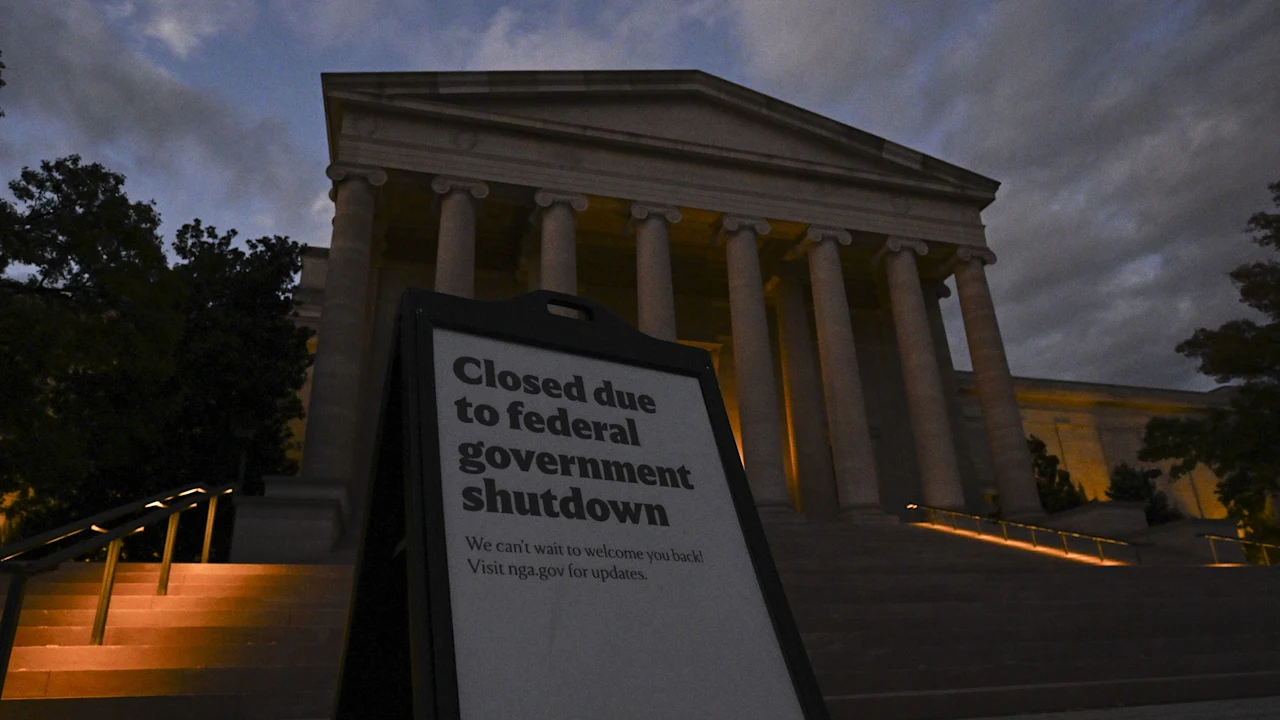
Amid a historic shutdown, the technology that keeps the government running, has, largely, kept running. Official websites are online. Internal software is mostly working. And security experts continue to monitor potential cyberthreats.
But as the 35-day closure stretches on, the situation could grow more dire, several current and former government officials told Fast Company, threatening the systems and teams that help support tax filing, healthcare systems, airports, and a lot more.
Without new funding from Congress, government IT offices can, in the short term, keep a number of essential workers in the office and draw on other funding sources, like, for example, earnings from selling services to other federal agencies to stay online. Tech teams often rely on contractors to run their platforms, and those contracts are sometimes paid out in advance, providing an extra source of support. (Those resources vary, depending on the agency.)
But such stopgaps will last only so long, experts warned. And as the shutdown drags on, desperately needed upgrades to federal tech systems will fall behind, making them a lot harder to run. Tech workers will start looking for jobs in the private sector instead.
Keep in mind that the U.S. government already has a hard time managing its tech. Federal agencies are running behind on upgrading websites, improving software, and providing experiences to online users that are not frustratingly horrible. The government is also chronically short on technology workers, including tens of thousands of cybersecurity professionals. Many of the people who leave the private sector to work on government technology take a pay cut, often under the assumption that, at the very least, they’ll have better job security in the public sector.
Now the shutdown is slowing down government tech projects and making the prospect of taking a federal job even less appealing. That’s a major threat to the stated goals of the Trump administration and the Department of Government Efficiency, which include attracting technology talent, improving government software, and increasing the U.S. government’s use of AI.
“Consistent operations are crucial for maintaining a stable and effective workforce across all industries, not just the federal government,” Jenny Mattingley from the Partnership for Public Service told Fast Company. “When employees face financial uncertainty from delayed paychecks during government shutdowns—which is layered on top of substantial workforce cuts this year—it undermines workplace morale and impedes their ability to perform effectively.”
She added, “These factors collectively foster conditions that make it difficult to attract and keep skilled technology professionals, which hinders technological advancement and modernization efforts in government.”
How shutdowns impact government tech offices
Like elsewhere in government during a shutdown, federal IT offices have to select a handful of workers who are considered “essential” to keep software running, one current government official told Fast Company. These include people who focus on keeping applications operational and secure. But this approach has flaws, since it’s relatively easy for a federal agency to lose some critical employees to furlough status while maintaining contractors who are assigned only to “less essential tasks.”
Agencies will sometimes keep a list of employee furlough codes and funding sources, which outline whether they’re exempt from a shutdown or supported by another funding source, another government tech official explained. There might also be a separate list of people who are then recalled from furlough to work without pay, though they’re immediately exempt. The administration seems to be exempting more people from the shutdown than usual in order to blunt the impact of the government closure, the official told Fast Company.
Agencies do try to anticipate government shutdowns and plans, a former Treasury official said. Federal agencies don’t receive all their funding from congressional appropriations, and sometimes have other funds they can use to keep IT offices open.
But as the shutdown drags on, agencies have to prepare for more drastic action. About 25 days into the last government shutdown, the Treasury IT office had begun considering turning off technology platforms used across its employee base, the official said.
Projects designed to modernize aging systems, or introduce new technology, are also impacted. A former chief information officer of a federal agency told Fast Company that during the last two government shutdowns, employees focused on core operations, infrastructure, and other support were exempted from the shutdown. But anyone working on new technology development was furloughed.
The current shutdown is “compounding delays on critical modernization efforts” and creating “serious impacts” that will only grow, the source said. Similarly, a tech official at the State Department said that while they expect the agency to be okay—given the agency’s dependence on contractors—a shutdown can be “brutal” when there are problems with an “ancient” government app.
There are also latent cybersecurity concerns. Theoretically, the government retains the ability to pull employees for an “all hands on deck” situation, one official said. But there can still be risks. For instance, during this shutdown, this official’s team learned of a vulnerability that had to be patched immediately. While the team implemented the fix, it couldn’t communicate with furloughed IT staff who could explain how the update might impact other agency systems.
On the one hand, workers are not checking their emails or, more generally, performing government activities, which means they’re less likely to fall victim to phishing attempts, sources told Fast Company. On the other, the shutdown could make the federal government a bigger target. Not paying people could also be a counterintelligence risk, since it becomes easier to offer employees money for information, warned David Nesting, a former White House modernization expert.
Shutdown could draw tech workers away
Government technology workers, including those who focus on IT, cybersecurity, and artificial intelligence, have typically been paid less than what they would otherwise make in the private sector. The highest-level positions denoted on the General Schedule, the main pay guidance for federal workers, have a base of around $162,000; top tech salaries can be several mutiples of that. Federal agencies have also put a strong emphasis on requiring employees to come back to the office. Still, government roles have always had one big advantage: job security.
But shutdowns damage the government’s reputation as a stable workplace. Just like in the private sector, the most experienced and capable experts are the ones who can find work elsewhere first, Nesting said.
“There is absolutely a risk that cybersecurity workers will decide, out of necessity, or just getting fed up with the way they’re being treated, that now is the right time for them to consider a career move,” Nesting said. “This creates a huge challenge for agencies trying to retain cybersecurity talent and persuade potential new hires that this won’t happen to them, too, in a year.”
Kshemendra Paul, a former government tech official and public administration expert, speaking in his personal capacity, told Fast Company that the past few administrations have seen a deterioration of the federal budget process, which requires both houses of Congress and the president coming together to agree to fund government activity, making shutdowns more likely. Each shutdown further damages employee confidence.
“Shutdowns are damaging morale. It increases cynicism, it increases skepticism of change. It makes change initiatives that are aimed at improving cybersecurity, improving information sharing, improving citizen experience, better managing government resources, reducing fraud and waste . . . so much harder,” Paul said. “They’re already hard to begin with in the government, but then it’s like you are working in a pool of molasses.”