
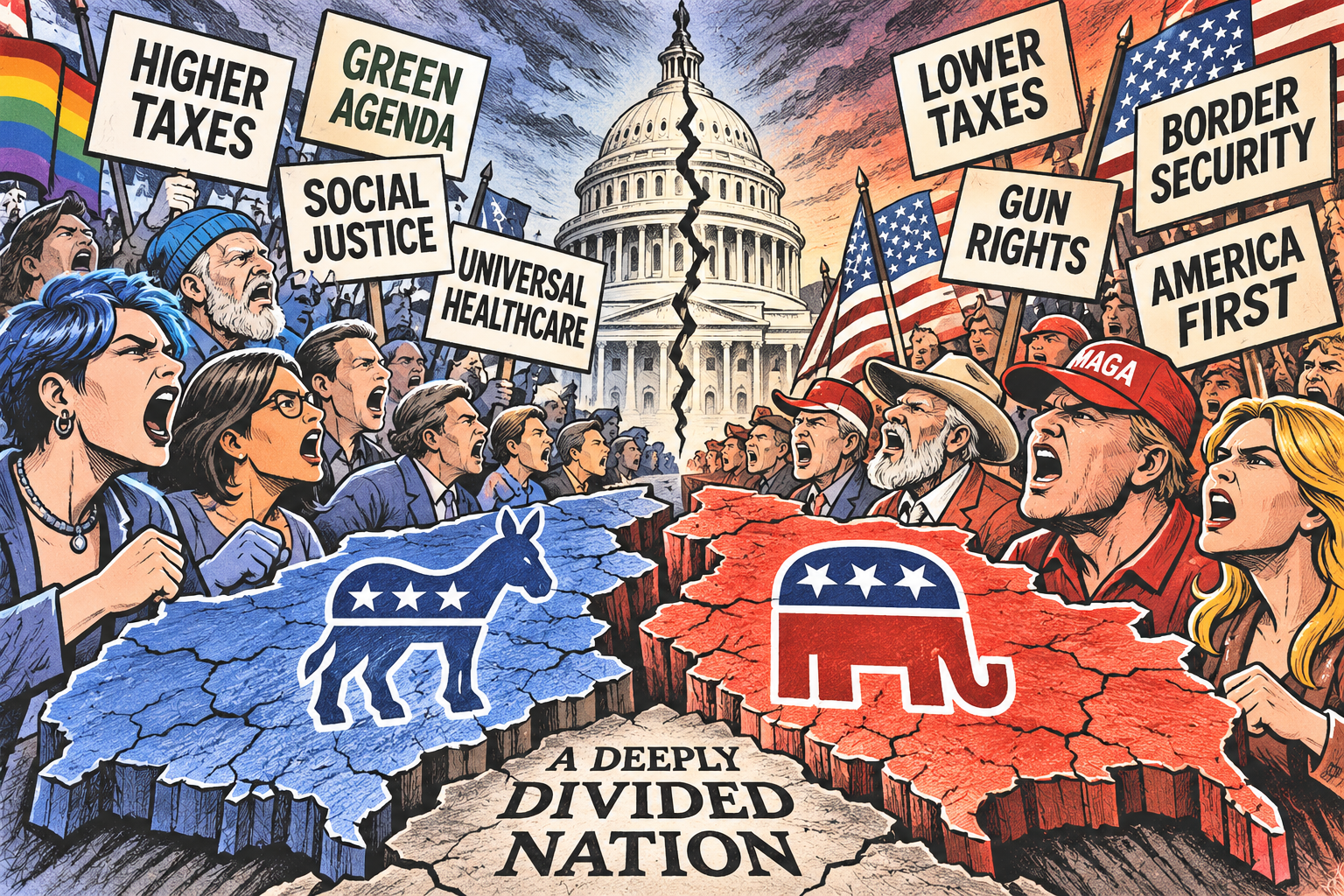
This is precisely what I have been warning about. Anyone who believes that electing Democrats will somehow resolve America’s mounting economic and political problems is seriously mistaken. Changing the party in power does not eliminate the underlying structural problems. What we may be witnessing is not the beginning of political reconciliation, but the opening stages of an escalating ideological confrontation that threatens to divide the nation even further.
The progressive wing of the Democratic Party is increasingly embracing policies that risk PUNISHING SUCCESS AND WEALTH rather than encouraging investment, entrepreneurship, and economic growth. Higher taxes, expanded regulation, and aggressive redistribution could undermine the very industries upon which future economic prosperity depends. Artificial intelligence is a particularly important example. At a time when technological innovation is attracting enormous investment capital, policies that discourage private investment could weaken America’s competitive position in the global economy.

The confrontation will also extend into foreign policy, particularly American support for Israel. Growing opposition to Benjamin Netanyahu within the Democratic Party could translate into demands to restrict military assistance and reconsider the longstanding relationship between Washington and Jerusalem. Netanyahu’s political position is becoming increasingly vulnerable as American support shifts from a bipartisan commitment toward another source of domestic political confrontation. So, this polarization is seen also in Israel as well as in the EU and Canada.
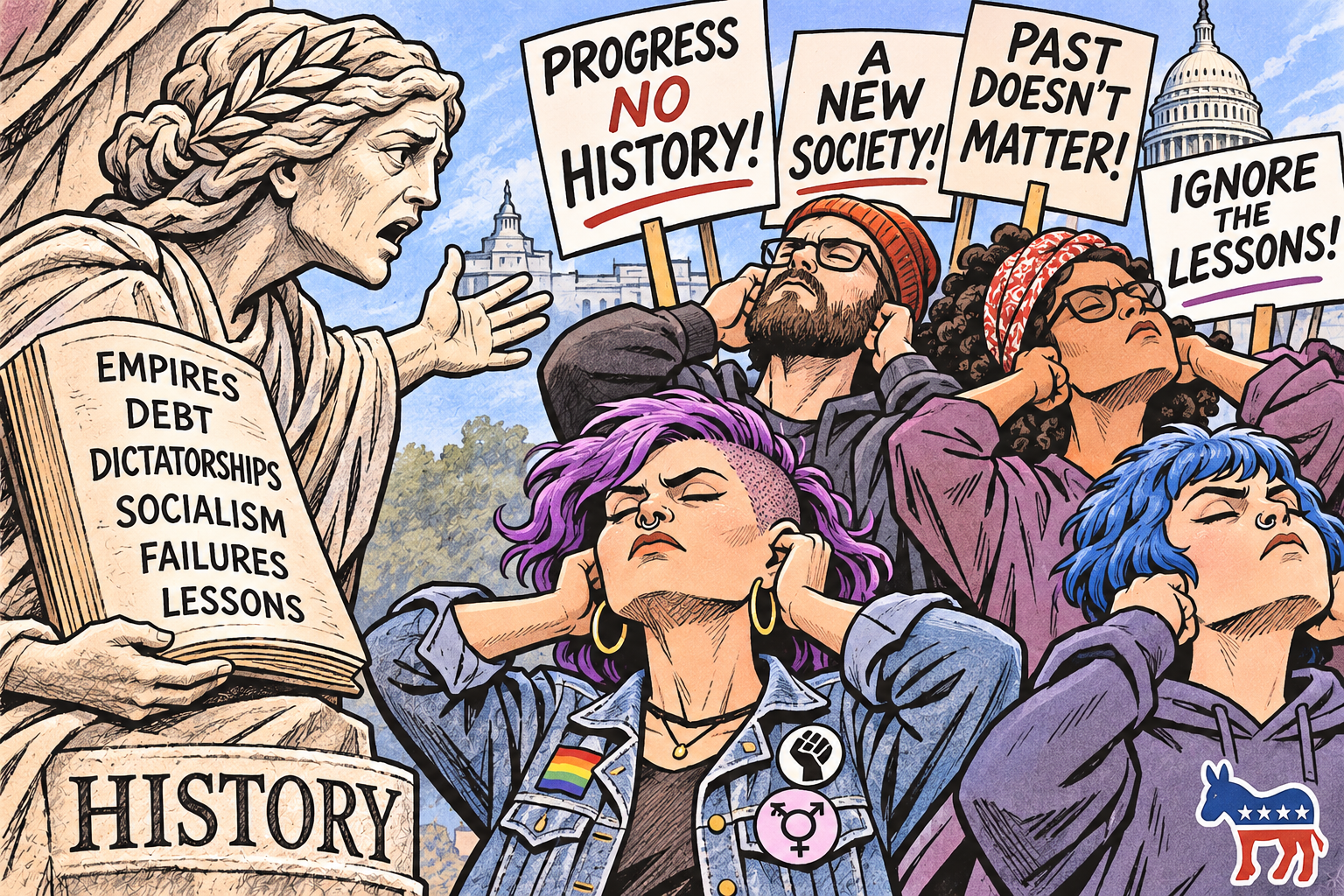
Yet the most revealing development may be the divisions emerging within the Democratic Party itself. Before the next Congress has even convened, tensions between moderates and progressives are already evident. The progressive faction will likely demand substantial increases in taxation, wealth redistribution, expanded social programs, and a more interventionist economic agenda. These demands could provoke fierce resistance not only from Republicans but also from Democrats concerned about the economic consequences. The Progressives, like all socialists, cling to their ideas and refuse to look at the track record. They will destroy the economy of the United States as they have done in France and Venezuela.
The coming political struggle may therefore be fought on two fronts: between Republicans and Democrats, and within the Democratic Party itself.
The social controversies surrounding identity politics, government appointments, and competing cultural priorities will undoubtedly attract considerable attention. However, the far greater danger lies in the economic consequences of government policy.
Pension funds, private investment, and capital formation are particularly vulnerable to changes in taxation and regulation. Politicians often assume that wealth represents a fixed pool of resources waiting to be redistributed. They overlook the fact that capital is mobile. Investors can change their behavior, move their assets, reduce investment, or relocate to jurisdictions offering greater economic and political stability.
This is where the analysis of international capital flows becomes essential. Governments cannot simply assume that capital will remain available to finance whatever political promises they make. Capital moves according to CONFIDENCE, opportunity, and perceived risk—not political ideology.
The growing demand for universal healthcare and other expansive social programs raises a fundamental question that governments repeatedly fail to confront:
WHO IS GOING TO PAY FOR ALL OF THIS?
France provides a warning about the difficulties of sustaining extensive public commitments while confronting sluggish economic growth, rising debt, and political resistance to fiscal reform. The problem is not simply whether a particular social program is desirable. It is whether the productive economy can generate sufficient revenue to support the government’s promises without undermining investment and economic activity.
There is a fundamental contradiction in attempting to expand government spending indefinitely while simultaneously imposing policies that may discourage the capital formation necessary to finance that spending.
Governments depend upon the private sector for their tax revenues. When taxation and regulation weaken productive activity, the resulting economic slowdown can undermine the very revenue base politicians seek to expand.
This is the paradox of modern fiscal policy: the more aggressively government attempts to extract wealth from the productive economy, the greater the risk that it will weaken the foundation upon which its own financial survival depends. Progressives especially refuse to listen to this. They just want everything to be free, as is the case in France with even a low productivity with a 35 hour work-week and 5 weeks vacation.
As these ideological divisions intensify, the consequences may extend far beyond Washington. Americans could increasingly question whether the federal government represents the interests of the nation as a whole or has become an instrument through which competing political factions attempt to impose their economic and social agendas upon one another.

The danger is that political disagreement gradually evolves into a broader crisis of CONFIDENCE in government itself. Once that c in the government of Rome was incompetent to defend them even against barbarians, they split and took the power themselves. Carausius’ (287-293AD) breakaway of Britain from Rome was in part also driven by not primarily driven by economic motives, intertwined with military and political ambitions. There was the tax burden and trade interests, but also the inflation and debasement of the currency. He even sought to restore the silver coinage.
History demonstrates that when citizens lose CONFIDENCE in central authority, regional loyalties and demands for greater autonomy can become more attractive. The United States is not immune to such pressures. Persistent confrontations between Washington and state governments could encourage renewed debates over federalism, states’ rights, and regional political independence. In Europe, we see Italy insisting a return of their sovereignty.
That warns that national fragmentation eventually becomes inevitable. The growing political polarization, combined with fiscal instability and declining institutional CONFIDENCE, creates conditions in which separatist sentiment historically always gains support.
The fundamental issue is no longer simply whether Democrats or Republicans control Congress. It is whether the political system can confront its structural economic problems without transforming every proposed solution into another ideological battle.
The greatest threat is not the victory of one political party over another. It is the destruction of confidence in the institutions that hold the nation together.
Once that confidence begins to disappear, the consequences extend beyond elections, taxation, and government spending. They reach into investment decisions, capital flows, economic growth, and ultimately the stability of the political system itself. We are already watching capital shifting from government debt to private sector. Be mindful of the debt of the Blue States especially and they celebrate this victory for when a politicians wins, they always assume it is forever.
That is how a political confrontation can evolve into a sovereign debt crisis, a crisis of CONFIDENCE, and eventually a struggle over the future structure of the nation.
This is how political polarization can evolve into a crisis of national unity. The greater the confrontation between federal authority and regional economic and political interests, the more likely we are to see renewed demands for states’ rights, greater regional autonomy, and ultimately the emergence of separatist movements.
The danger is not simply that one political party defeats another. It is that the struggle for political power begins to undermine confidence in the institutions holding the nation together.
That is when political disagreement becomes a crisis of confidence in government itself.

This a social war that reminds me of the Social War during the Roman Republic. The city states of Italy demanded equal right with Rome and the Romans refused. The person most directly associated with proposing Roman citizenship for the Italians and whose death immediately preceded the Social War was Marcus Livius Drusus the Younger, a tribune in 91 BC. The assassin was never identified. The Senate conveniently launched no formal inquiry into his death. He was assassinated for making such a proposal.
Politics has evolved into an outright social war, with ideological divisions increasingly threatening the very foundations of national unity. This may be the beginning of the eventual fragmentation of the United States, as the computer models have been forecasting. Similar pressures are already becoming apparent across the European Union and even in Canada, where regional interests are increasingly coming into conflict with central government authority.
However, the fundamental problem with any scenario involving the breakup of the United States is that today’s political polarization does not follow clearly defined geographical boundaries. Red and blue America are not two separate territories. They are deeply intertwined, often divided not merely by state or county, but by city, suburb, and even neighborhood.
This makes the prospect of national separation far more complicated than many people imagine. Any attempt to divide the country along political lines would produce an extraordinarily complex patchwork of competing jurisdictions, potentially requiring massive population movements to establish coherent territorial boundaries.
That is precisely why a formal breakup remains considerably less likely than a prolonged period of political dysfunction, constitutional confrontation, and growing resistance to federal authority. Then it becomes untenable and violence often surfaces.
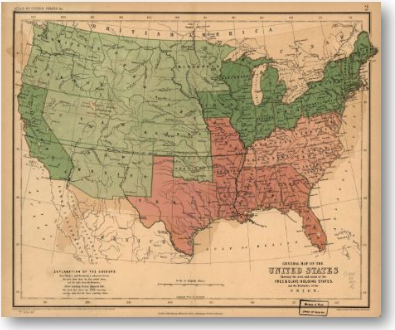
The American Civil War of 1861–1865 involved a relatively clear territorial division between the seceding Southern states and the Union, despite significant internal divisions and contested border states. Today’s political landscape is fundamentally different. There is no equivalent geographical boundary separating the competing ideological factions.
The greater danger is therefore not necessarily another conventional civil war, but an escalating internal political conflict in which the nation remains legally united while becoming increasingly ungovernable. There have been people in Florida talking about succeeding after COVID.
History demonstrates that political fragmentation does not always begin with formal secession. It can begin with the gradual collapse of CONFIDENCE in central authority, as regional governments and populations increasingly refuse to accept policies imposed by the political opposition.
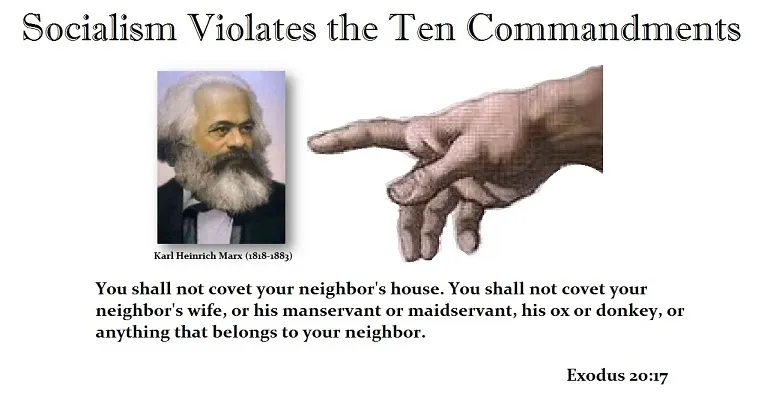
Some believe that the United States may remain one nation on paper while becoming increasingly divided in practice. That is one optimistic view, but impractical because the idea of a denial of human rights based entirely on wealth as led to the deaths of hundreds of millions of people for centuries. As I have said, it is even forbidden in the Ten Commandments clearly establishing this is the dark side of humanity that continually surfaces. It is the primary reason why all governments rise and fall. They also say most divorces are also over money.
It is not realistic that there will be a clean brek, because this is so polarized and it is intertwined throughout the nation as a whole.
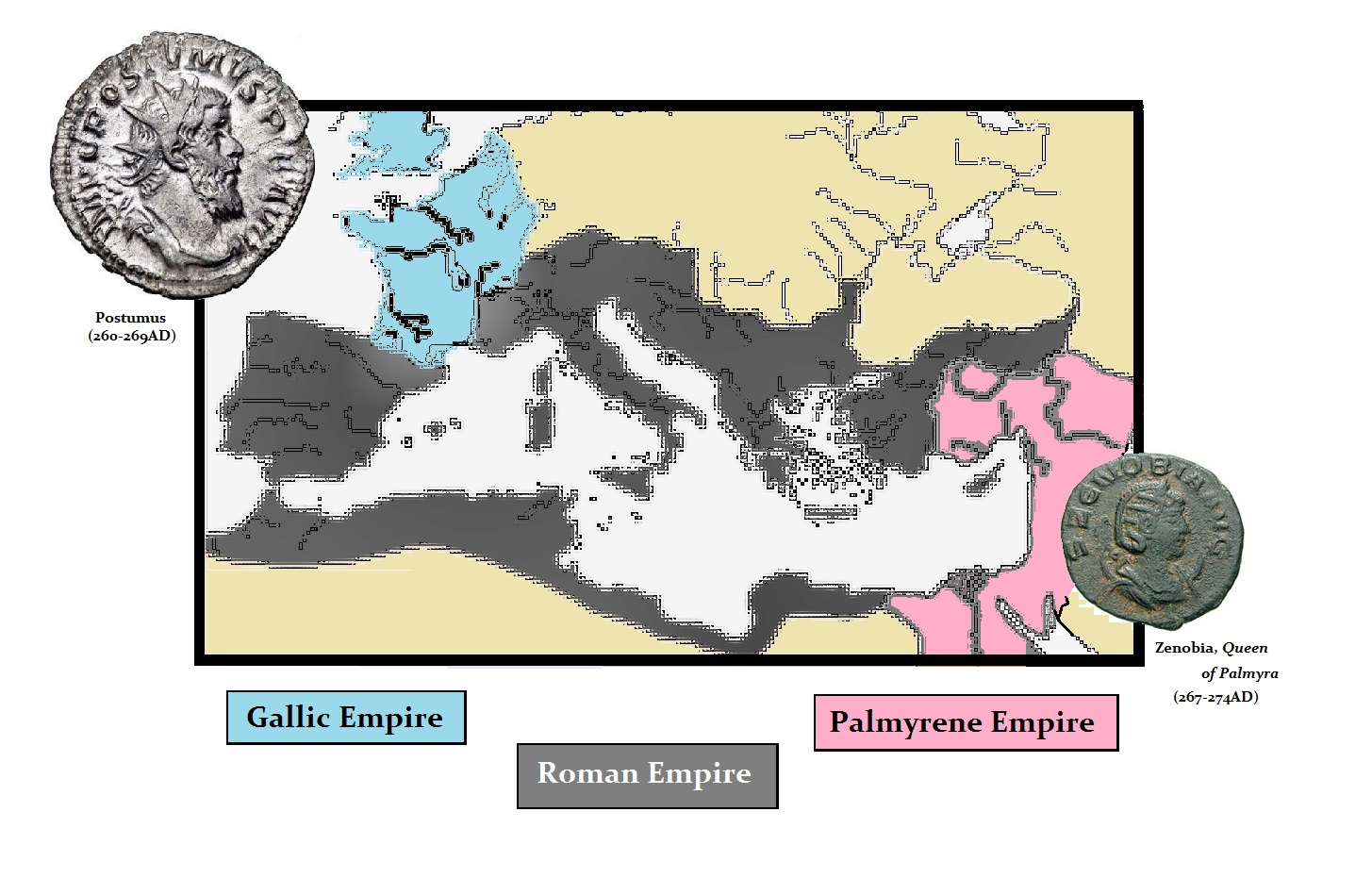
The US breakup would most likely NOT be just into two. Even Rome had initially split into three because there also it was not an even 50/50 split. Yet the reasons were the same. Discontent with the administration in Rome. I have posed that question to Socrates and this is what it saw.
The Northeast (New England through the Mid-Atlantic), the West Coast (California, Oregon, Washington), plus Illinois, Colorado, New Mexico, and possibly Minnesota—roughly the states that vote reliably Democratic.
An interior/Southern bloc: the South, Plains, Mountain West, and Appalachia—reliably Republican states.
The problem emerges that this leaves swing states (Pennsylvania, Michigan, Wisconsin, Arizona, Georgia, Nevada) as contested, and it splits states like Virginia, Colorado, and Illinois internally. It also cuts the red bloc off from most port access, which would be economically crippling.
Regional blocs of 5–7 nations
- Northeast (New England + Mid-Atlantic)
- South (Old Confederacy plus Texas)
- Midwest (Great Lakes states)
- West Coast (Pacific states)
- Mountain West (interior West)
This tracks older regional identities more than the current partisan map, and would likely produce several purple or internally divided nations. Then there is the question nukes. That was a major issue in the breakup of the USSR as well.

Anyway we look at this issue, the split becomes inevitable – it is only a question of WHEN!. The politics is simply becoming hate-speech itself. The Democrats will unleash pay-back and they have demonized Trump like the Neocons demonized Saddam Hussein. This hatred is like we see with Putin, prevents ANY reconciliation. This is all part of the road to 2032. We are simply past the point of no return. If you are surrounded by the opposite party, you may want to realize this is the future and it may be time to move.