
Close Menu
    Facebook X (Twitter) Instagram
    TRENDING :
    • GameStop CEO says goodbye to $35 billion pay package to focus on eBay bid
    • Everyone is a builder now
    • Dozens died at Camp Mystic last summer. Now the Texas campground has filed for bankruptcy
    • Market Talk – June 24, 2026
    • A popular password manager was hit by a hack. What you need to know—and how to keep your data safe
    • The New York City Race Where the Establishment Won
    • Schools are built to react to mental health crises
    • China, Russia, Iran, And Europe Along With The Rest Of The World Are Free To Vote In US Elections
    Populist Bulletin
    • Home
    • US Politics
    • World Politics
    • Economy
    • Business
    • Headline News
    Populist Bulletin
    Home»Economy»The Canals Behind the War
    Economy 3 Mins Read

    The Canals Behind the War

    Economy 3 Mins Read
    Share Facebook Twitter Pinterest LinkedIn Tumblr Telegram Email Copy Link
    Follow Us
    Google News Flipboard
    Share
    Facebook Twitter LinkedIn Pinterest Email


    Many people are looking at the conflicts in Gaza and Iran strictly through the lens of religion, terrorism, or regional politics. But history has shown that wars are rarely about what the headlines claim. Beneath the surface lies economics and control of trade routes. One project that has quietly resurfaced in strategic discussions is the Ben Gurion Canal, an alternative shipping route connecting the Red Sea to the Mediterranean that would rival the Suez Canal. The proposal dates back to the 1960s and would run from the port of Eilat through Israel and eventually connect to the Mediterranean near Gaza, providing a strategic bypass of Egypt’s Suez Canal.

    Declassified U.S. documents revealed that planners studied using hundreds of underground nuclear explosions in the Negev Desert to carve the canal. The proposal noted that such a route would be a “strategically valuable alternative” to the Suez Canal and could transform regional trade. Around 20% of global trade moves through the Suez Canal today, giving Egypt enormous influence over global supply chains. Any disruption, whether political or accidental, has massive economic consequences.
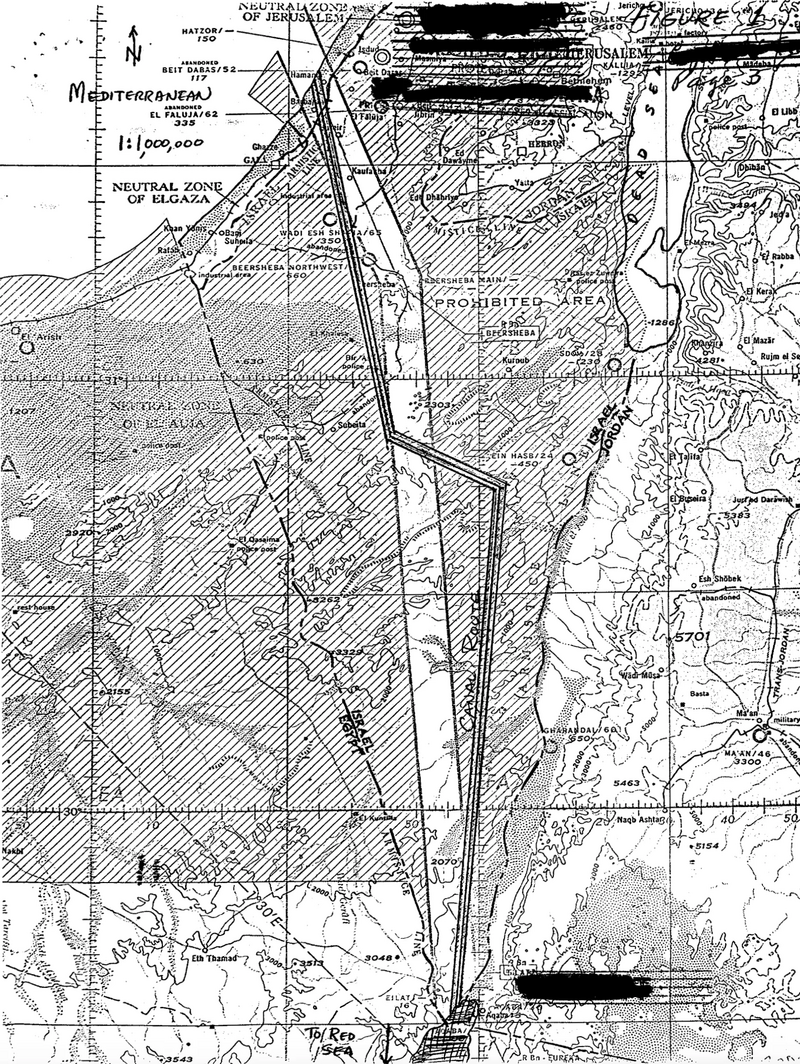
    Ben_Gurion_Canal_government_document.webp

    This is where the geopolitical puzzle begins to fit together. The proposed canal route runs extremely close to the Gaza Strip and, in some versions, could even pass through territory adjacent to it. From a purely strategic perspective, no major global shipping route could run alongside an area capable of launching rockets or drones. Control and stability in Gaza, therefore, are prerequisites for any such infrastructure project. Analysts have noted that renewed interest in the canal has coincided with Israel’s war against Hamas, raising questions about whether the long-standing project could become viable again if the region is brought under full military control.

    Now look at this through the lens of the Economic Confidence Model. The ECM has consistently shown that 2026 is a geopolitical turning point, leading to rising tensions toward the 2027 Panic Cycle and ultimately the 2028 Panic Cycle. These shifts historically coincide with wars, trade disruptions, and major changes to the global economic order. When the confidence wave turns downward, governments seek strategic advantage in infrastructure, energy routes, and trade chokepoints. The Suez Canal itself has repeatedly triggered geopolitical crises from Nasser’s nationalization in 1956 to modern blockages that froze billions of dollars in trade overnight.

    The second layer of the strategy involves the Strait of Hormuz. A large percentage of the world’s oil flows through that narrow passage between Iran and the Arabian Peninsula. Any conflict with Iran threatens that chokepoint and exposes how fragile global energy transport really is. If Hormuz becomes unstable while Suez remains under Egyptian control, the West’s supply lines become vulnerable. A new canal controlled by Israel and its allies would provide an alternative strategic corridor linking the Red Sea and Mediterranean without relying on Egypt or risking disruption from regional adversaries.

    When you step back, the sequence begins to look less like random events and more like long-term geopolitical positioning. The war in Gaza removes a security obstacle along the proposed canal route. Escalation with Iran highlights the dangers of relying on existing trade chokepoints such as the Strait of Hormuz and the Suez Canal. Meanwhile, the ECM shows that this entire period sits within a cycle of rising geopolitical tension leading into a Panic Cycle phase. History teaches us that major infrastructure projects that control global trade rarely emerge during peaceful periods. They appear during times of crisis when nations reposition themselves for the next economic order.


    Source link

    Share. Facebook Twitter Pinterest LinkedIn Tumblr Email

    Related Posts

    Market Talk – June 24, 2026

    June 24, 2026

    China, Russia, Iran, And Europe Along With The Rest Of The World Are Free To Vote In US Elections

    June 24, 2026

    US Strikes Deal For Kenya’s Rare Earth Minerals

    June 24, 2026
    Top News
    World Politics 4 Mins Read

    Germany’s Globalist Regime Has Spent $14.2 Billion on ‘Asylum-Seeking Minors’ Since 2015 | The Gateway Pundit

    World Politics 4 Mins Read

    In what critics on the populist right and left decry as a profound betrayal of…

    Trump’s Columbus Day Proclamation – End of Woke, Celebrates Discoverer of America, Restores Italian-American Pride | The Gateway Pundit

    October 10, 2025

    REPORT: Thousands of Illegal Immigrants Found on Registered Voter Rolls in Texas | The Gateway Pundit

    October 22, 2025

    The case for not loving your job

    November 27, 2025
    Top Trending
    Business 2 Mins Read

    GameStop CEO says goodbye to $35 billion pay package to focus on eBay bid

    Business 2 Mins Read

    In May, GameStop CEO Ryan Cohen surprised the masses after announcing an…

    Business 4 Mins Read

    Everyone is a builder now

    Business 4 Mins Read

    When a natural disaster hits or a political crisis breaks out, you…

    Business 3 Mins Read

    Dozens died at Camp Mystic last summer. Now the Texas campground has filed for bankruptcy

    Business 3 Mins Read

    On July 4, 2025, 28 people died in a catastrophic flood at…

    Categories
    • Business
    • Economy
    • Headline News
    • Top News
    • US Politics
    • World Politics
    About us

    The Populist Bulletin was founded with a fervent commitment to inform, inspire, empower and spark meaningful conversations about the economy, business, politics, government accountability, globalization, and the preservation of American cultural heritage.

    We are devoted to delivering straightforward, unfiltered, compelling, relatable stories that resonate with the majority of the American public, while boldly challenging false mainstream narratives that seem to only serve entrenched elitists, and foreign interests.

    Top Picks

    GameStop CEO says goodbye to $35 billion pay package to focus on eBay bid

    June 24, 2026

    Everyone is a builder now

    June 24, 2026

    Dozens died at Camp Mystic last summer. Now the Texas campground has filed for bankruptcy

    June 24, 2026
    Categories
    • Business
    • Economy
    • Headline News
    • Top News
    • US Politics
    • World Politics
    Copyright © 2025 Populist Bulletin. All Rights Reserved.

    Type above and press Enter to search. Press Esc to cancel.