
When one of the world’s biggest sports clubs, Sporting Clube de Portugal (SCP), was founded in 1906, it was centered on one code: “Develop the human, then the athlete.” Now, 120 years later, the club is getting a major rebrand that brings that code to the forefront of its identity—with a high-design twist.
SCP teaches sports including soccer, futsal, handball, volleyball, and rink hockey for everyone from young kids to elite adults. It’s best known for its men’s professional soccer team, which plays in the Primeira Liga (the top flight of Portuguese football), and has produced generational talents including Cristiano Ronaldo and Luís Figo. This is the first time that SCP has rebranded in 25 years, and the overhaul—led by the global creative agency JKR—encompasses everything from the club’s official crest and typeface to its merch, jerseys, and digital presence.
According to André Bernardo, SCP’s chief strategy and operations officer, it’s a move driven by members, who collectively own and operate the club. For SCP members, “there’s something beyond sports as performance, which is sports as the first step to creating human connections and development—it’s this process of getting there,” Bernardo says.
Right now, the club has more than 180,000 members and 200 delegations across five continents. As it looks to expand even further globally in the coming years, members wanted its branding to position SCP as not just a sports club, but also a personal development community backed with deep heritage.

A 1945 crest gets a 2026 upgrade
To reimagine SCP, JKR used a simple approach: Rather than inventing any modern assets, the team opted to retool the most iconic motifs from the brand’s history for modern applications.
That process started with combing through six years worth of research and interviews, conducted by Bernardo’s team, into members’ thoughts on the identity. The most important change that members asked for, Bernardo says, was a return of the brand’s 1945 crest.
The crest featured the club’s roaring lion mascot inside a shield-shaped design made up of adjoining swirls. Although that element was replaced with a sleeker, more modern crest in 2001, most members felt that the 1945 version remained the more recognizable design.

“If you look at a lot of the signage and tiles around Portugal, you do get a lot of those curvature shapes,” says Jennie Potts, creative director at JKR.
JKR’s version of the lion looks like a near copy of the 1945 iteration, with a few aesthetic tweaks. The mascot’s waist has been taken out, the patterns of its fur are now more curved than jagged, and its tail has been nudged into an “S” shape as an easter egg to reflect the word “Sporting.”
“We took all of the lions from all of the different logos that the club has had throughout the years, analyzed what was great about each one, and took the best from all of them,” Potts says.
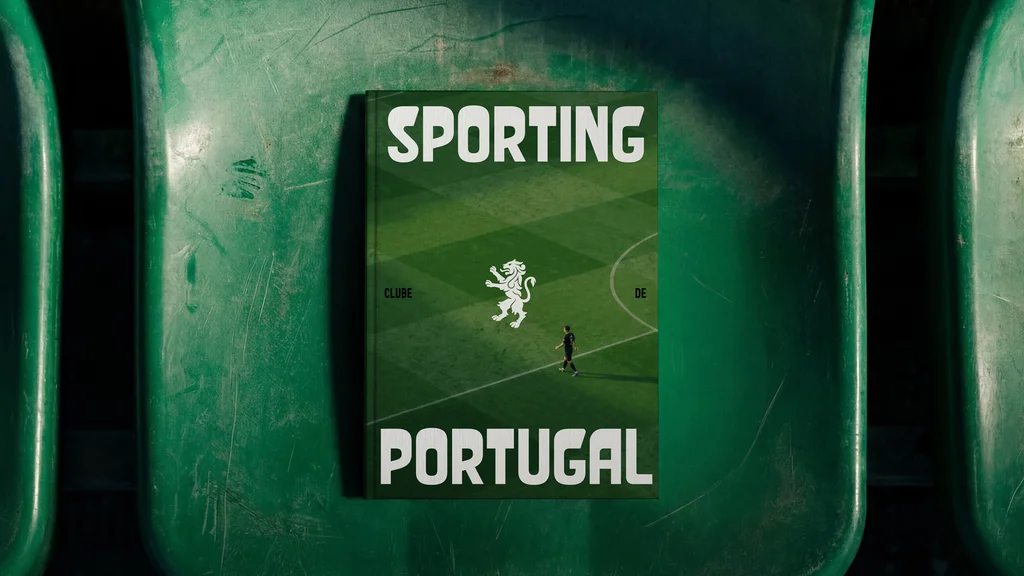
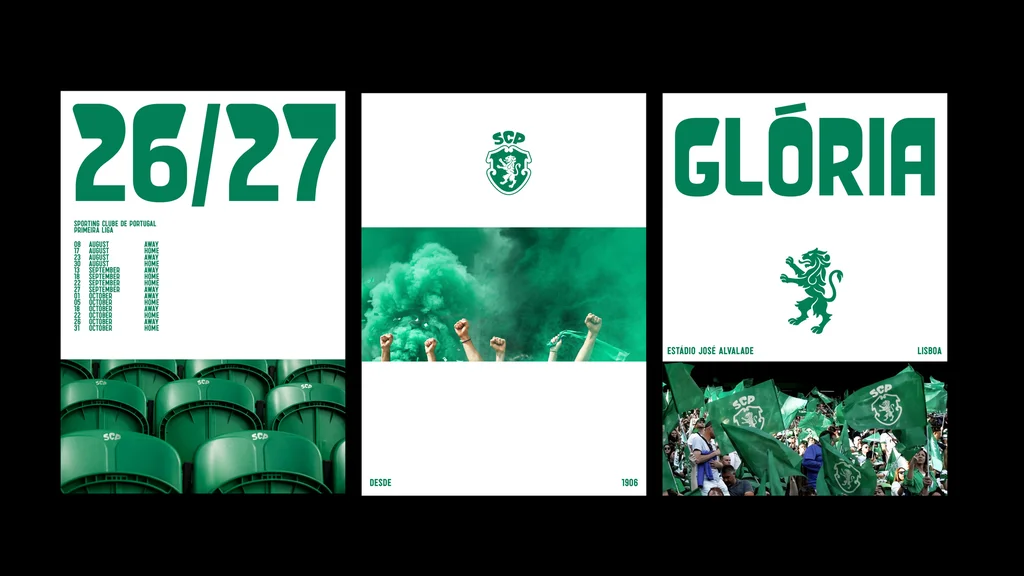
Another nugget from the 1945 crest shapes the brand’s new bespoke typeface. Above that original crest, the letters “SCP” formed a crown rendered in chunky, almost distorted characters. Potts’s team partnered with the type foundry F37 to turn those letters, alongside some other type samples from the brand’s archives, into “Sporting Sans.” This typeface combines thick, almost inflated upper components with thinner stems, and every angle is rounded. Aesthetically, it looks strikingly contemporary—especially in bolded, blown-up versions for socials—despite its 81-year-old origins.

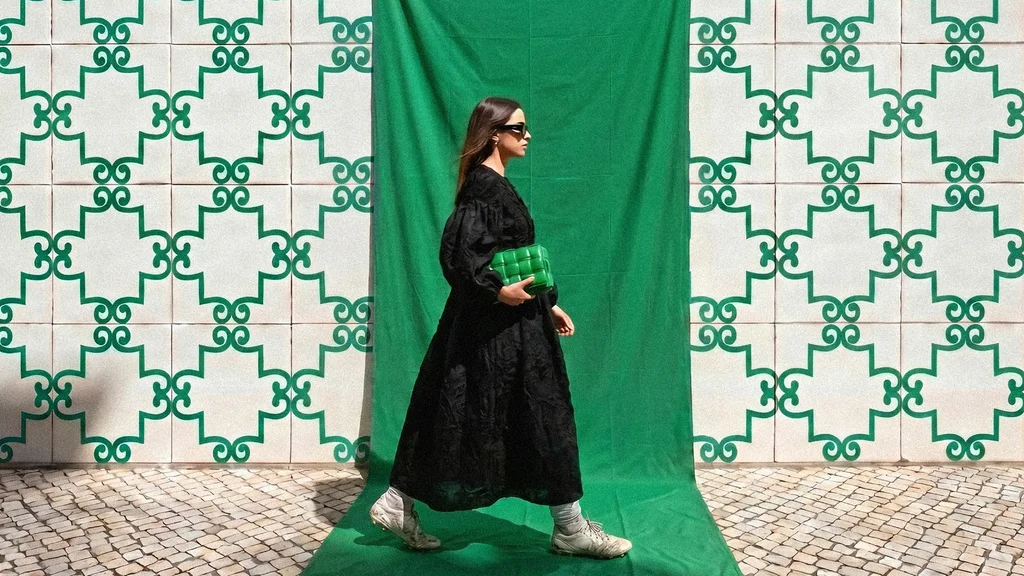
The same can be said for the brand’s new core pattern. Its design is pulled from a series of tiles that framed the club’s original stadium doors, called Porta 10-A—the same entrance that Ronaldo and Figo used to get their start. JKR took that pattern, rendered it in the club’s signature green, and converted it into an asset that can be used in combination with the typeface, crest, and lion.
“That gate felt very Portuguese but also really reflected the shape in the crest,” Potts says. “It all comes together in a way that feels very distinctive to Sporting’s visual language.”
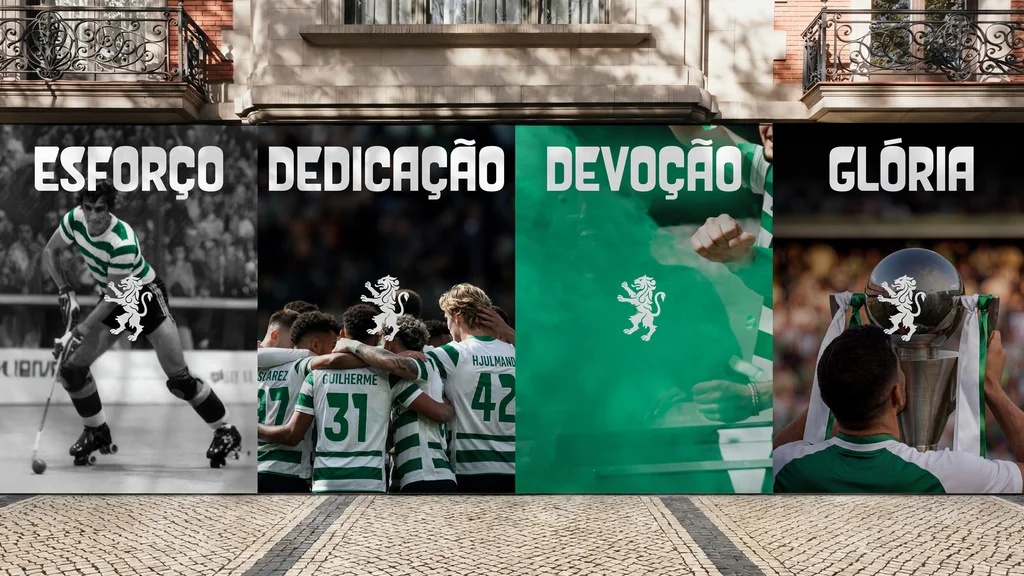
A high-design rebrand made from archival materials
Potts’s team may have relied on vintage assets as the rebrand’s pillars, but their applications feel anything but dated.
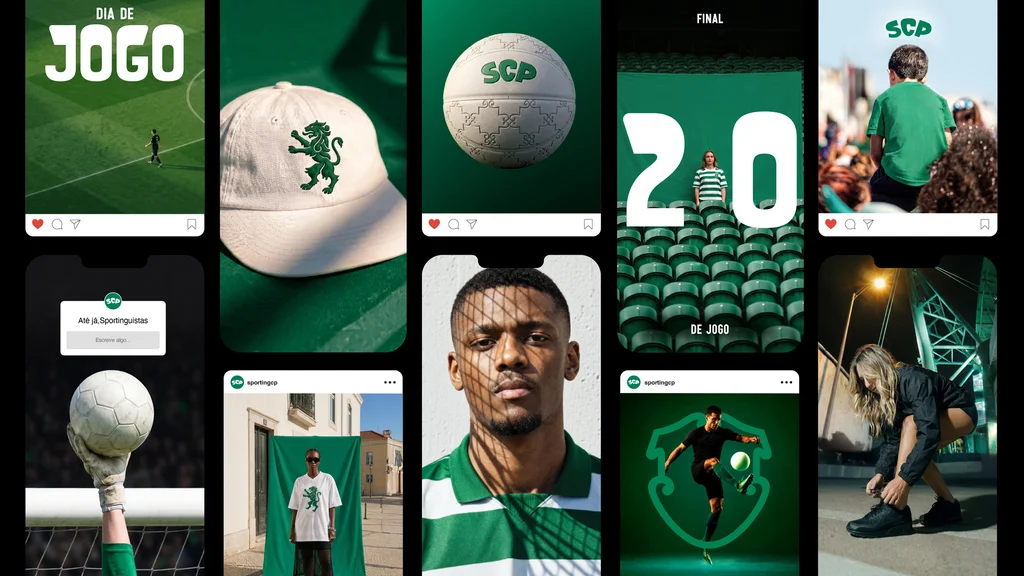
Examples of the branding’s potential applications include typeface-led Instagram post mock-ups that jump off the screen, classy merch like a signet ring and jacket emblazoned with the lion logo, and chic photography in front of a background made up of the Porta 10-A pattern. In concert, the rebrand looks more like something that you might expect from a luxury fashion brand than a sports club.
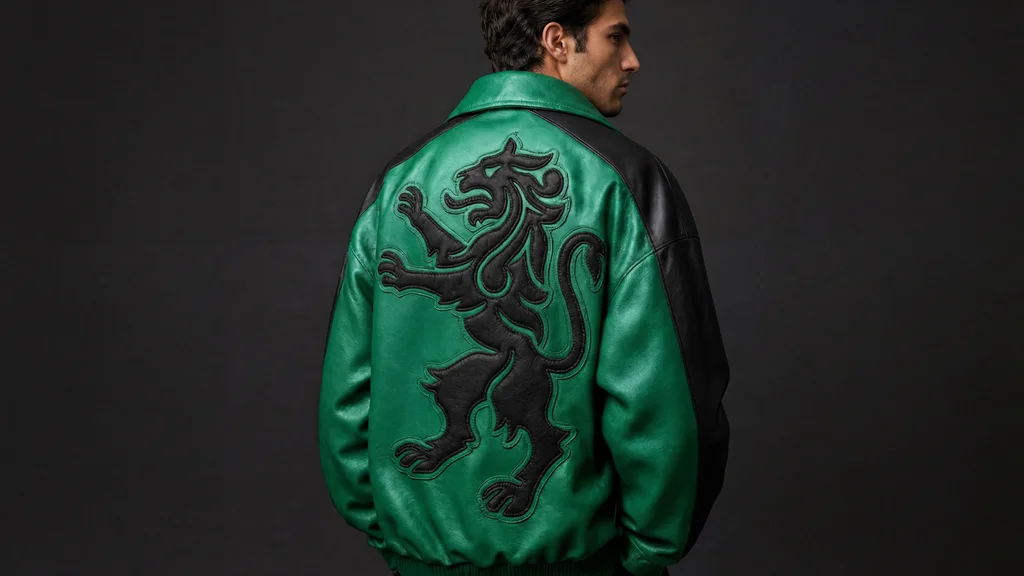
Potts says that effect was made possible by the versatility of SCP’s existing brand library, which JKR has tailored for modern-day applications. The shield crest, for example, can be isolated to serve as a frame for player highlights in Instagram posts; the tile pattern makes a perfect background on stadium walls and ads; and the lion practically begs to be embroidered on some merch. Her team took what was already there and molded it into something that SCP members would be proud to rep.

“Consumers buy into brands that reflect their values,” Potts says. “Sporting already had that, so we just wanted to make sure that that was reflected stylistically and that the brand could react in culture, like by doing cool collaborations and creating merch that people don’t just want to wear because they’re a fan of the club, but that it’s actually representing them as well.”