
Elon Musk is merging his rocket maker SpaceX with his artificial intelligence startup xAI in a deal that changes what a future SpaceX IPO represents.
After rumors surfaced last week, Musk confirmed the move Monday in a SpaceX blog post, calling the combined company “the most ambitious, vertically integrated innovation engine on (and off) Earth,” spanning AI, rockets, space-based internet, and his social media platform, X. Public records filed in Nevada and obtained by CNBC show the deal was completed February 2, with Space Exploration Technologies Corp. listed as the managing member of X.AI Holdings.
Bloomberg reports that the merged company is expected to price shares in an initial public offering that could value it at $1.25 trillion. At that scale, the story is no longer just about rockets. It is about AI and Musk’s claim that the future of compute will not be confined to Earth.
A $1.25 trillion IPO that looks very different
Before the deal, a SpaceX IPO would have given investors exposure to space launch services, government contracts, Starlink’s satellite internet business, and Musk’s long-term Mars ambitions.
Now it would also include a frontier AI company and a new thesis: AI cannot scale on terrestrial infrastructure. It must scale in orbit.
SpaceX was valued at about $800 billion in a secondary share sale last year. And xAI was valued at roughly $230 billion in a $20 billion funding round earlier this year. The percentage uplift is larger for SpaceX, while xAI shareholders gain stability by being folded into one of the most profitable private aerospace companies.
Reuters reported last week that SpaceX generated an estimated $8 billion in profit on $15 billion to $16 billion in revenue in 2025, citing people familiar with the results. By contrast, xAI is still burning cash as it races to build infrastructure to compete with OpenAI and Google, which remain ahead in the model race. The merger ties those two trajectories together.
“It looks like Elon Musk has one window to do a big IPO, and he wants to make the most of that,” Edward Niedermeyer, author of Ludicrous: The Unvarnished Story of Tesla Motors and an auto industry analyst, told Fast Company last week.
Musk’s core claim: Earth cannot power the future of AI
Musk argues that AI’s reliance on power-hungry data centers is unsustainable, as rising demand strains both electrical grids and the environment. His solution is to move the problem off-planet. “Space is called ‘space’ for a reason,” he said in the blog post, arguing that there will be more room off the planet.
“My estimate is that within two to three years, the lowest-cost way to generate AI compute will be in space,” Musk continued. “This cost efficiency alone will enable innovative companies to train their AI models and process data at unprecedented speeds and scales.”
SpaceX has already asked the Federal Communications Commission for authorization to launch up to 1 million satellites as part of what Musk calls an orbital data center.
Orbital data centers powered by the Sun
The orbital data center plan would require launching 1 million tons of satellites per year. Each ton generates 100 kilowatts of compute, which equals 100 gigawatts of AI capacity added annually.
Even in 2025, the most prolific year in orbital history, humanity launched only about 3,000 tons of payload into space, mostly Starlink satellites aboard Falcon rockets.
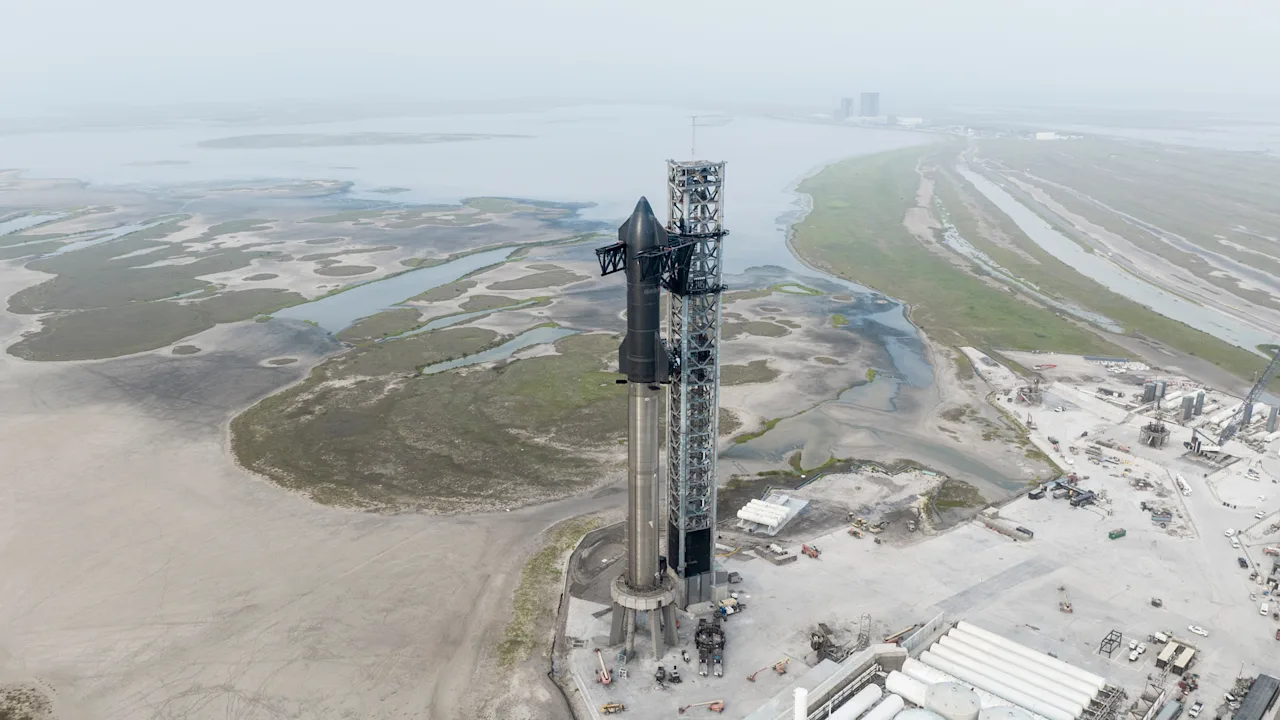
The difference now is Starship. Musk envisions Starship rockets launching every hour, carrying roughly 200 tons per flight, and delivering millions of tons to orbit per year.
SpaceX already operates the world’s largest satellite constellation through Starlink, with more than 9,000 satellites in orbit and roughly 9 million customers. The operational lessons from Starlink form the foundation for something much larger: satellites that function as AI data centers.
A familiar Musk playbook
This is not the first time Musk has merged his companies to move faster. Early last year, he merged xAI with X (formerly Twitter). Now xAI is being folded into SpaceX. Tesla, the primary source of Musk’s liquid wealth, said last week that it has agreed to invest about $2 billion into xAI.
The merger also pulls SpaceX into xAI’s regulatory scrutiny.
Currently, xAI is facing probes in Europe, India, Australia, and California after its Grok AI tools allowed users to generate sexualized images of children and nonconsensual intimate images of adults from photos found online. These investigations add risk to a company that is already spending heavily to catch up in the AI arms race.
Folding xAI into SpaceX gives it financial cover and operational scale, but it also ties SpaceX’s future IPO to those controversies.
Beyond orbit: the Moon and deep space
Musk’s vision does not stop with satellites circling Earth.
Starship’s ability to land heavy cargo on the moon opens the possibility of lunar manufacturing. Factories could use lunar materials to build satellites and deploy them deeper into space using electromagnetic mass drivers. Musk argues that at that scale, humanity begins to harness more of the sun’s energy.
The business case is simpler. If space becomes the cheapest place to run AI compute, everything else follows.
“The capabilities we unlock by making space-based data centers a reality will fund and enable self-growing bases on the moon, an entire civilization on Mars, and ultimately, expansion to the universe,” Musk wrote in the blog post.