

San Diego has delivered a much-needed victory for privacy by voting to shut down its network of more than 500 surveillance cameras operated through Flock Safety and Ubicquia. The City Council voted unanimously to terminate the city’s use of automated license plate readers and voted 5-2 to end its smart streetlight surveillance program. This is one of the largest American cities to reject Flock’s technology, and the decision sends a message that should be heard across the country. Americans are not criminals simply because they leave their homes. We have reached an absurd point where the government believes it should be permitted to record where everyone drives, store those movements in a database, and search through their private lives whenever someone with access decides to investigate them. That is government stalking, and we should NEVER permit it to become normal.
Flock’s cameras do considerably more than photograph a license plate. They record vehicle locations and timestamps, creating a searchable history of movements. San Diego’s network captured millions of images every month, with license plate data generally retained for 30 days. The smart streetlights separately recorded video that could be retrieved for police investigations. With enough cameras, authorities can begin reconstructing where someone travels, which neighborhoods they visit, and how frequently they return to particular locations. You do not need to know someone’s name to begin constructing a profile of their daily activities. Follow a vehicle long enough and you can learn where its owner works, worships, receives medical treatment, or spends the night. What business is that of the government when the person has committed no crime?
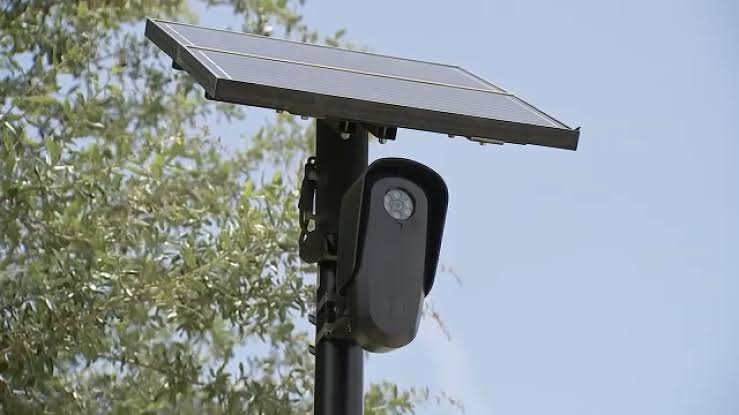
The controversy in San Diego became particularly serious after allegations emerged that police used the system to track a domestic violence victim and an officer during an internal investigation. Councilmembers who previously supported the cameras withdrew their approval. There have also been lawsuits involving individuals who allege that inaccurate surveillance information contributed to wrongful arrests.
The Fourth Amendment was written to restrain government searches and seizures, not to provide politicians with an inconvenient obstacle that technology could eventually eliminate. The Supreme Court recognized in Carpenter v. United States that extensive historical location information can reveal extraordinarily intimate details about a person’s life. That decision concerned cellphone location records and does not automatically resolve the legality of every license plate reader system. Nevertheless, the underlying privacy concern is obvious. A government capable of assembling detailed records of people’s movements possesses a level of surveillance power that earlier generations could scarcely have imagined. The fact that the information is collected on public roads does not make unlimited aggregation harmless.
What concerns me even more is the business model emerging around government surveillance. Flock has reportedly reached a valuation of approximately $8.3 billion. There is enormous money to be made selling municipalities the technology to monitor their own residents. Taxpayers finance the cameras, private companies operate the infrastructure, and government agencies receive access to information collected about the public. San Diego’s combined arrangement was valued at nearly $12 million. The public is effectively paying private contractors to construct a surveillance network that can be used to monitor the very people financing it.
These systems create vast repositories of location information that must be stored, secured, and protected from unauthorized access. A compromised account or improperly secured database could expose sensitive information about ordinary citizens. The more detailed the surveillance records, the more valuable they become to criminals, stalkers, and hostile intelligence services.
This is part of the broader transformation toward a society in which every activity becomes a digital record. Governments want electronic payments, digital identification, interconnected databases, facial recognition, and increasingly sophisticated monitoring systems. Each technology is promoted as a convenient solution to some immediate problem. Taken together, they can provide authorities with unprecedented visibility into the private lives of citizens. A government that can track where you travel, monitor your financial transactions, and associate those records with your identity possesses extraordinary power. The question is no longer simply whether technology can improve public services. It is whether the public retains any meaningful ability to live without being continuously documented.
San Diego’s decision is particularly encouraging because the opposition crossed political and generational lines. Privacy advocates, community organizations, and residents from different backgrounds united against the surveillance network. This should never have been a Republican or Democratic issue. The politicians controlling these systems will eventually change. A surveillance power created by one administration can be inherited and expanded by another. Nobody should assume that a government database will always be used by officials whose judgment or political views they happen to trust.
We are constantly told that anyone concerned about surveillance must have something to hide. That is a ridiculous argument. Privacy is not evidence of criminal intent. People close their curtains, protect their financial information, and expect confidentiality in personal matters because privacy is part of living in a free society. Nobody should have to explain why they visited a doctor, attended a political meeting, or drove to a friend’s house. The burden should be on the government to justify monitoring a specific person, not on every citizen to prove that ordinary movements are innocent.
The freedom to move about without government monitoring should not become some nostalgic memory of how America once operated. Technology has made mass surveillance cheaper, faster, and easier to conceal, but that does not make it acceptable. San Diego has taken an important stand by rejecting a system that many officials once considered indispensable. We cannot normalize government stalking and then pretend we still enjoy the same freedoms our Constitution was designed to protect.