
May 8, 2026
Do conditions for a pluralistic rebirth exist?
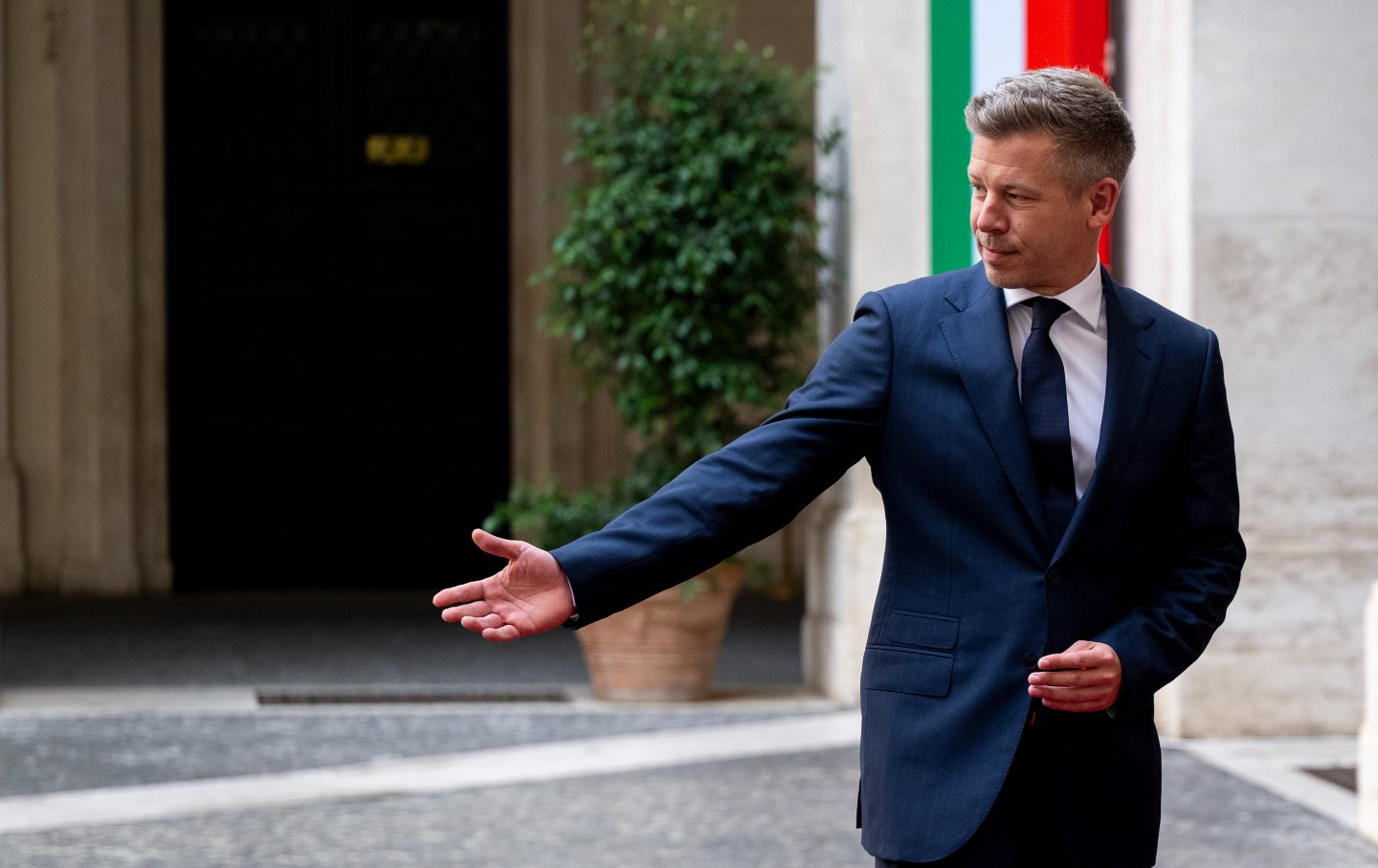
Hungary is in a state of euphoria, waiting for “The Man” to take the oath of office as prime minister on May 9. Péter Magyar is the man who was part of Fidesz’s inner circle before challenging Viktor Orbán and then defeating him in the April 12 election, sparking enthusiasm all over Europe. “The Man” is the way Magyar labels himself on social media, as if he were the star of a Netflix series or a teen idol. A huge celebration has been planned in Kossuth Square, in Budapest, to mark Magyar’s inauguration and his party Tisza’s entry into Parliament.
Anyone deviating from the party schedule is being labeled a killjoy, as the mayor of Budapest soon experienced. When Gergely Karácsony launched a concert “to mark the end of the system” on May 8, he found an angry comment from the future prime minister posted on his Facebook feed, reminding him of the capital’s dire economic situation. Karácsony rearranged his plans to match those of the party that controls not only the government but also Parliament: Thanks to the electoral law inherited from the Orbán regime, with 53 percent of the vote, the Tisza party has 141 of the 199 seats. This is what is called a “supermajority,” and it allows Magyar to do what he wants: not only change the Constitution, but also draft a new one, as he has already said he plans to do.
Now, the man who came from the Fidesz system and who benefited from it before the split in February 2024 truly has enough power to do whatever he wants. And that’s the point: Intellectuals can’t get drunk on celebrations. Keeping our mind clear and alert is the best way to honor Hungarians’ huge participation and commitment to change. “It’s not the man himself, but the change he promises,” young people told me a few days before the elections in a crowded “Regime-Change Concert” (Rendszerbontó Nagykoncert) in Budapest. Will these expectations be satisfied?
Even though Péter Magyar claimed that he is “different from Orbán in every way,” his positions suggest quite the opposite. Perhaps Magyar gives reassurances to the European ruling class, with which he is negotiating to secure EU funding, since he resembles the softer Fidesz of the early 2000s, rather than the latest version, pro-Russian enough to become a caricature of itself. But it’s wise to recall that the same ruling class has for years pretended not to see Orbán’s autocratic drift, as well as it is now pretending not to see Italian Prime Minister Giorgia Meloni attacking the rule of law. Back in 1993, Fidesz sold its newly acquired headquarters to a bank and gave the money to Orbán’s father, Győző: The true nature of Orbánism—autocratic and corrupt—was there for all to see, right in the city center at Váci Street 38. Since 2010, the Hungarian autocrat has taken over everything: the economy, the media, the construction of discourse; in 2014, he even transformed “illiberal democracy” into a global brand. Yet throughout Chancellor Angela Merkel’s era, Fidesz enjoyed appeasement from the German Christian Democrats, who, with their eyes on German car manufacturing in Hungary, turned a blind eye to antidemocratic tendencies.
Following the same pattern, the European People’s Party, led by Bavarian Manfred Weber, has since 2021 promoted Meloni’s far-right party Brothers of Italy as its tactical ally, to the point that Ursula von der Leyen described Meloni as pro-European and pro-rule-of-law; meanwhile, media freedom, civic space, and the rule of law have been increasingly under attack in Italy.
So is Tisza’s membership in the EPP and von der Leyen’s enthusiastic reactions enough to reassure us about a pro-European, pro-rule-of-law Hungary? No, I would say. And what Magyar himself declares is far from reassuring. The election winner has granted “pragmatic cooperation” toward Russia; when Donald Trump calls him “a good guy,” that’s because Tisza promised the US administration will be its point of reference. The incoming prime minister shows enthusiasm toward Meloni and “her extraordinary achievements,” publicly opposes European political integration, and zealously supports the deregulation underway in the EU (“less is more”). In short, The Man—whose image and election campaign were curated by his friend television director Márk Radnai—has devised the perfect mix to seduce an electorate long accustomed to Fidesz. On the one hand, he has latched onto that same ideological universe, extolling pride and exploiting nationalist aesthetics; on the other, he has secured the global support of Berlin, Brussels, and ultimately Washington, by embodying that pro-corporate approach under the guise of technocratic allure.
Current Issue
In short, Magyar wears the “Bocskai jacket”—with nationalist evocations—and Raybans with the same ease, displaying flags as he captions “Peter in da house” on a selfie from Brussels, where he went to unfreeze EU funds.
An “efficient and humane Hungary” is how Tisza can reconcile the drive for change from the younger generations—those who, as the founders of Fidesz admitted, are “tired of us”—with a substrate of conformism toward a Europe that increasingly resembles a corporation. In recent times, the EU Commission has been destroying its antitrust, liberal tradition, to chase the mirage of monopolistic “giants” (doesn’t that remind you of Peter Thiel’s antidemocratic dream?), while dismantling social rights and the welfare state itself (for example, in Germany as well as in the EU, a push toward privatizing pensions is underway). Nothing suggests that Magyar, who is anything but left-wing, would even bat an eyelid. Quite the contrary.
As minister of economy, Péter Magyar has chosen István Kapitány, formerly Shell’s global executive vice president. The deputy prime minister and foreign minister will be Anita Orbán—no relation—gifted with both political astuteness and international connections: She lived in the United States and even worked in the London office of an American liquified natural gas company (Tellurian), before moving on to manage relations with the Orbán government as Vodafone Hungary, precisely when an oligarch from the Orbán system was preparing to acquire the company. She understands the grammar of diplomacy as well as that of power, a skill she previously exercised for Fidesz before distancing herself from the latest Orbán version and promising to bring Hungary “back under the Euro-Atlantic compass.”
The Man advances with political astuteness and communication skills; we need to see how he will act before criticizing him, Tisza supporters say. But here’s the question: What is the state of pluralism in Hungary? Currently, in the Hungarian Parliament, besides the dominant Tisza party and Fidesz, only a handful of MPs from the far-right Our Homeland Movement (Mi Hazánk Mozgalom) are represented. Just to give an idea of the nationalist aesthetic that Magyar supports and fuels, the leader had welcomed Mi Hazánk’s proposal to have MPs swear in before the crown (an idea that was abandoned only due to logistical problems). Homage to the Szent Korona, the crown of Saint Stephen, the “sacred crown of Hungary,” hasn’t been seen for some time: The last to swear by the Korona was Ferenc Szálasi in 1944. The bold young man taking selfies at the gym has not only defeated Orbán. He has also realized Orbán’s long-held dream: to push the left out of Parliament.
What’s more, the opposition parties effectively excluded themselves, abdicating the new emerging party in the belief that, once Tisza achieved victory, they would be co-opted into the new system or could create new parties. Ildikó Lendvai, a former leader of the Hungarian Socialist Party, recently compared Tisza to a postwar, antifascist Popular Front, forgetting that a front would mean a coalition for change. In the latest Hungarian case, instead, there was one hegemonic “catch-all party,” Tisza, which co-opted the electorates of others without incorporating pluralism into its structure. Magyar pretended to remain the sole protagonist, with the others following suit and no real, pluralistic coalition. The small episode of the dispute over the two Budapest festivals gives just a taste of Magyar’s posture.
Do conditions for a pluralistic rebirth exist? Quite ironically, the answer has been put in the hands of The Man: with no other progressive opposition in the Parliament, it will be up to Tisza to grant pluralism—and until now, the government’s program was written by experts whose identities have remained secret. The grassroots activist groups known as Tisza Islands (Tisza Szigetek) were free to mobilize consent on the field but at the same time unable to influence key decisions, which remained within the founder’s inner circle of loyalists (about 30 people). One of these is Márton Melléthei-Barna, the husband of Magyar’s sister; he was supposed to be appointed as justice minister, but the scandal was so huge that he resigned before taking office. Tisza’s hegemony is so overwhelming that it breeds widespread opportunism and conformism: Concerns are not only about pluralism’s being at risk but whether there will be someone to fight for it..
From illegal war on Iran to an inhumane fuel blockade of Cuba, from AI weapons to crypto corruption, this is a time of staggering chaos, cruelty, and violence.
Unlike other publications that parrot the views of authoritarians, billionaires, and corporations, The Nation publishes stories that hold the powerful to account and center the communities too often denied a voice in the national media—stories like the one you’ve just read.
Each day, our journalism cuts through lies and distortions, contextualizes the developments reshaping politics around the globe, and advances progressive ideas that oxygenate our movements and instigate change in the halls of power.
This independent journalism is only possible with the support of our readers. If you want to see more urgent coverage like this, please donate to The Nation today.
More from The Nation
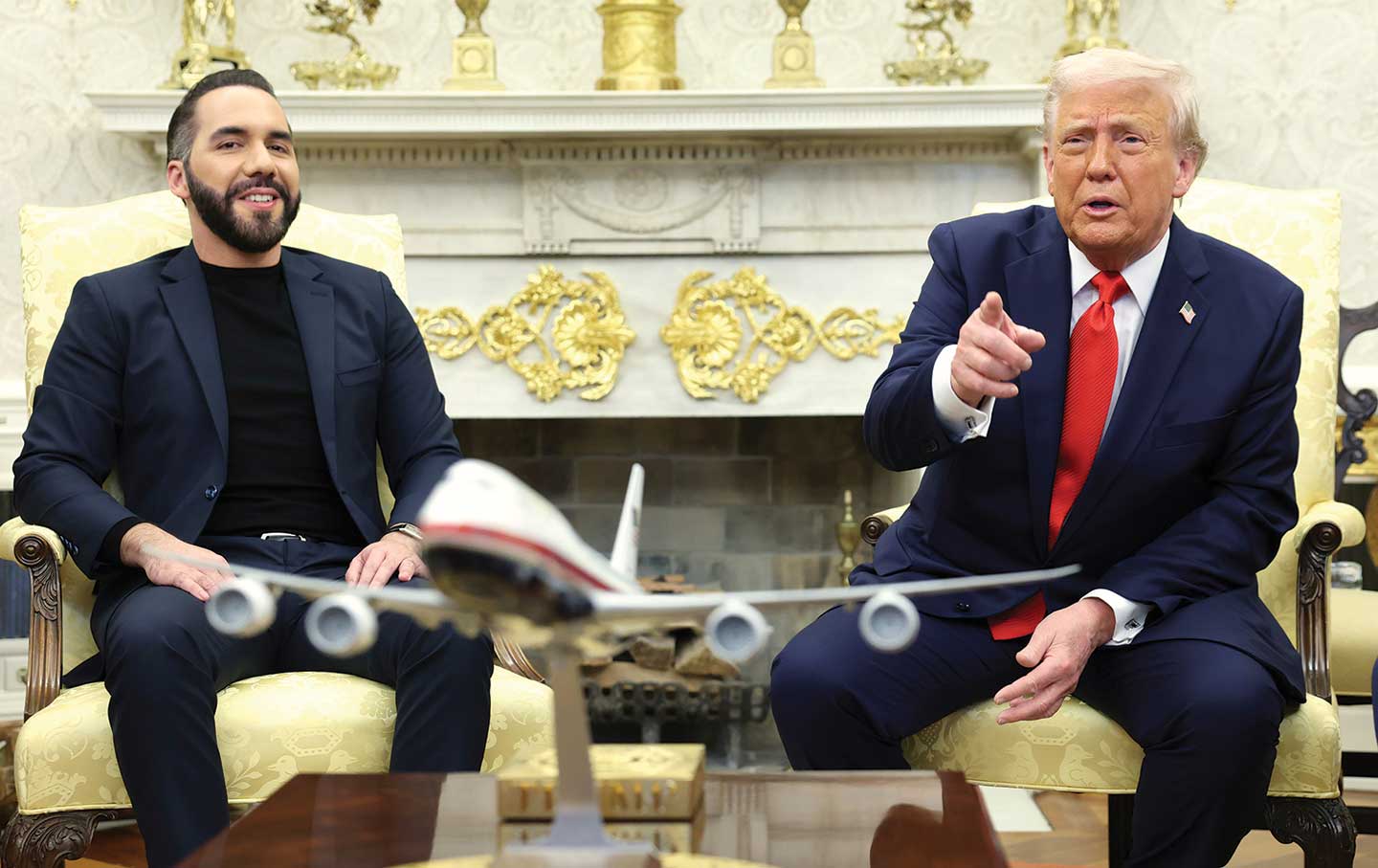
While Trump is ever more desperately focused on the Middle East, maybe some of us should still be focusing on El Salvador.

UK conservatism is changing dramatically, as I discovered when I hung out with some of the right’s youngest, drunkest up-and-comers.
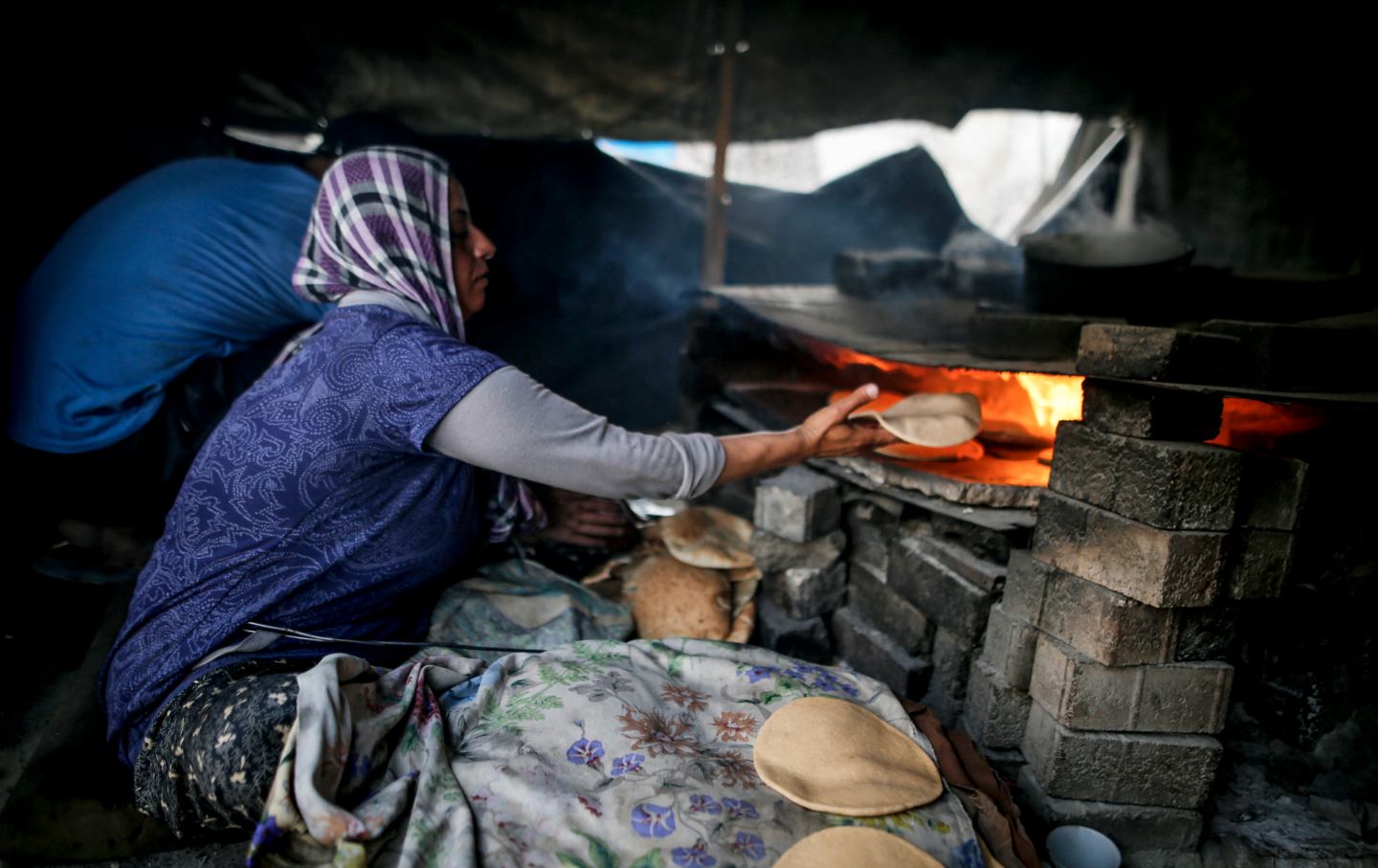
Women here have become both the primary caretakers and providers, sustaining their families in the absence of husbands, fathers, and sons.

The Russian blogger goes viral telling Vladimir Putin what everyone has on their minds—but is afraid to say.

Considering the costs so far as we wait on the precipice of another round of fighting.
The path to defeating Netanyahu may hinge on unity across ideological divides.