
Opinions expressed by Entrepreneur contributors are their own.
Key Takeaways
- When people inherit jewelry, emotional value and real financial worth collide. What they rarely understand is the asset itself.
- This generational hand-off is occurring alongside a seismic shift in consumer behavior: the mainstream adoption of secondhand commerce.
- The companies that win this transition won’t simply be those offering to buy these assets. They will be the trusted institutions that help heirs understand what they have and empower them to decide what happens next.
When economists and financial advisors talk about the Great Wealth Transfer, the conversation almost always centers on traditional financial assets: brokerage accounts, primary residences, retirement accounts and family businesses.
These numbers are massive, to be sure. Cerulli Associates estimates that $124 trillion will transfer through 2048, with $105 trillion passing directly to heirs. Nearly $100 trillion of that sum will originate with baby boomers and older generations.
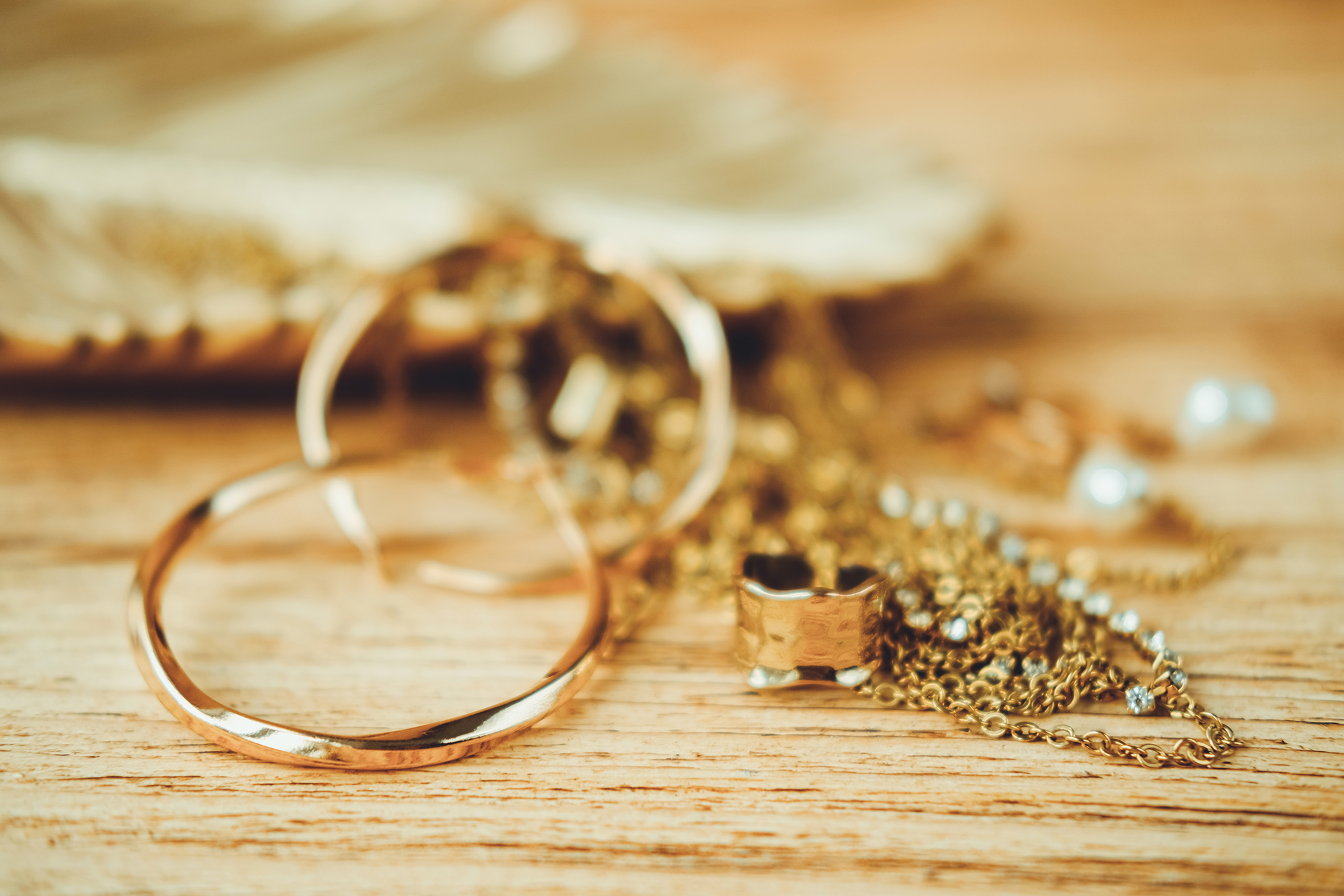
Yet wealth does not sit exclusively on a balance sheet. It lives inside our homes, stored in safes, tucked into back drawers and resting quietly in velvet jewelry boxes.
It’s estimated that half of the gold ever mined in human history exists today as jewelry. Millions of families are about to inherit gold jewelry, luxury watches, diamonds, heirloom rings, coins and precious metals alongside standard investment portfolios.
We are not just approaching a Great Wealth Transfer. We are on the precipice of the Great Jewelry Transfer. Unlike a stock portfolio or checking account, heirloom pieces rarely arrive with a neat financial statement telling heirs what they own, leaving many unprepared when it’s time to evaluate, keep or sell inherited jewelry.
Why jewelry creates a fundamentally different inheritance problem
When people inherit jewelry, emotional value and real financial worth collide.
Most heirs can tell you the backstory without missing a beat:
- “This was my grandmother’s engagement ring.”
- “My father gave this bracelet to my mother for their 25th anniversary.”
- “I remember her wearing this necklace to every holiday dinner.”
What they rarely understand is the asset itself.
They’re left asking basic financial questions: Is this real? Is it worth $200 or $20,000? Does the value come from the gold, the quality of the stones, the brand or the item’s vintage status? And ultimately, what’s the right move: keep it, insure it, divide it among siblings or sell it?
Without clear answers on metal purity or stone quality, deciding whether to keep, divide or sell inherited jewelry becomes an educated guess made during an already stressful time.
Furthermore, younger generations often don’t want to inherit physical clutter. Modern estate research indicates that millennials and Gen Z heirs prefer a small, curated selection of meaningful possessions over taking custody of an entire household’s worth of heirlooms.
Inheriting an asset and understanding an asset are two completely different things.
A collision course with the resale revolution
This generational hand-off is occurring alongside a seismic shift in consumer behavior: the mainstream adoption of secondhand commerce.
Buying secondhand used to carry a subtle stigma; today it’s a mainstream consumer movement driven by younger consumers who actively prioritize circularity, sustainability and the unique appeal of vintage items. According to data from Deloitte, the broader U.S. resale market is projected to reach $73 billion by 2028, while the number of U.S. fashion brands hosting resale platforms on their own sites increased 325% between 2021 and 2025.
For the jewelry market, this shift changes everything.
A piece one generation no longer wants to wear doesn’t suddenly lose its intrinsic value. Its lifecycle can seamlessly evolve: Kept → Valued → Sold → Recycled → Worn by someone new.
This expands the concept of a circular economy beyond traditional “cash for gold” operations. The next generation doesn’t have to choose between keeping Grandma’s jewelry in a drawer forever or shipping it off to a refinery to be melted down.
What we learned building Alloy
When I founded Alloy, our initial premise was straightforward: The traditional process to sell gold jewelry, or any other high-value estate piece, was unnecessarily opaque and fundamentally built to favor the buyer over the consumer.
After working with thousands of consumers, one thing became clear quickly: Many customers acquired their pieces through inheritance, estate management or a major life transition. We quickly realized our main job wasn’t just facilitating a sale; it was helping people understand what they actually owned.
Solving that problem requires three foundational pillars:
- Transparency: What is the piece made of? What does it weigh? Where does its true financial value come from?
- Trust: Is the party evaluating this item financially incentivized to be dishonest about its value?
- Optionality: Does this piece actually belong in a refinery, or could someone else want to wear it?
That third pillar, optionality, is where the market’s future lies.
Alloy’s role: Building infrastructure for jewelry’s next life
Historically, the secondary jewelry market has been deeply fragmented. A consumer sells a piece to a local business. That business flips it to another intermediary. Some pieces get resold; others are melted. Throughout the entire process, the original owner has zero insight into the asset’s true destination or value.
At The Alloy Market, we are building the infrastructure to connect these fragmented lifecycles.
By providing upfront valuation tools, real-time calculators and educational resources, we empower consumers to understand the exact value of their items before deciding. When an item is sold, our ecosystem evaluates whether to reintroduce it to the consumer market as a wearable piece, returning a portion of that resale upside to the original seller or whether to return its metals responsibly to the industrial supply chain.
We’re not merely building a better way to sell inherited jewelry; we’re building the underlying digital infrastructure that lets high-value physical assets transition smoothly from one generation to the next.
The ‘Great Jewelry Transfer’
Leaving things behind isn’t new. But we’ve never seen a handoff like this, where trillions of dollars in physical items land with a generation that thinks very differently about what’s worth keeping, selling or passing along.
Some inherited jewelry will remain in families for another century. Some will be sold for financial liquidity. Some will be melted for reuse. And a growing percentage will find a second life with a new owner who appreciates its history.
The companies that win this transition won’t simply be those offering to buy these assets. They will be the trusted institutions that help heirs understand what they have and empower them to decide what happens next.
While standard wealth management focuses on paper assets and balance sheets, the Great Jewelry Transfer is about what happens to the physical history families leave behind. Trillions are at stake, but the real value is in the objects themselves.
Key Takeaways
- When people inherit jewelry, emotional value and real financial worth collide. What they rarely understand is the asset itself.
- This generational hand-off is occurring alongside a seismic shift in consumer behavior: the mainstream adoption of secondhand commerce.
- The companies that win this transition won’t simply be those offering to buy these assets. They will be the trusted institutions that help heirs understand what they have and empower them to decide what happens next.
When economists and financial advisors talk about the Great Wealth Transfer, the conversation almost always centers on traditional financial assets: brokerage accounts, primary residences, retirement accounts and family businesses.
These numbers are massive, to be sure. Cerulli Associates estimates that $124 trillion will transfer through 2048, with $105 trillion passing directly to heirs. Nearly $100 trillion of that sum will originate with baby boomers and older generations.
Yet wealth does not sit exclusively on a balance sheet. It lives inside our homes, stored in safes, tucked into back drawers and resting quietly in velvet jewelry boxes.