

The long shadow of AIPAC… The AI revolution will not be televised… Speaking of taxes… Reporting on abortion… (online only)
The Long Shadow of AIPAC
New York Congressman Jerrold Nadler’s letter in response to Joseph Dana’s article “The Long Shadow of the ‘Jewish Question’” [March 2026] does not align with reality [Letters, June 2026]. The Holocaust, though horrible, did not make obvious the need for, or in any way justify, a sovereign Jewish state or any other sovereign religious state, aka theocracy. Theocracies are inherently elitist, antisocial, and antidemocratic.
After the Nazis were defeated in World War II, there was no reason for European Jews, whose descendants now comprise the overwhelming majority of Jews in Israel, to leave their home countries. Beginning in 1948, Jewish invaders, soon to call themselves Israelis, undertook vicious pogroms of occupation, home stealing, subjugation, dehumanization, and ethnic cleansing on the native Palestinian people.
The irony of the commission of genocide by a people who were themselves victims of genocide is truly beyond comprehension. How can a people go from victim to victimizer, virtually overnight, for exactly the same crime against humanity? Israel may have claimed in its Declaration of Independence that it was to be “based on freedom, justice and peace,” but as we have seen, this applies only to Jews and not to Palestinians and other non-Jews. Anyone who supports this ongoing brutality is not a progressive Democrat. Furthermore, Congressman Nadler’s opinion is biased. According to Track AIPAC, as of August, he has taken $309,889 in bribes, er, donations, from the American Israel Public Affairs Committee to protect and advance the interests of Israel.
J. Alfred Clem
santa rosa, california
The AI Revolution Will Not Be Televised
As a child of the baby-boom generation, I found your AI special issue a wonderful kaleidoscope of seven different takes on this revolution upon us [May 2026]. It was the article by John Nichols, “Luddite Renaissance,” that related more to me as I toddle my weary legs into antiquity. It’s about time that the Luddites return from their beginnings in the early 19th century. They might provide a bit of resistance amid the gathering storm of the new Industrial Revolution that confronts the values of work and a livable wage. Lord Byron (George Gordon) addressed Parliament in defense of the Luddites and wrote “A Song for the Luddites.” More recently, Richard Brautigan wrote a poem entitled “All Watched Over by Machines of Loving Grace” in the 1960s that I have carried in my wallet for the past 50-plus years. The title of the editorial by Katrina vanden Heuvel and John Nichols should be a marching chant for the current Luddite generation: “Humanity Over Profit.”
Richard Thorum
midvale, utah
All thinking persons should pay serious attention to the two interrelated questions that US Senator Bernie Sanders raises regarding artificial intelligence: “What happens if we can’t regulate the things that we create? Could that create an existential threat to humanity itself?” [“AI Dangers,” May 2026].
No one can brush aside the concern that unregulated AI could result in human extinction. Our current economy and technology do not adhere to the self-limiting principle, and the faith in undifferentiated economic and technological growth has become central to our culture. It is fair to say that any economic and technological system based on continuing unlimited expansion can never lead to dynamic balance. In The Order of Things, Michel Foucault wrote, “As the archeology of our thought easily shows, man is an invention of recent date. And one perhaps nearing its end.” He wagered that “man would be erased, like a face drawn in sand at the edge of the sea” in the last sentence of his book. As humans, isn’t it our collective responsibility to make the late philosopher lose his wager, for the sake of our descendants’ survival and well-being?
Yeomin Yoon
basking ridge, new jersey
The writer is professor emeritus of finance and international business at Seton Hall University.
Speaking of Taxes
A progressive should never use the word tax as an invective. The right has worked for a half-century to tarnish that term and everything about citizens’ contributions to the commonweal. Adding fuel to those flames only strengthens their bonfires. And yet that is precisely what Zephyr Teachout does in her article “Hidden Taxation” [May 2026].
Popular
“swipe left below to view more authors”Swipe →
Teachout attaches the term as a nasty epithet to the endless ways electric utilities and their investors gain at others’ expense. She uses the concept of taxation to dramatize the lack of public choice in how hidden processes result in hidden costs. So why not use the term “hidden costs” instead of “hidden taxes”? That would make it clear that these dollars are going to private entities, not into public coffers, where they might (in some better world) serve the public. Calling these plunderings “private taxes” and putting variations of tax in quotation marks are not clever work-arounds. They simply indicate an inability to think outside of the reflexive negativity about taxation that right-wing activists have instilled in our everyday language.
Pamela Walker Laird
denver, colorado
The writer is a professor emerita of history at the University of Colorado Denver.
Teachout Replies
I’m actually sympathetic to Dr. Laird’s argument, but it’s not a matter that I feel settled on. The idea is that “taxation” forces a reader to see a pricing relationship as a governing relationship, and a problematic one at that, because unlike public taxes, private taxes are created like those of King George: without representation. The problem is taxation without representation, not taxation itself. Calling oligopoly charges private taxation is supposed to turn the libertarian intuition against private power. It comes from the monopoly-as-private-government tradition.
Zephyr Teachout
new york city
Reporting on Abortion
Re “This Could Be You,” by Regina Mahone [May 2025]: I was dismayed to see The Nation publish a piece that amplifies a grieving mother’s misplaced blame on doctors for the death of her daughter, Amber Thurman. The article centers Shanette Williams’s heartbreaking story but fails to fully contextualize the direct role that Georgia’s abortion ban played in Thurman’s tragic death. That ban is what forced her to travel out of state in the first place, missing her surgical-abortion appointment and leading to the complications that followed.
While I understand the power of personal storytelling—and the raw emotions that come with it—The Nation has a journalistic responsibility to ensure clarity around cause and effect. Georgia’s Maternal Mortality Review Committee specifically cited the abortion ban as the reason that Thurman did not receive timely, appropriate care. The doctors in her case were working under vague, punitive legal restrictions that made them fearful of intervening too soon. To repeatedly highlight the word murder in relation to healthcare professionals—without correcting the narrative—risks putting those same professionals in the crosshairs in red states where they are already under threat. This framing undermines public understanding of how abortion bans work: by criminalizing necessary care and making doctors hesitate until it’s too late. It also does a disservice to other American women and birthing people who may read this piece and walk away with the belief that the enemy is negligent doctors rather than dangerous policy.
Elevating voices is important, but we cannot sacrifice truth and public safety in the process. I also urge The Nation and its contributors to reexamine the phrase “whether it’s medically necessary or simply their choice.” This language subtly reinforces a damaging narrative that has long served the anti-abortion movement: that some abortions are valid while others are selfish or “elective.” All abortions are medically necessary because they are necessary to the person seeking them. They are medically necessary because they prevent health complications, protect mental and physical well-being, and, in many cases, save lives. We are in this crisis partly because too much of the public accepted the lie that abortion is optional or rare or shameful. Journalists and editors who care about reproductive freedom must reject this framing and speak plainly: Abortion is healthcare. It is preventative care. And everyone who needs it deserves compassion and access. No qualifiers.
Colleen Luckett
denver, colorado
Mahone Replies
I see my role as a writer as elevating the voices of people who are the most marginalized and underrepresented by traditional media. A mother’s visceral pain was the story I was telling in “This Could Be You”—not the challenges medical professionals are experiencing under abortion bans. I had the privilege of interviewing a mother in raw pain after her daughter’s preventable death. A mother who, months before the conference I covered in my article, had grieved in public during an online town hall as Kamala Harris, the Democratic presidential candidate, promised to do all she could to codify abortion-rights protections. The country voted another way. And now here was Shanette Williams after the election, not retreating from the spotlight but saying unequivocally, “I’m not stopping.”
Shanette’s voice, and the voices of mothers like her, deserves to be centered in reporting on abortion access, not sidelined. They understand perhaps better than most the true costs of bans. And their experiences must not be separated from the medical industry’s long history of undermining reproductive healthcare (care predominantly provided by community midwives) to kill any competition for services; experimenting on the bodies of patients of color without their consent; and providing inadequate healthcare to Black patients due to myths about how we feel less pain than white patients. Medical professionals today who face terrible risks to do their work are part of a system that by design puts politics and profits over their patients. Of course, there are incredible doctors advocating for change within the field, and providers who are jeopardizing their lives and jobs to ensure that patients get the care they deserve. All of these experiences and histories and realities exist at the same time. Writers can hold them all at once, but we cannot necessarily emphasize them all at once.
Regina Mahone
More from The Nation
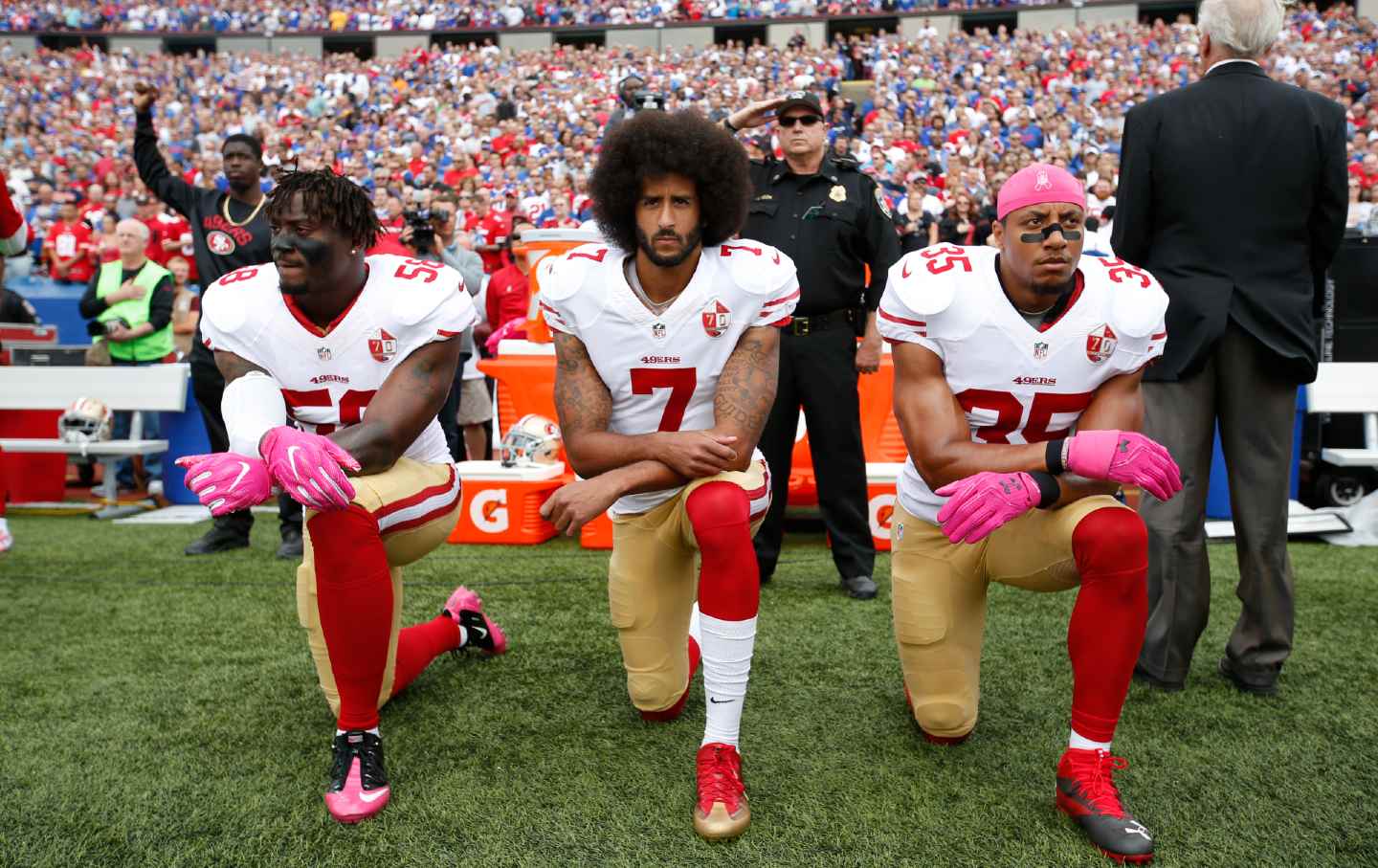
Critics say the Black Lives Matter movement in sports went too far. In reality, it didn’t go far enough, and the backlash to it has been brutal.

The political fixer created a career for himself as a self-promoting, ubiquitous hustler. Like Trump, he got away with it by having the right friends.
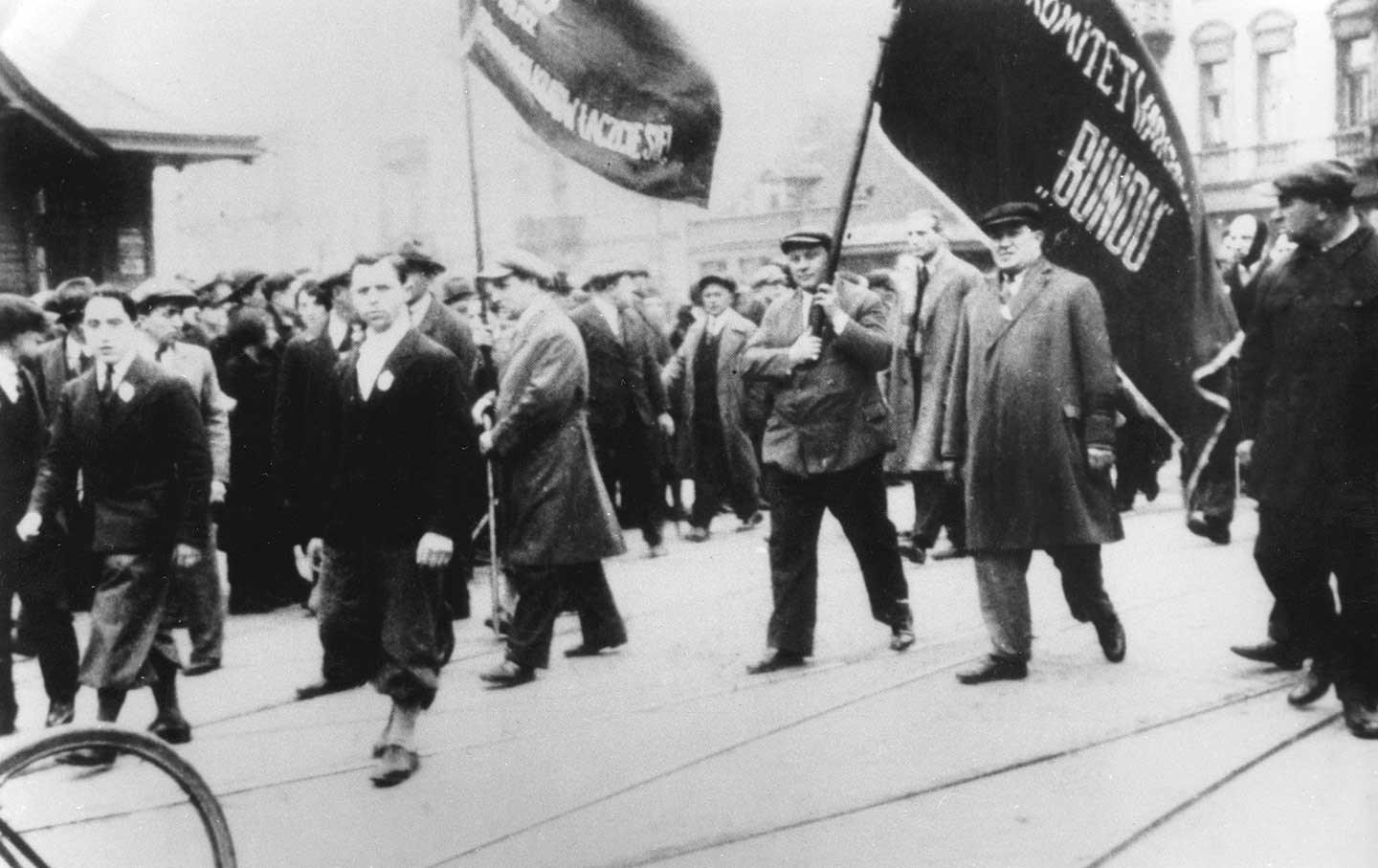
Molly Crabapple’s Here Where We Live Is Our Country revisits the past of the Jewish Labor Bund and considers what it might mean for our future.
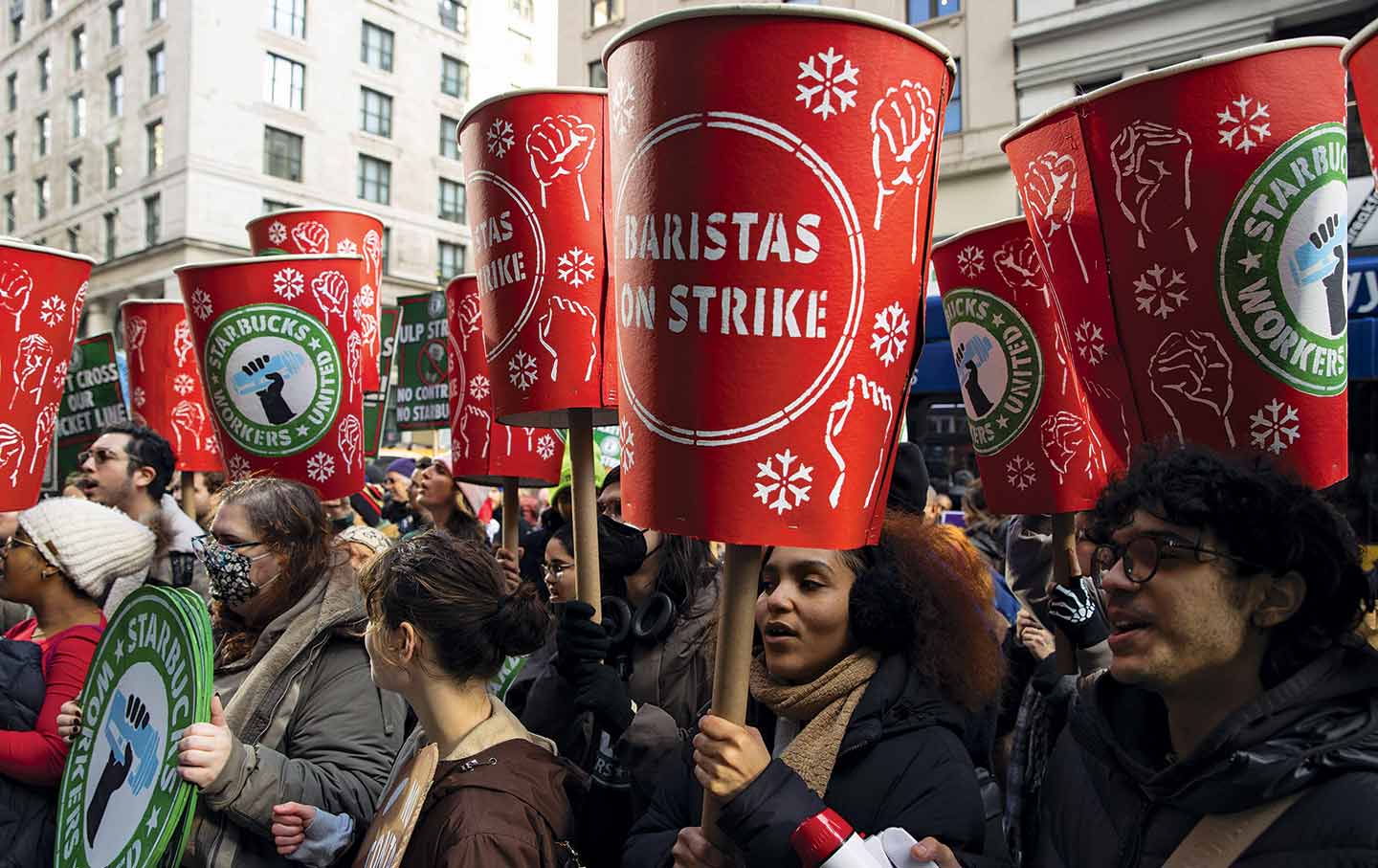
A new book follows a rising generation of labor organizers as they attempt to unionize their workplaces.