
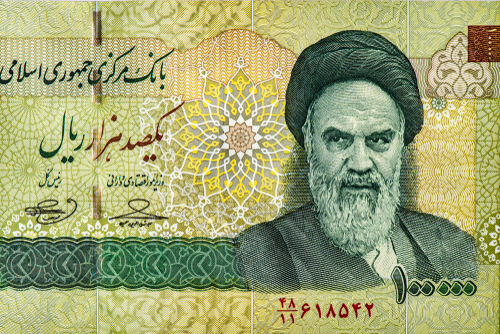
Iran International reports that the average advertised monthly rent in Tehran has climbed to 723 million rials, or about $389 at the open-market exchange rate. Many Iranian workers earn only 200 million to 250 million rials per month, equivalent to $108 to $134. A worker must now surrender nearly three months of wages to pay one month of rent. That is the destruction of an entire population’s standard of living.
Rents have reportedly risen between 70% and 100% in parts of Tehran, despite the government’s 25% ceiling. Even Alireza Novin, a member of parliament’s construction committee, admitted that “the 25% rent increase is clearly not being observed.”
The IMF now projects that Iran’s economy will contract 5.4% in 2026, the worst annual decline in decades. Consumer-price inflation is projected to reach 68.9%. Estimates indicate that unemployment rose from 7.6% in the first quarter to 9.1% in the second, while industrial destruction and economic disruption may have eliminated around one million jobs.
The rial traded near 70 to the dollar at the time of the 1979 revolution. Iran International’s housing calculations now use an open-market rate of 1.86 million rials to the dollar. Iran’s government may issue a 10 million-rial banknote or remove zeros from the currency, but changing the numbers printed on the paper cannot restore the savings that were destroyed.
Food and beverages have risen 113.8% from the previous year, according to figures attributed to the Statistical Center of Iran. Bread and cereals increased 140%. Red meat and poultry rose 135%. Dairy products climbed 116.8%, while oils and fats surged 219%. Fruits and nuts increased more than 104%.
Rural inflation has reportedly reached 86.5%, compared with 69.3% in urban areas. The poorest citizens are being hit hardest because food, transportation, and household necessities consume nearly all their income. They do not own stocks, foreign property, or offshore bank accounts. Their entire wealth is their labor, and the government has destroyed the value of that labor.
Real income per person has fallen by approximately 47%, pushing the average Iranian’s purchasing power back toward levels last seen in the late 1990s. Poverty is estimated to affect about 36% of the population nationwide and as much as 50% in deprived regions. Iran is creating millions of working poor—people who still have jobs but can no longer afford to live.
The diet of the Iranian people is shrinking. Red meat supply has reportedly fallen to approximately 623,000 metric tons, about 20% below 2024 and nearly 39% below its 2010 level. Dairy consumption has declined to around 40 kilograms per person, roughly one-third of the global average. Families are not changing their diets for health reasons. They are abandoning meat and dairy because they cannot afford them.
Grocery workers have reported increasing theft of bread, cheese, butter, and meat. Medical patients are postponing treatment because they cannot afford medication. People are moving back in with their parents, sharing apartments with strangers, or fleeing Tehran for poorer outskirts.
Tindex estimates that the average advertised home in Tehran now costs more than 240 billion rials. A worker earning 250 million rials per month would need 80 years of gross wages to reach that price, assuming he never spent anything on food, rent, clothing, or taxes. Homeownership has become mathematically impossible for much of the population.
The war turned Iran’s prolonged decline into an active crisis. Factories, power plants, railways, airports, bridges, and industrial facilities have been damaged. Oil exports, the financial lifeline of the government, have reportedly fallen as much as 70% during periods of severe disruption. Some estimates place the economic cost of the blockade near $435 million per day.
The cumulative cost of the war has been estimated at around $144 billion, equivalent to roughly 40% of Iran’s prewar GDP. Whether every estimate proves exact is secondary to what Iranians can see: businesses closing, wages vanishing, investment stopping, and entire industries struggling to obtain materials or transport goods.
The government has compounded the damage by restricting the internet. Iran’s own communications ministry estimated that shutdowns cost the economy around 5 trillion rials per day at the official exchange rate. Other estimates placed the direct and indirect losses much higher. Online businesses lost customers, workers lost income, and private commerce was sacrificed so the state could suppress information.
Meanwhile, Iran’s rulers continue spending on missiles, proxies, internal surveillance, and political repression. The people are told to sacrifice for the revolution while those connected to the state preserve access to hard currency, property, and protected markets. The ruling class rarely eats the consequences of its policies. The people do.
Yet Washington and Israel should not celebrate this misery. Sanctions and blockades do not starve political elites first. Officials control state resources, smuggling networks, and foreign currency. It is the mother buying bread, the factory worker searching for an apartment, and the pensioner choosing between food and medicine who pays.
The neocons believe that enough bombing and deprivation will force Iran to surrender and produce a friendly democracy. They made the same argument in Iraq, Libya, Afghanistan, and Syria. Economic misery can produce revolution, but it can also produce repression, military rule, fragmentation, or civil war.
A government can manipulate inflation statistics and threaten landlords. It cannot hide an empty refrigerator or convince a worker that three months of wages should equal one month of rent. Many have turned to military service for survival, but what happens when the government cannot pay its troops? Iran’s people are watching their economy unravel in real time. Their wages have become scraps of paper, their savings have disappeared, and the idea of building a future is slipping beyond reach.