
Close Menu
    Facebook X (Twitter) Instagram
    TRENDING :
    • From footwear to AI chips: Allbirds’ next move is hard to explain
    • Where are new grads finding job opportunities?
    • Starbucks’s ChatGPT experiment could quietly reshape how people order coffee
    • Duolingo was evaluating its workers’ AI use. Workers pushed back.
    • Is organic music discovery dead? Geese ‘psyop’ debate leaves artists frustrated by growing barrier to entry
    • SantaCon president stole millions in charitable donations to fund luxury lifestyle, says FBI
    • Target’s new retro-inspired Pokémon collection was made for superfans, by superfans
    • The future of AI in schools isn’t personalized learning
    Populist Bulletin
    • Home
    • US Politics
    • World Politics
    • Economy
    • Business
    • Headline News
    Populist Bulletin
    Home»Economy»Iran, Russia, China, and the Emerging Axis
    Economy 4 Mins Read

    Iran, Russia, China, and the Emerging Axis

    Economy 4 Mins Read
    Share Facebook Twitter Pinterest LinkedIn Tumblr Telegram Email Copy Link
    Follow Us
    Google News Flipboard
    Share
    Facebook Twitter LinkedIn Pinterest Email


    For years, I have warned that geopolitics moves in cycles just as markets do. The Economic Confidence Model has been projecting that the period around 2026 would become a geopolitical turning point, leading to rising confrontation toward the Panic Cycle in 2027 and ultimately the 2028 Panic Cycle year. What we are now witnessing is the early stage of that alignment. The conflict with Iran is no longer merely a regional war. It is evolving into something far more significant as alliances that previously existed quietly in the background are now being acknowledged publicly.

    Iran’s foreign minister has now openly stated that Russia and China are providing military cooperation to Tehran during the war with the United States and Israel. He emphasized that these relationships are part of long-standing strategic partnerships that now include intelligence sharing and other forms of support as the conflict escalates. This matters enormously because once cooperation becomes official rather than discreet, it changes the geopolitical landscape. The declaration of alignment is a signal to the world that a new bloc is forming.

    Reports indicate that Russia’s support has included intelligence assistance and battlefield data, while China has focused on diplomatic backing, logistical assistance, and the protection of energy flows through the Strait of Hormuz. At the same time, Chinese naval assets have appeared near the Strait while Russia and China have coordinated diplomatic efforts at the United Nations to challenge the legitimacy of the strikes against Iran. None of this is accidental. These powers are not rushing troops into battle, but they are positioning themselves strategically while allowing the United States to become entangled in another prolonged conflict.

    In the modern era, direct confrontation between nuclear powers is avoided, but support flows through intelligence, logistics, technology, and diplomacy. Russia and China are effectively helping Iran sustain resistance without crossing the line into direct war with the United States. Analysts already note that intelligence sharing and electronic warfare assistance have improved Iran’s ability to track U.S. military movements in the region. The result is a conflict that can drag on far longer than policymakers initially expect.
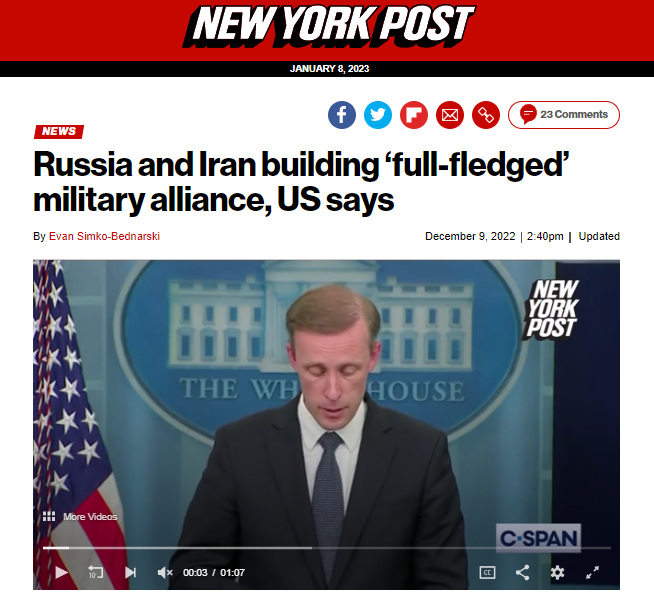
    2023_01_08_Russia_and_Iran_building_full_fledged_alliance

    From the perspective of the Economic Confidence Model, this is exactly what a Panic Cycle environment looks like. Confidence begins to shift away from government institutions, geopolitical tensions escalate, and alliances begin to harden. The ECM has shown that 2026 represents the pivot year. Pressure builds into 2027, where the Panic Cycle raises the probability of sudden geopolitical escalation, and the cycle then carries forward into the 2028 Panic Cycle year. When these cycles align, history shows that global alliances restructure and the world moves toward a new balance of power.

    Energy routes make the situation even more dangerous. The Strait of Hormuz remains one of the most critical chokepoints in global oil supply, and disruptions there have already sent energy prices sharply higher as the conflict intensifies. China’s interest in securing passage through the strait and Russia’s strategic positioning highlight that the battle is not only military. It is economic. Whoever controls the energy corridors and trade routes ultimately controls leverage over the global economy.

    The key takeaway is that the official acknowledgement of cooperation among Iran, Russia, and China goes beyond wartime rhetoric. It signals that the geopolitical chessboard is shifting. What began as a regional confrontation now sits within a larger strategic framework that the ECM warned about years in advance. When alliances begin to crystallize during a Panic Cycle phase, the risk is not simply prolonged conflict. The risk is that the world divides into opposing blocs once again, and history shows that such realignments rarely unfold quietly.


    Source link

    Share. Facebook Twitter Pinterest LinkedIn Tumblr Email

    Related Posts

    Hungary 3rd Time A Charm?

    April 15, 2026

    The Oil Conspiracies | Armstrong Economics

    April 15, 2026

    China’s Gold Strategy Is A Long-Term Move Against The Monetary System

    April 15, 2026
    Top News
    US Politics 10 Mins Read

    The Red State–Blue State Healthcare Divide Is Dangerous for Everyone

    US Politics 10 Mins Read

    Society / February 27, 2026 Whether or not you have access to independent, scientifically sound…

    Free Webinar | On-Demand: From Bottlenecks to Breakthroughs: 5 Barriers Stalling Entrepreneurs—and the System That Removes Them

    September 11, 2025

    New York AG James Won’t Drop $454 Million Civil Fraud Case Against Trump, Office Says

    August 23, 2025

    Senate Confirms Former Fox News Host Jeanine Pirro as US Attorney for DC

    August 18, 2025
    Top Trending
    Business 3 Mins Read

    From footwear to AI chips: Allbirds’ next move is hard to explain

    Business 3 Mins Read

    The fall of former direct-to-consumer darling Allbirds has taken a very weird…

    Business 3 Mins Read

    Where are new grads finding job opportunities?

    Business 3 Mins Read

    It’s a brutal hiring market for new grads. Hiring has slowed across…

    Business 3 Mins Read

    Starbucks’s ChatGPT experiment could quietly reshape how people order coffee

    Business 3 Mins Read

    Not sure what to order on your next Starbucks run? Now, ChatGPT…

    Categories
    • Business
    • Economy
    • Headline News
    • Top News
    • US Politics
    • World Politics
    About us

    The Populist Bulletin was founded with a fervent commitment to inform, inspire, empower and spark meaningful conversations about the economy, business, politics, government accountability, globalization, and the preservation of American cultural heritage.

    We are devoted to delivering straightforward, unfiltered, compelling, relatable stories that resonate with the majority of the American public, while boldly challenging false mainstream narratives that seem to only serve entrenched elitists, and foreign interests.

    Top Picks

    From footwear to AI chips: Allbirds’ next move is hard to explain

    April 16, 2026

    Where are new grads finding job opportunities?

    April 16, 2026

    Starbucks’s ChatGPT experiment could quietly reshape how people order coffee

    April 15, 2026
    Categories
    • Business
    • Economy
    • Headline News
    • Top News
    • US Politics
    • World Politics
    Copyright © 2025 Populist Bulletin. All Rights Reserved.

    Type above and press Enter to search. Press Esc to cancel.